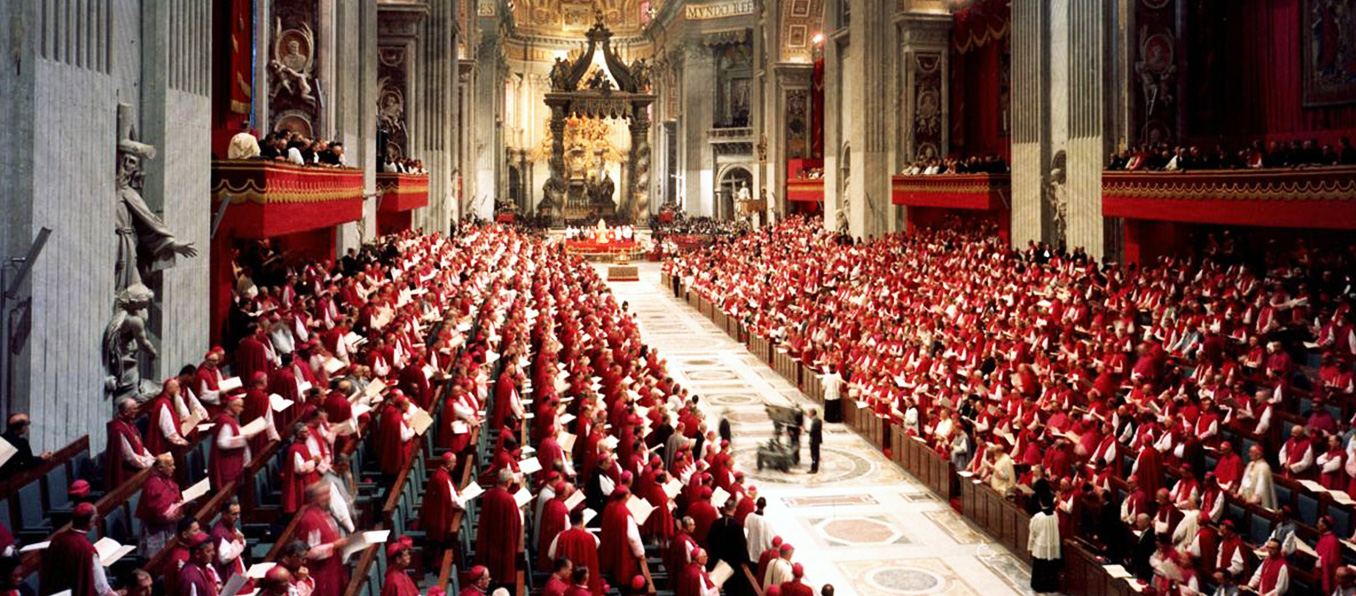
In January of 1959, Pope Saint John XXIII shocked the world when he announced the convening of the 21st ecumenical council of the Catholic Church. From 1962-1965, the bishops of the Church met to discuss the Church’s understanding of itself in the modern world, producing major documents of reform with changes to ecclesiology, liturgy, ecumenism, anthropology, and social responsibility.

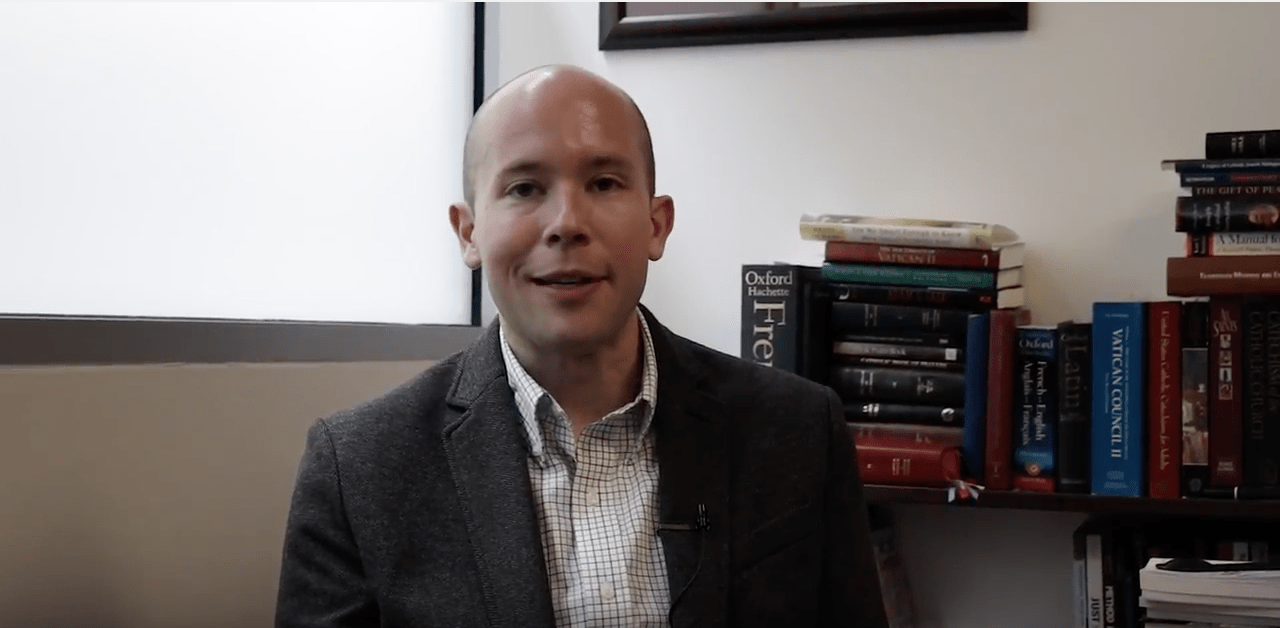
In this episode of Catholicism in focus (here for email subscribers), I look at the inspiration behind these changes, putting the council in its context to understand why the reforms took place.

Here, I would like to take a minute to share a few of the things that changed with the council and why they were done.

The liturgyThe most obvious changes for the average Catholic was the Sunday Mass. From Latin to the vernacular, the priest facing the altar to facing the people, flexibility in music and allowing instruments outside of the organ, and increased involvement of the laity, the mass looked quite different in a matter of years. And while some of the things we do today are not actually the wishes of the council (if you’re interested, the document itself is not too long and quite good: Sacrosanctum Concilium) a number of the changes are the direct result of a critically different emphasis underlying the worship: full, active, and conscious participation on the part of the laity. Looking at the early Church, the bishops realized that the changes over time, solidified in the the 1600s, had lost an essential element of Christian worship. Focused solely on the transcendence and holiness of the mass, the Church had lost the foundational inspiration of the mass, namely, that it was a house meal of remembrance and fellowship. What Catholics were doing in 1962 looked nothing like the last supper or early expressions of the Eucharist, and some traditions, even though well-liked, actually detracted from the essential nature of the Eucharist.

The hierarchy of the Church: Ever since the very beginning of the Church, and all throughout our history, we have understood Jesus as the head of the body and the sole leader of our faith. How this body was organized on earth developed over time. In the very beginning, the roles of leadership were not clearly defined, and while scripture mentioned episkopos (bishop), presbyter (priest), and diakonos (deacon), these words take about 100-300 years to become clearly developed. Eventually, we see the Church being governed by the bishop—the fullness of the priesthood, prophetic voice, and kingly authority in a Church community—surrounded at the altar by his priests and helped in the community by his deacons. Deacons were not below priests, but a separate form of ordination with an alternatively important role. Over time, the permanent diaconate disappeared, the role of the bishop diminished (the Middle Ages considered bishops no different in ordination than priests), and the laity—out of which and for which leadership arose—fell by the wayside, placed at the very bottom of an upward ladder. The Second Vatican council did a number of restorative acts: 1) It restored the central authority and ordination of the bishop as the shepherd of his flock, 2) inverted the hierarchy by reminding us that we are one in our baptism, and that baptism, shared by all Christians, has primacy over ordination, and 3) restored the permanent diaconate and its integral role to the Church.

Relationship with the outside world: With the rupturing of the Western Church at the Reformation and the subsequent wars between Christians, and with the Enlightenment severing the secular world from the religious, the Catholic Church took up a defensive, antagonistic approach to non-Catholics. Filled with heresies and the source of violence, it was easier to adopt a “circle the wagons” policy, calling all non-Catholics heretics and maintaining that there was “no salvation outside of the Church” than it was to engage one’s enemy. One wonders, in the latter half of the second millennia, if anything else were possible anyway. By the 20th century, the world had changed and was ripe for a new perspective. Rather than hide from the world, the bishops, grounded in scripture, reminded the Church that we are all created in the image of God, all blessed with abundant grace, and all capable of knowing God intimately. Instead of hiding from potential problems, we, from our baptismal call to be priest, prophet, and king, were to go out into the world to evangelize through our lives. God did not speak simply through the magisterium of the Church, but through our consciences, other religions, cultural insights, and empirical study.

From these paradigm shifts, the result of a desire to brings things up to date with the sources as our foundation, the Church set forward a number of practical changes, suppressing some traditional practices that no longer carried forth the Church’s mission and elevating others that did so better. While it would take a series of books to identify them all and give proper explanation to each, my goal in making this video and writing this post is simple: as much as Vatican II angers or inspires people with its decisions on specific practices (Latin, veils, altar rails, reception on the hand, ecumenism, etc.) these things are inconsequential to the overall issue. We, as Catholics, are called to follow Jesus Christ. Trust me when I say that Jesus does not care about the color of our vestments or the shape of our churches. While those things can be important in providing an identity, facilitating worship, and organizing people, they are, at their best, passing expressions. We can never, ever, become a people attached to passing expressions. As difficult as change can be and as much as we might have liked one thing or another, when we assess the authority and faithfulness of a council and our desire to be in a Church based on its externals, we have lost the whole reason for being Church. Vatican II, while harsh for those who enjoyed the traditions of the Middle Ages, had at its very core the desire to makes its members better Christians. For me, the inspiration that guided the council and the overall paradigm shifts that came of it were exactly what our Church needed.

Moved by the great joy of the resurrection in our lives, we Christians have been given a mission to “make disciples of all nations,” sharing with our words and lives the great mystery that we know and receive. We live in an ever-growing secular culture in which many children are being raised without a knowledge of Jesus Christ and even more are leaving the Church by their teenage years. What has been passed down for two thousand years—a community of faith bound together by a common experience of the divine to pray, work, and live as a source of strength and a symbol of the heavenly kingdom yet to come—is fading away without serious consideration.

Not on my watch.

The internet is the new missionary frontier for evangelists, and we as a Church are way behind. With Breaking In The Habit, I want to evangelize and catechize in the Franciscan spirit in order to promote faith, energize communities, inspire active involvement, and encourage vocations to consecrated life. I don’t just want to make videos that are okay, things that people put up with because they are well-meaning. No, I want to produce content that reaches and out and engages people who are stuck in the faith of their childhood, people who are tired of overly simple answers to difficult questions, and those with no faith at all.

This, right now, is the start of something new. Rather than just a hobby I do in my spare time or a side ministry that I manage when I am able, I want to establish an independent, self-sufficient ministry that consistently grows and adapts to future media. While I am doing the best with what I have on my own, I would like to one day update my equipment to be able to always maintain the best quality in my videos; to one day be more than just me but a staff of people working full-time to produce entertaining and thought-provoking content; to one day reach beyond organic growth but to invest in paid advertising, just like the big businesses, to reach more people.

If you share this vision and want to make sure that we work as hard as we can to evangelize and catechize a world in need, would you consider joining me on this mission with a small monthly donation?

By clicking here, you will be taken to my Patreon page, a website designed specifically for creators to crowdfund their projects. You can give as little as $1 a month, and with each level of giving you receive a new reward to show my appreciation.

Thank you for your generosity.

For those subscribing by email, click here to watch this new video.

This is the sixth and final episode of an ongoing series. For the previous episode, click here.

“Never go to the restroom in the middle of a board meeting.” These words of wisdom, learned the hard way, are the reason that Fr. Joseph Nangle, OFM and I ever lived together. A councilor of the province from 2011 to three weeks ago, Fr. Joe, then 82, excused himself from a meeting about replacing the current director of post-novitiate formation only to find, when he returned, that he had been voted the one for the job.

“Never go to the restroom in the middle of a board meeting” he told us in a tongue-in-cheek way when he moved into our house. “You’ll find yourself with jobs you never wanted.”

And yet, the job he never wanted is the job that he found himself doing. With great enthusiasm no less. At 82. That’s Joe Nangle for you.

A Franciscan Friar since before my parents were born, he’s lived an interesting, unorthodox, inspiration, radical life that never ceases to amaze anyone. A former missionary in Lima, Peru, Joe has spent the last thirty years living in an intentional community of lay and religious men and women in Washington, D.C., working at a parish, organizing demonstrations, giving parish missions, and furthering the mission of peace and justice in our Church. As long as there is injustice in the world, Joe has a job to do.

For many in our province, Joe is a legend. Fifteen years in the missions. In the room when Gustavo Gutierrez coined the term, “A Theology of Liberation.” A welcomed guest of Fidel Castro in initial peace conversations. Notorious priest of Washington, D.C. blessing the white house with ashes on Good Friday for the sins of the country, arrested for protests, leading demonstrations, and constantly acting as a rabble rouser of our province of friars, Fr. Joe is a one-of-a-kind friar.

And because of his apparent weak bladder, I found him as my director for eight months when the current director was called away for special assignment. What a pleasure. For all that I had heard of Joe, for the little bit I had experienced myself, I simply enjoyed his company.

Now 85, he lives with a passion for this life that people half his age don’t exhibit. He lives and breaths the message of Jesus Christ and won’t stop while there is still work to be done building the Kingdom of Heaven. Old age? Don’t tell him. Retirement? No reason for that. No, Joe is a man who lives with passion and there’s nothing that could extinguish that. And who would want to? A man like no other, Joe lives a life that cannot be replicated, and yet everything about what he does is a perfect example of what “A Friar Life” can be. Serving as the conclusion of (the first season) of “A Friar Life,” this video of his life captures yet another example of what it means to be a Franciscan friar in the world today.

For email subscribers, click here to watch the video of Joe’s life.

This is the fifth episode of an ongoing series. For the previous episode, click here.

In any organization, team, or family, there’s always that one person who does such a fantastic job at what they do and gains such popularity that everyone else around them looks good and shares in their fame. For the Franciscans of Holy Name Province, that’s Fr. Dan Horan, OFM. Author of a blog, countless articles, and more than a few books; professor of graduate education and guest lecturer throughout the English-speaking world; popular preacher and engaging priest booked years in advance; and worldwide expert on Thomas Merton and John Duns Scotus, Dan has gotten his name out there a bit since becoming a friar in 2005… Still unsure whether or not he actually sleeps, he told me once, in a typical Dan way, that he doesn’t “spend day and night tirelessly working to get everything done,” he’s just “very efficient at getting things done quickly.”

I’m not ruling out that he’s a vampire though…

Whatever it is and however he’s able to do it, the truth of the matter is that Dan is a brilliant scholar, a hardworking man, and passionate friar that has always been a joy to be around. Despite his tremendously long list of accolades and accomplishments, he is quick with a joke at his own expense, easy to talk with, and a great guy to share a life with. Come August, after I make my solemn profession, I will have the privilege of living in community with him in Chicago and taking one of his courses at the Catholic Theological Union.

For email subscribers, click here to watch the video of Dan’s life.

This is the fourth episode of an ongoing series. For the previous episode, click here.

When most people think of the essentials of living a Franciscan life there are a few things that come to everyone’s mind: humility, simplicity, fraternity, care for creation, and an intimate prayer life, to name a few. And these are all absolutely right. But having lived this life for almost six years, I can say that there is one often-forgotten aspect that might be most essential of all: joy.

What made St. Francis so inspiring to his early followers, and what has kept this order alive for more than 800 years, is the joy he experienced in life, in prayer, and in his interaction with the world. It’s been said that St. Francis never truly got over the fact that God loved him, that he lived until the moment he died with the unbridled joy of one who has recently fallen in love. Christian life for him was not one of sadness or stoicism, it was a life of profound thanksgiving and constant rejoicing as a result of Jesus’ sacrifice for our sake. While some may not see this in his life of mostly ascetic prayer and fasting, the joy of being a son of the Father was the very reason for everything he did. Even in suffering, there can be laughter and rejoicing because of our eternal destination.

There are few people I know that live with as much optimism and joy as Br. Angel Vazquez, OFM, one of our student friars studying in Chicago. Angel is the type of brother who is always at the center of a loud conversation, always with a smile on his face, and always bringing levity to a tense situation. I had the joy of living with Angel for a year and enjoyed his presence greatly. He lives his emotions on his sleeves and doesn’t hold back, and is a great instigator of friar game nights and outings to keep us a lively bunch. In a world where everything means so much and we’re given so much serious responsibility in people’s lives, it is Angel’s joy that reminds me how essential it is to our charism: we could not do the things we do unless we had the joy of being loved by God. Unless we’re able to step back from time to time and laugh until our stomachs hurt, we’ll never make it in this life.