Network television and major production companies can create awe-inspiring works of art, but they are often limited by industry standards, engrained expectations, and bottom lines. Not YouTube. On this platform, creators are in charge, meaning the world gets an incredible mix of informative, inspirational, and weird.
This week on Everyday Liminality, Br. Tito and I discuss the wonders of YouTube and a few of our favorite channels.
“All who believed were together and had all things in common; they would sell their property and possessions and divide them among all according to each one’s need.” Is this from the Communist Manifesto? Did Mao Tse-Tung write this? No. But those are good guesses. In actuality, this quote is from the Acts of the Apostles, a line taken from our readings today. It describes how the early Christians lived, how they shared amongst themselves so that no one went without.
And it makes me wonder: how well do we live up to this idyllic image of Christian living? What the current coronavirus is revealing is that we as a society fall pretty far short.
By just about any metric, the Church in Europe and United States is in decline. From Church attendance to denominational affiliation, people are coming to Church less and no longer identifying with organized religion.
What do we do about this? Naturally, the answer to this question would take months to answer in a video, if an answer can even be given. Rather than offering a comprehensive response to the issue, i want to focus on one thing in this video: reframing our goals.
As much as the common metrics seem dire, quantitative data may not be all that helpful to us. Why? Because in years past, many people came to Church because they had to. It didn’t mean that they were true disciples, it just meant that there was social pressure to show up to church on Sunday. Now that that is simply not the case, we can see that “church attendance” may not be the end goal of our faith. Rather, we need to get to the core of what it means to be a Christian, and focus our attention on what really matters.
Imagine a world in which everyone is isolated from one another, in which people are so lonely and emotionally stunted that their only place of comfort is found in computers, video games, and anonymous online communication.
Okay. That’s probably not too difficult to imagine. But imagine it in “the future” where we have highly advanced artificial intelligence systems… Now we’re stretching things a bit!
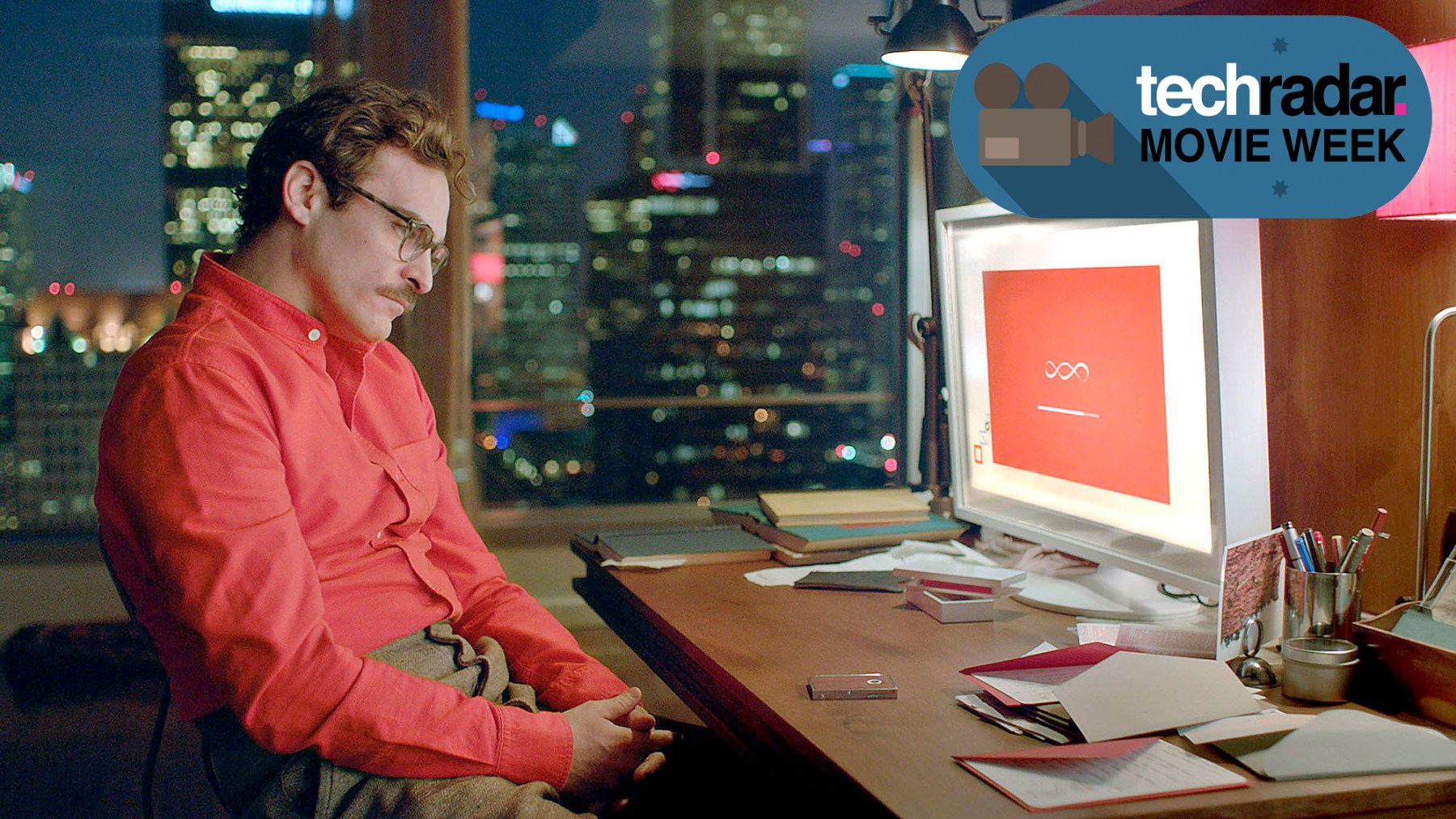
Such is the premise of the 2013 movie Her. Winner of the Academy Award for Best Original Screenplay, it is one of the most dynamic, creative, beautiful stories I have ever seen. Moving beyond the question of “is she human” almost immediately, the movie poses a far more interesting question: what actually makes the physical characters “human”? With ever advance in the artificial intelligence’s consciousness, emotion, existential crisis, and even love, there is a challenge to the human characters to reclaim a part of themselves that has been lost to isolation and loneliness, to communicate with one another in the way we were created to do.
Starring Joachim Phoenix, Amy Adams, Chris Pratt, and Scarlett Johansson (as the artificial intelligence voice), Her is well-acted and thought-provoking, but is definitely intended for a mature audience. With an R-rating for language, sexual content and brief graphic nudity, it is not exactly family friendly, but then again, most existential questions of our reality aren’t. If you can get passed some of its more graphic features, it is among the most important films of our age.
Read the Catechism and you will certainly learn what Catholics believe. Study Canon Law and you will undoubtedly learn what Catholics do. But in neither of these texts will a far more important question become self-evident: why do Catholics believe this or that?
Behind every statement of faith is the possibility of interpreting Scripture and Tradition in a slightly different way. Few things are undeniably self-evident, but are rather influenced by theological foundation that guides us. We have, simply put, a Catholic worldview that informs what we believe, how we pray, and why we remain Catholic.
In order to understand what it means to be Catholic, as opposed to Protestant, we have to understand that essential spirit that guides everything we do. In this video, I offer three core principles and four additional themes that define us as Catholic.

 Breaking In The Habit