
Click here to listen

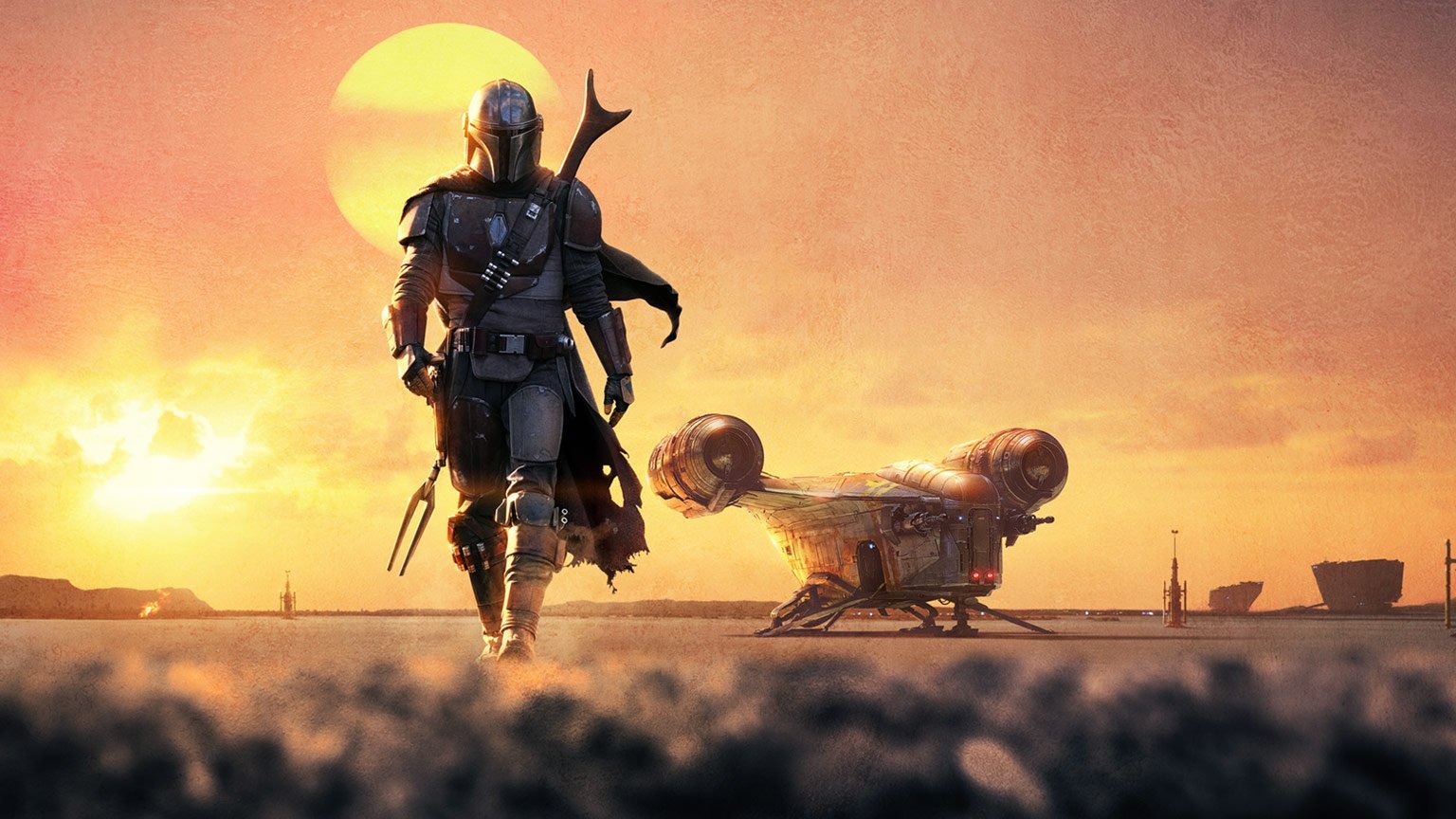
The Mandalorian is catching the world by storm. It’s got action and adventure, plot twists and betrayal. It’s even got a baby version of Yoda! For Star Wars nerds, there is plenty of nostalgia to go around, with homages on top of homages to remind us of what we love about the galaxy. As a show within the Star Wars franchise, it was pretty good. Br. Tito and I have enjoyed it thus far.

But don’t be fooled: this is not a story about bounty hunting. Oh, no. Disney would have you believe that. They want you to think that it’s just another thrilling installment of the Star Wars franchise. But it’s not, let me tell you. As Br. Tito and I discuss in this week’s Everyday Liminality, The Mandalorian is a show about religious life.

Totally not kidding at all.

Well, I mean, we are kidding in the sense that we know that John Favreau and the production team didn’t intentionally set out to create a show about religious life… but we are dead serious in that the whole show speaks to our life. For a Christian watching, it is more than obvious to see a connection between the bounty hunter’s life and ours.

Don’t believe us? Check out what we have to say!

Click here to listen

If you haven’t seen the Netflix original Two Popes, Br. Tito and I highly recommend it. That is, with an important caveat: it’s a complete work of fiction. While, yes, there are in fact two living men who at one point were popes, and yes, much of the movie is based on true events, the entire premise is fictional. The movie centers around two encounters—Cardinal Bergoglio meeting Pope Benedict XVI at Castle Gandolfo to discuss Bergoglio’s retirement, and the two meeting later to share confessions with one another—that never happened! There is no evidence that these conversations ever took place. (Even the name is misleading! There are not two popes. We have one pope, and that is all. Benedict XVI, while pope at one point, is a retired theologian with no apostolic authority to teach.)

And yet… we still recommend the movie. Despite its historical inaccuracies, despite its mind-numbing oversimplifications, despite its frustrating portrayals at times… it is a beautiful movie with powerful themes.

As a work of non-fiction, it is a hot mess. As a work of fiction, it is one of the best examples of faith, doubt, vocation, reconciliation, and dialogue that I’ve seen in cinema. And from a secular studio for a secular audience, no less!

Click here to listen

Click here to listen

Trigger warning: this episode contains opinions about Christmas movies that may upset your nostalgia and sentimentality!

Objectively speaking, Christmas movies are the worst. Yeah, I said it. Released at any other time of the year, It’s a Wonderful Life would have been forgotten as an average movie. A Christmas Story is just awful. There’s a reason that Holiday-themed movies never win awards: artistically, cinematically, creatively… they’re just not good. They’re unrealistic, overly sentimental, shallow, and focus on some strange traditions (have you ever really stopped to think about Santa Claus and wonder why we still teach our kids this?)

And yet, we love to watch them every year. And yet, I watch them even while criticizing them, and actually enjoy many of them. What gives?

This week on Everyday Liminality Br. Tito and I discuss what attracts us to these sorts of movies, while also imagining what could make them a lot better for us as Christians.

Click here to listen

Sometimes movies get the cast exactly right. Sometimes… we wonder how a movie would be different with a reimagined cast. This week on Everyday Liminality, Br. Tito and I discuss some near catastrophes in movie casting, while also coming up with some of our own changes.

Click here to listen

Who doesn’t love Law and Order? You are set up with an interesting case, find clues, and within the course of an hour, you find out who did it. Open-and-shut case.

The fact of the matter is that we love closure. We like things that are complete. It gives us a sense of control, a sense that things are right with the world.

But what happens when there is no closure? What happens when we are set up for a mystery but receive a tragedy? That’s what happened to me last week reading a book. I thought I was reading one thing and had the floor taken our from under me.

In this week’s episode of Everyday Liminality, Br. Tito and I discuss the merits of such works and how we deal with the fact that not every mystery has a happy ending.