Sex in the Catholic Church?

In the 19th century, of the (many) reasons that Catholics faced discrimination from their Protestant counterparts was over the issue of sex. While many Protestants had been swept up in the Victorian-era repression of sex, believing that sex was merely a means to an end and should be avoided except for the procreation of children, that all sexual desire should be suppressed, Catholics took a slightly different approach. Not only did we emphasize the importance of pleasure in sex, we freely talked about it, with Church leaders routinely commenting on sex in homilies or letters to the faithful. For those who thought that what happened in the bedroom was private and was no one’s business in the Church (even God’s?), the Catholic Church was a strange and promiscuous institution that one should be wary of.

Funny how the more things change the more things stay the same. Today, we’re still looked upon as strange by the outside world, but instead of being promiscuous and free we’re now seen as repressed and stuck up. And while our teachings have stayed the same all of these years, there is plenty of evidence to suggest that few people actually understand what’s at the root of these teachings. Why do we say what we do? What is at stake in terms of our definition of the human person? How does sexual activity require responsibility, morality, and (dare I say) even some virtue? Even for married couples, even for those in the privacy of their own bedrooms, the Church stands firm in believing that everything we do should reflect our faith. Marriage does not give someone the free pass to do anything they want just as a driver’s license doesn’t give someone free rein of the highway.

Obviously, there are many ways to exercise this and some may faithfully approach sex without coming to the same conclusions that we do. In fact, even within the Catholic Church, among the faithful and clergy alike, there is great debate surrounding our sexual teaching. To say that simply because someone disagrees with the official magisterium of the Church means that they are not taking this sacred act seriously would be a serious overgeneralization. There are many faithful ways to view the same issue.

What I present to you this week, then, is not meant to be dogmatic teaching inherent to the very nature of being a Christian. What I present is an attempt to understand the logic behind the Church’s teaching. Not everyone will accept this, I accept, but that is not my hope in taking on this topic. In a world so divided on such a controversial issue, my only hope is that people may come to a greater knowledge of why our teachings are the way they are so to engage them more critically in prayer and conversation. We’ve gotten a bad rap on this issue for centuries, and while some of it is certainly deserved, I think the vast majority of it springs from misunderstanding.

Heaven is one of the most imaginative topics of our Christian faith. Because we have very few actual descriptions of it in scripture, and because no one has come back to tell us exactly what it’s like, much of our what we hold to be true about the afterlife comes form art and entertainment. In some ways, this can be a great thing, giving us vivid depictions for what we cannot rationalize ourselves; in other ways, though, this can be a negative thing, filling our minds with very un-theological beliefs about a very theological topic.

This week, I address one such un-theological belief that encountered in my conversation with a stranger and offer what I hope to be a better way of approaching life.

In some ways, the topic of this week’s Catholicism in Focus is a trivial one. It is the sort of topic that the Pharisees might have argued about, seemingly esoteric, having no effect on the lives of the poor and no relevance to a true faith.

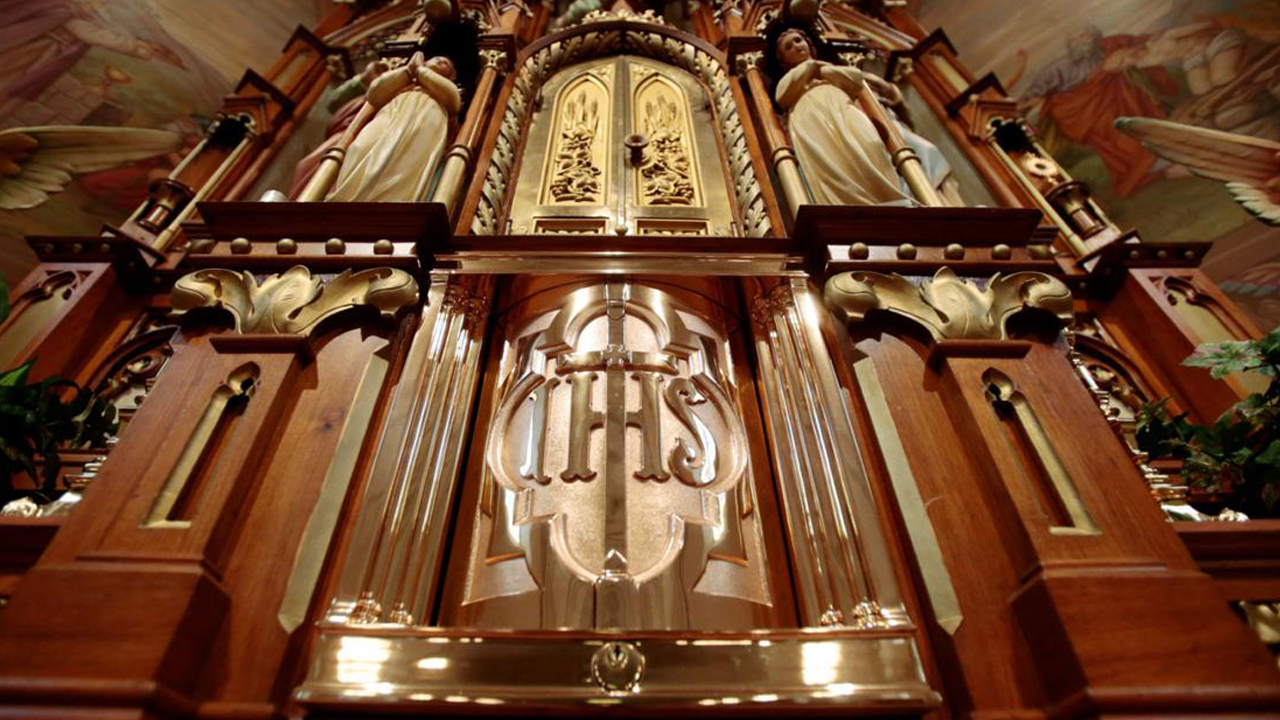
In other ways, this topic finds itself at the very center of the most important aspect of our lives. How we answer this question is not simply a matter of preference or idiosyncrasy, but is rooted in the very theology that we bring to our Eucharistic celebrations.

Oh, and based on the comments on the video so far, it’s also a controversial question that is dictated more by emotion and nostalgia than a carefully tested Eucharistic theology…

The question that I tackle this week is of the placement of the tabernacle.

As you watch this video, I simply ask that you try to understand what the Church is saying and why it is saying it. Rather than trying to justify your own opinion or challenge what is being said, really try to get to the heart of the issue. In the interest of tradition and familiarity, many have already rejected the prescriptions of the Church, writing them off as irrelevant, out of touch, or just another mistake of the Second Vatican Council. They have looked to things they don’t like in the Church as a way to prove that this “new” practice is the cause. Even some bishops are trying to find their way around the rubrics and return to what the Church used to do. Try to fight this urge. Try to get beneath the surface, outside of your comfort zone, and see what is really at stake.

Reverence for the Eucharist is surely not what it should be. Our worship can definitely be lackluster at times. For some, this is reason enough to abandon our present practices and return to the old ones, a “magic bullet” to fix our issues. My opinion? While there are some obvious pastoral issues at play here and some clear problems that need to be addressed, the placement of the tabernacle is less of an issue than catechesis is. Putting it at one place or another might hide the issues we have, but it won’t actually address them if people don’t know what’s going on. Let’s address what’s going on under the surface, let’s correct what could be lacking in our Eucharistic theology, and none of this will be an issue.

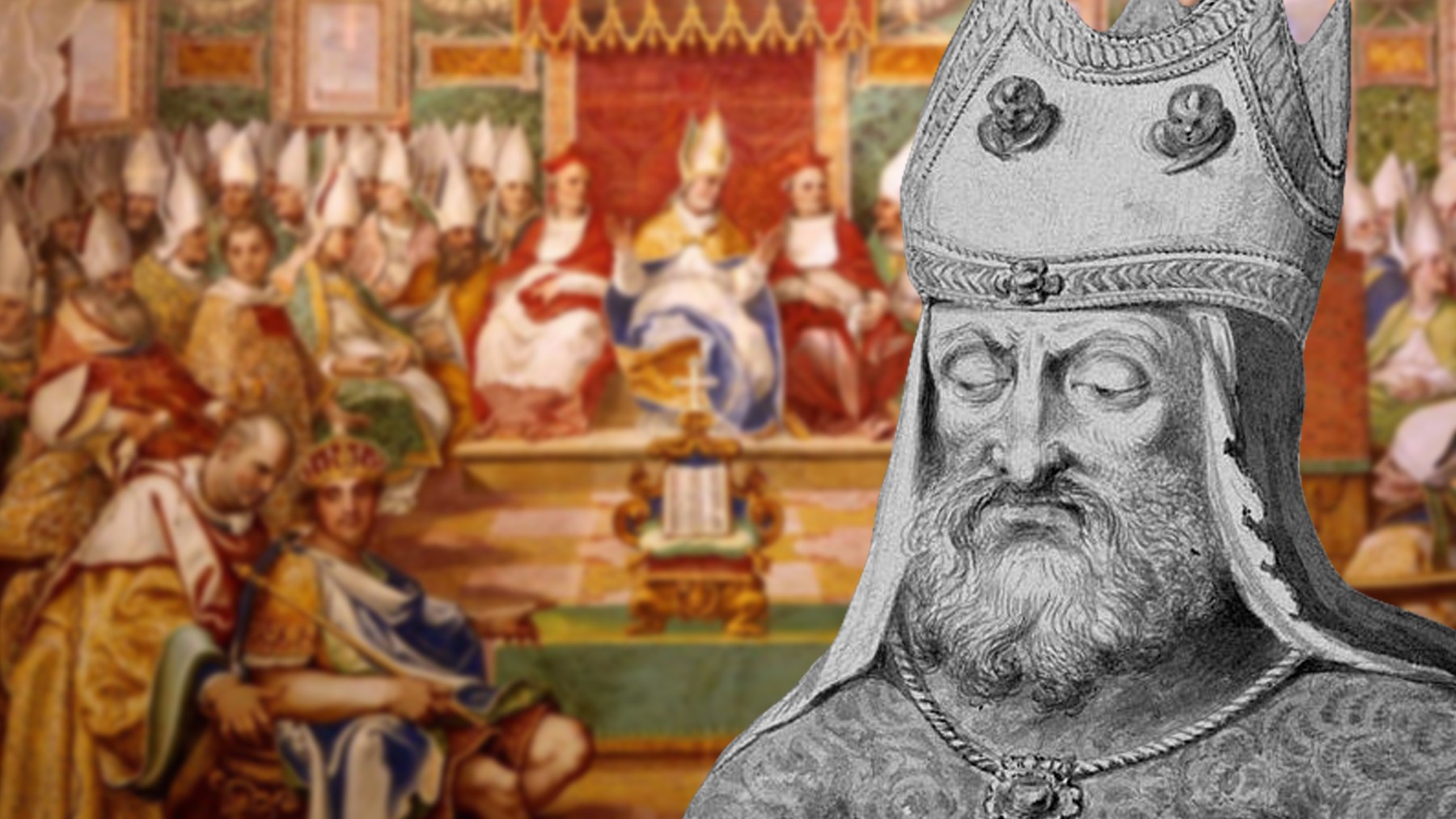
If you frequent Catholic blogs or YouTube channels, you are bound to see one word come up in heated arguments: heresy. When someone challenges Church teaching or another person just wants to belittle someone’s opinion, the word can get thrown around pretty easily.

Luckily, in most cases, heresy has not actually been committed. While heresy is certainly prevalent in our world (and I will make a video next semester outlining a few of them) simply disagreeing with the Church is not grounds for being called a heretic. The actual definition is a bit more precise than that.

So what is a heresy? This week’s Catholicism In Focus sets out to give a basic definition.

In this week’s vlog, I talk about the story of true and perfect according to St. Francis. Below I have copied the story in its entirety for those who have never read it.

One day in winter, as Saint Francis was going with Brother Leo from Perugia to Saint Mary of the Angels, and was suffering greatly from the cold, he called to Brother Leo, who was walking on before him, and said to him: “Brother Leo, if it were to please God that the Friars Minor should give, in all lands, a great example of holiness and edification, write down, and note carefully, that this would not be perfect joy.”

A little further on, Saint Francis called to him a second time: “O Brother Leo, if the Friars Minor were to make the lame to walk, if they should make straight the crooked, chase away demons, give sight to the blind, hearing to the deaf, speech to the dumb, and, what is even a far greater work, if they should raise the dead after four days, write that this would not be perfect joy.”

Shortly after, he cried out again: “O Brother Leo, if the Friars Minor knew all languages; if they were versed in all science; if they could explain all Scripture; if they had the gift of prophecy, and could reveal, not only all future things, but likewise the secrets of all consciences and all souls, write that this would not be perfect joy.”

After proceeding a few steps farther, he cried out again with a loud voice: “O Brother Leo, thou little lamb of God! if the Friars Minor could speak with the tongues of angels; if they could explain the course of the stars; if they knew the virtues of all plants; if all the treasures of the earth were revealed to them; if they were acquainted with the various qualities of all birds, of all fish, of all animals, of men, of trees, of stones, of roots, and of waters – write that this would not be perfect joy.”

Shortly after, he cried out again: “O Brother Leo, if the Friars Minor had the gift of preaching so as to convert all infidels to the faith of Christ, write that this would not be perfect joy.”

Now when this manner of discourse had lasted for the space of two miles, Brother Leo wondered much within himself; and, questioning the saint, he said: “Father, I pray thee teach me wherein is perfect joy.” Saint Francis answered: “If, when we shall arrive at Saint Mary of the Angels, all drenched with rain and trembling with cold, all covered with mud and exhausted from hunger; if, when we knock at the convent-gate, the porter should come angrily and ask us who we are; if, after we have told him, “We are two of the brethren”, he should answer angrily, “What ye say is not the truth; ye are but two impostors going about to deceive the world, and take away the alms of the poor; begone I say”; if then he refuse to open to us, and leave us outside, exposed to the snow and rain, suffering from cold and hunger till nightfall – then, if we accept such injustice, such cruelty and such contempt with patience, without being ruffled and without murmuring, believing with humility and charity that the porter really knows us, and that it is God who maketh him to speak thus against us, write down, O Brother Leo, that this is perfect joy.

And if we knock again, and the porter come out in anger to drive us away with oaths and blows, as if we were vile impostors, saying, “Begone, miserable robbers! to to the hospital, for here you shall neither eat nor sleep!” – and if we accept all this with patience, with joy, and with charity, O Brother Leo, write that this indeed is perfect joy.

And if, urged by cold and hunger, we knock again, calling to the porter and entreating him with many tears to open to us and give us shelter, for the love of God, and if he come out more angry than before, exclaiming, “These are but importunate rascals, I will deal with them as they deserve”; and taking a knotted stick, he seize us by the hood, throwing us on the ground, rolling us in the snow, and shall beat and wound us with the knots in the stick – if we bear all these injuries with patience and joy, thinking of the sufferings of our Blessed Lord, which we would share out of love for him, write, O Brother Leo, that here, finally, is perfect joy.

And now, brother, listen to the conclusion. Above all the graces and all the gifts of the Holy Spirit which Christ grants to his friends, is the grace of overcoming oneself, and accepting willingly, out of love for Christ, all suffering, injury, discomfort and contempt; for in all other gifts of God we cannot glory, seeing they proceed not from ourselves but from God, according to the words of the Apostle, “What hast thou that thou hast not received from God? and if thou hast received it, why dost thou glory as if thou hadst not received it?” But in the cross of tribulation and affliction we may glory, because, as the Apostle says again, “I will not glory save in the cross of our Lord Jesus Christ.” Amen.”

To the praise and glory of Jesus Christ and his poor servant Francis. Amen.