Outside of rare circumstances, all priests in the Catholic Church are required to be celibate. You can choose ordination or marriage, but not both. For many, this is a heavy burden to carry, requiring one to either be “heroic” in their denial of the goods of marriage, sacrificing what many want in order to serve the faithful. For many, this burden is simply too much, and is cited as a major reason for the lack of priests in the modern world.

And maybe it is. Maybe some who are married should be allowed to be ordained as well. Being that clerical celibacy is a discipline of the Church and not a doctrine or dogma, it’s conceivable that we could see a change in the future.

But that is a question for someone else. For me, the more interesting question is not whether those who are married should be allowed ordination, but why the practice was instituted in the first place and what benefit has the Church seen in it for centuries. Time and time again people have questioned it, and time and time again the Church has maintained it. Why? What’s so important about it?

After taking a course called Ordained Ministries, and with the help of Msgr. Paul McPartlan, esteemed member of the Catholic University of America faculty, I want to suggest something rarely stated on the matter: celibacy is a gift to the priest and the people of God. That’s right: a gift. While the idea of going one’s entire life without getting married or experiencing the joy of having kids is certainly difficult for some, the idea that celibacy is simply a “means to an end” and that it has no merit in itself lacks vision, imagination, and an understanding of the reason for the practice in the first place.

For subscribers on email, click here to watch the video.

Having just arrived in Durham and being around a lot of new people, I’ve been going through the usual suspects of questions quite a bit: “How did you know you wanted to be a Franciscan?” “How old are you?” “How much longer do you have left?” and my *favorite* one, “Are you going to be a priest or a brother?” Regular readers of the blog will know this question (and my feeling towards it), and will understand why I generally choose to be difficult with people by saying, “Yes,” or “Well, we’re all brothers…”

When it comes right down to it, I don’t ever blame people for not knowing the subtleties of being a Franciscan or that certain phrasings of the question are highly offensive (e.g. “Are you going to remain a brother or go on to be a priest?”). The question reflects a culture in the Church that is very common, and at the core, it’s not a bad question to ask: Knowing that not all Franciscans are priests, they want to know if I will be.

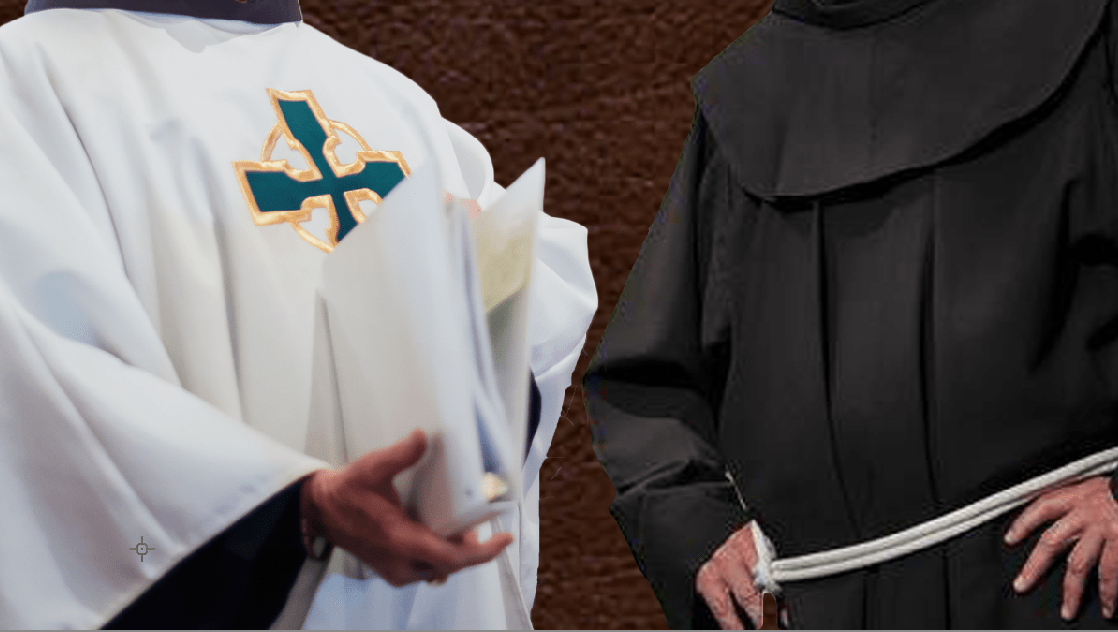
But that doesn’t mean that it’s not a teaching moment either. Whether acknowledged or not, there is often an underlying assumption in people that one is better than another, that one is a “higher calling” or more important life, and so there is an unconscious hope for “priest.” Given the shortage of priests in our country, I completely understand why someone might be disposed that way. But at the same time, it is an attitude that undermines our understanding of what it means to be Franciscan. We are not two groups in one, the priests on one side and the lay brothers on the other. We are one brotherhood. Some of us live out our baptismal call to discipleship behind an altar and some behind a desk, but our place in the brotherhood is no different.

It may seem like old news to the faithful readers, but a topic worth emphasizing every so often. I hope you enjoy the newest Ask Brother Casey segment as I explain once again the difference and share my own reason for choosing the path of priesthood.

Priest or Brother?

Five years ago Saturday, as a newly received postulant, I attended the solemn vow ceremony of two of our brothers. Having just entered a few days earlier and being at the very beginning of my six-year journey of formation, I was deeply moved by that experience:

“It’s hard to imagine that six years ago, these two men were in my position, postulants, young and new to the order, attending some other friars’ solemn profession. It’s kind of cool that one of the first things we do is attend this ceremony because it gives us a glimpse of the ‘finish line,’ so to speak.”

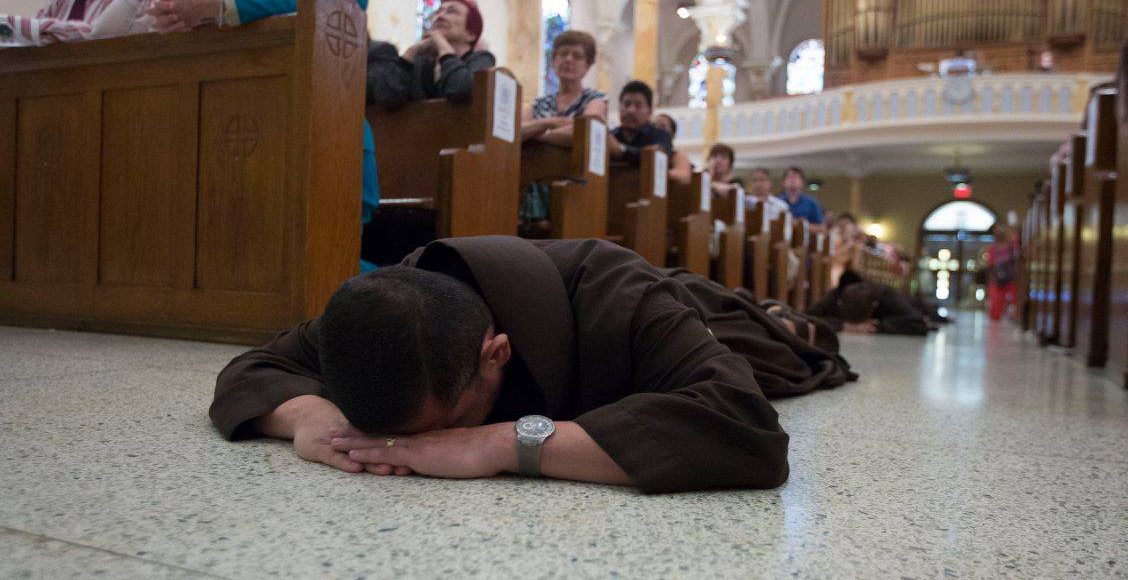
From day one (or four) I was looking to the future at what would one day come: myself in their place, lying on the floor during the litany of the saints preparing to permanently vow my life to God in the way of St. Francis of Assisi. At that time, being as new and far off as one could be, the experience was powerful yet safe, a distant vision that was little more real than a dream.

This Saturday, I found myself sitting in the exact same pew for the exact same ceremony… with a very different reaction. What I was witnessing was not some far off goal, a “finish line” from the view of someone on lap one, it was an imminent reality just before me, the finish line from the perspective of someone who has run the race and knows that they are almost there. The men before me were not just “some friars” years ahead acting as a generic example for my future; having lived with each of them for two years, they were my classmates, my housemates, and my friends. I knew what they were going through and I knew what had gotten them to where there were, but maybe most significantly to me, I knew that I was next.

It was at the moment, sitting in the very pew that had given me the image of running a race to the finish, that I was struck with a new image: I’m now on deck. All at once it became real to me that there is no one in front of me. With no one on and no one out, I better get my helmet and bat because I’m going to be hitting next. Just as I had watched them last year go out on internship year, be evaluated and voted on, sign formal documents with more weight than any documents they had ever signed in their lives, and finish their discernment with a final one-month long retreat, I knew that all of that was upon me now.

How did this make me feel? Exactly like being on deck in baseball, actually: a little nervous, but wanting nothing more than to be at the plate. When you’re sixth in the order, you know that you’re going to get up eventually but there’s no pressing need to be ready. When you’re on deck, things are very real. Nerve-racking, but also so very exciting. No one wants to be sixth in the lineup, they want to be hitting. I knew a year before I even entered that this life was for me and have not doubted that feeling for a minute, and I can’t wait to make that decision official, with family, friends, and friars present. For five years it has been a far-off goal. Now, I’m ready to hit.

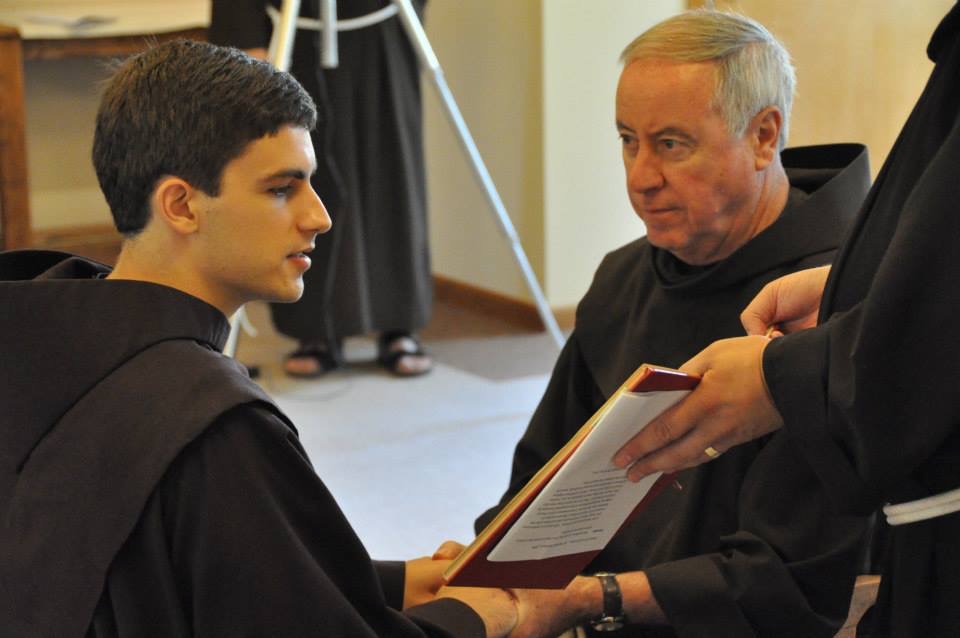
14125553_422398677930516_4374013541427741310_o

Congratulations to George, John, and Egdardo

Almost five years ago, I joined the Franciscans when I was 22 years old. For some, that was too early. “Don’t you want to see the world?” one friend asked me. Of course I do. But I can and will do that as a friar.

I knew when I was 21 that I wanted to be a Franciscan. Some people know even earlier than that. On an almost regular basis I meet or hear from someone in high school that’s seriously discerning a vocation; some as young as 16 say they’ve made up their mind and are just waiting to be old enough. As far as I’m concerned, this is a great thing! Age does not always indicate readiness, and sometimes, maturity and a clear call from God can come at a young age. There are young people out there that could enter religious life as soon as they’re old enough (usually between 19-22 as a minimum), while others who are in their 30s still need a little time to grow up.

We always encourage kids to think about what they want to be when they grow up and are delighted when they say “doctor,” “teacher,” or “lawyer.” Why no “friar,” “sister,” or “priest”? Sure, they can’t fully know what this life entails at that age, but can a kid know what it’s really like to be a teacher either? If there is an interest, no matter the age, there are age appropriate questions and experiences that can be explored.

That’s the topic of the newest installment of “Ask Brother Casey,” a question inspired by more than a few requests for advice: “I’m not old enough yet to join religious life, but what should I do to prepare?”


During the second week of July, 2010, I decided that I wanted to be a Franciscan Friar. Sitting in a chapel all alone that night, a flood of clarity came over me. I realized that, even though I had been struggling for months about what I should do, I had actually made the decision in my heart a long time ago. It was time to admit it to myself and stand by it: “I want to be a Franciscan friar,” I said out loud. Since that moment, nothing has changed. In terms of my commitment to the life, I could have received my habit, made solemn vows, and began living the life of a friar that evening in July six years ago. I was that sure then and remain that sure today.

Is that to say that I fully knew what that commitment would mean or that I was prepared to do so? No, surely not. Nor does it mean that everything in my years as a friar has been affirming of that desire either. There have been bumps and bruises along the way, moments of disillusionment and crisis, and my understanding of what that original desire to be a friar meant has certainly been refined. Work was needed to be done on my part, and continues to be done, to turn that desire into a formal, conscious, prepared commitment.

And yet, the point remains: in terms of discerning whether or not I want to stay for the rest of my life as a friar, my discernment ended more than five years ago in that chapel.

This, I would like to make very clear, is not the norm among people entering our Order. In fact, I would venture a guess to say that it is almost never the case. Guys don’t come into postulancy (the first year of formation) sure of where they’re supposed to be for the rest of their lives or ready to make any formal commitment. Even after two, three years of living with the friars, many guys aren’t there yet.

And they don’t have to be. 

Becoming a solemnly professed friar is an intentionally long engagement. As I’m sure I’ve mentioned before, the formation process to make solemn vows in our Order takes at least five years (in my province, the minimum is six years), and no formal commitment takes place until the end of the second year. That’s a lot of timetime to  try on the life, ask questions, struggle with challenges, and overcome doubts and fears. Like anything else, it rarely happens overnight.

But even if it seemingly does and someone finds themselves in my positionsure of where I’m headed and ready to get therediscernment in the broader sense does not stop. As a Franciscan friar, I may have moved beyond the initial question of whether or not I want to be a friar in the first place, but I will never move beyond the questions of how to live this vocation out in the world today.

How am I called to live?

Who am I called to serve?

What does it mean to be a brother?

These are questions that can never be answered definitively. As the world changes, as we incorporate new brothers into the Order, as the Church presents new needs, and as I change with experience and knowledge, the way in which we answer these questions will inevitably change with them.

This evening, five members of my house will join the four others on their internship year, in renewing our vows to the Franciscan Order for another year, formally recommitting ourselves to a life of poverty, chastity, and obedience in the way of St. Francis of Assisi. For some, this is a moment that has required great discernment, evaluation, and preparation to determine that this path was still the one for them; for others it is simply another step along the way towards something that we committed ourselves to along time ago. Today, that’s not really what’s important though, and certainly not the focus on my reflection. The point that I see in all of this is that, no matter where we are on the journey, our discernment never stops, it only changes its form.

This is as much the case for Franciscans discerning religious as it is for all Christians: many of us have no question whether or not we want to remain a Christian and live out our baptismal promises, but the question of how we do it will never end. A life in Christ, no matter its form, requires that we always be discerning His call and ready to respond in the way that our world needs us most.