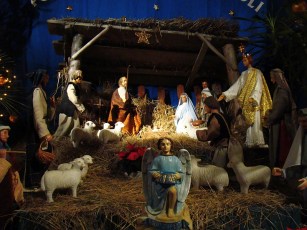
 The so-called “Nativity Scene” is a staple this time of year. Found on the lawn of nearly every church and in the home of nearly every Christian, they can be big or small, life-like or cartoonish, full of animals or simply Mary with her newborn child. Some churches even put on a “living nativity,” complete with costumes, live animals, and a crying baby. For many, it’s just not Christmas without a depiction of the birth of Jesus, and it’s amazing to see the level of creativity from one year to the next.
Overall, it’s a wonderful thing. There’s something about being able to experience the event for ourselves, to use our senses to capture all that the original scene must have been like, to make the story from the Bible come alive. It’s why Francis of Assisi created the first nativity scene back in 1223 (trivia for you!) and why Christians have continued the tradition for 800 years.
And yet, there is something tragically lost in so many of our depictions, and I can’t help but wonder if we miss the true spirit of Christmas because of it. Yes, all nativity scenes capture gist of the story: Jesus was born to Mary outside because there was no room in the inn and was eventually visited by either three men bearing gifts (Matthew) or shepherds (Luke). And no, there’s nothing wrong with themes like “peace on earth,” joy, and giving to one another. But like so many Biblical stories, this one has become so familiar to us that our depictions of it are often white-washed and sterilized, glossing over the truly challenging parts of the story for something that makes us feel nice inside.
When we look at the Gospel accounts of the birth of our Lord, what we see is not a happy, feel-good moment, but rather an act that was provocative, controversial, and even upsetting to the religious elite of the time. The nativity scene is a sign of subversion and ultimate conversion.
Take the situation of Mary and Joseph in its context. When we look back on this situation with the eyes of faith and the privilege of history, we can call them the “Holy Family.” But to their contemporaries, especially the religious elite, there was nothing “holy” about them. Even though Joseph takes her into his home rather than exposing her, people had to have known that Joseph was not the father. Irregular marriage and child out of wedlock? Strike one. Embarking on their journey, they find themselves foreigners in a distant country. Immigrants? Strike two. And let’s not forget that this was hardly a wealthy family. They did not have a caravan of camels and servants, they did not stop at fancy places and dine with princes. Joseph and Mary were poor peasants with no political or religious power. In their world, they were essentially worthless to both the Jews and the Romans. Strike three.
And yet, this is the situation into which God is born. The creator of the universe, the King of Kings, was not born in a palace to a noble family. He was brought into this world by poor, seemingly-worthless immigrants in an irregular marriage.
Another powerful, yet mostly overlooked point, is the symbolic place of his birth:
She wrapped him in swaddling clothes and laid him in a manger, because there was no room for them in the inn.
To many, this simply continues the theme of his humble situation: Jesus was laid in the manger because Mary couldn’t afford a nice bed or crib. But it’s more than that. The problem is that most of us think we know what a manger is… but actually we don’t. A manger is not a synonym for crèche, has nothing to do with a barn, and is not a normal 1st century crib; a manger is a trough where animals eat. Seriously. In other words, “She wrapped the poor child and laid him the chafing dish.” An odd statement, to say the least. Sure, given the circumstances, it might have been the most comfortable and convenient place to lay a baby and Luke may have just been recounting the practical details. But I don’t think so. Of all the themes in his Gospel, nothing is more significant than the institution of the Eucharist from their table fellowship. Luke, even from the point of Jesus’ birth, is announcing Jesus as food for the world.
To us, that’s a nice little detail, a cool foreshadowing to things to come. We love the symbolism and it helps us understand who Jesus is for us. But for the people of his time, this was blasphemous. Eat what? Who does this person think he is? From the very beginning of the Gospel, Luke makes the message clear: Jesus is the way to salvation, not the law. To accept this and follow him meant stepping outside of the status quo, rejecting the practices and teachings of the religious elite of the day, and having the faith to follow a radical man who upset a lot of people.
Finally, no nativity scene would be complete without a few visitors. Whether we highlight the magi in Matthew or the shepherds in Luke, their presence is highly significant, and highly controversial. For now, though, I want to focus on Luke’s account of the sheep.
So the shepherds went in haste and found Mary and Joseph, and the infant lying in the manger. When they saw this, they made known the message that had been told them about this child.
We’ve been so desensitized to the idea of shepherds that it seems normal. How could we have a nativity scene without a shepherd and a few cute sheep? It seems almost obvious to us. But to the people of the time, this would have been absolutely scandalized by them.
The whole issue is over ritual purity. For the Jews, certain things were clean and certain things were unclean, and exposing oneself to certain situations made one ritual impure, meaning they were excluded from the community and temple worship until they were ritually washed. Shepherds were very unclean. Not only did they spend their entire lives with livestock, no doubt encountering blood and other unclean substances, they were basically stuck in an institutional state of uncleanliness: as long as they remained a shepherd they were unclean, and if they took the time to enter the city to purify themselves, they would lose their flock. In Jesus’ time, shepherds were outcasts and undesirables, and they were not alone: for many, the law was a burden that inhibited community, created an entire class of people unfit for worship.
This is the situation that Jesus enters. These are the people that visit our Lord at the moment of his birth. It was not the chief priests or the ritually pure; it was not the most charitable or most liked; it was not the noble or important. The people connected to Jesus’ birth are the outcasts and unclean.
The savior of our world did not fit into religious categories, and was probably not regarded as important by the religious elite of his day. Think about what it means that Jesus is the outcast and the unclean.
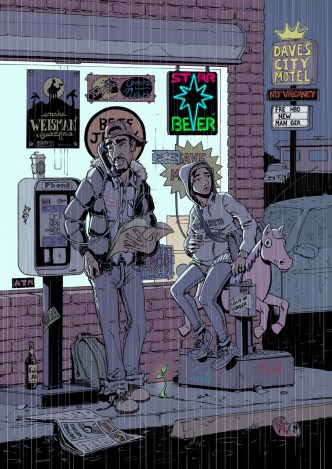 Taken altogether, the birth of our Lord, captured in our nativity scenes, is a provocative, controversial, and downright upsetting symbol of our faith. His birth is yes, in a way, a sign of peace on earth and holy giving, but only if it is understood with an unmistakable sense of subversion. Jesus came to upset the religious and political systems of the day, to bring a new order contrary to what was expected.
As we look at own nativity scenes this time of year and glory in the birth of our Lord, my hope is that we may experience something more than a Hallmark moment. Recreating this scene as we do offers us an opportunity to see and feel how radically upending his birth really is, in his world, and in ours. It’s an opportunity to realize that, if our Lord were to be born today, many of us would not be among the outcasts or undesirables included in this scene, we might be among the religious elite, shocked by the blasphemy of it all, concerned with the ritual laws of our day, and unknowingly overlooking something quite extraordinary in our midst.
This Christmas, may we capture once again the true spirit of Christmas, that spirit that upholds the poor, welcomes the outcast, is open to conversion, and lives as a community gathered at table. I hope you all have a Merry Christmas!



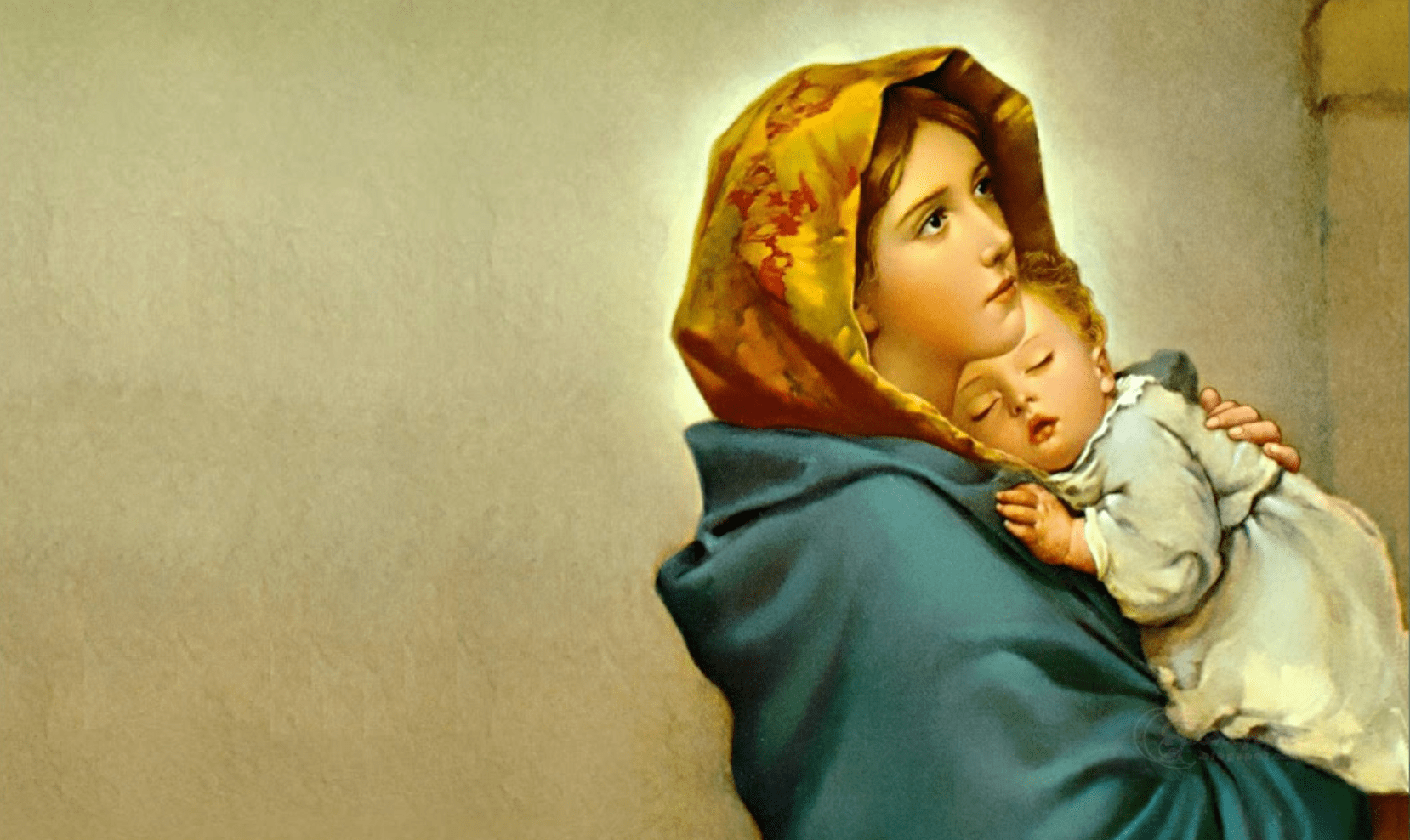
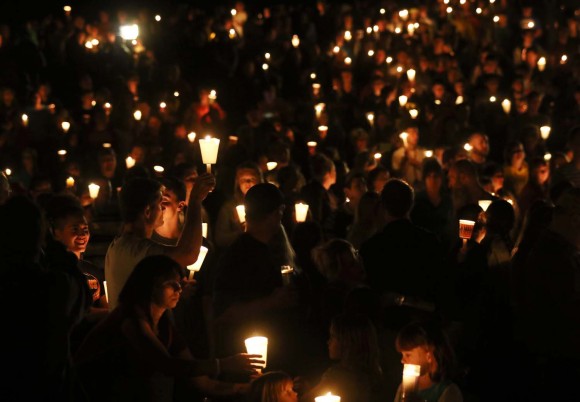
 And yet, prayers like these have caused quite the outrage in recent months. After the mass shooting at Umpqua Community College on October 1 of this year (at that point, we had only had 294 mass shootings in 274 days), President Obama emphatically remarked, “Our thoughts and prayers are not enough. It’s not enough. It does not capture the heartache and grief we should feel, and it does nothing to prevent this carnage being repeated somewhere else in America.” Today, the New York Daily News responded in a similar way with the headline, “God Isn’t Fixing This,” calling a number of politicians “cowards” for their “meaningless platitudes.” In both cases, as with the many people who have suffered at the hands of gun violence, there seems to be a growing dissatisfaction with the prayer. We cannot depend on God to fix all of our problems, many say. We need to do something ourselves.
 If this is our understanding of prayer—getting back to politicians dealing with our tragic situation of repeated gun violence—true prayer is not an expression of our sentiments or a way to express our condolences, it is an act that gives us the clarity and motivation to act more like God in the world. True prayer is transformative. It does not end when we say “Amen” and go about the rest of our day. That’s when the prayer truly begins.
 Breaking In The Habit