In last week’s episode, I mentioned that I was nearing the limit of what I could do on my own. Some took this as an indication that I might be letting up on the social media ministry. Hardly. Rather than letting my limitations stop me, I’m seeing them as an indication that I need to look outside of myself for help, seeking out the professionals to take the next step.
Enter Spirit Juice Studios, a Catholic production company that has helped Catholic creators and organizations produce amazing works of evangelization for a number of years, gaining national recognition even in the secular world, taking home multiple Emmy’s in their short time in business.
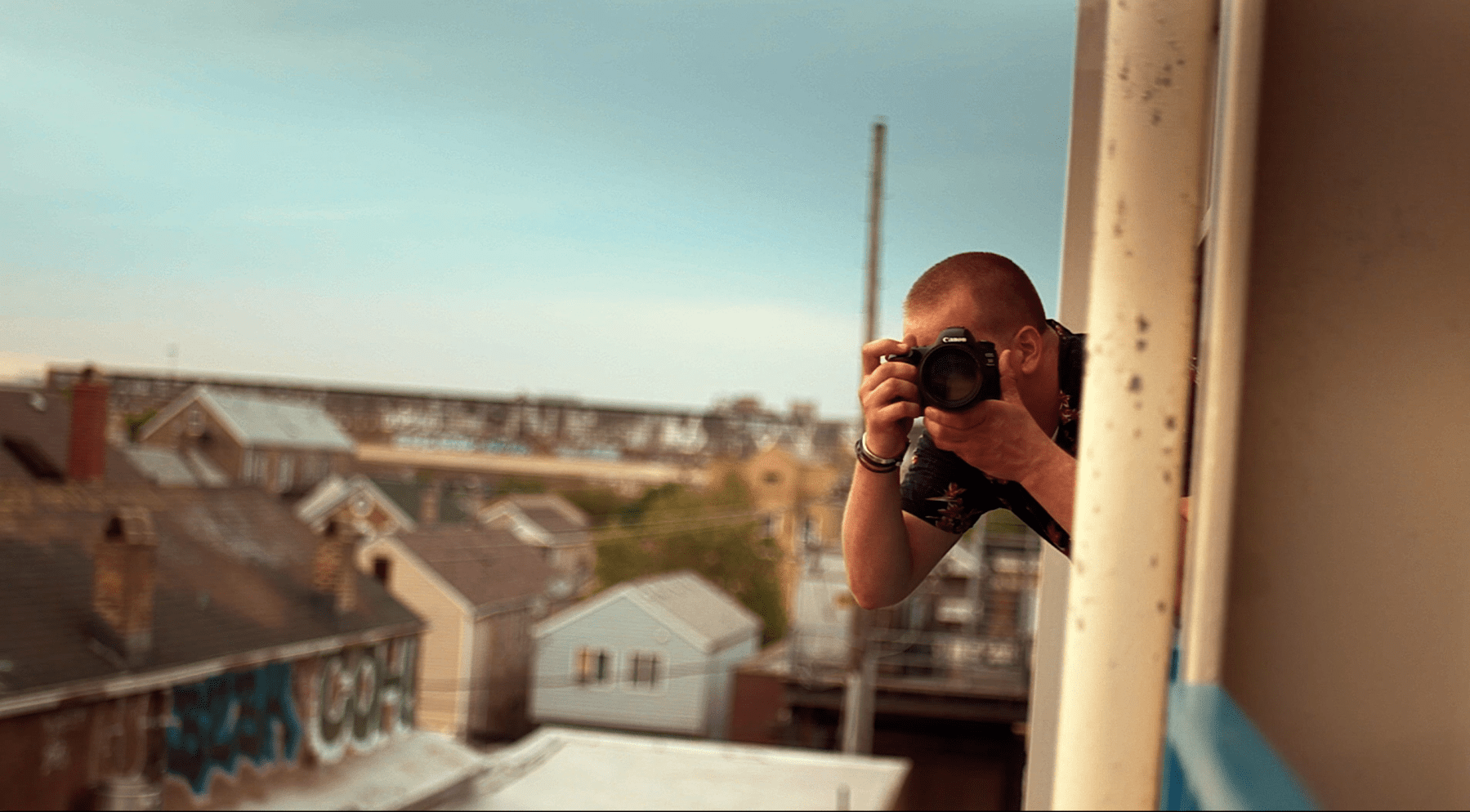
Last week, I stopped by their studio for a photo shoot. Yeah, a photo shoot. It was a bit outside of my comfort zone, but I guess I’ll just have to take it all in stride like anything else!
Three years ago last week, I posted my very first video on YouTube. It was dreadful. But it was also so cool. With just a camera and a computer, I was able to tell my story in a quasi-entertaining way and reach people all around the world. Sure, it was rough, but after only ten videos, I knew that I had tapped into something special.
In today’s world, nearly anyone can produce high-quality and entertainment works. Technology has become so accessible and easy to use that full-length documentaries and award-winning movies have been shot on iPhones. Right there in nearly everyone’s pocket is all that one needs to reach the world in a breath-taking way.
And so many are taking advantage of this incredible time in history. YouTube is absolutely exploding with new content and creators, standing as the second largest search engine in the world. People with no film background, no media training, and some with as little technology as their smartphones have mesmerized the world with their creativity. They have a story to tell, and they’re doing it. They don’t need a movie studio. They don’t need a production company. They don’t need expensive equipment or big budgets or powerful friends. In today’s world, all you need to get your story heard is a phone and enough ingenuity to tell it right.
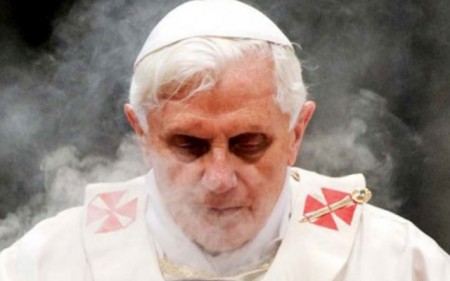
For three years, I have operated under that assumption for the sake of growing the kingdom of God. I have a story to tell. We have a story to tell. Even more than from the pulpit or soapbox, our story can be effectively told from our living rooms in front of a camera, reaching people where they are rather than expecting them to come to us. This is not a hobby or a fun activity but a ministry as important to the life of the Church as the early missionaries going to foreign lands. Pope Benedict XVI himself said it a few years ago, encouraging those missionaries who evangelize on the “digital continent” to see what they do as critical to the life of the Church.
But do we? Do we invest enough time, talent, and treasure into our digital media? Do we take seriously our parish websites, Facebook pages, videos, and digital identity? Too often, the Church finds itself in a category of its own: watchable only because it has a good message but otherwise dull and out-of-date. Recognizing of course that there are some out there that do this very well, I think that we could do much better. The stakes are just too high and the opportunity too profitable not to.
As I look to the future of Breaking in the Habit, I find myself called to a two-fold mission. First, I want to encourage the Church to take up this incredible opportunity we have in our age and begin to take seriously the digital world as a realm for evangelization. I want to support new creators to think boldly, offering them what I have learned so that they don’t have to make the same mistakes that I have. I want to remove any excuse in people’s minds that they do not have a story to tell or that they are unable to tell it. The world needs to hear their voice. Your voice.
On the other hand, I want to create an environment of collaboration for the “best of the best” in both the Catholic world and the media world. I know that anything that talks about God will have an obvious disadvantage in our world today, but I honestly don’t think that the bar we have set for ourselves is high enough. Even the best creators in the Catholic world—men and women far more talented than I am—weigh in as below average in the grand scheme of YouTube creators. Maybe we won’t ever be able to amass 25 million followers like some secular channels, but the fact that there are only a small handful of Christian-based channels above 500,000 subscribers and not a single Catholic channel over 150,000 frustrates me. Jesus said to go to all nations… not a population roughly the size of Bridgeport, CT. We can do better.
If either of those goals inspires you, let me know. I do not have a magic potion or a secret plan to accomplish either, but I have three years of experience, a lot of passion, and a few good ideas rolling around in my brain waiting to be put into action. Maybe you’re the person the Church needs to get that done.
As the world changes, so too does religious life. 150 years ago, there were thousands of women and men religious in the United States running schools, hospitals, orphanages, and centers for the poor. The significance of women religious in particular was so great in founding this country that Congress actually thanked them some years back.
Now, they represent but a remnant of their past glory. Even more than men’s religious groups, women’s religious groups have diminished almost out of existence. It would be very easy to say that there is no future for such groups.
At least, “no future” for the way that they operate today. That was the theme of this weekend’s talk by Sr. Carol Zinn, SSJ at the gathering of the Poor Handmaids of Jesus motherhouse. Honoring the Poor Handmaids on their 150th anniversary in the United States, she recounted their past and their great accomplishments, how they were among the tremendous labor force of the Catholic Church to build institutions and evangelize the new world. Their thousands were necessary to do the work of God. But not so much now, she said. Looking to the future, she turned their sorrow of diminishment into something for the future: “When the Church needed a labor force, we provided it. We served as teachers and nurses and founders when there was no one else to do it. But now, the world and Church have those things and does not need that from us. Rather, what it needs us to be is the leaven, the agent that inspires and lifts the already-working institutions. That is our role for the future.”
Sr. Carol went on to remind the sisters that religious institutions have often gone through cycles of growth, death, and rebirth over their histories. Every three hundred years, she said, a movement needs to either transform or die. We are at that point now. What will we do?
Her response spoke very true to my own experience of religious life. She told us that gone are the days when we could define ourselves narrowly by what we do and people would be attracted to that. Among other reasons, one of the greatest reasons for decline in religious life came at the Second Vatican Council (and no, not because Vatican II is a bad council… ugh) when it insisted on the primacy of baptism and the universal call to holiness. Now, one did not need to be a brother or sister to be holy; now, one did not need to take final vows to teach, care for the poor, help the sick, or do extraordinary work. In the case of women, it was also at this time that women across the world began to break the barriers of the workplace, able to do incredible work and be taken seriously even without the backing of a religious order. The greatest decline in religious life came not because of some theological reason or because of lack of faith, but because people began to realize that they could do almost anything a brother or sister could do… and still have a family. If a religious order is simply a workforce, why would someone go through all of the troubles and sacrifices when they could do the work anyway?
This is the shift that religious life needs to make if it wants to survive: rather than defining itself by the work that it does, it needs to focus on the life that it lives. No matter how robust its ministry may be, a religious community is first and foremost a brotherhood/sisterhood of people wanting to live the Gospel in prayer and humility. What defines religious life is the life together. It is only from that life with God and each other that any ministry makes sense; it is only from that life with God and each other than anyone will want to join us.
For me, this is what we need to (re)claim if we want to have a future. As important as ministry is—and it is critical to this life—it must always be seen as the fruit of our life rather than the substance. People join us not because of what we do but because they are seeking an intentional community to live the Gospel. They join us for intimacy and support, for inspiration and foundation.
And we need to give it to them. Too often, in my experience, our houses are not houses of prayer—they are domiciles for workers, barracks for priests. This is not enough. We need to make sharing meals with one another a priority. Common prayer a necessity. Routine faith sharing, recreation, spiritual nourishment, and times to just be together are not luxuries, they are the very things on which our life rests.
For me, that is where the future of religious life lies: in communities that are so filled with love and support of one another and the Gospel that they cannot help but go out and spread it to the whole world. If that is our focus, religious life will absolutely have a future.
Two weeks ago, I learned of the deaths of two extraordinary men: Saul Rodriguez and Albert Hendel. In many ways, they had very little in common. Saul was a seminarian with the Capuchin Franciscans, was 31 years old, and died suddenly; Albert was my grandfather, the father of ten, nearly 98 years old, and died after a number of weeks of preparation. One represents what we would call a tragedy, while the other is the ideal situation we can all hope for.
And yet, there is a sense that even in the case of Albert, something is still tragic. Death, it would seem, is always tragic.
Why, even though we believe in the resurrection, is there still the sting of death? Why, even when someone dies after a long life with little pain, are we still upset about it? Why, in a world where death is inevitable and a faith built upon it, are we so bad at accepting death? This week’s video is my attempt to make sense of it all from a Christian perspective. I hope that you will join me in praying for the families of the deceased and for all of the deceased that go unnoticed. May we all find ourselves, one day, in the heart of God with the saints.
For many an internet troll on Catholic YouTube channels, “Catholicism is a cult” is a go-to comment. When in doubt, just lump the world’s largest religion in with fanatical fringe groups to win an argument.
Yeah… the internet is not always sophisticated.
But it does raise an interesting question. While we don’t have to stop for a second to actually wonder if Catholicism is a cult, what exactly is a cult? It may seem like a weird question, asking something that appears to be blatantly obvious, but just like defining what a religion is, it often eludes our grasp. With each bit of criteria, there are exceptions to the rule.
Most cults are small, and so we might look to size as a determinant. And yet, a group like Family International, largely held to be a cult, claims to have more members than the ancient religion Zoroastrianism, well over 100,000 people.
Often, cults are as much of a new religious movement with entirely new revelation as they are a reform of a previous religion. In which case, how do we distinguish between Mormons, Scientology, and Peoples Temple, all of which were founded on entirely new statements of faith?
Even the concept of “brainwashing” and self-mutilating practices, two things always associated with cults, are suspect. For one, is there really even any such thing as “brainwashing”? No one can ever force another to believe something against their will, and while misinformation plays a major role in it, it is still up to the individual’s personal agency to join in the first place. As for practices that hurt an individual, how do we separate the ascetic practices of Christianity and Buddhism from the seemingly dehumanizing practices of Heaven’s Gate? Is it just perspective?
And so on.
In asking these questions, my hope is not to relativize the issue and say that “cults” are just the same as traditional religions, nor do I want to defend some truly horrible groups; there are definitely some highly misguided people out there who will abuse others for their own gain, and they should not be grouped together with Christianity. My point in this week’s Catholicism in Focus is to show that the term “cult” is often loaded with a lot of definitions and particularly hard to define. It is important that we not think with such a black-and-white mindset in these issues, definitively declaring certain aspects to be bad, as we might find that we are condemning ourselves. What makes something a “cult” versus as religion is not necessarily one or two factors but rather an overall combination of factors.
Oh, and to show that Catholicism is not a cult. ‘Cus that’s ridiculous.



 Breaking In The Habit