Almost five years ago, I joined the Franciscans when I was 22 years old. For some, that was too early. “Don’t you want to see the world?” one friend asked me. Of course I do. But I can and will do that as a friar.

I knew when I was 21 that I wanted to be a Franciscan. Some people know even earlier than that. On an almost regular basis I meet or hear from someone in high school that’s seriously discerning a vocation; some as young as 16 say they’ve made up their mind and are just waiting to be old enough. As far as I’m concerned, this is a great thing! Age does not always indicate readiness, and sometimes, maturity and a clear call from God can come at a young age. There are young people out there that could enter religious life as soon as they’re old enough (usually between 19-22 as a minimum), while others who are in their 30s still need a little time to grow up.

We always encourage kids to think about what they want to be when they grow up and are delighted when they say “doctor,” “teacher,” or “lawyer.” Why no “friar,” “sister,” or “priest”? Sure, they can’t fully know what this life entails at that age, but can a kid know what it’s really like to be a teacher either? If there is an interest, no matter the age, there are age appropriate questions and experiences that can be explored.

That’s the topic of the newest installment of “Ask Brother Casey,” a question inspired by more than a few requests for advice: “I’m not old enough yet to join religious life, but what should I do to prepare?”


Back at the beginning of Lent, I said in a video that Lent was a time of preparation for the renewal of our baptismal promises. Because the video was mostly about Lent, I didn’t give a full explanation of what that meant, and I’m sure I left a number of you thinking, “What promises? I was a baby… I didn’t make any promises.”

Maybe so. But your parents and Godparents did for you.

You see at baptism—whether its done as a child or as an adult—all of us Christians are incorporated into Christ and Christ’s Church by being cleansed of our sin, permanently marked on our souls, and commissioned to live the threefold office of Christ: priest, prophet and king. Lumen Gentium, the 1964 Dogmatic Constitution on the Church promulgated at the Second Vatican Council (essentially the highest teaching authority on the Church), had this to say:

These faithful are by baptism made one body with Christ and are constituted among the People of God; they are in their own way made sharers in the priestly, prophetical, and kingly functions of Christ; and they carry out for their own part the mission of the whole Christian people in the Church and in the world (Lumen Gentium, 31).

It is for this reason that baptism is considered entry into the “royal priesthood”(1 Peter 2:9) making all the faithful, myself and likely you included, “priests” in a very real sense. Did you know that you we were priests?! Obviously different from our brothers with the title “father” in front of their name, what we are called to is no less significant in the life of the Church.

Called to offer sacrifice

Traditionally, the role of the priest is to offer sacrifices to God; this is the case for the Levitical priests in the Old Testament, this is what Jesus did when he offered himself as a sacrifice, and this is what Catholic and Orthodox priests do today on the altar. They interact directly with God and make the world holy because of their actions. But guess what: there are other ways to make the world holy than celebrating Mass! Just because we as non-ministerial priests cannot offer the “Holy Sacrifice of the Mass” doesn’t mean that we’re free from this office of Christ! Once again, the Second Vatican Council had this to say: “The supreme and eternal Priest, Christ Jesus, since he wills to continue his witness and service also through the laity, vivifies them in this Spirit and increasingly urges them on to every good and perfect work” (LG, 34). All of us as Christians are called to be priests like Christ in the sense that we are to offer sacrifice and make Christ present through our works. Even the ordinary lives of the faithful—going to work, being married, praying at home, even enduring hardships—can be done in a way to “consecrate the world itself to God” (LG, 34). This is an extraordinary reminder and a powerful commission we should take seriously: we are called as baptized Christians to make the world holy through our actions.

Called to be make God known

In the Old Testament, prophets were not so much the people that saw the future as they were people who saw the present as God does. They were people so close to God and attuned to God’s Word that they could look out into the world and proclaim what needed to be done to build God’s world (and even sometimes how God was going to react if we didn’t!) Jesus was the greatest of the Prophets because he was at the same time the one delivering the message and the message itself; his very existence proclaimed God and taught people about what God wanted for us and the world. As sharers in this office of Christ through baptism (yup… you guessed it) all of us are called to be prophets in the world as well. While ordained ministers are entrusted to teaching and preaching in an official sense, the council was clear that all Christians are a part of this mission, even taking on a part particular to them: “Now the laity are called in a special way to make the Church present and operative in those places and circumstances where only through them can it become the salt of the earth” (LG, 33). In other words, we are all called to spread the Word of God in the world, but the laity, living and working in the secular world, are able to reach people and places that the ordained generally can’t. Does this mean that everyone is expected to start reading the Bible at their workplace or asking fellow soccer moms if they know Jesus? No, not necessarily. Evangelization is not always so explicit. But it does mean that the way we live, all of us, needs to proclaim ourselves as Easter people, people who know the joy and life of the Resurrection and a God who loves us. There are infinite ways to show this!

Called to lead others through service

Finally, we all know that Jesus is the true King, the “anointed one” of God awaited in the Old Testament, ruling now on his throne in heaven. He is the all-powerful, just judge that governs all of Creation. The king of glory comes the nation rejoices! In an official way, ordained ministers take on this role as the ones who govern the Church, leading the people and making laws for proper life and worship of all Christians. But once again (last time!) the laity are not off the hook! As baptized Christians who live and work in the world, the laity are not only part of this commission, they are given a special role in it. Think about it. If we’re supposed to build the kingdom of God as Jesus announced, who is going to be better able to act with justice in the world: the priest running a parish or a regional manager of a bank? While ordained ministers might be better equipped to govern the Church, the laity, in fact, are better equipped to build a just society because they live and work in it. Doctors, lawyers, bankers, sales reps, social workers, factory workers, minimum wage clerks, authors and musicians. Each one of these professions is intimately connected with the wider world and the economy, and each Christian working in these places has insider knowledge about what needs to be done to create a better world. Being incorporated into Jesus’ “kingly” office means using the authority, knowledge, and ability one has to “serve others rather than be served.”

A priestly people

Taken together, all of us baptized Christians constitute a “priestly people” unto God, a royal priesthood of believers. As such, we are given a special commission to be priests, prophets, and kings in our world in a way that fits our way of life. One does not have to be an ordained minister to make Christ present, and in fact, there are ways that only someone who is not an ordained minister can do it. In this time of Easter, having purified and prepared ourselves in the time of Lent, we are sent out into the world to begin living this again in a renewed way.

How will you be a priest, prophet, and king today?

During the second week of July, 2010, I decided that I wanted to be a Franciscan Friar. Sitting in a chapel all alone that night, a flood of clarity came over me. I realized that, even though I had been struggling for months about what I should do, I had actually made the decision in my heart a long time ago. It was time to admit it to myself and stand by it: “I want to be a Franciscan friar,” I said out loud. Since that moment, nothing has changed. In terms of my commitment to the life, I could have received my habit, made solemn vows, and began living the life of a friar that evening in July six years ago. I was that sure then and remain that sure today.

Is that to say that I fully knew what that commitment would mean or that I was prepared to do so? No, surely not. Nor does it mean that everything in my years as a friar has been affirming of that desire either. There have been bumps and bruises along the way, moments of disillusionment and crisis, and my understanding of what that original desire to be a friar meant has certainly been refined. Work was needed to be done on my part, and continues to be done, to turn that desire into a formal, conscious, prepared commitment.

And yet, the point remains: in terms of discerning whether or not I want to stay for the rest of my life as a friar, my discernment ended more than five years ago in that chapel.

This, I would like to make very clear, is not the norm among people entering our Order. In fact, I would venture a guess to say that it is almost never the case. Guys don’t come into postulancy (the first year of formation) sure of where they’re supposed to be for the rest of their lives or ready to make any formal commitment. Even after two, three years of living with the friars, many guys aren’t there yet.

And they don’t have to be. 

Becoming a solemnly professed friar is an intentionally long engagement. As I’m sure I’ve mentioned before, the formation process to make solemn vows in our Order takes at least five years (in my province, the minimum is six years), and no formal commitment takes place until the end of the second year. That’s a lot of timetime to  try on the life, ask questions, struggle with challenges, and overcome doubts and fears. Like anything else, it rarely happens overnight.

But even if it seemingly does and someone finds themselves in my positionsure of where I’m headed and ready to get therediscernment in the broader sense does not stop. As a Franciscan friar, I may have moved beyond the initial question of whether or not I want to be a friar in the first place, but I will never move beyond the questions of how to live this vocation out in the world today.

How am I called to live?

Who am I called to serve?

What does it mean to be a brother?

These are questions that can never be answered definitively. As the world changes, as we incorporate new brothers into the Order, as the Church presents new needs, and as I change with experience and knowledge, the way in which we answer these questions will inevitably change with them.

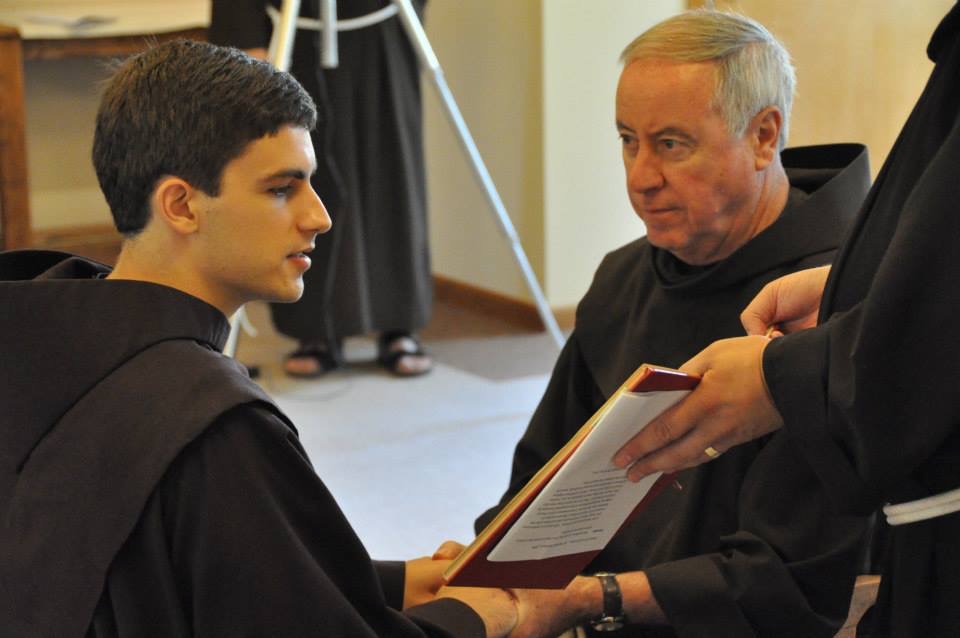
This evening, five members of my house will join the four others on their internship year, in renewing our vows to the Franciscan Order for another year, formally recommitting ourselves to a life of poverty, chastity, and obedience in the way of St. Francis of Assisi. For some, this is a moment that has required great discernment, evaluation, and preparation to determine that this path was still the one for them; for others it is simply another step along the way towards something that we committed ourselves to along time ago. Today, that’s not really what’s important though, and certainly not the focus on my reflection. The point that I see in all of this is that, no matter where we are on the journey, our discernment never stops, it only changes its form.

This is as much the case for Franciscans discerning religious as it is for all Christians: many of us have no question whether or not we want to remain a Christian and live out our baptismal promises, but the question of how we do it will never end. A life in Christ, no matter its form, requires that we always be discerning His call and ready to respond in the way that our world needs us most.

There are a few meals that I will never forget as long as I live.

I’ll never forget Thanksgiving dinner with my family some years back. We all tried our best to be as behaved and formal as we could, but alas… it’s just not in the Cole genes. Napkins were used as puppets and funny hats, napkin holders became building blocks, and normal, respectable voices turned into eruptive proclamations and impersonations.

I’ll never forget visiting one of our friaries for dinner as a postulant. Spontaneously visiting for the weekend, the five of us not only got the opportunity to meet the three friars living there, we were coincided with the surprise visit of two other friars from out of town. A casual dinner soon turned into a small party: wine, laughter, and a dinner conversation that lasted more than three hours.

I’ll never forget the times I went on retreats or away on Spring Break as a college student. There, away from our normal routines, intentionally together, we set up, cooked, shared a meal, and cleaned up together. With nothing to do or to distract us from each other, dinner was something we did together.

In each of these cases, what made the so memorable was not the food we ate, it was the company that attended. While meals can certainly be practical ways of obtaining calories, a purely physical necessity, meals can also be powerful social, even spiritual experiences. With good friends around a table, time can almost stand still. It’s the place where bonds are formed, relationships are nourished, and memories are instituted for ever.

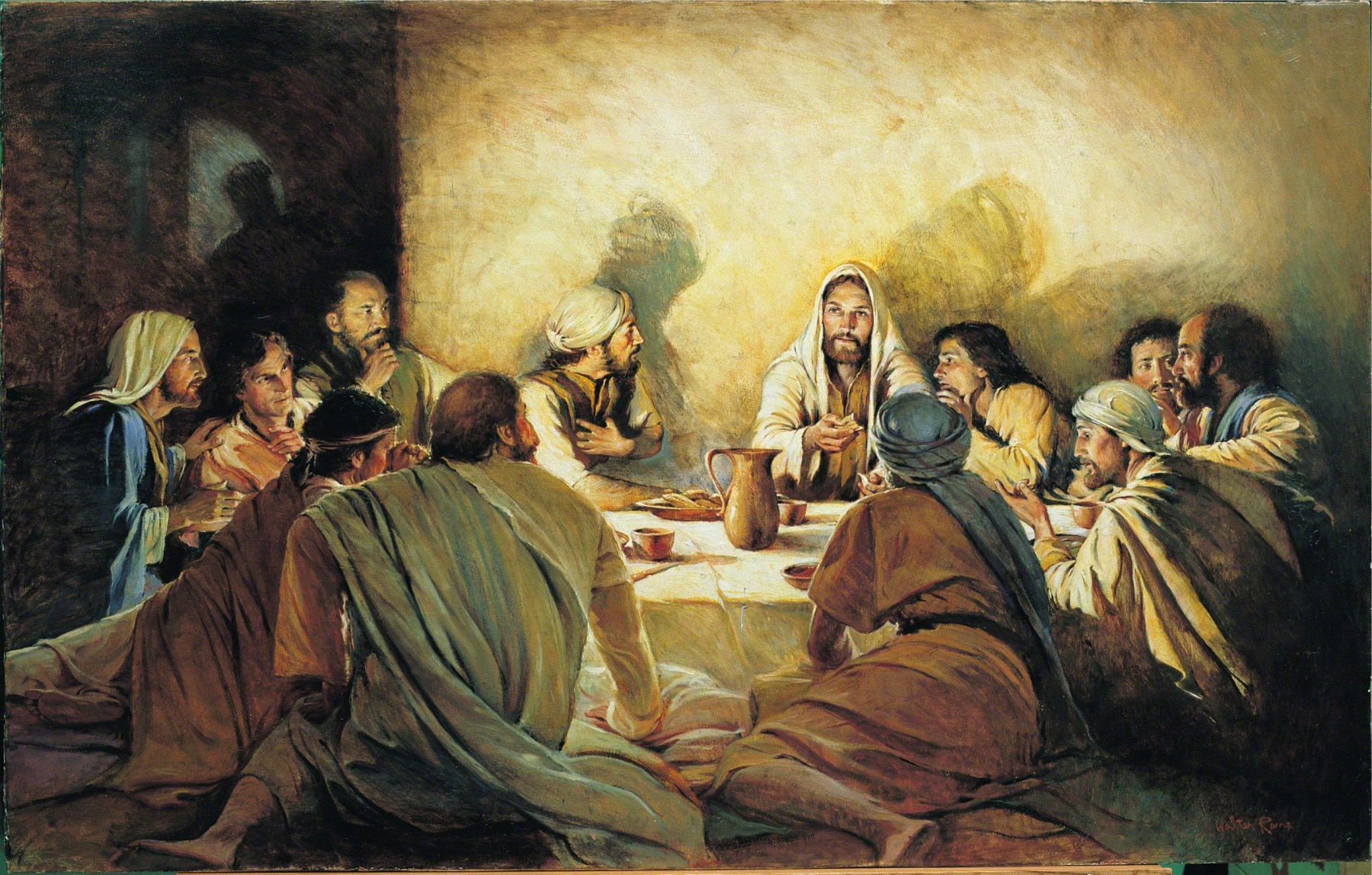
There’s no doubt that Jesus understood the power of a good meal with friends. In our Gospels, especially the Gospel of Luke, Jesus does much of his ministry around the table breaking bread. It is around the table, not in a synagogue or temple, not in the city streets, and certainly not from a throne, that Jesus has his most intimate moments with his disciples. Just before he died, it was a meal he shared with his disciples; after he was resurrected, it was a meal that caused the disciples to know who he was; just before the ascension, it was a meal that reestablished the fellowship he had begun in order to commission them into the world.

What Jesus did through meals has served as the “source and summit” of our Catholic faith for two thousand years. At the mass, we break the bread of life, our savior given to us, as a means of building our own table fellowship, coming closer to the one who created us, and inspiring us to go out and be the Body of Christ in our world. As Catholics, we marvel at God’s ability to turn bread and wine into the body and blood of Christ, a miracle before our eyes, and offer thanksgiving for the great gift that is his eternal grace.

But as we heard in our first reading at mass today, there can be a danger in such marvels. Witnessing a man healed in the waters, the crowds flock to those who blessed him to see more miracles. A good thing for sure, a sign of faith. And yet Peter is furious. How are you amazed at this miracle but you refuse to accept the one who caused it, Jesus the Christ? What inspired the people was not the person of Jesus; they desired no relationship with him nor did they want to be a part of his community. What amazed them was the external sign, the miracle, the “magic” of unexplained powerful things.

There is, I will say, that temptation in our Eucharistic meal. Focusing solely on the “Holy Sacrifice of the Mass,” there have been times in our history (and spiritualities even today) that are so concerned with the holiness of physical body and blood of Jesus, that the whole experience either becomes, a) the reception of a miraculous, grace-filled wafer that is so objectively powerful that nothing else matters except saying the proper words and personally receiving with proper devotion, or b) something so very holy that one is rarely ever worthy enough to receive, a prize to be won by the perfect but hardly ever earned. Something is surely lacking here.

Jesus instituted the Eucharist as a meal, a form of table fellowship. He established it not to be dispensary of miracles and grace, but as a way to encounter the living and true God in an intimate, communal way. What we do at mass is a very holy experience, one that requires a certain level of reverence for sure. But it is a holy experience because it establishes and nourishes the community that Jesus established and serves as its head. When we gather for Eucharist, we gather together around the table, not simply as coincidental bystanders in a common location, but as men and women forming and nurturing a community of faith. When we gather for Eucharist, we gather together with our risen and living Lord just as we would at our kitchen table: to share a meal with a close friend.

There’s a reason that Jesus gave us a meal as a way to remember him. Meals can be the places where communities are born, where times can stand still, where we can be who we are in a comfortable setting. It’s no wonder that Jesus made the center of our worship a table for eating. Our hope as Christians is that the life we share together at the kitchen table—all of our joys, fears, vulnerabilities, and excitements—will be what we bring to the altar of our Eucharistic table, sharing with Jesus and his gathered Church in a way that makes time stand still and forms memories that we will never forget.