The Flaw with the Abortion Argument
Today I decided to talk about an easy issue that is in no ways controversial or problematic in our world. Okay, maybe not…
Today I decided to talk about an easy issue that is in no ways controversial or problematic in our world. Okay, maybe not…
One of the biggest problems with theological debates online is that many people fail to understand the concept of the “hierarchy of truths.”
Sometimes it’s a matter of treating everything the Church teaches as equally important. When this is the case, well-meaning Christians will call other Christians heretics because they don’t fast on Fridays or because they have a problem with the Church’s teaching on contraception. While both of these teachings are important, neither of them are dogmatic in nature, meaning that disobedience of either does not result in excommunication or heresy.
Far more commonly seen, unfortunately, is the confusion of the hierarchy, elevating a non-authoritative teaching over dogmatic principles. This is seen when people quote the theological writings of a pope, saint, or prominent theologian as proof of something, forcing people to obey. Maybe it’s even a line from an ecumenical council many years ago. Just because a pope, saint, or theologian writes something, doesn’t mean that it is a binding teaching for all the faithful. We must have an understanding of the difference between private opinions and the ordinary magisterial teaching of the Church, and then within that ordinary teaching, where it all fits together.
Hence, this week’s video. It is by no means a comprehensive work and will need a few more followup videos to even cover all of the basics, but it’s a start: what is the hierarchy of truths? What must a Catholic obey?
“Treat others the way you want to be treated.” This is the wisdom we learn as kids, and it’s the wisdom of the Bible. Why do something to others if you wouldn’t want the same treatment? It’s a basic building block of morality.
And yet, it’s not without its quarks. As I share in this video, sometimes, when we take the passage too literally, we run the risk of missing the point. Sometimes it might be helpful to remember that not everyone wants to be treat the same way, and that true Christian humility means treating others the way they want to be treated.
Throughout the middle ages, it was easy to have a rather “isolationist” approach to people of other faiths. They either lived in other countries than most Christians, or in the case of Protestants, didn’t exist yet. When everyone around you is of the same faith, there’s not much you need to do.
But what happens when you live in 21st century America? What do you do when the majority of people around you are not of your same faith? While some in the Church would still prefer to treat them as if they don’t exist and hide in our own bunkers, this is hardly practical, nor is it in our best interest. Relating to people of other faiths not only offers the opportunity for evangelization, it allows us to strengthen our own faith.
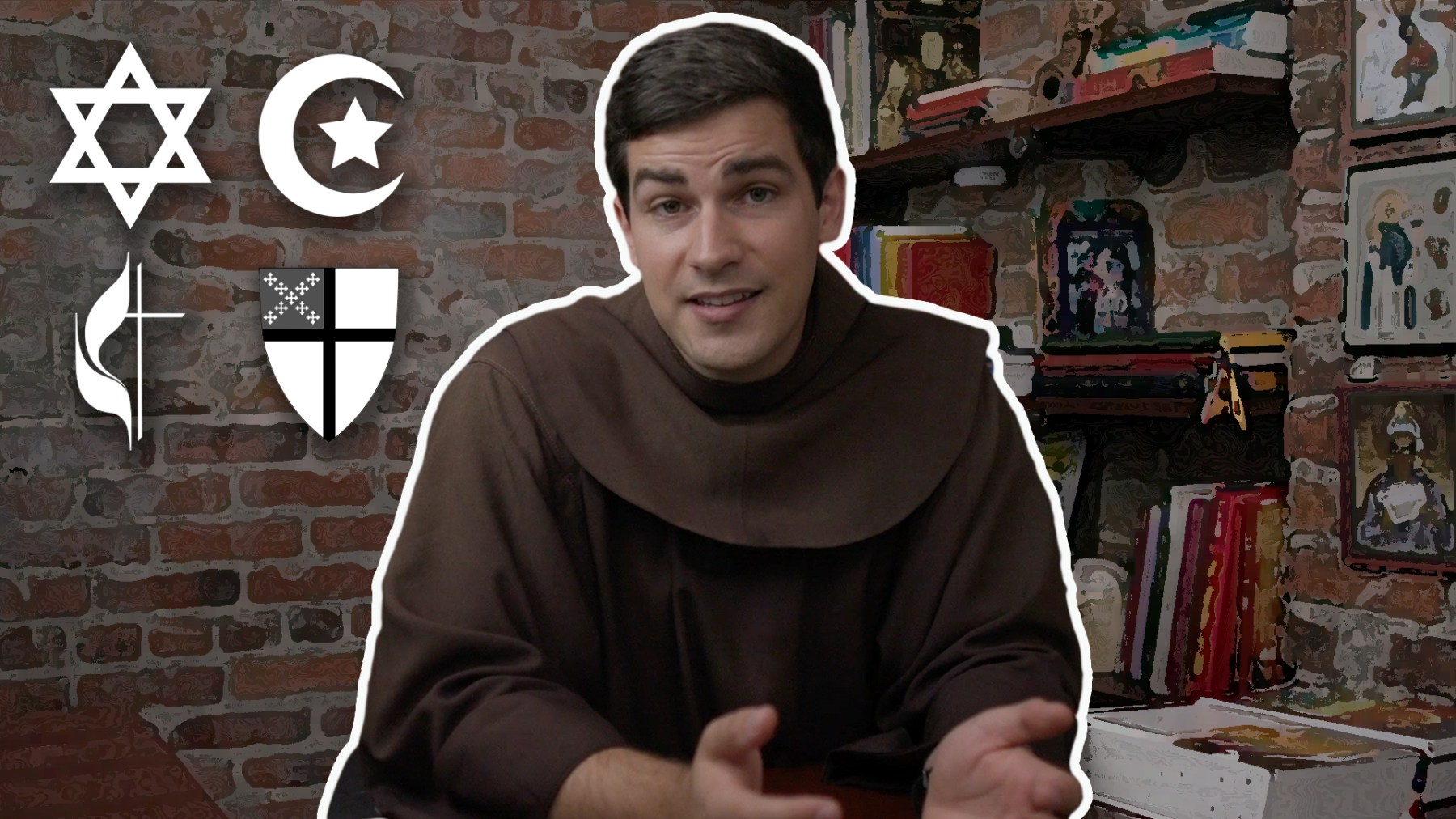
In this video, I want to talk about what makes good ecumenism and inter-religious dialogue. Rather than focusing on what we have in common, resting in the lowest common denominator of faith, I suggest jumping right into the deep end: focus on the differences. As far as I’m concerned, it’s only when we show who we really are and what we really believe, humbly and respectfully, that coming together in these ways is worth it.
 Breaking In The Habit