While I may be in Mexico right now and unable to post any new videos, that doesn’t mean that new things aren’t happening with the ones I’ve already made. I’m proud to announce that Catholic TV, the Massachusetts-based Catholic programming network, has requested and begun to air a few of the Breaking In The Habit videos on television. How cool is that??
Since most of the videos are fairly short and so are unable to fill an entire block of programming, they’ve decided to use them as necessary to fill open blocks of time. For that reason, it’s difficult to known when they’ll appear on a weekly basis, but one video has already aired five times this week and I’ve been told that two videos will air tomorrow: the Ask Brother Casey video about my summer assignment will air at 6:00am EST, and the Ask Brother Casey video about work and Holy Name Province Ministries will air between 9:00-9:30am.
If your service provider includes Catholic TV, check it out! If not, stream the channel live by clicking here! Sure, it’s the same video that you can watch on YouTube, and sure, you’ve probably already seen it, but c’mon! It’s on TV!
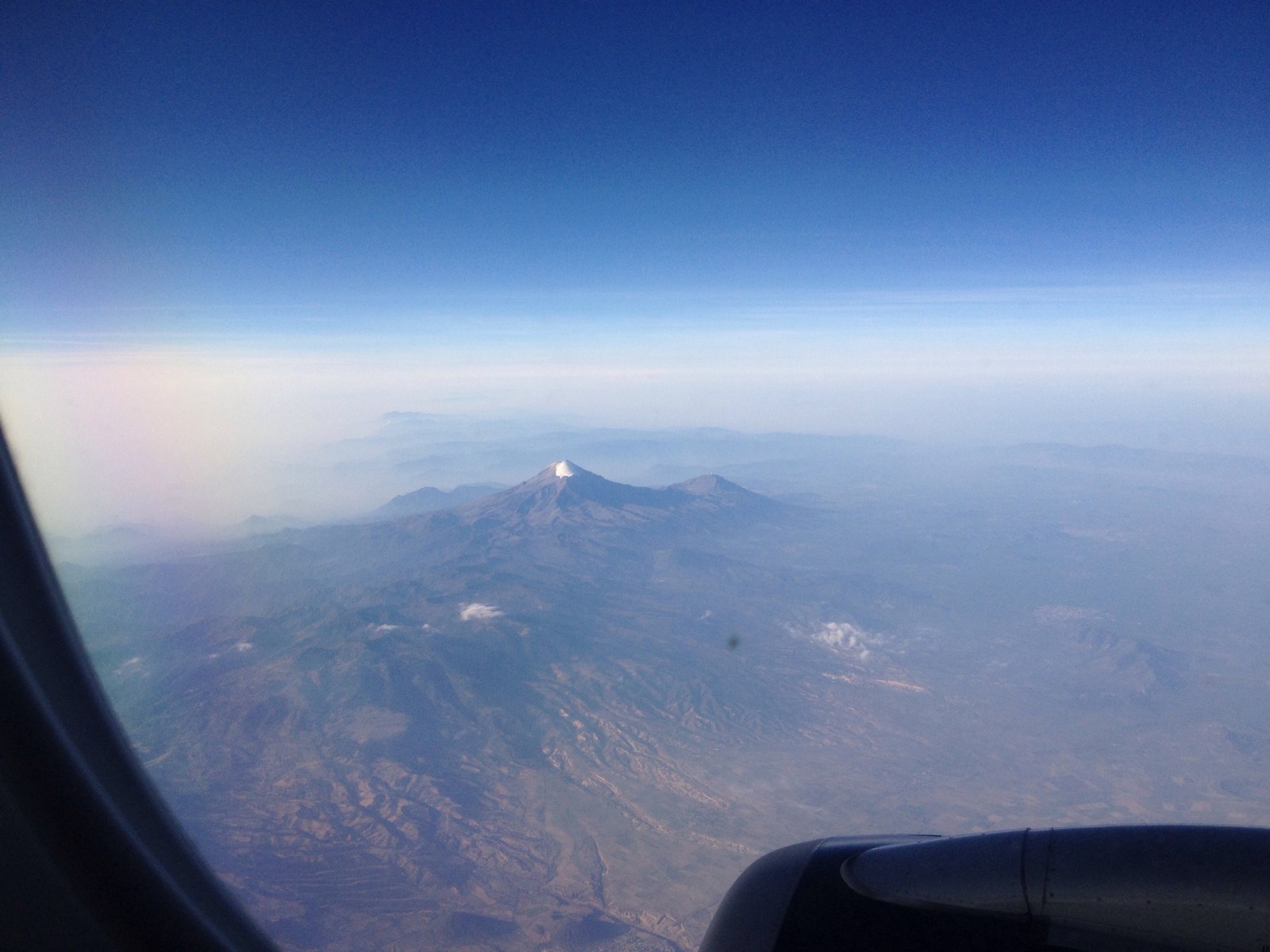
Our first day in Mexico was the longest day of my life.
Beginning our travels at 10pm on Monday evening (having been awake for thirteen hours already), we took a plane to a bus to another plane to a three-hour car ride, arriving at our destination a mere fifteen hours after departed. At this point, it was only 1:30pm, a long way away from finishing.
The biggest adjustment, even greater than the language, was the weather. As some of you know, Washington, D.C. has been unseasonably cold, remaining in the 50s and 60s during the month of May as it experienced 19 straight days of rain. When we arrived in Tenosique, Mexico, a tropical area in the south of the country, the temperature was 102 with a dew point of 66. I was completely shell-shocked throughout the first day. No air conditioning, no ice or cold water, no relief in either night or day. (Now in our third day, I have not stopped sweating at any point.)
But wait, we haven’t even done anything yet; our day, in a sense, was just beinning! First there was a tour of the place, were acquainted with our rooms (more in a second), a quick nap, then concluded with multiple hours of aimlessly walking around the grounds attempting to have conversations in Spanish with the volunteers and migrants. Let’s just say I was not in the mood nor did I have the energy for this to be enjoyable.
So what about the room? Well, let’s just it’s not exactly what we were expecting. Not a room in the friary, our room is a communal barracks-style room shared with other volunteers. It’s kind of austere…
It was at this point that we thought we had made a mistake. What have we gotten ourselves info? There was no mention of our language classes and it appeared that we would be volunteering all summer as workers (or at least until we died of heat stroke.)
Christian and I prayed together that night before bed in our sweltering room, exhausted, dejected, and a bit worried. We were going to reserve judgment until the morning, deciding that a good night’s sleep would make things better.
We were half right. The heat kept me up all night, prolonging the longest day, but the next two days have been much better. We met with the director and made a schedule, organized prayer times (previously not regularly done but added at our request), and began our classes.
We’ve had some interesting and exciting experiences already since then, and it looks like it’s going to be a great, albeit hot, Summer for the both of us… But that first day was something I will never forget nor do I want to repeat!
Before leaving, I filmed this final video for the summer. My internet is not great here so you may have to go to the YouTube channel to find it, but this link might work:
One year ago today I posted my first Breaking In The Habit YouTube video. Looking back, it was dreadful: the camera work was shaky, the edits were rough, the music was clichéd, none of the images were properly positioned or color corrected, and my narration was so… so forced *cringes thinking about it*. It was far from perfect. And yet, at the time, I was so proud of it. I had made a video!
Over the course of the summer I experimented with other types of videos—reflections, questions, conversations—realizing almost immediately that what I was doing with the videos was not just some fun project to show off to friends, it was a blossoming ministry touching an underdeveloped medium. To my great surprise, the “little videos” I was making were being watched well beyond the readership of the blog and were producing comments from far and wide.
Maybe there’s something here… I thought.
Overtaken by this new “hobby” of mine, I began to learn everything I possibly could about film-making. Even though I stuck to the mantra “content is king”—the idea that no matter how good the production value is, people are not going to watch a video for long if the content is boring, poorly scripted, or disconnected from reality—I wanted my videos to look like the films and shows I watched. As I learned more, taking a film class at Catholic University this year, I realized that I was actually more interested in the directing and producing of the video than I was in the performing.
Does this mean that I’ll be giving up my part on camera now? No, not exactly. I still really enjoy doing segments like “Ask Brother Casey” and “Catholicism in Focus,” and plan to continue these things in the fall when I return to the US. But what I’ve realized slowly over this year is that there is more to Breaking In The Habit than simply me on camera, and there are more ways to tell a story than simply using my voice.
The video I present today is just that. The first in the Breaking In The Habit Productions segment, “Franciscan Volunteer Ministry” is a short glimpse into the lives of Franciscan Volunteers, men and women who devote a year or two of their lives in humble service as a part of a prayerful community. At no point in this video will you see my face, and nowhere in these five minutes will you hear my voice; the story that it tells is told by the three volunteers themselves because it is their story.
And yet, there is a sense that it is mine as well. As the person organizing the video, I was amazed at how many different ways the raw footage could have gone. Move this clip here, that clip there, slow this down, edit this out, leave this in… Faithful, of course, to the story they wanted to tell, I was able to make something that told mine as well.
By the looks at what I’ve learned in one year, I’m sure I’ll look back on this video in six months and cringe at all the many mistakes and poor decisions I made. In all honesty, I hope I do. There’s obviously no use in beating ourselves up for not being as mature in the past as we are now, but there’s also no use in remaining content with who we were and what we accomplished yesterday. In another year, I hope that this project makes me cringe as much as I do watching that first video I posted because it means that I’ve learned something worth knowing, it means that I’ve grown in some important way.
I never expect to reach perfection. In filmmaking, and in life, perfection is a goal that has no real end—there is always something more, something better, something incomplete. But what makes producing videos like these fun, what makes this life as a Christian so fulfilling, is pursuing it anyway. There is always a new challenge, always a new lesson, always a new way we need to grow and move towards God. May we never stop our pursuit to “be perfect as your heavenly Father is perfect,” until we live perfectly in God’s love.
During my sophomore year of college, I had a sort of “Catholic Awakening.” Baptized as a child and deeply committed to my faith since high school, it was around this time that I discovered the rich tradition of social teaching in our Church. Called “the best kept secret” in the Catholic Church, Catholic Social Teaching is the social justice component of our faith, the part of the Gospel that demands that we care for our sisters and brothers. I was amazed at the commitment the Church had towards the poor, doing wonderful acts of charity, of course, but also calling for serious acts of justice. In a sense, the Church calls all of us Christians to look out into the world, identify injustice, and work to build the Kingdom of God in its place. It was powerful, insightful, and revolutionary to me at the time.
What the Church wrote in its documents and what I saw it doing in the streets made sense to my intellect, but truly spoke to my heart. I wanted to know more. For the first time in my life, I began to study everything about the Church in a substantive way: theology, liturgy, history, scripture, morality. It was truly the start of my adult faith.
Today, I present to you a small snippet of that faith, a quick foundation in what sparked my serious interest many years ago. As Christians, we are all called to live the Gospel, not just in prayer and thanksgiving, but in serious works of charity and justice. I hope that this video speaks to you as it did for me many years ago. If it does, or you’d like to know more, I’ve copied a few of my favorite quotes from Catholic Social Teaching below:
“Decisions must be judged in light of what they do for the poor, what they do to the poor, and what they enable the poor to do for themselves. The fundamental moral criterion for all economic decisions, policies, and institutions is this: they must be at the service of all people, especially the poor.” Economic Justice for All 24
“The root reason for human dignity lies in man’s call to communion with God.” Gaudium et Spes 19
“A society lacks solid foundations when, on the one hand, it asserts values such as the dignity of the person, justice and peace, but then, on the other hand, radically acts to the contrary by allowing or tolerating a variety of ways in which human life is devalued and violated, especially where it is weak or marginalized.” Populorum Progressio 101
“Profit is useful if it serves as a means towards an end that provides a sense both of how to produce it and how to make good use of it. Once profit becomes the exclusive goal, if it is produced by improper means and without the common good as its ultimate end, it risks destroying wealth and creating poverty.” Caritas in Veritate 21
“We were created with a vocation to work. The goal should not be that technological progress increasingly replace human work, for this would be detrimental to humanity. Work is a necessity, part of the meaning of life on this earth, a path to growth, human development and personal fulfilment. Helping the poor financially must always be a provisional solution in the face of pressing needs. The broader objective should always be to allow them a dignified life through work. Yet the orientation of the economy has favoured a kind of technological progress in which the costs of production are reduced by laying off workers and replacing them with machines. This is yet another way in which we can end up working against ourselves.” Laudato si 128
“Each of us as Catholics must acknowledge a share in the mistakes and sins of the past. Many of us have been prisoners of fear and prejudice. We have preached the Gospel while closing our eyes to the racism it condemns. We have allowed conformity to social pressures to replace compliance with social justice.” Brothers and Sisters to us
“Peace is but an empty word, if it does not rest upon that order which Our hope prevailed upon Us to set forth in outline in this encyclical. It is an order that is founded on truth, built up on justice, nurtured and animated by charity, and brought into effect under the auspices of freedom.” Pacem in Terris 167
“When there is question of defending the rights of individuals, the poor and badly off have a claim to especial consideration. The richer class have many ways of shielding themselves, and stand less in need of help from the State; whereas the mass of the poor have no resources of their own to fall back upon, and must chiefly depend upon the assistance of the State.” Rerum Novarum 37
“The thirst for power and possessions knows no limits. In this system, which tends to devour everything which stands in the way of increased profits, whatever is fragile, like the environment, is defenseless before the interests of a deified market, which become the only rule.” Evangelii Gaudium 56
The “debate” between religion and science is not new. It’s been alive and well in the world for centuries, and even a topic that I have written about before. For Catholics, it’s a tired argument, one that has no place for us because we don’t see science as the enemy of religion. Science is yet another way, along with divine revelation in Scripture, Tradition, and magisterial teaching, that we can learn about God. As Pope John Paul II said when he gave a speech to Vatican scientists, “Truth cannot contradict truth,” and so we are called to use the intellect and ability God gave us in every way we can.
In the back of our minds, though, we often wonder how true this has been in our history. “Sure, we believe that now, but what about Galileo?” This was a thought of mine even when I wrote the post about science two years ago. “At least we got it right in the end, but we were kind of in the “Dark Ages” for a while.
That was until I learned about Galileo in one of my seminary courses this fall. (As some of you may know from this article, the Catholic University of America received a grant some years ago to incorporate scientific study into seminary courses.) While Galileo was in fact condemned for holding a belief that we know to be true today, what I learned was that he was not condemned on the basis of contradicting Scripture and that Church did not condemn him because it did not like science. No, he was actually condemned because he failed to produce enough proof for his claim prior to teaching, broke his own oath, and then to top things off, led a smear campaign against those who funded him and his fellow scientists. (The last bit is not illegal but it certainly didn’t help his sentencing!)
Check out the video above or click here to learn about what actually happened to Galileo, where the myth came from, and how the Church has viewed science for centuries.




 Breaking In The Habit