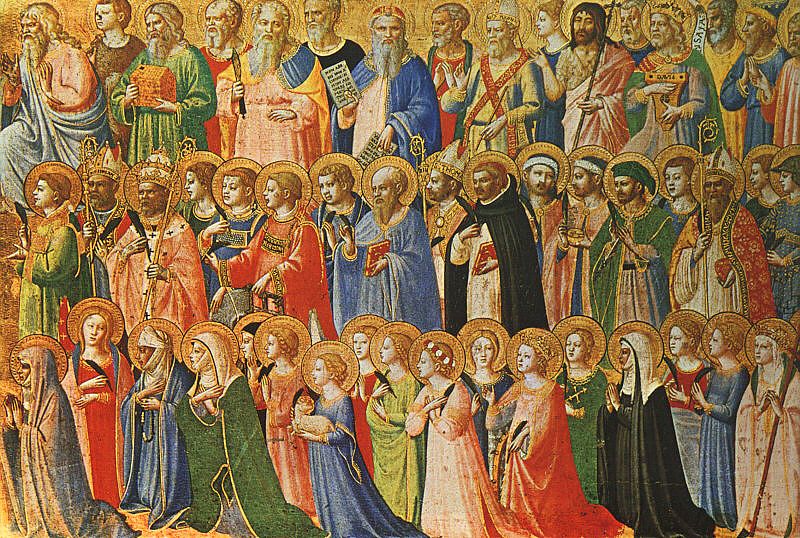
I once saw a statue of Mother Teresa without wrinkles. No lie. It was like the Hollywood actress version of the saint, free of any blemishes or imperfections. It was one of the most bizarre things to witness, but absolutely fascinating. Here was, by all intents and purposes, an extremely ordinary women—no advanced degrees, no landmark works, no heroic accomplishments—who lived with an extremely large heart. Anyone, it would seems, could follow in her footsteps. And yet, in this statue, she was to be somehow glorified, somehow unattainable, somehow special beyond us.

Imperfections? No, we won’t allow it. She must be placed on her pedestal above us.

As strange as this may sound, it is pretty par for the course when it comes to saints. For centuries, people of faith have exalted the saints far beyond their due, highlighting their extraordinary graces and overlooking (or even removing) their mistakes. Sometimes it means removing wrinkles from a statue. Other times it means subconsciously believing that they never sinned or struggled at all.

This could not be further from the truth.

As I suggest in this week’s video, the saints were just as much sinners as we were. They did not believe themselves worthy of sainthood. Like us, they looked to the saints before them with awe and wonder, overwhelmed with the prospect of living up to their greatness. What made them special was not that they were superhuman, beyond sin, or remotely perfect in themselves. No, what made them special was that they recognized their sinfulness and so relied on God.

All Saints Day is a time to remember the saints in heaven, yes, but it is also a time to remember that we are all called to be saints as well. And we can be.
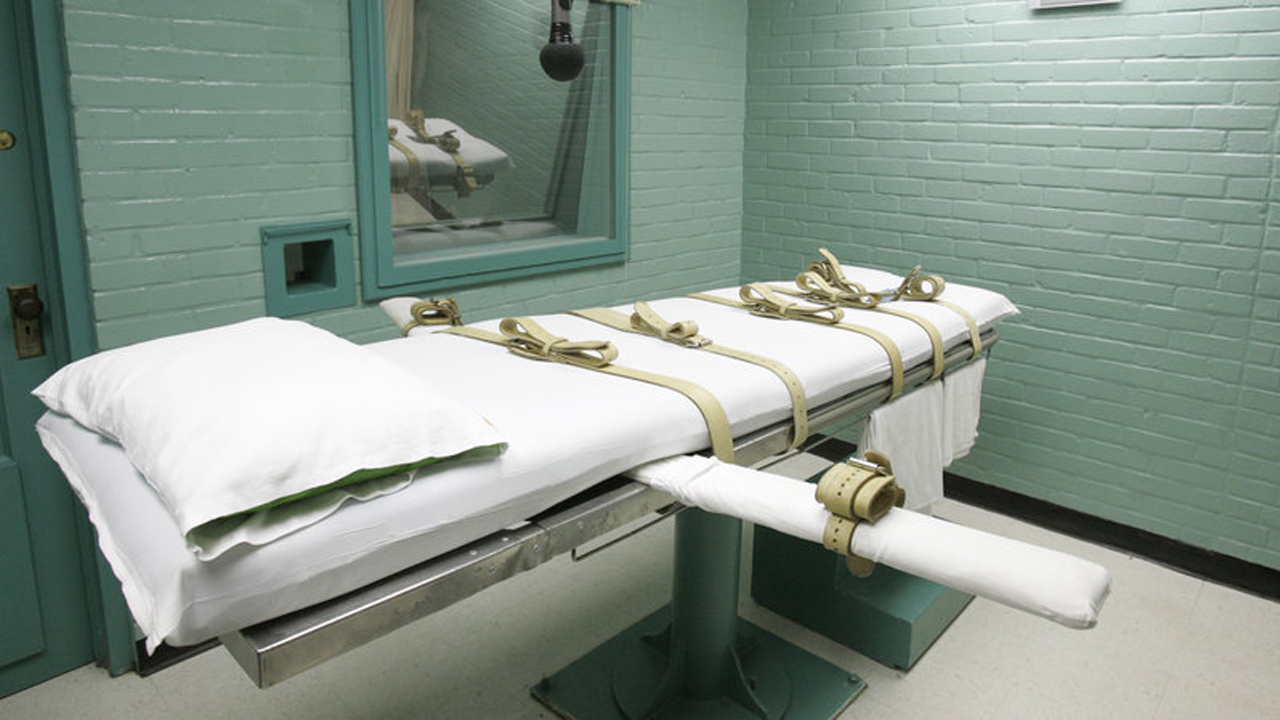
I have to say: the issue of the death penalty baffles me in the Catholic Church. How we pride ourselves on being a people of life! How we claim that all life is sacred and should be protected! And yet… how vehemently I see Catholics react to the pope when he suggests that there is never an acceptable situation for the death penalty.

While the vast majority of Catholics recognize the evils of abortion, only about half are against the death penalty. While the “right to life” is a slogan found at almost every church, many of its people demand “justice” for victims in the form of executions. Reading the comments of this week’s video, hearing people talk about our pope, I’m honestly at a loss. How does this fit?

We can look to the Old Testament and find proof texts for the death penalty. All throughout the Law we can find that the penalty for certain sins is death. And people will stick to them. But why? Why them? Why, in the light of the Gospel and the recognition that we have been ratified to a new covenant, would we choose to hold onto that law when we are very comfortable letting go of others (animal sacrifices, eating pork, wearing clothing made of two fibers, etc.) Jesus makes it very clear that we are to love our enemies, that we are to forgive and have mercy because our God forgives and has mercy on us.

And yet, “justice” needs to be rendered in many people’s hearts. Horrible crimes deserve execution, in their minds.

I’m sorry, but I have to side with Pope John Paul II on this one. I have to stand with Pope Francis here. Really, I stand with the entire history of our Catholic tradition that says that the capital punishment is an evil to be tolerated at best, a thing that can never be a good. Now that situations exist when it is not necessary for the safety of society, now that we have a more defined understanding of the dignity of the human person and the damage that such penalties inflict on all of society, there is simply no need for it.

I hope that you will join me in standing agains the death penalty in all situations. It is the teaching of the Catholic Church, and really, the teaching of Jesus Christ.

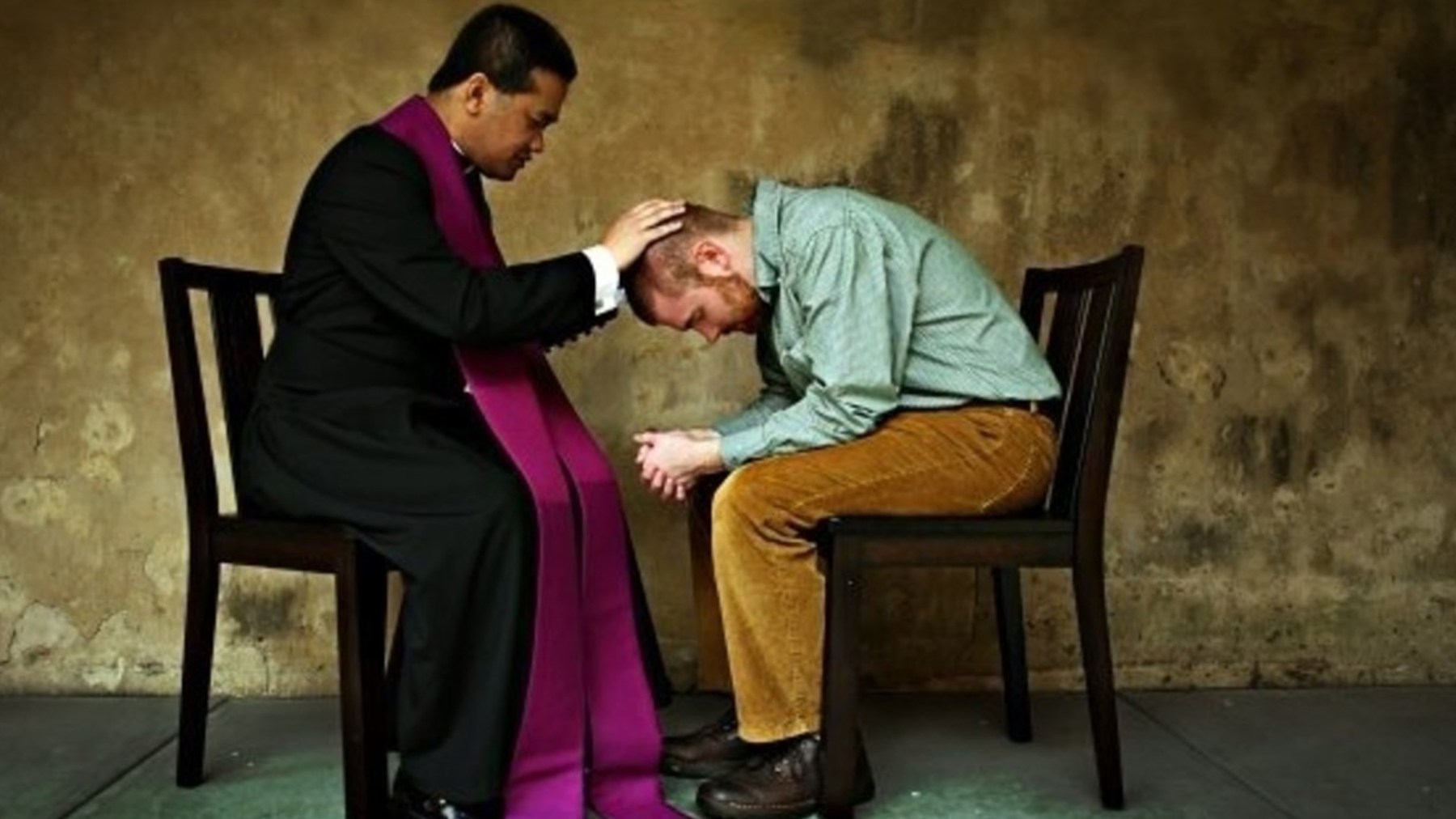
One of the most common complaints waged against Catholics (and Orthodox) by Protestants is the sacrament of confession: “Why do you need to go to a priest for confession? Why can’t you go straight to Jesus?” While seemingly an easy question to dismiss (just Protestants ignoring tradition, right?) there is actually an interesting theological question at work here, not unlike the question of baptism: Is it really required? When we use that word, we’re not simply saying required for the standards of the Church, but signifying that it is the only way that it is possible for something to happen.

Surely this is not what we mean when we say that one must confess their sins to a priest.

For starters, we accept that the Eucharist is a sacrament of reconciliation, meaning that all who receive it are freed of their venial sins. So, right there, we see an exception. You don’t HAVE to confess to a priest to have your sins forgiven.

But even beyond that, as I outline in this video, the idea that confession is the only way that God can forgive a sinner is ridiculous. OF COURSE God can forgive whomever God wants whenever and however God wants. The sacraments do not bind God or limit what God can do!

Instead, it is much better to say that the sacraments are the clearest forms of God’s grace, and, the crux of the matter, the only form that offers assurance of that grace. While God can show mercy and forgiveness in an infinite number of ways, it is only through the sacraments that we can be sure that we have received it, for they are visible signs of invisible graces. You can’t miss them!

So, does someone have to go to confession to have their sins forgiven? Obviously not. And the Church doesn’t teach that. What it does teach is that, if someone wants the surety of absolution and wants to be a part of the community once more (because the community wants that assurance as well!) then there is only one ordinary means: the sacrament that Christ instituted.

“Vatican II is the reason for all our problems!”

Welcome to 20% of the comments I receive on YouTube. I have to say… I find it a bit tiring. Besides just the nonsense of scapegoating in any situation, it’s just ludicrous if you’ve ever actually read the documents of the Second Vatican Council. People are upset with the world as it is and must find something to project onto. Because change is often unwelcome, the thing that caused the change must be the reason for their dissatisfaction, a la Vatican II is the reason for all our problems.

While I am often not able to muster up the amount of patience and respect needed to engage such comments, when I am, my response is always to quite the council itself: don’t go by hearsay or conjecture, read for yourself. As we have seen of late, there are more than a few news sources that have a vested interest in something other than the truth; even in the Catholic world, sites like LifeSite News and Church Militant churn out garbage every day that does more to misinform and create division that it does to edify God. For those faithful who do not know any better, it can be easy to believe what some sites say about the Catholic Church, when in fact it is a serious distortion of the truth.

Read the documents yourself.

In this week’s episode of Catholicism in Focus, I offer a primer for the first document of the Council, Sacrosanctum Concilium, the Constitution on the Sacred Liturgy. I hope that it will inspire others to read the document (which is very short) for themselves, and see that Vatican II did nothing of what people blame it for, but was a profound and holy document of the council that called for much needed changes.

When you look at the life of St. Francis, there is hardly anything remarkable to behold. In almost every way, he was an ordinary man. Compared to other saints, I cannot think of a single superlative that we could add to his name that wouldn’t fit better with a handful of others.

At yet, his life has captured the hearts of millions. The effect that he (and his order) have had on the world is incalculable. People revere him as the greatest of saints, and I have to wonder: why?

On the eve of his feast day, I offer my own take on why I believe him to be the greatest of saints.