How does one examination their conscience to know if they’ve sinned? For many people, this involves using a questionnaire, checking off boxes for things we’ve done. Great.

Except, not always.

One problem that people face with these questionnaires is that they are beholden to the limited nature of the instrument itself. Often, they are based on the Ten Commandments (and only the Ten Commandments) meaning that there is no examination of how we’ve treated the poor, no care for creation, no sense of humility or meekness, and no reflection on the words of Jesus. Clearly, we need to use more than the Ten Commandments as a guide (which is why I offer the above video with further suggestions.)

But beyond what I spoke about in the video, there is a danger in using these questionnaires in that the questions themselves are not waited. So often I have people come to confession with a list of 19 sins. “I lied. I swore. I disrespected my parents. I had lustful thoughts. I wasn’t content with God and so desired physical things. I doubted. I was prideful. I didn’t pay attention in Mass. I had anger towards my sister…” While all of these things could be sinful, and none of them are good things, they really don’t tell me, the confessor, anything. Simply listing off a long succession of items does not offer context, intention, severity, or effect. “I lied” might mean that the person told another that their baby pictures were cute when they actually thought the baby was weird looking, or it might mean that they told false information under oath in an attempt to hurt their enemy. The same check mark on the questionnaire, but clearly a very, very different sin.

Using examination of conscience tools can be very helpful to uncover blindspots in our lives, helping us to see where we need to change, but they must always be approached critically. It is not about the quantity of checks that we make. It does not make someone more of a sinner if they have 15 checks compared to another with just one when that one is murder. Further reflection is needed.

If you use an examination of conscience tool (and I do recommend that you use multiple), don’t get hung up on the number. Don’t worry about checking boxes. Use the tool as a means to ask yourself, “What is truly getting in the way of following Jesus?” Focus on the things that matter, and change your life.
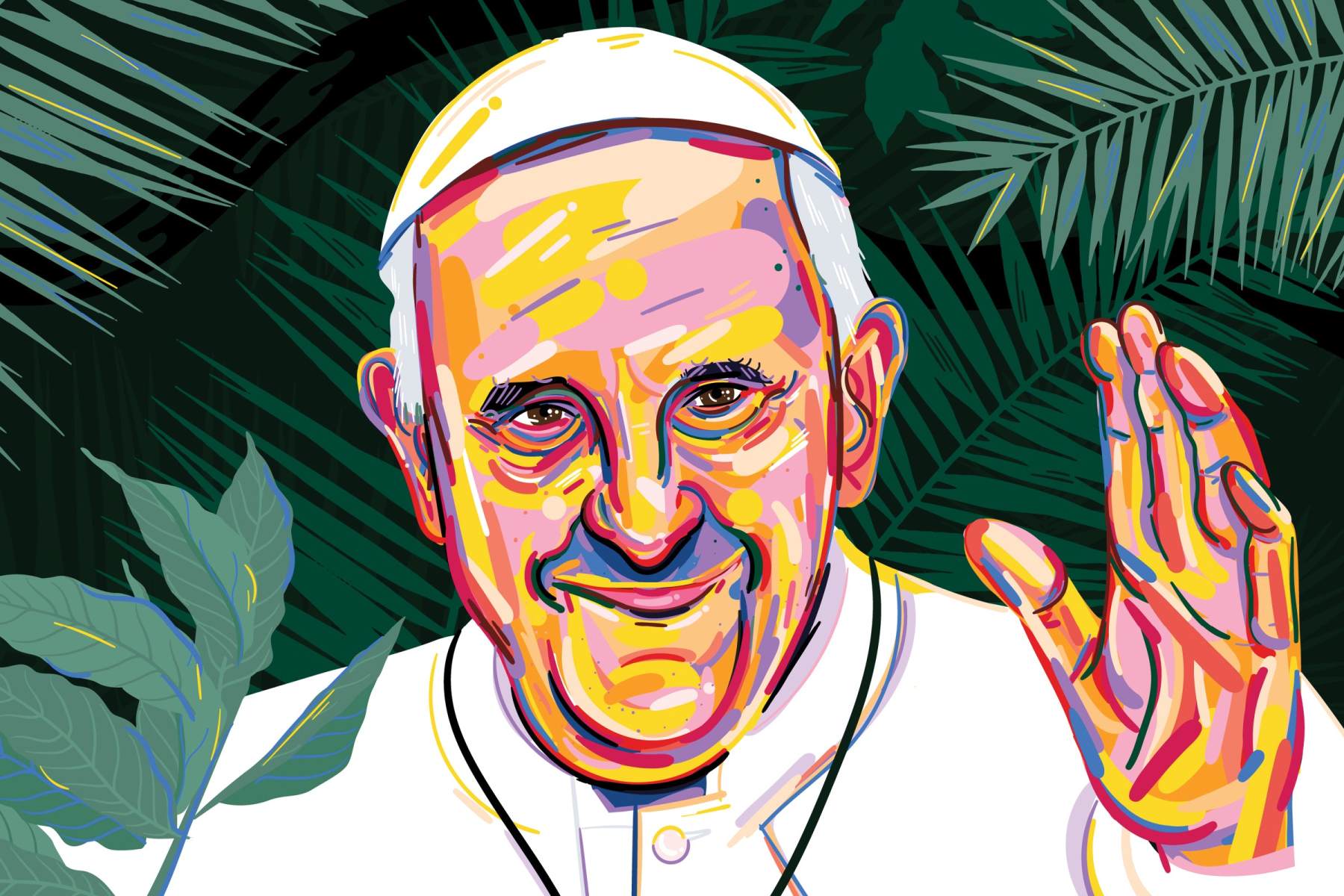
If you’ve followed Catholic news much over the past year, you know that there has been a lot of attention give to the Amazon region. Pope Francis convened a synod to explore the needs of the people and what the Church should do in response.

On most people’s minds, there was only one question that mattered: will the pope allow married men to be ordained priests in a region that desperately needs sacramental ministers? This is what the news covered almost entirely, and so for many people, it was seemingly the only issue at hand.

Thus, when Pope Francis remained silent on the issue, many moved on without giving much attention to the post-synodal document. This is a shame, to say the least.

In this week’s Catholicism In Focus, I unpack what the pope actually did say, and why it matters to us. It is a short document (relatively speaking) and so I strongly encourage everyone to read through it yourself. You can find it in its entirety here.

Let Go… Of Yourself

The following is the first installment of a six-part series this Lent. Each reflection is inspired by my new book, Let Go: Seven Stumbling Blocks to Christian Discipleship, available in paperback, audiobook, and Kindle.

For the past 10 days or so, I have been on the road, visiting Texas A&M University to give a talk, meeting with the friars under five years solemnly professed in St. Petersburg, FL, and attending the Los Angeles Religious Education Congress in California. It’s been a bit of a run… and as a result, it appears that I have forgotten to share a few videos with you!

Last Friday I announced a Lenten Series based on my book Let Go. Each Friday I’ll offer a reflection on something that I feel we as Christians need to let go of. Here’s the trailer:

On Monday, I released Catholicism in Focus video about the Rite of Penance. As the lenten season is a popular time to go to confession, I thought it was a good idea to explain what exactly it is that we go to do (or, at least, what we should go to do!) Here’s that video:

And finally, hot off the press today, is a video I recorded while at LA REC last week, in which I asked many of the spiritual leaders present to answer a simple question: What should people ‘Let Go’ of this Lent. Their responses were diverse and wise:


It is a very strange situation to be in: you’re standing outside of mass greeting people as they arrive, and someone walks in drinking coffee or finishing some food. It’s rare, but it happens. Far more common is chewing gum while walking into mass, something that I see on a regular basis.

These things, to be clear, are not allowed.

While the Church does not require heavy fasting today like it did for centuries, the Tradition has not changed: fasting is required prior to receiving communion. As with the rule of fasting on Fridays, the Church of the 20th century realized that certain age-old rules were irrelevant or burdensome to some, and so looked to the people of God to act as mature adults and choose for themselves what seemed most appropriate. In the case of fasting on Fridays as well as fasting before mass, this effectively meant that most people abandoned the rule completely.

The Church wanted to make the fast clearer and easier, not nonexistent. There is still a required fast prior to receiving communion. The 1983 code of canon law states three directives:

  • §1. A person who is to receive the Most Holy Eucharist is to abstain for at least one hour before holy communion from any food and drink, except for only water and medicine.
  • §2. A priest who celebrates the Most Holy Eucharist two or three times on the same day can take something before the second or third celebration even if there is less than one hour between them.
  • §3. The elderly, the infirm, and those who care for them can receive the Most Holy Eucharist even if they have eaten something within the preceding hour.

How did we get here, and why does it matter? All of this is answered in this week’s Catholicism in Focus.