The following is my homily for the 24th Sunday in Ordinary Time, Year C. The readings can be found here.

I lived in a fraternity once in which things would mysteriously go missing or show up in strange places. The guardian of the house would routinely make announcements at dinner, “Has anyone seen the stapler? It’s not in the mail room.” Or “Why is the paper cutter in the kitchen? Who was using it and what were you doing?” Without exception, no matter what it was, the response was always the same: silence. No one ever seemed to know where things were, who had used them, why they were broken. It was like the objects in our house were like Toy Story characters who came alive when we weren’t looking and hid themselves in strange places.

This, of course is not the case—things do not get up and get lost on their own—people lose them. They forget about them, get distracted, maybe even treat them with negligence.

It may sound like an extremely obvious point to make—you’re sitting here wondering, “Did Fr. Casey just find out that Toy Story isn’t real?”—but I think remembering this fundamentally shapes the way we interpret our Gospel today. So often, when we hear the parables of the lost coin, lost sheep, and lost son, we place ourselves in the position of the thing that is lost. We read them as Jesus telling us that even though we are lost, God will continue to search for us, continue to seek us out. The story is about how we need to return to God with a contrite heart and he will take us back.

And that’s true, for sure. But I’m not sure that that is the really what Jesus is trying to teach here. Because, remember, objects don’t lose themselves. The coin did not jump out of the woman’s bag and run away; no, the woman had to have misplaced it, dropped it somewhere. The sheep probably walked away, but are you really going to blame one of the world’s dumbest animals for getting itself lost? Of course not. The sheep is lost because the shepherd lost track of it, because he didn’t do his job and let it go astray. Even with the lost son: science tells us that the human brain doesn’t fully develop until you’re 25; I know I’m in the presence of the cream of the crop, students who never did anything foolish in high school, or yesterday… but the fact of the matter is that the part of the brain that makes decisions is really impulsive when we’re young. We all have free will, sure, but the story of the lost son could be as much about a father giving a teenager his inheritance and letting him run off to a foreign country.

In all three stories, the active character—the one responsible for the situation—is not the one who is lost, but the one who lost. These stories are not about comforting those who are lost, convincing them to repent and return to God; they’re about demanding that we take responsibility for those we have lost. The coin did not have a change of heart. It didn’t decide, “Oh, I’ve been bad, I should go back.” No, the woman tore her house apart to find it. She changed her life so that she could get it back. The sheep did not all of the sudden think, “I’ve been foolish. Why did I walk away from the pack?” No, the shepherd left the 99, he took a huge risk of losing more, he went out of his way to retrieve it. But the son, you say? He sinned horribly and repented before returning. Yes, but it wouldn’t have mattered to the father. Even before the son could say a word, the father ran to him and hugged him. When he apologizes, the father never even acknowledges it. What matters is not the son’s contrition, but the joy that the father has to have him back. “Who cares why you’re here, I’m just so happy to have you back.”

These parables are not about the lost, but about those who have lost. These parables are not about our relationship before God in our sin, how we go astray, but about how we, as Christians and ministers, are to respond to those whom we have lost, those on the peripheries, those who are not always welcomed.

I’m talking about our friends and family who have left the Church because we failed to evangelize and catechize. Those people who say “I used to be Catholic,” who come to mass on Christmas and Easter, who feel no connection, no welcome, no fulfillment.

I’m talking about those who have been abused by the Church, who trusted us only to find that trust exploited, who have gone through life burdened with pain and suffering at our hands.

I’m talking about our LGBTQ brothers and sisters who feel that they have no place in the Church because so many Catholics have told them that they have no place, who routinely are told that they are not real Christians, that God hates them, that there is something disordered about them.

I’m talking about those those in prisons and in gangs, those who live in destitution and poverty, who know nothing but suffering in their lives, who find themselves cut off from the human family and do not know the love of God.

These are the lost coins, the lost sheep, the lost sons of our world, not us. Our exhortation today is that we must be like our heavenly father who rejoices when one of these are found. That our relationships must not be based on merit—what someone can offer us, what others have earned—but rather on mercy: like the father to the son, “who cares why you’re here! I’m just so happy that you’re here!”

But even more than that, Jesus does not want us to simply wait for them to return, to “hope” that they magically find their way back, as if the coin will just appear on its own. No, what he is telling us today is that if we want to share in the Father’s joy, we must actively go after those who are lost. If we really love our brothers and sisters, if we really care about the state of their souls, the state of their lives, we must be willing to do all that we can to go after them, even if that means being inconvenienced, dropping everything and tearing the house apart. We must be willing to take a risk, to leave what’s comfortable, in order to go after that one sheep. We must be willing to accept that we might be the reason that they left in the first place, that there is something wrong with our home, something we failed to do, and have the humility to change ourselves in order to welcome them back.

If I’ve said it once, I’ve said it a million times: we love with humility, not because of who they are, but because of who we are. It is not about deserving to be in this place. None of us deserve to be here! The problem of the Pharisees, and why these parables were directed to them specifically, is because they could not accept the wideness of God’s mercy. They could not imagine a God who loves sinners, who welcomes outcasts, who goes out of his way and risks his own life for people who do deplorable things. But that is what our God did. He died not just for the good, but for all. He welcomes not just the repentant, but all. He loves us, all of us, so much, that he’s just happy that we’re here.

If we want to be his disciples, we must go and do likewise. No one is outside of God’s love, and so no one should be outside of our care. Go to the lost and forgotten, go to the hurt and abused, go to those tax collectors and prostitutes of our world, and make it your life’s work to welcome them with love.

The following is my homily for the 23rd Sunday in Ordinary Time, Year C. The readings can be found here.

They say that you should always read the fine print before you sign anything. I… have not always been the best at doing this. Throughout my life, I have often acted impulsively and signed up for something without knowing what I was getting myself involved with.

When I was in second grade, I saw the boy scouts in their uniforms and thought it was so cool. The idea of hiking and camping seemed awesome, and so I signed up, made my parents buy the uniform and everything I needed… until I realized that we wouldn’t be going on an adventure in the rocky mountains every week and that there were many things about being a boy scout I found boring. I quit after three weeks.

When I was a freshman in college I signed up for this sort of “outside the box” series of classes that sounded incredible. It was team taught by the best faculty in the school, used interdisciplinary methods, and was supposed to be this amazing learning experience. Turns out, they were also known as the hardest courses at the school… and you had to take all three to get credit for any of them, so there was no quitting without losing everything. Should have read that pamphlet all the way through…

And then there was that time that I met the Franciscans and was so moved by their lives that I signed up to be a priest only to find out after the fact that they take a vow of chastity and can’t get married. You should have seen my face when I realized that one!  Okay, the last one is a joke, but you get my point. So many times in my life I got involved with things before I knew what I was getting myself into, and as a result, never really committed to what I was doing. Easy in, easy out.

For many people in the world, the Church is the same way. 

I look at all of the kids that have gone through religious education over the years. Their parents signed them up for the classes, they coasted through for a couple of years, and then got a nice party at the end with a pretty communion dress. Without much knowledge of what they were doing, without a strong commitment to what they were signing up for, they became Catholic Christians, they began receiving the sacraments, without knowing much of Christ or his mission.

This was certainly the case for me. I went to class, knew I was a Catholic, but come confirmation, it was basically my graduation. I went to Mass because it was a “good thing to do,” I guess, but I didn’t want to get involved, didn’t want to go to any more classes, didn’t really want to do anything. I considered myself a Christian, but my life wasn’t really any different from any of my other friends. I acted just like others, wanted the same things as them. I was very much a Christian in name, but not in commitment.

Unfortunately, this is the case for many people. I think of friends and family who say that they’re Catholic, consider themselves Christians… but never actually pray, never actually go to Church, change nothing about their lives. They’ve gone through the motions and received the sacraments, they bear the indelible mark of Christ on their souls that they received in baptism, they might even receive Christ in the Eucharist from time to time, but they’re not actually disciples of Christ. They are Christians in name, but not in commitment.

Maybe, to some extent, you’re the same way. You’re here, and that’s awesome. There is obviously something inside you that got you here, you want to be here for this hour, and I applaud you for that.  But what about the other 167 hours of the week? Do you have a relationship with Christ that shapes and defines all that you do?
If you do, awesome! Let it grow. If not… and I know this sounds harsh… but are you really a Christian?

The reason I ask is not because I’m here to judge you, not because I’m here to separate the real Christians from the fake ones. No, I ask simply because I know that Jesus doesn’t want lackluster commitments. He doesn’t want easy signups, partial followers, people who accidentally find themselves involved with something because they forgot to read the fine print. Through a number of parables and sayings in our Gospel today, Jesus reminds his followers that being a Christian is not a part time job. Being a disciple means giving everything to God, making Jesus the most important person in our lives, for whom we’d be willing to do anything. Life for a disciple is not easy… and he wants to make sure that anyone who follows him, everyone who signs up knows ahead of time. Like the king calculating his troops, the builder planning the house, Jesus wants his disciples to take this commitment seriously. Are you sure you know what you’re signing up for? If you follow me, read the fine print: You better be ready to bear your own cross.

This does not simply mean that things will be difficult for us. We use the phrase so much that I think it’s lost its meaning—bearing our cross is nothing more than an inconvenient situation. We get sick? Cross to bear. Have to deal with difficult people? Cross to bear. Have to share Netflix account with my sister and she’s always using it? The worst cross to bear!

No… Following Jesus, bearing our cross, means radically changing our lives. It means aligning our values, our thoughts, our actions, our politics, what we do with our free time, how we spend out money—everything about us—with Jesus Christ. It means, in a world where slavery is the norm, being like Paul writing to Philemon, challenging his friend to act more justly: now that you are a Christian, he says, you cannot treat men as slaves, receive this man as your own brother. It means realizing that the world will not accept us when we side with Jesus, that we will face persecution and hatred because of his name. Like Paul, we may even find ourselves in prison.

No, following Jesus is not an easy task. It is not for the faint of heart. And so Jesus wants to let people know: this is what you’re signing up for, this is what you’re getting yourself involved with. Are you really sure you want to follow?

Here at mass we are given Christ’s very self, the Way, the Truth, and the Life in physical form. We are given all that we could ever want, and MORE. What Jesus is offering us today is something that no one else in the world can offer. But in receiving it, in coming to this table, we do not simply receive something, we make a covenant with the Lord, we sign our names in his blood, accepting all that comes along with it.

You’ve read the fine print, you know what that entails. And so I leave you with this question: Do you just want to be called a Christian, or do you actually want to be one?

The following is my homily for the 22nd Sunday in Ordinary Time, Year C. The readings can be found here.

A number of years ago there was a cop drama on TV that my mom and I used to watch. Unlike Law and Order or CSI, this show didn’t focus on police officers and prosecutors using the law to catch “bad guys,” but rather on a mysterious vigilante that helped people with impossible situations. When the law had failed them, he would fix their problem by “creative” means. Unfortunately, there was a catch. In order to accept his services, people either had to pay him a million dollars or owe him an undetermined favor in the future. Talk about a quid pro quo! People were happy to have their problems disappear, but invariably lived in fear of what they might owe the vigilante.

While this is a fairly extreme case (and hardly the type of show designed for a 3rd grader!), I think we can probably relate to the concept of such exchanges fairly easily. We live in a fairly transactional society. A few years ago, a friend of mine wanted a small wedding with just some close friends and family. This was not possible. Her mother stepped in and said, “Oh no, you have to invite your cousin Johnny, he invited you to his wedding” and “We need another invite for my friend Paula. She used to babysit you and she’s been so good to the family.” Her “small” wedding had over 200 guests.

Maybe you’ve been on the other side of this. You really put yourself out there, help someone move or wake up at 2 in the morning to bail someone out of jail. You know… And so the next time you’re moving, the next time you’re in jail at 2 in the morning… you expect them to help you. I was there when you needed me, now you owe me!

Even at Christmas, what do we do? We ask our friends and family members if they want to “exchange gifts.” I’ll give you something if you give me something. 

My suspicion is that most of our interactions work this way. It doesn’t mean that we’re not generous, but it does mean we live largely with a transactional mentality. We like fairness, and so we feel guilty when someone gives us something and feel cheated when someone doesn’t give us something back.

This is quite different from what Jesus tells us today. What does he say in our Gospel? “When you hold a banquet, do not invite your friends, brothers, wealthy neighbors.” Why? Because they may be able to invite you back. They may be able to repay you. And if they can repay you, you might be tempted to do it simply to get repaid. “Instead, invite the poor, crippled, lame, and the blind”—invite those who have absolutely nothing, who never get invited to parties, who are ridiculed by others—because they will never be able to repay you, because your act of hosting people in this situation will truly be a gift.

What Jesus is getting at here is the selflessness of love. A true gift is something that is freely given, without any promptings or reservations, no strings attached, completely for the sake of showing love. As an act of love, it is an end in itself. It doesn’t need anything in return. How can it? Gifts are given simply because we have something we want to share. I imagine the idea of exchanging gifts at Christmas would seem like an oxymoron to Jesus! How do you exchange something that is freely given out of one’s generosity? No, a true gift does not need anything in return.

The reason that I believe Jesus tells us this parable is to show how God loves us. God created us, gave up his life, animates us with the Spirit. He gives us the sacraments, chiefly the Eucharist. He does this, not as an exchange, not a transaction, but as a free gift. We have done nothing to earn any of this, we can do nothing to pay God back. In God’s court, we are the poor, crippled, lame, blind. We’re useless—we sin, we have no idea what we’re doing in life, have nothing to offer in return, and certainly don’t belong.

But he invites us anyway. He invites us, not because of who we are, but because of who God is. It is an act of love because it is something that we cannot earn.

The opposite is true as well. As an act of love, a true gift, is something that we cannot lose. No sin, no disobedience, no wrong decision could ever force God to stop loving us, could make God take back what he offers, because his gift is not dependent on who we are or what we do. Sure, we may turn away ourselves, we may refuse to accept it, ut God gives us these gifts to us not because of who we are, but because of who God is. Even if we turn away, even if we remove ourselves from God’s grace, God will continue to follow us, continue to invite us, continue to prepare a place in his home.

How amazing is this? Take a moment, and just let that sink in. In a world so dependent on performance… in a world where everything is an exchange—you do this for me, I’ll do that for you—our God loves us… no matter what. Maybe that makes you feel uncomfortable. Maybe you don’t know how to respond. Nothing is free in life, right? There must be a catch! How can I get such an amazing gift and not do something in return? Surely… there have to be strings attached!

Truly, there is only one thing we can do: Be thankful. Accept the gifts that he has offered us with a thankful heart. Enter completely into this liturgy, singing with full voice, listening attentively to the prayers, praying like your life depends on it. We gather together at this table, not just to receive, but to give thanks. That is what eucharist means—thanksgiving. Be thankful for what God does in your life, be thankful for the person sitting to your right and to your left, be thankful that you live in a country with freedom of religion and press and protest. Be thankful, recognizing that it need not be this way. We do not deserve any of this, but receive it as gift.

And then, with a heart overflowing with grace and thanksgiving, pass it on: Do the same for others.

Give gifts that cannot be repaid. Love those who cannot return the favor. Act selflessly, giving to others not because of who they are, not because of who you are, but because of how God has already loved you. Invite the poor, crippled, lame, and the blind to your house, to this house; eat a meal with those who are outcasts of society, those who cannot repay you because they can’t even take care of themselves.

When we look at this from the perspective of the world, it seems crazy. My guess is there are more people who would be willing to owe an enormous favor to a mysterious vigilante after he fixes our problem than there are who think that inviting the poor into their homes is a good idea. As ridiculous as that crime show was, it at least made sense to the world: you give me something, so I give you something.

But that’s not the way God works. It’s not the way of our faith. God gives without counting the cost. We are filled with abundance for doing absolutely nothing.

What can we do but do the same for others?

The following is my homily for the 20th Sunday in Ordinary Time, Year C. The readings can be found here.

I have to admit, when I first read through the Gospel for today, my first thought went to The Dark Knight. I could just hear Michael Cain saying, “Some men just want to watch the world burn.” We hear of a Jesus who wants things to burn, wants chaos, want divisions. Given how divided our world already is today, some of us might find Jesus’ words a bit challenging, even shocking: “C’mon Jesus, I’m here trying to build bridges and work for peace and you’re over there saying ‘I didn’t come to bring peace but division.’ Let’s get on the same page here!” Of course, he’s the Lord and I trust him, but it does make me wonder: Is Jesus secretly just a criminal mastermind trying to take over Gotham? And if not, what does he mean by setting the world on fire? What does he mean by bringing division?

To answer this, I want to go back in time a bit, back to a time without as much civil unrest in our country as we have today. In 1896, the Supreme court ruled that segregation was legal, that black and white people could have separate but equal accommodations under the law. And for more than 50 years after this, life in the south seemed pretty stable. People knew their place and there wasn’t a lot of animosity.

But then things began to change. In the 1950s and 60s, the complaints of injustice became louder and more organized. There began to be a raised awareness of the plight of an entire people. People like Rosa Parks protested unjust laws; black students started attending white schools, drinking from the same water fountains; college students staged sit-ins at whites only restaurants and got arrested for breaking the law; people like Martin Luther King Jr. rose up and began rousing people to the cause, walking in Selma, walking on Washington, before he was arrested and thrown in jail.

All of this created major divisions. The US had gone from a peaceful, stable place, to a place with constant fighting and extreme tensions. Violence was in the streets, and people of color were blamed for causing it. In his letter from the Birmingham jail, King wrote about the resistance he received from others, that he was causing too much of a stir, that he should be more patient, that he should “wait” and basically not be in everyone’s face about these things. He was tearing the country apart with his demands. These civil rights advocates were responsible for causing division, they said.

Which is true, in a way. But not because they wanted to see the world burn. No. What they were advocating for was not division for the sake of division, but for justice, equality, and freedom under the law; they were trying to make the earthly kingdom appear more like the heavenly one. In other words, what they were advocating for was the Truth.

Unfortunately, what they found was that the Truth is divisive for those who don’t want to hear it.
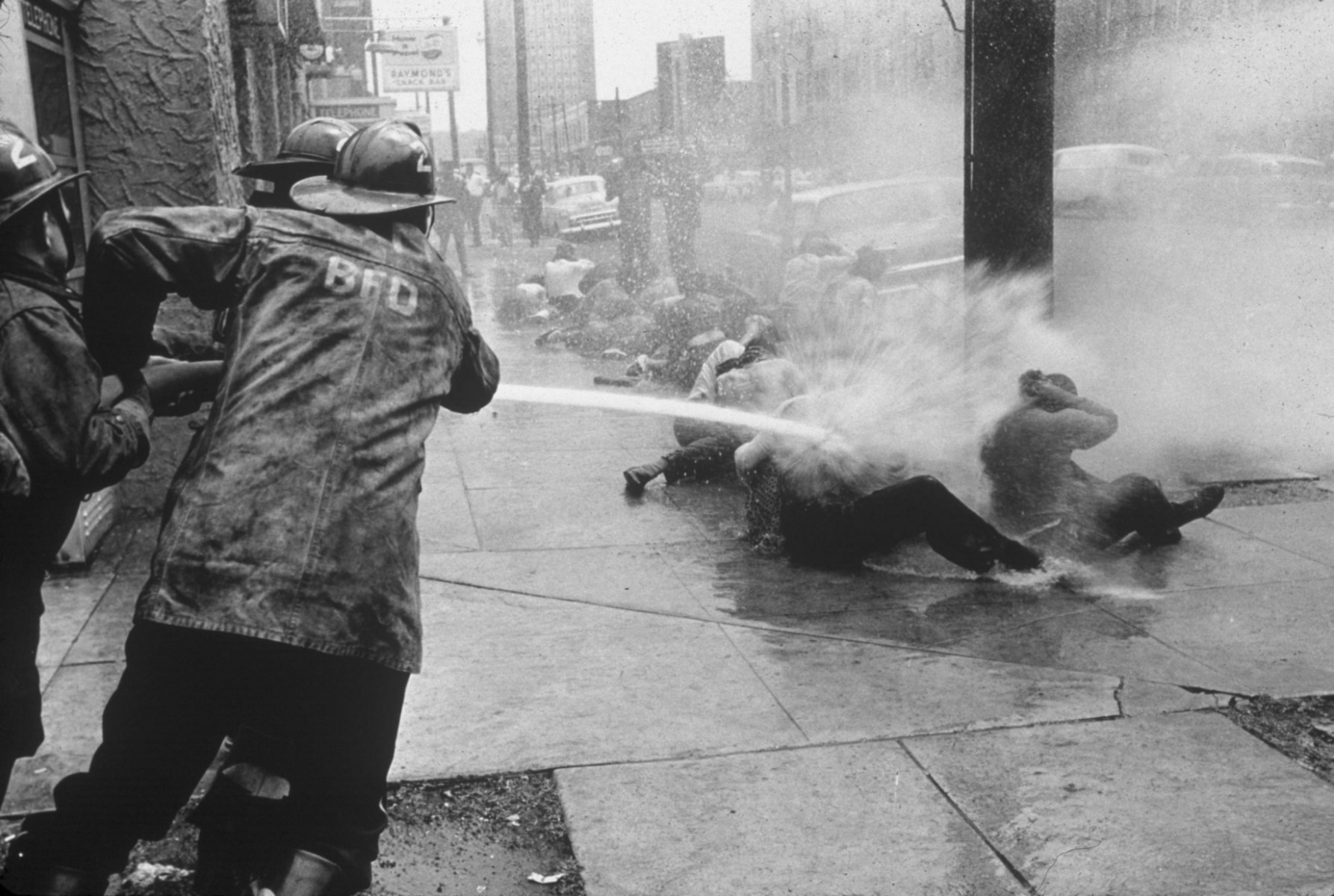
Those who preferred the status quo, those who liked to abuse and oppress others, those who did not care about justice, fought back: they had black leaders assassinated, burned people’s homes, attacked marchers with water hoses and dogs.

I tell you, it’s amazing how history repeats itself. Turn back the clock 2500 years and it’s the exact same story. In our first reading we hear of Jeremiah the prophet being thrown into a cistern, left for dead.
What got him here you ask? He called out his people for the evil of slavery. Even after God told them to free their slaves, that it was unjust to enslave their own people, they continued to do it, and Jeremiah continued to protest. He refused to quit preaching the Truth of God, and it got him first banned from the Temple—unwelcome in the place of worship—and eventually thrown into a cistern. Those with slaves, those with power, did not want to hear the Truth because the Truth forced them to admit that they were wrong, forced them to change what they did. They didn’t want that… and so they acted violently.

The Truth is divisive for those who don’t want to hear it.

Returning, then, to our original question—is Jesus secretly just a criminal mastermind trying to take over Gotham?—this is our answer. When we hear Jesus saying that he has not come to bring peace but division, this is what he is talking about. Jesus does not set out to create division for the sake of division. Rather, like the civil rights advocates, like Jeremiah, he comes preaching the Truth, but he knows that the Truth of the kingdom will inevitably upset people; the justice of God will not be received with joy from everyone because there are people who actually stand to benefit from injustice. Those who live selfishly, those who do not respect life, those who have no care for the kingdom of God will be offended by anything that challenges them. They might even respond with violence.

Jesus himself came preaching a message that many did not want to hear, that tax collectors and prostitutes were loved by God, that religious people were abusing their power and should give it up, that the kings of this world were filled with greed and should be cast down from their thrones. He preached truth to those who did not want to hear it, and it caused division, it created chaos… and it got him killed.

The truth is divisive to those who don’t want to hear it. 

This… presents a bit of a problem for us. Making a commitment to Christ means living the way the he did, caring about the things he cared about, preaching the things he preached. But what Jesus preached, what we stand for, is not alway attuned to the values of the world. If we truly take seriously our commitment to him, it is inevitable that we are going to face some resistance.

Standing with Jesus means that we may not be accepted by society. We are a people that stands for a consistent ethic of life, upholding the dignity of all life in all of its stages. We stand against abortion, the death penalty, euthanasia, war, and torture, while advocating for the well-being of children, refugees, the poor, and the elderly. There is no political ticket that accepts all that we believe. When you stand against greed and oppression in our world, you are going to make some people angry.

Unfortunately, the same thing can be said about our relationships with friends, with boyfriends and girlfriends. Following Christ means that what we do, and more importantly, what we don’t do, will go against what is popular sometimes. It will force us, as difficult as it is, to stand up to our peers and say, “No, I don’t do that sort of thing, and you shouldn’t either.” It might even compel us to intervene when our friends are gossiping or putting someone down, when they are doing something destructive and dangerous say, “stop, we shouldn’t do that.” That is not going to make us popular, no sir. The Truth is not received well by all, and those who commit themselves to it will cause divisions.

Divisions among their friends, but worst of all, among their families. I wish that I could say that it wasn’t the case, but I have met more than enough people whose parents do not support them going to church, who do not support their discernment of a vocation. Someone wants to devote their life to Christ, doing something virtuous for the kingdom, and their families tell them that they are throwing their life away.
How very sad. And what a horrible position it puts them in, to know the Truth but to realize that living it will bring division to people they love very much.

This, this right here, is what Jesus is bringing out attention to today: if we are to be his followers, if we are going to stand by the Truth, we must accept the fact that we are going to cause some divisions. People are not going to always like us. We might even face violence as a result of our lives.

The Truth is divisive for those who don’t want to hear it, but it is no less the Truth.

What Jesus wants from his disciples today is for us to pick a side. Are we going to stand with the world, with what’s easy, overlooking injustices, overlooking difficult situations so that we can live in peace and not upset some people? Or are we going to stand with Jesus, acknowledging that he is the Way, the Truth, and the Life, willing to risk what we have, even risk some of our relationships, to stand for the Truth?

I can tell you, standing with the Truth is not easy. You might lose some friends, face some ridicule. It might even get you arrested, attacked with a fire hose, thrown down a cistern, or even nailed to a cross. But what’s the point in having all the comfort in the world if we’re living a lie?

The following is my homily for the 19th Sunday in Ordinary Time, Year C. The readings can be found here.

A few weeks ago our our internet went out at the friary. It was horrible. No Netflix, no YouTube… just Fr. Frank and I… enjoying each others’ company. Luckily, we called the cable company and they said they’d send a technician out the next day. Unluckily, they said that he would be there anytime between 11 and 5. Lovely.

And so I waited at the house. At first, I was very vigilant, knowing that he could come at any moment. I didn’t make any phone calls, didn’t take Louis for a walk… I didn’t even want to take a shower or use the bathroom, just in case he came in the five minutes that I couldn’t answer the door. I just waited around the house, ready to answer the door at the drop of a hat.

After a few hours… I was not so vigilant. He’s not coming now, let me just run up to the center for a minute; I’ll just pop into the shower; maybe I’ll go take a nap. As the day rolled on, it was difficult to remain perfectly ready for whenever he showed up. I had things to do. I couldn’t be waiting by the door for six hours. Life moves on.

Happily, the technician finally came, fixed the modem, and so we have internet… I’m sure you were worried. But it reminded me a bit of our readings today. In each one, we hear of God speaking of a future reality yet to come, a reality that will come at an indeterminate time that we must way for. Wisdom reminds us of how the Israelites, those who were slaves and oppressed, waited to be saved for many years, how they had lived not knowing the time or day when they would be set free; the letter to the Hebrews tells us that many lived their entire lives waiting for their faith to be fulfilled, but died before that happened; and of course, o Gospel speaks of the master returning to the servant, a clear analogy to Jesus returning to his people in the second coming. In all of this, God tells us that we must wait for what we want. He tells us to be vigilant, to be ready at any moment for our Lord to return, to gird your loins. Everyone’s loins girded?

I’ve heard preachers say, “Treat every moment as if the Lord is on his way. Is this where you wanna be when Jesus comes?” they ask. And on one hand, it’s great advice, right. It reminds us to have integrity, to do what’s right even if no one is watching, to be ready at any moment. Good stuff. There’s just one problem—it’s entirely impractical. If people actually did live their lives as if Jesus were coming back right now, no one would ever go to work and there would be no dinner made tonight. If people actually did live with that much vigilance, they would run out of energy almost immediately. Does that mean we’re not supposed to sleep? Not supposed to go to the gym, clean out the gutters, or ever get dirty? Are we supposed to avoid Georgia football games, just in case Jesus comes back part way through the fourth quarter and our church is empty?

If you’ve ever tried to wait for the cable guy and found that 11-5 window a bit difficult to manage, then what do we do with Jesus who left us 2000 years ago and said he’d be right back? What does “being ready” even mean? I want to suggest three things.

The first is that we wait with surety, not worrying

Whether it’s with the cable guy or waiting for the that cute guy or girl to text you because they said they would, there’s always a doubt that it’s never going to happen. You can wait all you want, but it might all be for naught. Not with Jesus. As people of faith, we have no need to worry, no reason to doubt. Jesus said that he would come, and so we can take that to the bank. Our hope, in this life and the next, is not just some wishful thinking, but the most unbreakable promise that we could ever receive. 

How do we know this? Because we already possess what we await. 

While we do wait for heaven, we do wait for the second coming—events, places in the future—the fact of the matter is that our hope is rooted in the past and in the present: Jesus has already come. He already took on human flesh, walked this earth, performed miracles, and died for us. Not in the future, but in our midst does he make himself present in the reading of the word, in me, in you, and of course, in the sacrifice on the altar. It’s why, if you ever noticed, we begin by referencing four things—I kiss the altar, the book of the Gospels is placed in a prominent place, I greet you with the Lord’s blessing, and you greet me back. At each and every mass, we begin Mass by acknowledging the presence of Christ right here among us. The very first things we do when we worship. What we await, what we hope for, is already in our midst. We’re gathered here, not just for some distant, far off, abstract future… but for the living and true God among us.

And so, point number three, our waiting must not be passive, but that of active disciples. We do not sit around, waiting at the door, waiting at the phone, hoping that something will happen to us. As Christians, we know that something has already happened to us: in our baptisms and confirmations, we were grafted with Christ and infused with the Holy Spirit; in hearing the Word and receiving the Eucharist, we are continually filled up and sent out. The very reason that we are a Church, the mystery of Pentecost, is so that we would not need to sit around on our hands waiting for Christ to come back before we did anything, but that we would take up where he left off, that we would go out and heal people as he did; that we would go out and feed people like he did; that we would go out and be ministers of peace and justice in a violent and isolated world. 

What does it mean to be ready for Christ’s return? It means living with sure faith that it is not a matter of if, but when; it means recognizing in all that we do, in everywhere we go, that Christ’s presence is among us, filling us with his love; and it means devoting our lives to the mission that he started. 

And so, I have to ask… Are you ready?