Down through history, the Bible has been as much of a weapon as any manmade contraption. Used not to inflict a deadly blow but rather to entrap, oppress, or belittle, one could argue that it is the most powerful forces of violence the world has ever seen.

In fact, many do argue that.

And yet, we as Christians hold it as the most sacred of books. We hold that this controversial book is not just important, it is the Word of God, so divinely inspired and life-giving that it offers us a pathway to salvation.

How do we reconcile the two? How do we, as faithful Christians, respond to those who see genocide, slavery, and incest within its pages and dismiss its importance? Forget responding to others—how do we reconcile this within our own consciences?

Naturally, these are questions that would take hours to answer, and even still we mind find ourselves struggling with the paradoxes we find. But I would like to offer a start. It may not be a solution and it may not offer concrete answers, but I would like to offer a means by which we begin to answer the difficult questions of faith.

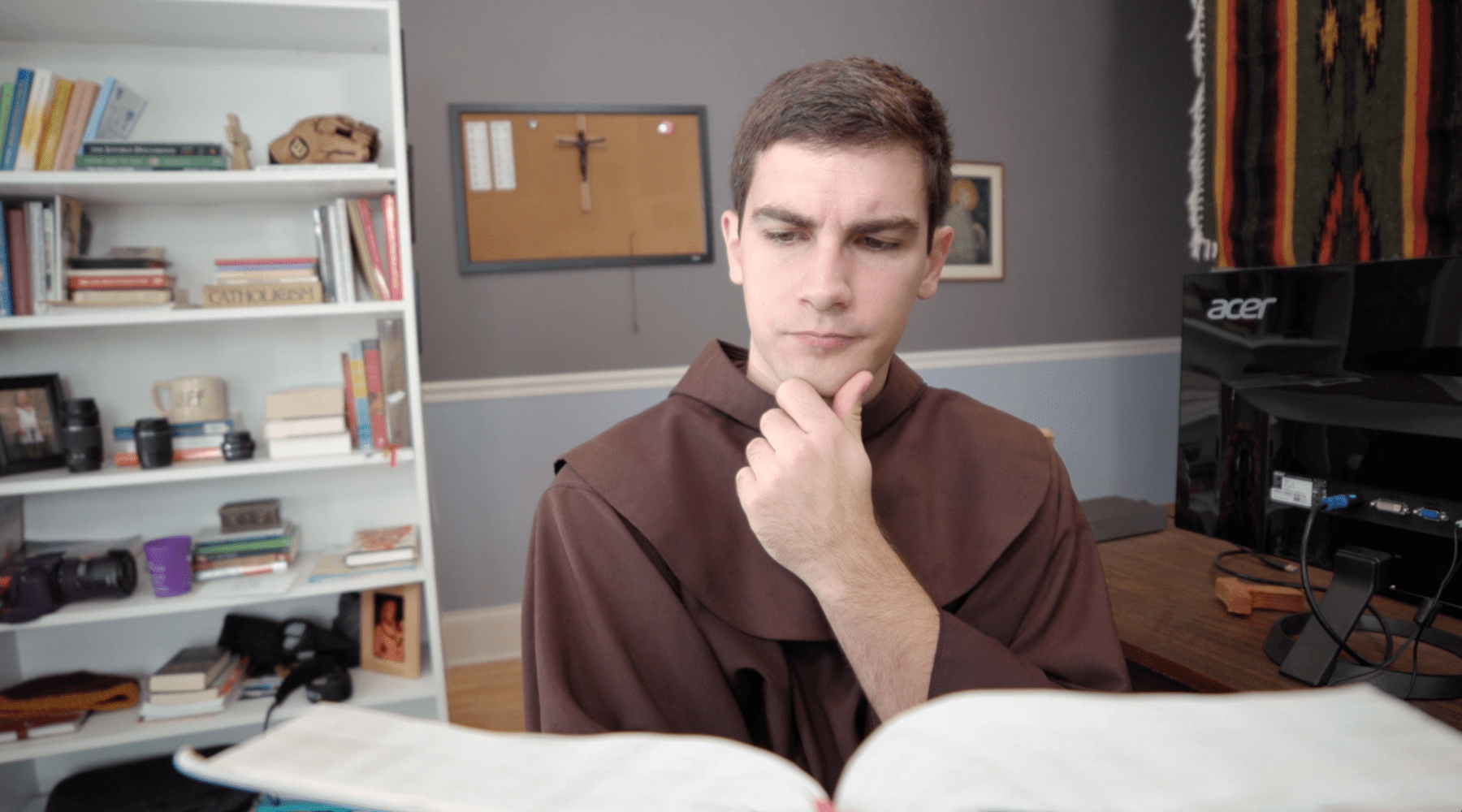
In this week’s vlog, I look to the Bible as a complicated and confusing book, but one that can offer us powerful truths if we know how to read it. My hope is that it begins a conversation, evokes a deeply hidden question, and inspires us to take seriously our call to know and live the Word of God in our lives.

For email subscribers, click here to watch the video. As a reminder, you can follow me on Facebook, Twitter, and Instagram for exclusive content not found here on the blog.

Faith is an interesting thing. Where does it come from? How do we receive it? Where does it go sometimes?

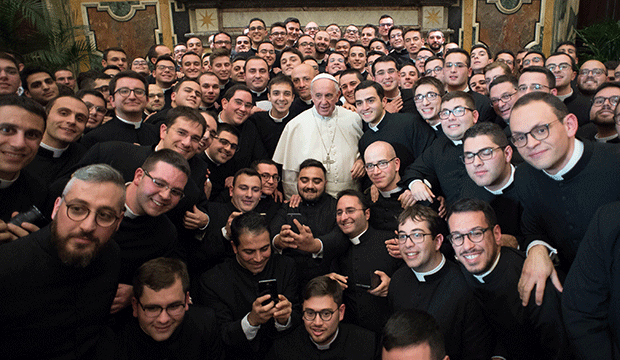
As we are faced with the sobering reality that so many of our young people are either leaving the Church or being brought up in a secular world, we can see how delicate the faith we possess is. Though nearly two millennia in age, it would take but one generation for it to disappear. If no one receives it today, who will be around to pass it on tomorrow?

Now, I should say that I do not believe that we are in such a bleak situation as to say that the Christian faith is being wiped off the face of the earth. Worldwide the number of Christians continues to rise and is stronger than ever in some places. But I do think, especially in the West, it is a question we have to ponder: are we doing enough to make sure that the faith we possess will live beyond us. While it may not disappear completely, there isa good chance that it will be left weaker than when we received it.

For me, that’s just not good enough. Sure, we are facing a secular society that might be as volatile towards religion as it was at the time of the French Revolution. Of course, levels of atheism or non-affiliation may be the highest they have ever been. These are realities for sure, but they are not excuses. The world has seen troubled times, and our Church, trust me when I say, has been through worse. The issue is not the world; the issue is whether or not we have the faith and charisma and effort to infuse that world with something we know is worth handing on.

Will you help me hand on what you have found to the next generation? You can start by clicking here to watch this week’s vlog.

It’s a terrible state in our Church today that 50%—yes, fifty percent—of our parishes report rates of church attendance below the median.

It’s also true by definition that fifty percent fall below the median because the median of any data set is the exact middle, meaning that I could have said anything and it would have been true! Fifty percent of our children fall below the median reading level! Fifty percent of NFL teams fall below the median in ticket sales! Fifty percent of dogs fall below the median level of treats received in a day.

Now that last one is tragic…

My point in using this bizarre example is to show that statistics do not speak for themselves. Taken out of context, selectively presented, or intentionally deceptive—as in my attempt to confuse you with the word “median”—a bit of information may be factually correct and yet at the same time very misleading.

Such is the case with the priest shortage crisis. For years we have heard statistics telling us that the total number of priests is considerably lower than needed, that seminaries are emptier than they were in 1975, and that more parishes than ever are being run without a resident priest. And in themselves, these statistics are factually true. Thanks to the Center for Applied Research in the Apostolate (CARA), the Catholic Church can quickly and accurately quote any amount of precise numbers about the shape of the Church across time.

The problem is that these numbered are not often placed  within their appropriate context meaning that they do not necessarily convey the correct meaning. Too often, as we see in politics and advertising, these numbers can be used incorrectly, in a misleading fashion, or simply reported incorrectly, giving the impression that something is better or worse than it seems. For years we have known that there is a crisis on our hands, and yet, for years many have perpetuated misleading or false statements about what that crisis actually is.

In this week’s video, found here for email subscribers, I try to dispel five myths about the priest shortage crisis, putting commonly held statistics and beliefs within their appropriate contexts.

It’s important to note my intention in making this video. I by no means am trying to mitigate the issue or gloss over its effects. Despite trying to break down these myths, I am not trying to say that there is no crisis. There definitely is. The issue, for me, is to make sure we truly understand what that issue is.

Just a bit of Discipline

They say that sometimes the best strategy to preaching is to preach to yourself: figure out what you really need to hear and go with that.

One can only hope that’s the case as this post is riddled with irony. This week’s vlog, posted a day late and without an accompanying blog post until Saturday at 6:45pm Central Time (not exactly the original plan), recommends that the secret to staying balanced, getting work done, and being a good Christian is adding some discipline to our lives.

Says the guy completely behind on everything.

But then again, “they” also say “do as I say not as I do.” In that vein, and hearing my own preaching, I present this newest video on a Saturday night as I am abstaining from watching college football so I can put some devoted time into work and eventually some late-night prayer!

Click here to view from email.

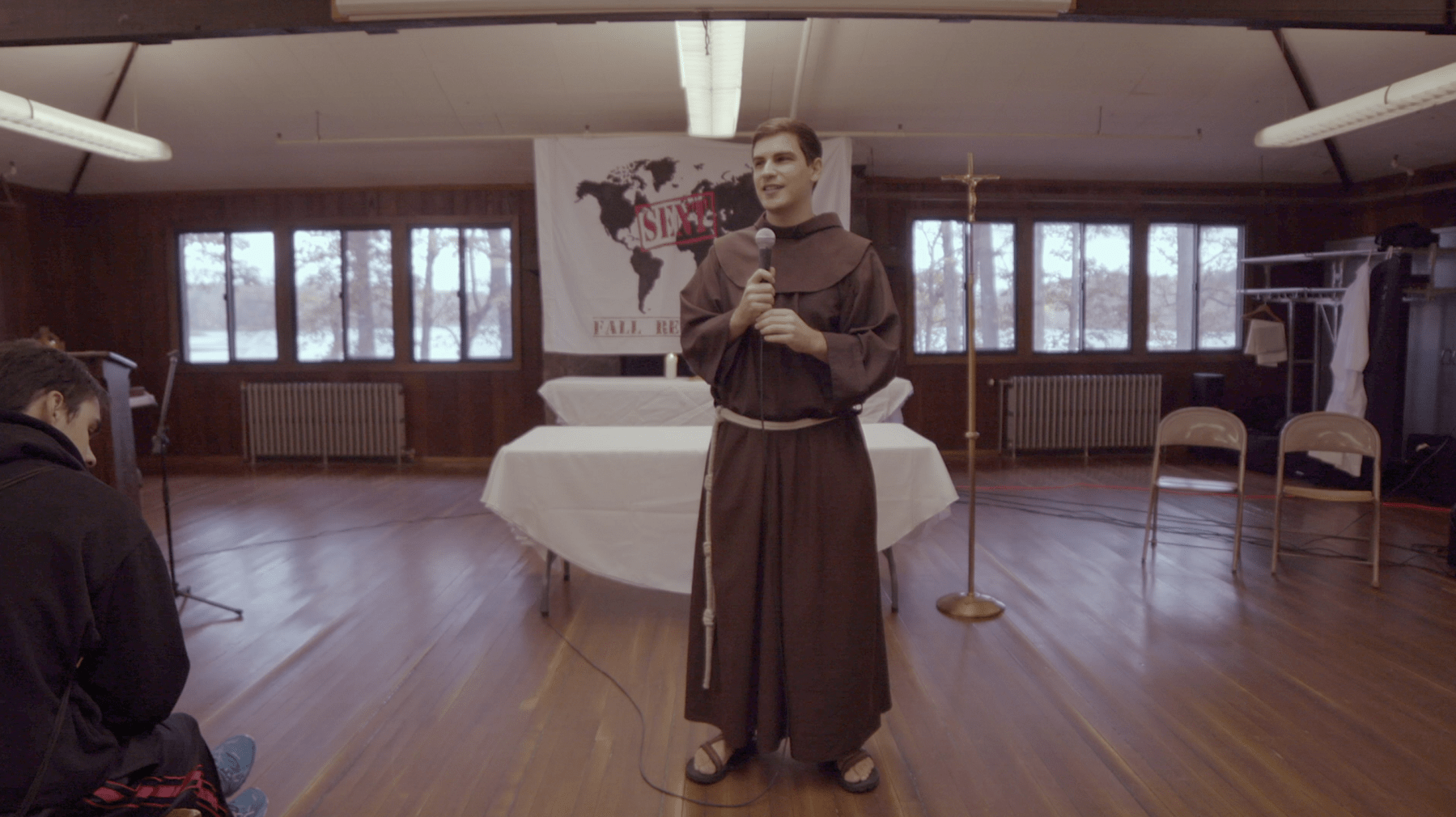
Since it’s a holy day of the Church… how about an unexpected blog post?! This past weekend I was privileged to be invited to speak at the Michigan State University Catholic Student Center’s fall retreat. I gave two talks, one of which was entitled, “What is the Good News?”

It was a great for sure, maybe more to come on Friday… For now, click here to watch the talk!