It’s no secret that some in the religious world approach science with a lot of skepticism. Approaching the two disciplines with a polarized mindset, they feel that they have to pick between religion OR science, as if one is completely right while the other is completely wrong. This, we know as Catholics, is a rather short-sighted approach. As “non-overlapping magisteria,” science and religion represent ways of knowing that speak to different things: science explains WHAT is around us while religion explains WHY it exists and how we’re supposed to use it. These disciplines do not contradict each other, nor can they exist without the other. To have good faith, we need to be well informed about what is going on around us; to study the world around us, we need to have foundation of faith to know how to approach it.

For many, this topic is a bit worn out. An issue only to the most fanatic, the rest of us are left wondering why this is still a topic of debate and why Br. Casey continues to write about it. It’s fair to wonder that. But you see, in this week’s Catholicism in Focus I want to also address this issue’s opposite: scientism.

A topic that has received a lot of attention of late from Bishop Robert Barron, scientism is essentially the same imbalance in relationship between science and religion, except from the other side. Rather than denying that science has anything to offer people of faith, scientism proposes that science is the only thing that can offer knowledge. In other words, “If you can’t prove it, it doesn’t exist.”

What’s so unfortunate about this opinion is not that people take science seriously. Science is a wonderful discipline that allows us to know about the world, which, in turn, helps us to know about God. What’s so unfortunate is that it denies all of the other ways of knowing: history, poetry, literature, art, philosophy, and religion, to name just a few. When looking at a sunset, science can tell us why the colors are the way they are, how hot the sun is, its speed and distance related to the earth, and its effect on human life. Those are all good things. But is that all there is to know about the sun? What about how it makes us feel, the memories it evokes, how it teaches us lessons about life? Surely, when we look at a sunset our thoughts are not focused on the chemical reaction occurring 93 million miles away. No, we’re focused on the beauty of it all, the memory of past sunsets, the constancy of the earth’s turning, the wonder of the universe, and the meaning of life. These are not topics answered by science but captured and shared only by other disciplines. How could we say that all that matters—that the only things that could ever be held true—are the things that we can prove by observation?

No, we need them all. Science is good. Science is wonderful, even. But science does not answer all of our questions. When we look to the marvels of the universe, something like the Big Bang Theory can be extremely helpful, and we should study it to know more about God, but it cannot give us answers to ultimate questions.

To watch this video, click here.

After nine months of pitching a proposal, agreeing on a concept, writing, editing, and planning, I’m finally able to share something that has consumed much of my energy of the last year: I wrote a book!

Man it feels good to finally say that.

Naturally, more will be revealed in the coming weeks and months, but for now, the essential information: the title is Called: What Happens After Saying Yes to God, it will be published by Franciscan Media, and it is set to release at the end of February (just in time to be a great resource during Lent…)

If you want to find out more, be sure to watch this week’s vlog by clicking here, and if you haven’t already followed me on Facebook, Instagram, and Twitter, you’re going to want to do that now! Lots of pictures, behind the scenes, interview, and even giveaways to come that you don’t want to miss!


“Why is there something rather than nothing?” This philosophical question, posed by Martin Heidegger in the 20th century, is one that reaches into the depths of our being. When we look around and see stuff—people, trees, rocks, Burger Kings, dust, light—we can often take it for granted. That stuff is just there. It always has been. It always should be. But is that really true? Why is anything here? For the philosophical mind, we realize that stuff didn’t have to exist, that there could be a “world” of nothing, a non-world in which nothing existed.

So, why is there something rather than nothing? Admittedly, this is not a question I can pretend to answer, but I think the question leads us to other ones. Like, “How did God create the universe?” or “How does God relate to what God has created?” We can’t truly know why God decided to create, but since we see that things do exist and we do believe in God, we can wonder how they fit together.

There are clues, no doubt, all throughout Scripture, but the most concentrated bits of evidence obviously occur at the beginning: Genesis. And while we can all probably give an account of what happened (God spoke and it came to be, God took a rib from Adam to make Eve, they lived in the garden), what might surprise you is that such a story is a combination of two creation myths found in Genesis. Yes, that’s right: Genesis contains two separate stories, complete with different details about the process of creation, different words to refer to God, and different theological conclusions about God.

What do we do with this? Well, that’s the topic of this week’s Catholicism in Focus, a look at Creation from a biblical perspective. For email subscribers, click here to watch.

“Are you ready?” For me, context almost doesn’t matter: the answer to this question is almost always “no.” Is it time to go already? If there is one thing I wish I could have an excess of, it most certainly wouldn’t be money or fame. No, I just want more time. It seems like I’m always running out of it, running behind, and just barely keeping up. I look at my calendar on a regular basis and wonder with disbelief, “How is it already… time for finals… end of November… the latter half of the decade??” The time just breezes by and I hope to catch a bit of what’s important along the way.

But it didn’t always used to be this way. No, I remember when I was young and time seemed to stand still. When I was in elementary school, I lived in full anticipation of what was next. Each day was a countdown of some sort, part of an elaborate preparation for some celebration or holiday. I remember how everything all of my surroundings reminded me of what time it was, what was next, and what I should be getting ready for. The halls of every elementary school inundate its students with feeling of the season, every square inch festively decorated.

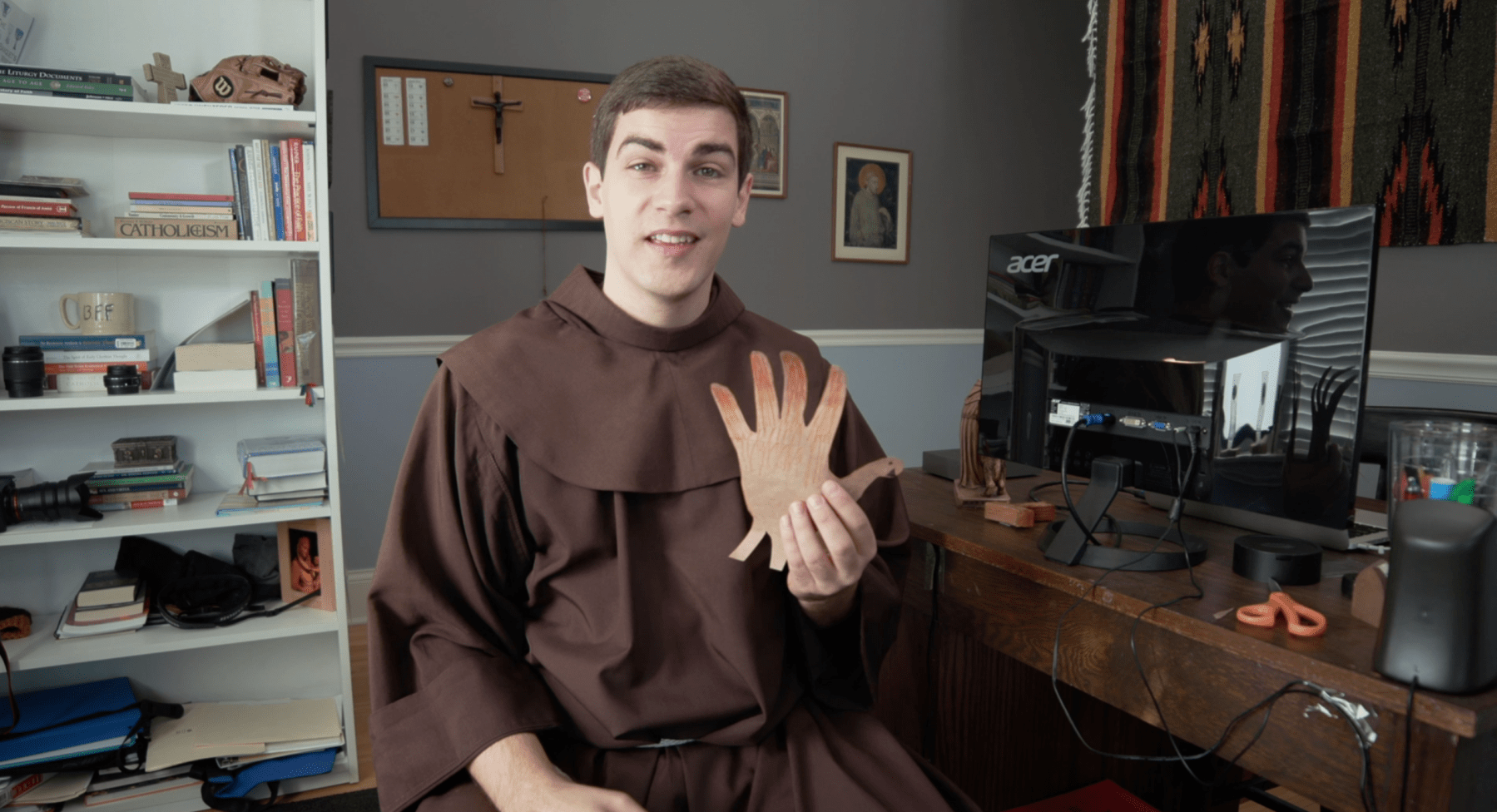
I think there’s something to that. I think there are many things of our childhood that are tragically lost in adulthood. Sure, making turkeys out of outlines of our hands or snowflakes out of folded up paper may be a little juvenile (is it though…?) but there is something to be said about taking the time to enter into the approaching season. We may have bills to pay, papers to write, rooms to clean, and a whole host of items piling up even while I type, and it may seem overwhelming to take the time to do anything else, but can we really afford not to? 

There’s a reason we take the time to celebrate what and how we do. We commemorate the moments in history that have significant meaning to our lives, moments that define us and give us life. I would like to argue that these are not just nice opportunities for a party each year but rather essential to developing us as people, reminding us who we are and who we should be.

If that’s the case, how could we just show up the day of and expect to be able to fully participate in them?

We can’t. The moments that truly matter to us require preparation, preparation of heart, mind, and spirit. We need to be ready—physically, emotionally, and most of all spiritually—for what is to come.

In 31 days, the Solemnity of the Nativity of our Lord will be upon us. In just over a month, we will be celebrating the fact that the second person of the Triune God, Jesus, came to earth to be like us. Yes, God walked among us as one of us. What a powerful occasion. What an immense reality. What an altogether mind-blowingly important event in our own salvation history that shapes everything we do. How could we just show up on December 25 and be ready to celebrate it?

We couldn’t. And luckily, we don’t have to. Next week (yes, not this Sunday) we begin the season of Advent. Four weeks of preparation, waiting, hoping. Four weeks that should be taken seriously. Four weeks that should be entered into and used to transform us. What will you do to prepare?

This week’s vlog asks that very question. It challenges each of us to slow down and let God speak to us in a special way over the course of these few weeks, to let ourselves be ready, for once, for what is about to happen.

What will you do?

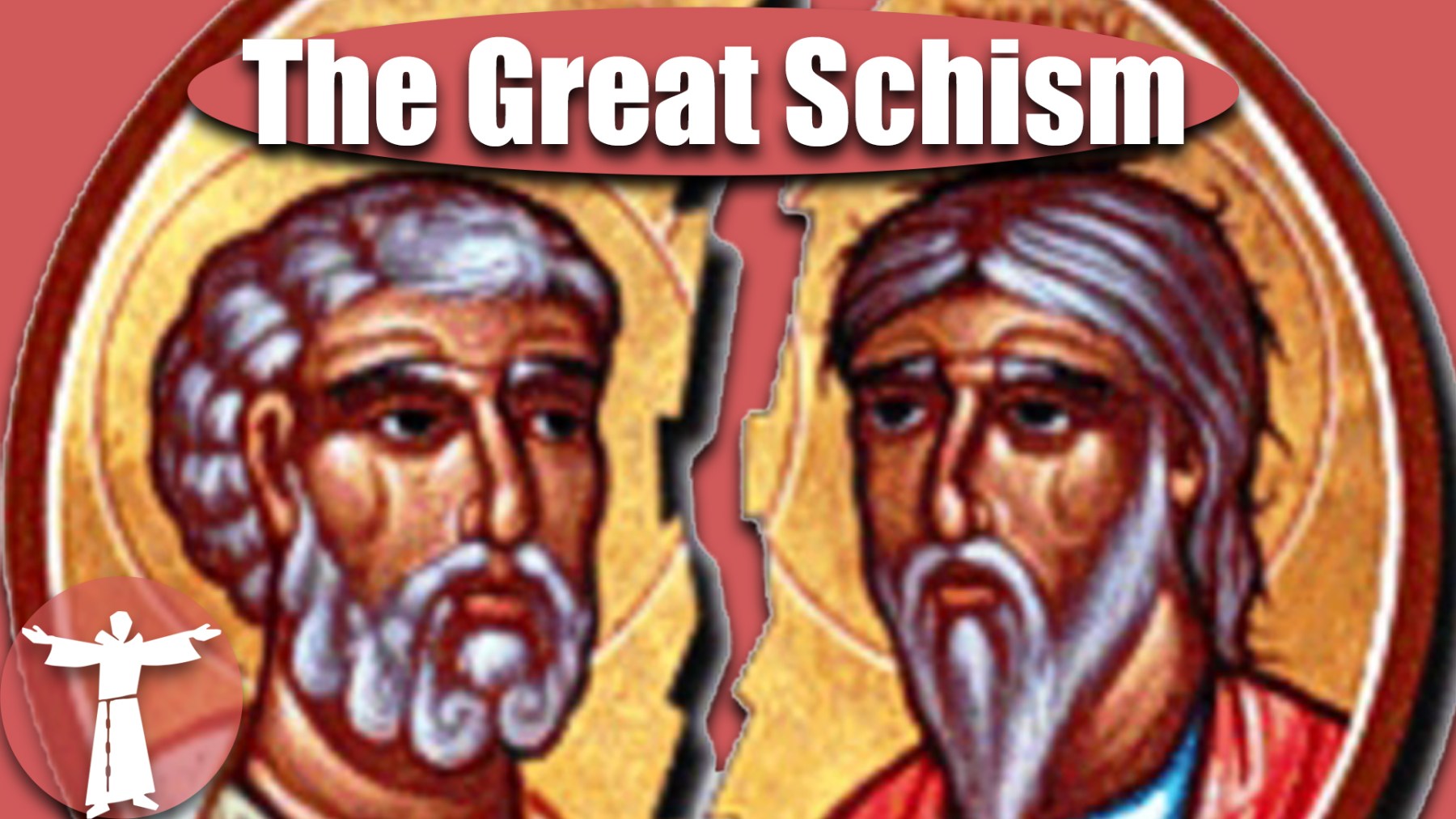
A few years ago I took a class on Church history. Naturally, one of the major topics of study was the schism between the Churches of the East and West known as the “Great Schism.” But rather than just focus on the events of 1054 (the mutual excommunication of Pope and Patriarch), our professor brought us back hundreds of years to see how the seeds of division had been planted and nurtured well before that time. We learned how it was a complicated issue, how both sides had made their own mistakes, and how we as the Catholic Church needed to have the humility to recognize the major role we played in causing the problem.

It was a great moment of clarity and regret for me.

Most of all, though, I will never forget the interaction I had with a fellow student the moment we left the classroom. “Do you think that the Eastern people will ever come back to the Catholic Church?” he asked. Um… what?? Were you not just sitting there in class? Did you not see how it was not them who broke off from us but a tangled web of issues over the course of many centuries that produced a pretty mutual split? I was quick to answer: “Not with that attitude they won’t.”

Maybe a bit sharp, and I eventually explained what I meant and hopefully put together the pieces he had missed in class, but I stand by my statement: no unification will happen if we hold to the idea that we are the true Church without fault in the matter, and that they need to completely ascent to us. While the Protestant Reformation may have a different dynamic, the relationship between the Eastern and Western Churches, to me at least, is that of rival fraternal twin brothers: coming from the same mother, sharing the same history, and fighting all through our youth, we look different and have different perspectives but neither of us ultimately has a claim to being the more “true” brother. We share in our authentic status as the original Church of Jesus Christ and it is a great sin against the body of Christ that we remain apart.

Theological and practical issues do remain, and I am not saying that those do not matter or that one side cannot be more right than the other. What I am saying, and say quite emphatically, is that unification is not a matter of one side coming back to the other. From the start we were different, and different we will remain. But unification does not mean uniformity. When we look to history, we see that what separates us is not our language, culture, theology, or liturgical practice—these differences existed while we remained in communion with one another for centuries. No, sadly, history reveals that what most keeps us apart is our own desire for power and authority, the notion that we are the real and true Church that others must return to.

If you, like me, disagree with this very un-Christian notion that undermines the body of Christ and wish to see a more unified Church, then let’s begin by showing a little humility towards our Eastern brothers and sisters and work for something more than we have.

For more of a foundation in the issues that divided us a millennia ago, click here to watch this week’s video.