
Click here to listen

With the new live-action Aladdin movie recently announced, Brother Tito and I decided to revisit the original animated movie to discuss its hero. You know, the guy who lies to everyone about who he is, uses a genie to control the world around him, gets caught in his lies, but then by the end of the movie ends up with the girl, a palace, and tremendous power, all without every showing remorse or saying he’s sorry.

You know, the sort of heroic behavior we want to instill into our kids.

For Br. Tito and I, this is just one example of many of “cheap grace” in entertainment, happy endings and character resolutions that just don’t seem “earned.” The character gets everything they want without changing or making any sacrifices; the horrible things they’ve done are forgiven without contrition or attempt at reconciliation. It’s “forgiveness,” and I guess a “happy ending,” but it’s just not that satisfying.

Real forgiveness, we contend, the sort of forgiveness that flows from the grace of God, is completely free, but it has a cost. It takes time. It takes effort. The reason that “cheap grace” in entertainment leaves us so unsatisfied is because we know that’s not the way the world works. Change does not happen immediately or completely, nor is it a magical property that happens to us without our knowing or willing. It takes sacrifice. It takes contrition.

And the best stories in entertainment get this.

As friars, it is not uncommon for us to find ourselves in hospitals comforting people in tragic situations. Whether it be a patient with a troublesome diagnosis or a family dealing with the loss of a loved one, it is always difficult.

It is a very sad situation, made worse only by the fact that they are sometimes forced to make difficult decisions in the midst of their anguish. Should we continue treatment? Is it okay to remove life support? What should people of faith do in the face of death? Even for those who have studied moral theology and are completely disconnected from the situation, these can be difficult questions; add in the weight of personal sadness, and it can be debilitating.

But it doesn’t have to be so despairing. It doesn’t have to be soul-crushing.

While death is always tragic, I think that we compound our losses and make these decisions far more difficult than they already are because we wait until the point of death to even acknowledge that death is an inevitability. Many find themselves around a hospital bed having never even thought about death, let alone encountering it personally. They are forced to rationalize, theologize, and make ethical decisions for the first time, all in the midst of grief.

As seminarians, we hear it all the time from our pastoral theology professors: you can’t teach people when people are in the middle of a tragedy. You can’t reason with someone, explain to them that God loves their child, that we need to have hope in Christ, that death is normal and not the end when they’re overwhelmed with emotion. That is not the time to break down false conceptions of God. That is not the time for a lesson in moral theology. It is simply the time to be with them and offer them strength.

So when is the right time? How do we catechize appropriately before they find themselves in such situations?

How about by making a video on YouTube teaching about the ethical questions of end of life issues? Yeah, that seems like a good idea. It’s why I made this week’s video, and why I hope to make another video by the end of the semester on the common misconceptions of the sacrament of anointing, another topic that requires catechesis when it’s already too late.

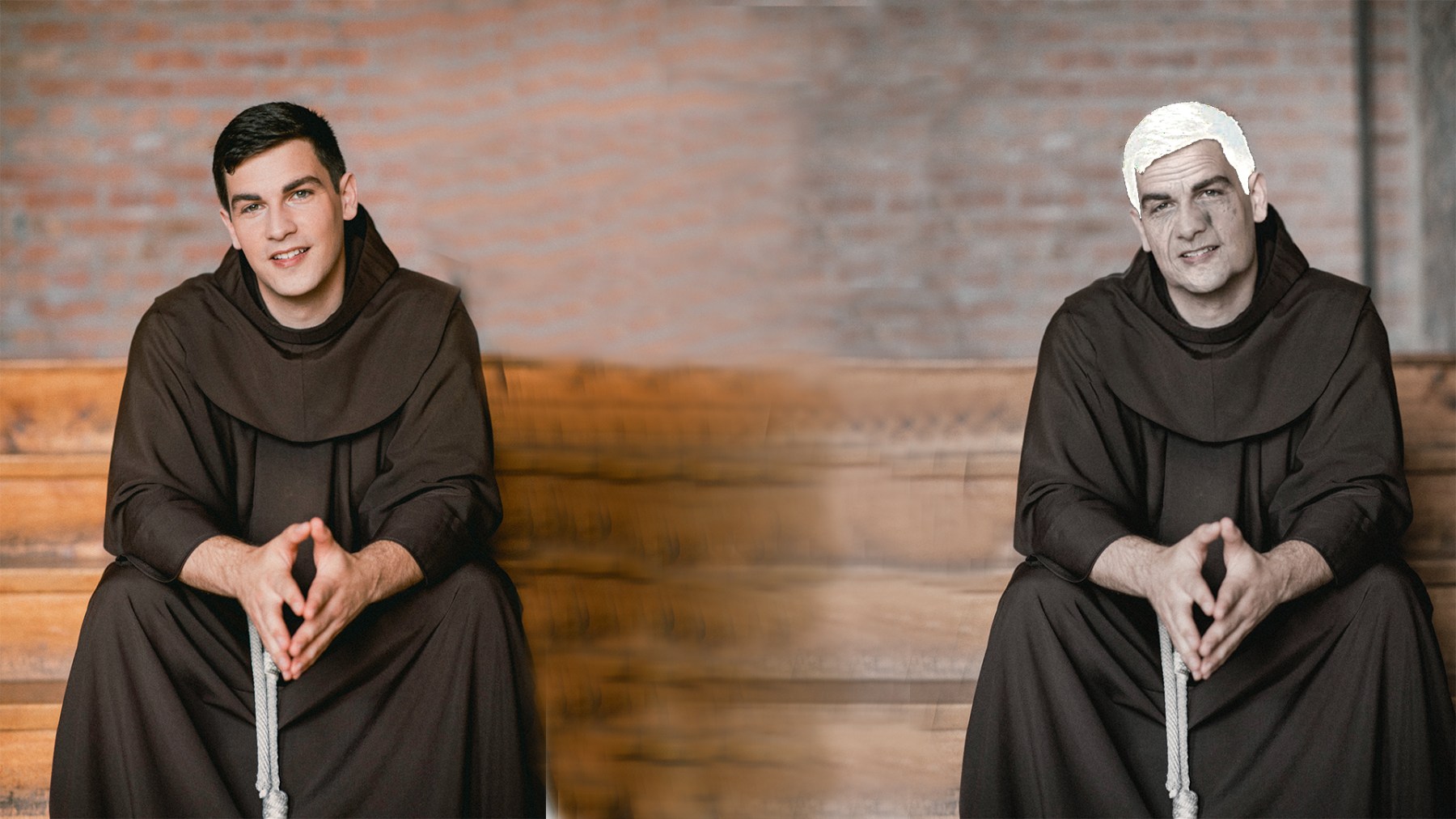
It is a fact of life: we don’t stay “young” forever. If we are blessed enough to live a long life, we will inevitably find ourselves having less energy, unable to do the things we once could, and needing more help. For many of us, this is accompanied by more free time with family and friends, a time that we can rightly call our “golden years.”

But what about for friars who are so defined by our work and have chosen not to build families of our own? What happens to these men who grow old and infirm without a wife, children, or grandchildren by their side?

This was a major question I had in my discernment, one that almost prevented me from entering. Would I be lonely? I wondered.

Visiting one of our retirement houses this week, I was reminded of that old fear and how I overcame it. I was reminded of the great treasure that these men are to our order.

If you or someone you know is considering religious life and is worried about this issue, I pray that my experience may help. I cannot think of a more meaningful thing to do with one’s life, and I know that while I may never have the comfort of a wife and kids, I will always have this life to live and the brothers by my side to live it with me.

Click here to listen

In the movie Dumb and Dumber, there is a scene in which the two main characters weep uncontrollably while watching television. On the screen, we see two children carrying bags, united with an older male figure, walk towards a house as the camera slowly zooms out. One of the children is heard saying, “Do you think he’ll let us stay?” It’s clearly a touching “happy ending” to a sad movie.

Until the scene ends with the logo for Pacific Bell and a narrator promoting the company. What they were watching—and weeping uncontrollably to—was a commercial.

The movie is, of course, a complete farce, and this scene further highlights how “dumb” the two characters are; they are completely out of touch with reality. And yet, what makes this scene so funny is that I think it resonates with each one of us: we know what it’s like to get sucked in by an emotional commercial.

It’s sort of a remarkable feat, isn’t it? Commercials have less than 30 seconds to introduce characters, develop a plot, and resolve a conflict, and yet can tell some amazing stories. Many make us laugh. Some can actually be quite profound.

And all of them are trying to manipulate our emotions in some way.

That’s what Br. Tito and I decided to discuss this week on our podcast, Everyday Liminality. Looking at some of our favorite—and least favorite—commercials, we look at the power ads wield over us and suggest that we should always be on our guard for the tricks companies try to use against us.

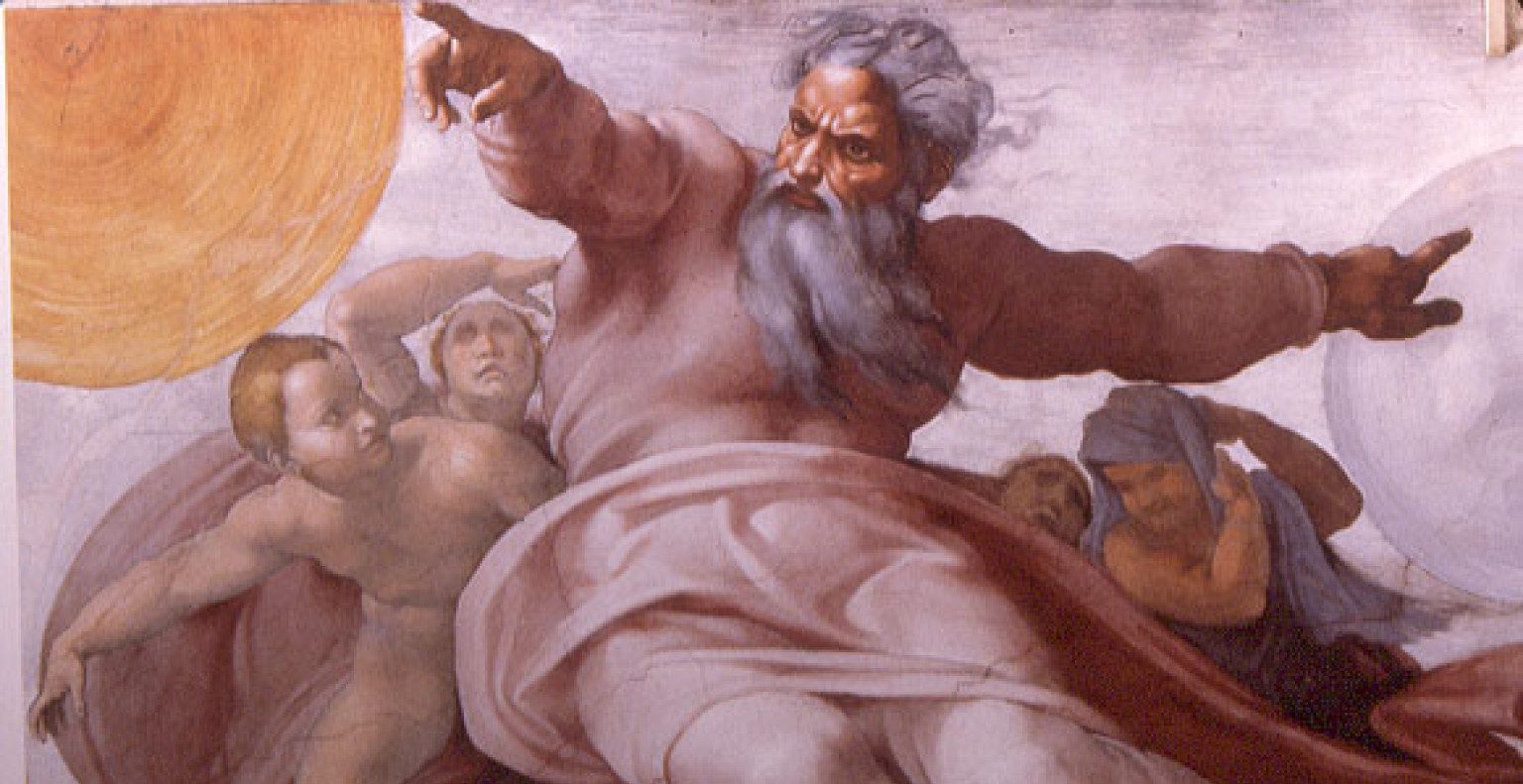
In the early Church, some proposed that the Old Testament be entirely removed from the canon of Scripture, stating that it had nothing to do with the call to follow Christ. Some, taking this to an extreme, believed that there were actually two gods in the Bible: the angry, evil God of the Old Testament that created the world and tortured creation, and the loving, good God of the New Testament who came to set us free from the tyranny of creation and save us from the angry God.

Naturally, both of these stances were condemned as heresies, as there is but one God, but there is a part of me that thinks that these ideas live on even today. Ask yourself: would you prefer the God of the Old Testament or the God of the New Testament? If you think you can actually choose… we have a problem on our hands. They’re the same God.

But most don’t see it that way, at least not implicitly. Even among faithful Christians, there is this innate sense that the Old Testament God is angry and wrathful while the New Testament God is loving and merciful. This is not only unfortunate, but a complete misreading of the Bible, and something that I want to address in this week’s Catholicism in Focus.