Christianity. Pure and Simple.

Has anyone ever asked you why you are Christian? I hope so. It’s a seemingly easy question to answer, and yet, I worry that many cradle-Christians don’t know what to say (I don’t think that this is purely a Catholic issue, but one for all who grew up in the faith and have never known anything else.)

So here’s my answer. It’s a longer form of what could possibly be said in that situation, but it boils down to just one thing: I am a Christian because I have experienced the healing love of Jesus Christ. I would not respond with philosophical truths, testimony from others, accounts from the Bible, or moralistic imperatives, although each of these things bear truth as well. Christianity, as far as I can see, is a matter of relationship at its very core. Pure and simple, if you don’t have that relationship, if you’ve never had that encounter, nothing else will make sense.

And so encounter him. Let him encounter you. I will leave you with one of my favorite passages from Pope Francis’ Evangelii Gaudium:

I invite all Christians, everywhere, at this very moment, to a renewed personal encounter with Jesus Christ, or at least an openness to letting him encounter them; I ask all of you to do this unfailingly each day. No one should think that this invitation is not meant for him or her, since “no one is excluded from the joy brought by the Lord”. The Lord does not disappoint those who take this risk; whenever we take a step towards Jesus, we come to realize that he is already there, waiting for us with open arms. Now is the time to say to Jesus: “Lord, I have let myself be deceived; in a thousand ways I have shunned your love, yet here I am once more, to renew my covenant with you. I need you. Save me once again, Lord, take me once more into your redeeming embrace”. How good it feels to come back to him whenever we are lost! Let me say this once more: God never tires of forgiving us; we are the ones who tire of seeking his mercy. Christ, who told us to forgive one another “seventy times seven” (Mt 18:22) has given us his example: he has forgiven us seventy times seven. Time and time again he bears us on his shoulders. No one can strip us of the dignity bestowed upon us by this boundless and unfailing love. With a tenderness which never disappoints, but is always capable of restoring our joy, he makes it possible for us to lift up our heads and to start anew. Let us not flee from the resurrection of Jesus, let us never give up, come what will. May nothing inspire more than his life, which impels us onwards!

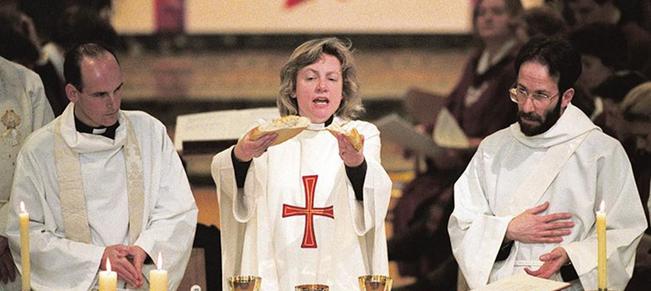
The question of ordaining women to the priesthood is not open to debate. At least, not according to John Paul II. In his 1994 letter Ordinatio Sacerdotalis, he states, “I declare that the Church has no authority whatsoever to confer priestly ordination on women and that this judgment is to be definitively held by all the Church’s faithful.”

In other words, the Church will not and cannot ordain women to be priests.

The point of this week’s Catholicism In Focus is not to spark a debate. I have no interest in sharing my own opinions or hearing others’. What one thinks about a doctrine is of no consequence, really, especially when few people know what the doctrine actually says.

The purpose of this video, then, is to look at the rationale given in this definitive statement and to understand its limits. Why can women not be ordained priests, according to the Catholic magisterium? How does this limit their scope of leadership in the Church? In what ways has this doctrine been inappropriately applied to prevent women from active participation? These are the questions I seek to answer, particularly the final one.

Women may not be able to be ordained priests, but that doesn’t mean there aren’t ways for them to have legitimate influence. Until those ways become the norm and not the exception, we’ve got some work to do.

The following is a homily for the Feast of the Ascension, Year A. The readings can be found here.

Technology is amazing these days, isn’t it? Despite being trapped at home, away from everyone we know, we can just pull out our phones, open our computers, and not only hear the voices of our friends and family, but see them. During lent, the students at UGA got together each Friday and prayed the stations of the cross together. This week, the women’s group hosted more than 30 people on one call for prayer and fellowship. I mean, c’mon: My family has been getting together every so often for a virtual happy hour. Just stay grab a drink wherever you are and hang out with the family.

It’s absolutely amazing. It’s like they’re in the room with us. It’s why everyone is completely fine social distancing, feeling like everything is normal, no one thinks they’re missing anything at all and hope that we stay like this forever!

Okay, maybe not.

Even with the advances in technology, something is missing. It’s not the same. No matter how spectacular it is that we have this, many of us are starting to get a bit tired of it, wishing we had more, realizing how important it actually is to be in the same room with someone, to have a physical presence. It is not enough to have a voice, not enough to have a vision—there is something to this bodily experience that really, really matters.

Unfortunately, we too often have a limited view of the human person, a dreadful one, really.
Whether conscious or not, we have this sense that a person is simply soul trapped in the body, that when you die, your soul is freed and goes to heaven, while the body stays here and doesn’t matter. We see it in cartoons and movies all of the time, and I suspect that many people believe that that is how things actually work. But that is not what we believe. In fact, it’s kind of a heresy. Look at the Apostles Creed, pay special attention to the very end: “I believe in the Holy Spirit, the Holy catholic Church, the communion of saints, the forgiveness of sins, the resurrection of the body, and life everlasting.” Ever notice this? It’s pretty important, actually. Against this notion that we are just souls trapped in a human body, what it says is that we believe in the inherent importance of the body, that it will be with us, even in heaven. We believe that the soul animates the body and the body gives substance to the soul, that they exist together as one, that you cannot know a person without their body.

So why do I bring up this up? You see, today we celebrate the feast of the Ascension, the culminating moment of the resurrection, really, the culminating moment of Jesus’ life on earth, when he returned to heaven. It shouldn’t come as a surprise to anyone. We’ve heard 100 times over the past few weeks that Jesus came from the Father, and he will return to the Father. He lived among us for a while, and now reigns in heaven. But what part of him reigns in heaven? Just his divine spirit? Just his disembodied soul?

I think not.

When Jesus was resurrected, he had a physical body. Remember the other stories we’ve heard this Easter
Thomas touches the wounds in his flesh. Pretty tough to do if you’re just a spirit. Jesus shares a meal with those on the road to Emmaus. Pretty much impossible without a body. While we don’t know exactly how it worked or what he looked like, we know that when he was resurrected, he had a body, and when he ascended to heaven, he left nothing behind. All of him—not just his soul, but his body as well—ascended into heaven to live forever with the Father and the Holy Spirit. This point was so important to the early Christians that a devotion began to develop around what was believed to be his footprints at the ascension, the place where his body literally made marks in the earth before he left. Look to famous paintings of the ascension, and you will see footprints on the ground below his feet. This was not just some spirit rising, it was a whole person.

But again, you might be wondering, why is this any of this important? What’s it got to do with me? I tell you, everything. This very fact may be the most important detail for us in the whole Bible: The fact that Jesus rose from the dead and ascended into heaven, taking with him his physical body, his human nature, opened the door for our own eternity in heaven. Think about it: our human natures—our bodies, something God created, something finite, something contingent—now exists in eternity, never to be lost or forgotten. At the Annunciation and Christmas, feasts of the Incarnation, we celebrate the fact that Jesus came to be like us, but now on the feast of the Ascension we celebrate the reason for it all: Jesus came to be like us, so that we could become like God. A few weeks ago we heard Jesus say that he was returning to the father, that he was preparing a place for us in heaven, that this place was not to be found in some temple but in the heart of God. This is what he meant. We have a place in God because our natures, our bodies, something completely other than God, now exists in God. We will live forever in heaven, body and soul, because Christ ascended with his human nature, body and soul, to make room for us.

So, yeah. Our bodies matter. And so do the bodies of those we serve. I hear people say it all the time, that the role of the priest is to save souls, and that’s it. We shouldn’t be getting into social work or politics or social justice. All that matters is the soul, they say. But as we can see, this is clearly not the case. Knowing what we know about Jesus’ Ascension, hearing his command in this passage, we know that we are called to serve the whole person. As he leaves his followers for the last time, he gives one final command: make disciples of all nations. He doesn’t say to go save souls, doesn’t say that our mission is simply to teach divine truths. He says make disciples, make people who do what he did, who want to go where he went.
And what did Jesus do? He gave the hungry food, cured their illnesses, cared intimately about the entire person, not just the soul. For if a body is hungry, if a body is abused, if a body is left in destitution… the soul will suffer as well. The two cannot be separated: the soul gives life to the body, and the body gives substance to the soul. If we are to be true believers in the resurrection, making people true disciples of Jesus, then we must teach, yes, but we must also heal, feed, console, and protect, just as Jesus did. We must care not just about the soul, but the body as well.

It is not enough to have Zoom calls to fully experience someone we love. It is not enough to watch the mass from home for the rest of our lives. It is not enough to treat the soul and ignore the body. Christ shows us that the body is integral to everything we do, that it has a place in heaven, and so we must do everything we can here on earth to honor and cherish it. Our own, and our neighbors’.
What is a Mortal Sin?

Do you know what really grinds my gears? Finding parish or youth group websites posting lists of mortal sins. Not only does no such list exist in the magisterial teaching of Catholic Church, it would be impossible to make one.

For starters, as I discussed in a previous video, there is no such thing as an act that always bears culpability. The act itself is important, but one must always consider the intent of the actor and the circumstances in which they acted.

On top of that, for something to be a mortal sin, it must have more than just “grave matter.” Simply being serious (or what these homemade lists believe to be serious) isn’t enough. There must also be full knowledge and complete consent on the part of the actor. If they don’t know what they’re doing or are not completely free to say no, it cannot be a mortal sin.

Again, for those sitting in the back. Just because someone has done something grave doesn’t make it a mortal sin. In fact, there are many times in which it isn’t.

So when you see a list suggesting that illegal drug use, theft, gossip, anger without justification, superstition, and pride are all mortal sins, without any reference to intent, circumstances, knowledge, or freedom, please remember what the Church actually teaches. There is no such thing as something that is always a mortal sin no matter the circumstances. There are things that consist of grave matter, yes, but that’s not the same as being sinful, and it most certainly isn’t the same as culpability.

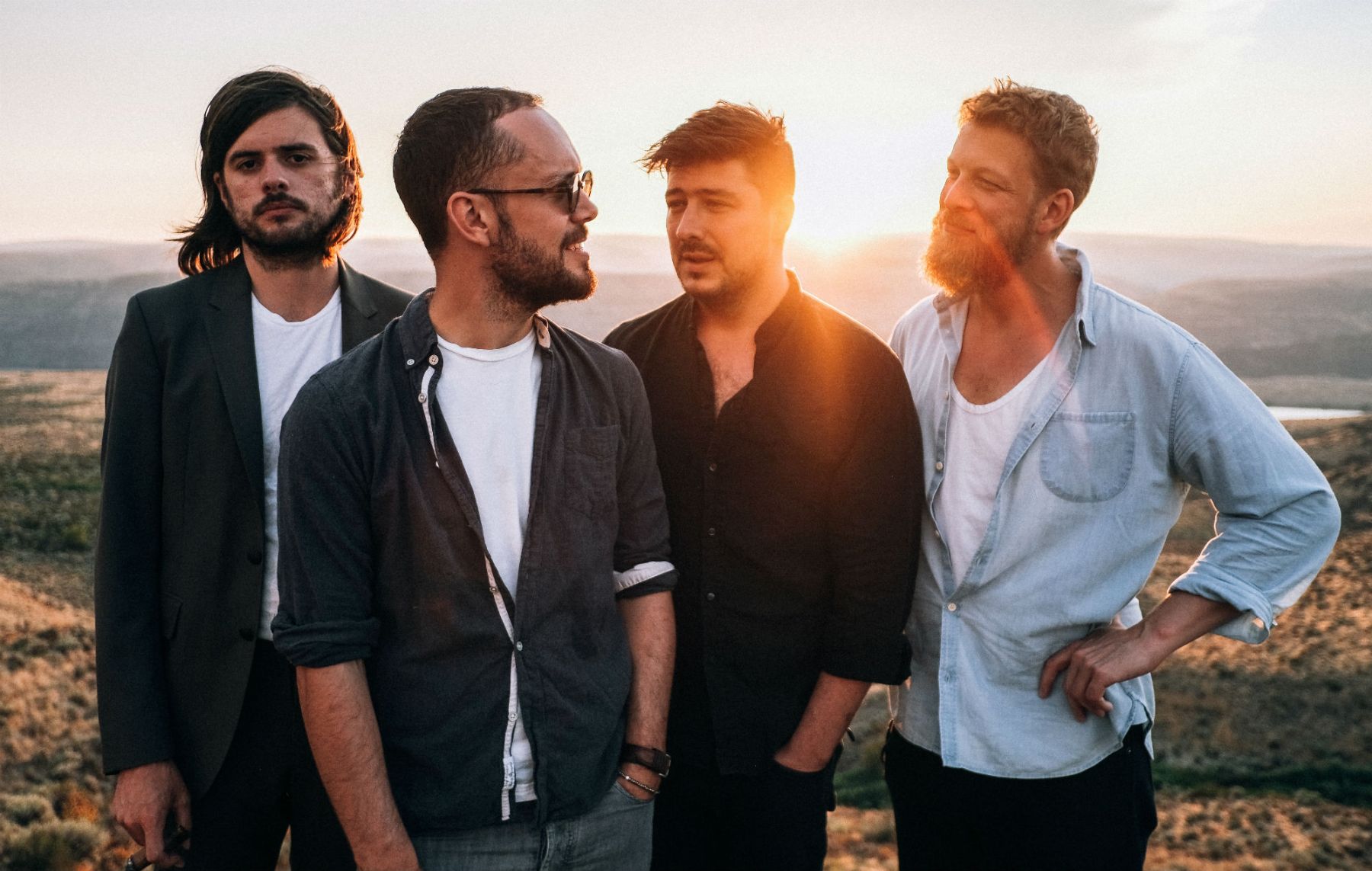
I hope you’re all enjoying your Sunday. If you’re looking for some music to jam to, something that explores some of the biggest questions of life with a Christian heart, I’ve got a recommendation for you: Mumford and Sons.

They’re not Christian themselves (or, at least, don’t claim to be any more) but the band has a strong Christian background and you can’t deny the overwhelming influence the faith has had on their music. Just take a look at some of the names of their songs: Babel (Genesis), Rose of Sharon (Song of Songs), Thistle and Weeds (parable in the Gospels), Roll Away Your Stone (Lazarus, Jesus), Broken Crown (of Christ), Timshel (literally “thou mayest” in Hebrew), The Cave (reference to St. Francis of Assisi), Believe, Awake My Soul, Lover of the Light. Even in songs that are not specifically about the Bible or faith, their way of expression is the language of faith (Babel is about putting on false selves and failing to communicate, a call to take off the mask and tear down the wall. What better way to capture this situation than to invoke the tower of babel?)

When I listen to their music, what I hear is a band that once knew faith quite well, that was excited for the mission of Christ. And then the world happened. And then doubt crept in. (And then being labeled “a Christian band” and being associated with the Christian Music Industry would have killed their success.) So they say publicly that they are people of that don’t consider themselves a part of the Church. Who am I to judge, but I still think they have Christian hearts influencing everything they do. Just because you hit a patch of doubt and go on a wayward journey doesn’t make you no longer a Christian.

No matter what they say, I think they’re furthering the mission of Christ. Subtly, they are opening the door for people who would never come to Church to engage with topics like faith and doubt, sin and grace, shame and redemption, hope and despair. You don’t need to use the name Christ for the mission to grow, and I think they’re doing just that: helping it grow.