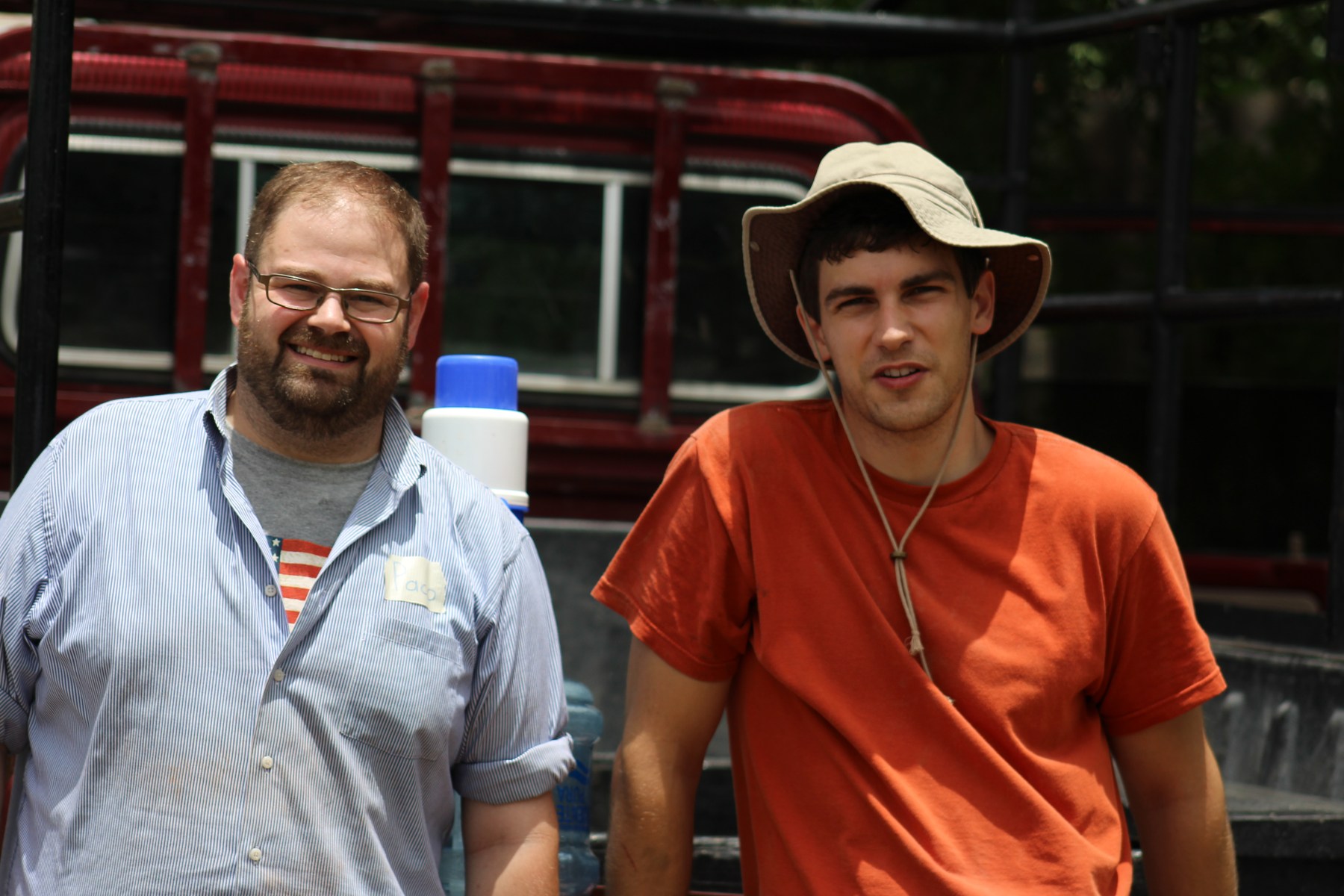
I was tempted to have this reaction on more than one occasion this summer.

I was tempted to have this reaction on more than one occasion this summer.

I love debate. There are few things to me better than a good argument, presenting one’s case and rebutting the other. It’s a great way to refine one’s own opinion and to learn the perspective of another. That is, if it is a good debate.

This summer has been witness to quite a few bad ones, I have to say. Divisive and inflammatory issues such as climate change, same-sex marriage, gun control, the Affordable Care Act, Deflategate, the confederate flag, ISIL, Israel and Palestine, Cuba, immigration, Planned Parenthood, Caitlyn Jenner, Donald Trump, and the Iran nuclear deal, to name just a few, have dominated discussions and infuriated so many in the past few months. On any given day, my Facebook news feed exploded with impassioned, and often offensive, articles and opinions that left me angry and deflated. “Really? Why would you say that about that person? What is wrong with the world?”

Part of the problem is definitely the opinions themselves. Research done by the Pew Research Center (found here, with lots of infographics and great information so check it out!) shows that the United States is becoming increasingly extreme in its opinions and further divided on issues than in the past. The number of people that hold moderate opinions, able to bridge the gap between extremes, is diminishing while the extreme conservative and liberal stances are gaining support.

The real issue, though, has less to do with the opinions themselves and more to do with how we react to them. This same study found that an alarming number of people are beginning to see those of the opposing political party as a “threat to the nation’s well-being.” Compared to ten years ago, both sides moved away from the other: conservatives in this category more than doubled while liberals increased by a third. This is a major problem. Not only are we moving away from the other in what we hold true, we are much more likely to label and belittle the other as our enemy, becoming more comfortable with the notion that we don’t need the other. “Oh, those people? Who cares what they think? They’re ruining America.” This is not good debate for the sake of the truth. This is bad debate which seeks to destroy the enemy.

Anecdotally, my daily experience on Facebook and in general conversations has shown me that most of us simply don’t know how to talk with one another about difficult issues without becoming angry or taking things personally. Conversations about simple governmental policies or social issues quickly escalate with emotions and even offensive behavior. Why does this happen? How is it that opinions such as these can get us so angry that we are willing to post hateful articles, show disrespect to another, or even choose to end a relationship?

In my experience, the biggest problem is that we struggle to make a distinction between someone disagreeing with our idea and someone attacking our person. I had an experience like this once in a planning meeting. Throwing around ideas, I disagreed with one person in particular:  “I see what you’re saying, but I just don’t agree. I think it would be better to do X, for these reasons…” Respectful, direct, and clearly thought out. After the meeting, though, this person came up to me upset and actually hurt: “What do you have against me?” he asked. What? I just disagreed with you. I don’t hate you! For him, he was so tied to his opinion, had allowed it to become intertwined with his identity, that a simple disagreement felt like an attack on him personally.

The problem with this is that our political rhetoric and smear campaigns are actually designed to do this. “He believes X, so he’s a bad person.” A quick look at any television ad shows what I mean: the pro-candidate is always in color with smiling faces while the one with a different stance is in black and white with dramatic or sad music. By attacking the person’s character with cheap emotional tricks, these ads try to convince us that, “If s/he is a bad person, her/his idea must also be bad, and vice-versa.” This sort of thinking leaves us unable to disagree with a candidate we respect or to like an idea from people we don’t get along with.

We as Catholics need not fall into this trap of bad debate, though. We know that every single human being is created in the image of God, and that the opinion one holds, even if completely idiotic at times, has absolutely no effect on the respect we must give to this God-given dignity. Yes someone may be severely misinformed, but we are called to love everyone, not because of what they believe, but because of what we believe, that they are created in the image of God. 

For me, this is a non-negotiable for a good debate. No matter how much I may disagree with someone on the most fundamental of principles, there is never an excuse to confuse the idea with the person, attacking both indiscriminately. Who wins from that? If our goal is to actually convince people of our side, namely that the love of Christ is freely given to all and is fueling our mission in the world, hatred and impatience is not going to do a great job at expressing that! And we all struggle with this, I’m sure! I know that when I’m faced with certain opinions, it is really hard to show the respect that Christ shows me. But here’s the thing: that is exactly the moment we need to show it most. It is in those debates with those who agree with us least, say…a pro-abortion pedophile Nazi who worships trees and burns the American flag for fun… that we need to be at our absolute best, arguing not only with good logic and reason, but with the way we treat them.

It is why I would love to see more Catholics on inflammatory shows like Rush Limbaugh preaching peaceful and balanced dialogue, conservative news sources like Fox News speaking about climate change and immigration, and liberal news stations like MSNBC defending the life of the unborn. If done with respect and intelligence, those are the places we need to be entering the debate. And we need to be entering. Some opinions should make us angry. They should infuriate us. It is not only appropriate to hate an idea and stand against it at times, it is our Christian responsibility to do so. As long as we do so as Christians. Our anger should always be proportionate to the gravity of the situation and rightly directly, aimed at the opinion and never the person professing it. What is the purpose of winning an argument if it as the expense of belittling our brother or sister? We all lose in that situation. Instead, let us debate with one another like Christians, with respect for the other, and with the goal not of beating our opponent, but of challenging them (and letting them challenge us) to discover greater truth from which we can ALL benefit. That, I say, is a debate with dignity, and there are few things I like more in the world.

Our Franciscan Mission

After ten days of reflecting and slaving over a hot computer, I am pleased to present a video about our mission to Nicaragua.

There are two things you might notice right away. The first is that the video does not follow the chronological order of the trip. In fact, it doesn’t even show every aspect of the trip. There is only one clip of us praying and no clips of us reflecting, two things we did together every day of the trip. There’s also very little about our meals or relaxing time, and believe it or not, no description of the organization that ran the whole trip or the great work they’re doing (you can check it out here if you’re interested). These are not oversights. Part of it was simply a decision to put the camera down at times in order to fully participate (prayer) or a respect of others’ vulnerability and privacy (reflections), but part of it was simply a conscious decision to show something more than the just “my trip.” I wanted to show mission. What is it about this trip that is true for other trips? What is it about this experience that represents the experience of Franciscans on a larger scale? This I found much more interesting than cataloguing every detail and event.

The other thing might be a bit more surprising. Outside of the opening introduction, you will not hear me speak in this video. Unlike all of the other videos that were entirely directly by my voice and reflection, this one is directly entirely by my fellow Franciscan friars on mission. Did I all of the sudden get camera shy? Not exactly. What I realized part of the way through the trip was that this was not my trip to give some wise, all-encompassing reflection, it was our trip. Each friar brought with him different expectations and added to the life of the mission in a different way. Sure I have reflections to share (as I’ve shared two posts on it already) but there was something about the Franciscan nature of this mission that couldn’t be shared by one person, and there was even a thought that it couldn’t be shared by me. I decided to document my brothers’ experience, to let them tell our story.

As usual, if you are reading this via email, you can click here to watch the video.

You Can Be As Poor As You Want

Having experienced third world poverty, I know that I cannot live the poverty I want here in the US. On the other hand, I can absolutely live the poverty I need.

Having experienced third world poverty, I know that I cannot live the poverty I want here in the US. On the other hand, I can absolutely live the poverty I need.

I have mentioned a number of times that Franciscan poverty, freeing oneself of material possessions in order to identify with the poor Jesus, was a major attraction to me in my discernment; receiving a minor in Poverty Studies and completing an internship at a soup kitchen even before seriously considering the friars should tell a bit about me. I have also mentioned that defining Franciscan poverty has been an 800-year battle among Franciscans; what and how much one should be able to own has been fought over and divided the charism more than a few times.

In response to this (and the problems particular to our province of men in the 21st century), a number of our friars have taken the opinion that a friar “can be as poor as he wants in this province.” What they mean by this is that one’s personal decisions for a simpler lifestyle are one’s own free choice. No one is forcing us to spend any of our stipend, maintain excessive wardrobes, or consume any more food or drink that we want to. Even if others define poverty in an altogether different way and live much more comfortably than one would choose, their decisions, these friars would say, do not affect one’s ability to live poverty how they choose: you can be as poor as you want.

Over the past four years I’ve thought about and struggled to live out this opinion. There is great truth in it: why blame others or “the culture of the friars” for not living poorly enough when I take everything that’s given to me without question? I have been forced (in a very good way) to think about what I’ve been given by the friars and decide if that’s even too much. At times, it has meant giving back part of my stipend, abstaining from food or drink, and refusing gifts. And that helps. But I find that this is only part of the answer. When we choose to live together, whether that be in a Franciscan context, a family, or simply in a larger society, we are never free to do anything and everything we want.

It’s tough to be that poor in America. The broadest example of this is simply living in the United States. Having just spent ten days in one of the poorest countries in the Western Hemisphere, I have now seen real poverty (as compared to the “poverty” we Franciscans live.) I saw houses the size of the bedroom I’m in right now with dirt floors and little-to-no sanitation, teenagers that walk 2 hours each way to get an education, children that had to drop out of school to help support their families, and meals in which a tortilla is the main (or only) item on the menu. Compared to even the poorest in the United States, the average person in Nicaragua has very little.

And yet, there is a great appeal to the simplicity of lifestyle we saw. Sure, they had much less, but their world was not tied to material possessions in the way that ours is. Most of them had very little, but many of them had a sufficient amount, and were happy. It’s no wonder that so many people go on trips like these and have a great desire to change their lives when they come home. Looking at the excesses all around them in the US, people like myself, feel very uncomfortable with all the things they now see as luxuries.

But good luck getting rid of them. What I mean by this is not a cynical take on one’s ability to let go but rather a realization that much of what we have is built into our societal structure. Are we really going to renounce clean drinking water to be in solidarity with our poor brothers and sisters in Nicaragua? Are we really going to throw our toilet paper in the trashcan rather than flushing it to go through some of the hardships they do? Are we really going to turn off our air conditioners AND lobby that every other home and business we visit do the same so that we can experience the relentless heat we knew there? I don’t think so. They’re kind of ridiculous questions, really. But that’s the point. So many of our luxuries are built into our societal structure and are outside of our control. Short of doing these radically ridiculous things, we are not free to live as poorly as we want.

Living together means shared decisions. Bringing this question back to where it started, the Franciscan friary, we can see a similar dynamic. One’s personal decisions can effect the situation to an extent, but are not the only factor in the situation. What if others in the house don’t agree with one’s conception of poverty? What if everyone in the house has a different conception? I may think it inappropriate to ever eat filet mignon as a friar (hypothetical), while others might think it’s appropriate sometimes, and even more think that it’s appropriate often. Does the house eat filet mignon? My personal desires only go so far in community because, believe it or not, there are other personal desires than mine. I would obviously be free to abstain from eating the steak as it is outside of my conception of poverty and no one can force me to eat it. True. I could go make a PB and J sandwich and be completely happy. But look what I have done. I have decided that my personal desire is great enough that I’m willing to remove myself from the group to do my own thing. I have chosen that it is better to be “right” than to be “together.”

And maybe, at times, that’s what we have to do. Everyone can’t be happy all of the time, and I don’t mind abstaining for someone else’s happiness. For one meal, that’s no big deal. But what if it’s every meal? What if it’s every friar outing? What if it is the general life of the friary? I can abstain from eating certain meals, but I cannot abstain from living in a certain house or using certain furniture. Just as in the situation with Nicaragua, there is a clear sense of culture in each friary that cannot be discounted. It is something outside of an individual’s control and has a great effect on their ability to act how they want.

So, can you be as poor as you want as a friar in Holy Name province? No, not at all. And I struggle with that. But it’s a struggle I want to have because I am not called to be a king. I am not called to be right all of the time and to get my way. I am called, as a Franciscan, to a humble life in community in which I have to learn to accept my brothers’ desires as legitimate, to grow outside of myself, and to live with the poverty that I am not in control. Sometimes, as difficult as it may sound, I have to compromise on my own ideals for the sake of community. Does this mean that I’m a fraud, that I’m weak and a hypocrite because I don’t stand up for what I believe? No. It means that, while I will challenge my brothers to a simpler lifestyle when I can, I realized very early in my Franciscan life that we are called to be together, not necessarily always “right.” A big part of being Franciscan is realizing that community life is never going to be exactly how we envision it, but that it is better to be challenged by our brothers than to easily have everything we want on our own. In this way, I know that I could live material poverty better on my own, but it is only in community can experience the poverty of not being in control and having to work with others that are different from you. As a Franciscan in this sense, you can can be as poor as you want.

Encountering Ourselves

While yes, there are experiences further from my comfort zone than making bead necklaces with a tiny child that doesn't speak English, the problem was that I focused on my struggle and not on the boy in front of me. Such is the experience of a first time missionary.

While yes, there are experiences further from my comfort zone than making bead necklaces with a tiny child that doesn’t speak English, the problem was that I focused on my struggle and not on the boy in front of me. Such is the experience of a first time missionary.

As I’ve reflected with others over the past few days, answering the obvious, “How was the trip?” question more than a few times, I was discouraged at first that I didn’t have a clear answer. “It was good,” was usually all I could come up with. One person responded, “It sounds like it was a good trip, but I expected a little more excitement in your voice. I just don’t hear it when you talk.” He was right.

This was partly the sleep deprivation giving mixed signals, but there was some truth to it. I didn’t come back excited about the trip because I didn’t exactly know what I was bringing back with me. Whereas a number of the volunteers shared powerful moments of conversion, clear experiences of God in what they were doing, and serious connections with the people we served, my big reflection was, “I was happy not to die on my first trip out of the country.” Don’t get me wrong: I enjoyed the work, felt relatively comfortable in a foreign environment, greatly enjoyed my time spent getting to know the other volunteers, and was obviously touched by the generosity and openness of the people that welcomed us into their homes and culture (how could you not be touched?) I would even say that I would go back again. It was a good experience. And yet, I didn’t come back “excited.”

In fact, there was a part of me that was a bit disappointed in the trip. The fact of the matter is that I didn’t really invest myself as completely as others did. They came prepared with games and stickers, books to read and puppets to play with; they jumped right in and started talking with people and making friends; they tried everything, took part in every game, meal, excursion, and gift shop. I, on the other hand, followed where I was supposed to go, did what I was supposed to do, and mostly kept my head down. In the end, they had their full experience and I had my “I’m happy I didn’t die” experience. In this way, my lack of excitement could definitely be traced to a little regret here.

But as I think about it more, what I experienced was exactly what I needed to experience. As this was my first time out of the country, let alone visiting a third-world country, so much of this trip was just encountering and overcoming new experiences. Mosquito net beds. Toilet paper in the trashcan. Worrying about drinking enough water but making sure it’s clean. Being one of the only people in the area that speaks English. Eating foods I’ve never tried. Rooms with six bunkbeds. No hot water. Ten days without technology. Navigating new cultural and social norms. The list could go on and on for hours because, really, almost everything I experienced for ten days was new, making even the most routine tasks a new personal challenge to overcome.

It’s no wonder, then, that I didn’t jump right in as others did or come away with the strong connections with the Nicaraguans we met: I was too busy encountering myself in a new environment. It’s strange thing to think about but I think it’s true. Placed in a new environment, stripped of our comforts and distractions, left with only ourselves and our thoughts, we are forced to see even familiar tasks differently, but more importantly, to understand ourselves in those surroundings differently. Just as the background of a picture can drastically change our perspective of the subject, so to do we see ourselves differently in a new surrounding.

For us on mission, I think this is an essential, albeit frustrating, process that everyone has to go through their first time. We all want to go and encounter the other, to understand another culture through intense relationships with new people. And to some extent, I did that last week; it’s kind of impossible not to get a taste of this after ten days. But there’s also a part of me, the disappointed part, that realizes that I was not fully capable of encountering the other. Although I could begin to form a relationship, when so much of my energy in the encounter was spent dealing with my own struggles, my interactions with others were less about encountering another and more about encountering myself in the other. When I met someone new, I couldn’t fully see them because all I could see was my newfound minority status and inadequacy in speaking the language. This is the story, I hope, not so much of egocentric me, but of a first-time missionary in a completely new environment, a story we all must go through before we can go deeper.

So how do I feel about the trip? Well, it was a good trip, and I am happy that I survived. These words don’t seem to say much and they’re certainly not profound reflections, but I say them now without disappointment or regret. I know that I cannot fully encounter another until I have first gotten over the need to encounter myself. I did that. It’s my hope that, as I go on more of these trips and am able to spend less time processing mundane things and more time outside of myself, that the one that I will encounter is my new brother and sister, and that who I will encounter in them is our Lord who unites us as one. I’m glad to have encountered myself in a new way on this trip, but I also know that no encounter with ourselves can ever be complete without this.

At 12:55 this morning, I touched back down on American soil. It was a great ten days out of the country with a lot to share and even more to reflect on. Just not right now.

Besides the obvious fatigue I feel from spending ten days in a foreign country and not getting to bed until 4:00 this morning, I return to a mess of a room that was never fully put back together after returning from my summer assignment days before leaving, and with a mess of more than 750 video clips, hundreds of pictures to acquire from others, and more thoughts to process than the two put together. I’m going to need a day…

But for those waiting on bated breath, I will say that the trip was a very good experience. We did some great work and met some really great people, and overall, were all stretched in ways we probably didn’t expect. I certainly expected to be put outside of my comfort zone, given that it was my first trip outside of the country, but there were definitely some surprises. Health is always a concern on trips like these, and so all things considered, I’m pleased with how that went. Yes, I was one of the many people sidelined for part of the trip, but luckily I was not one of the ones with diarrhea (not that heat stroke is all that much better!) Overall, there were no major catastrophes but a lot of highly-positive experiences.

I plan on taking my much-needed two weeks vacation towards the end of the week, but before then will be reflecting on my experience and hopefully putting together some things to share. I plan on putting together the whole experience in a documentary-style video, which will be my main focus this week, but I can’t guarantee a deadline on that!

Until then, peace and good, and it’s good to be stateside!