“Are you ready?” For me, context almost doesn’t matter: the answer to this question is almost always “no.” Is it time to go already? If there is one thing I wish I could have an excess of, it most certainly wouldn’t be money or fame. No, I just want more time. It seems like I’m always running out of it, running behind, and just barely keeping up. I look at my calendar on a regular basis and wonder with disbelief, “How is it already… time for finals… end of November… the latter half of the decade??” The time just breezes by and I hope to catch a bit of what’s important along the way.

But it didn’t always used to be this way. No, I remember when I was young and time seemed to stand still. When I was in elementary school, I lived in full anticipation of what was next. Each day was a countdown of some sort, part of an elaborate preparation for some celebration or holiday. I remember how everything all of my surroundings reminded me of what time it was, what was next, and what I should be getting ready for. The halls of every elementary school inundate its students with feeling of the season, every square inch festively decorated.

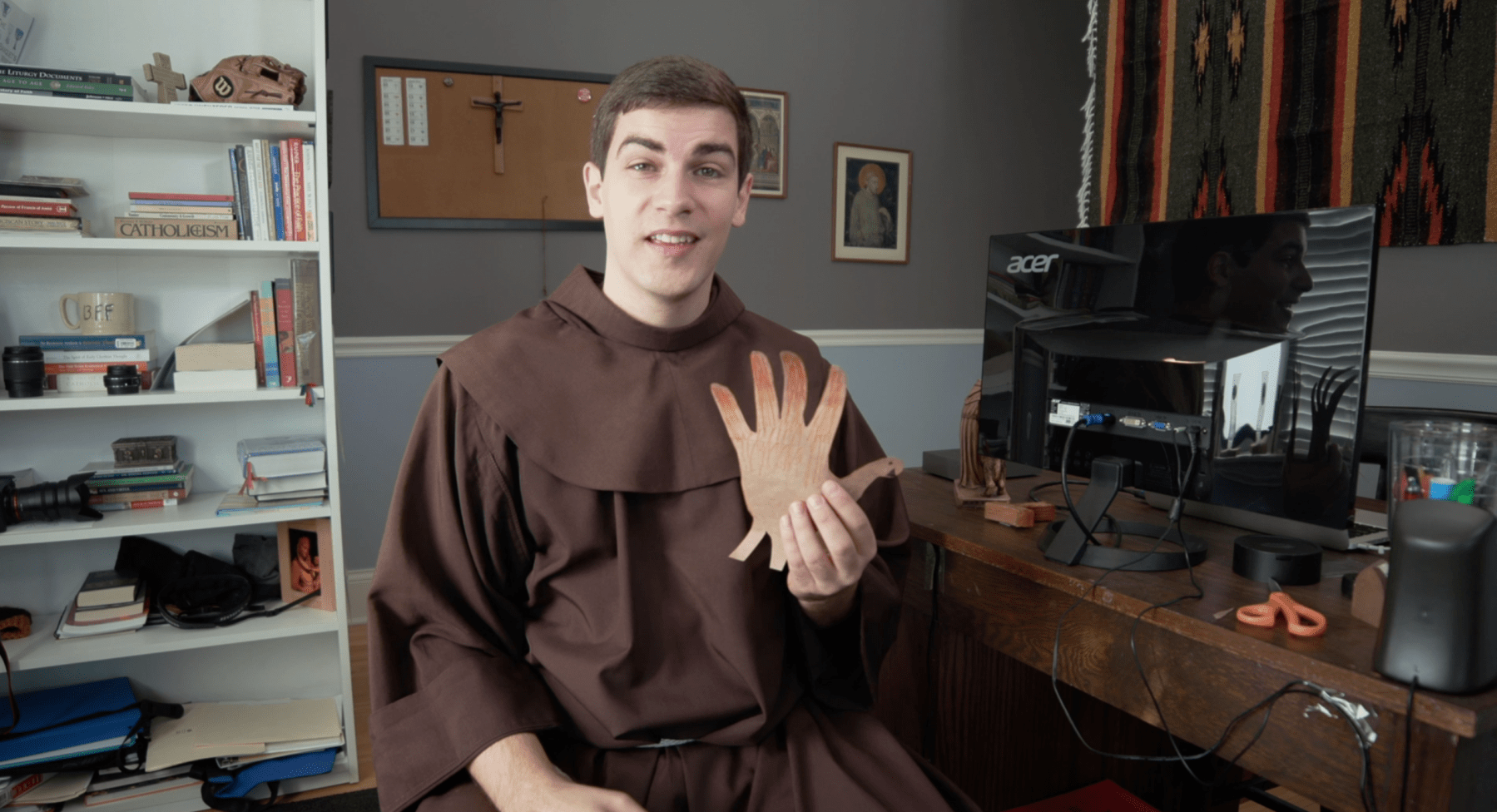
I think there’s something to that. I think there are many things of our childhood that are tragically lost in adulthood. Sure, making turkeys out of outlines of our hands or snowflakes out of folded up paper may be a little juvenile (is it though…?) but there is something to be said about taking the time to enter into the approaching season. We may have bills to pay, papers to write, rooms to clean, and a whole host of items piling up even while I type, and it may seem overwhelming to take the time to do anything else, but can we really afford not to? 

There’s a reason we take the time to celebrate what and how we do. We commemorate the moments in history that have significant meaning to our lives, moments that define us and give us life. I would like to argue that these are not just nice opportunities for a party each year but rather essential to developing us as people, reminding us who we are and who we should be.

If that’s the case, how could we just show up the day of and expect to be able to fully participate in them?

We can’t. The moments that truly matter to us require preparation, preparation of heart, mind, and spirit. We need to be ready—physically, emotionally, and most of all spiritually—for what is to come.

In 31 days, the Solemnity of the Nativity of our Lord will be upon us. In just over a month, we will be celebrating the fact that the second person of the Triune God, Jesus, came to earth to be like us. Yes, God walked among us as one of us. What a powerful occasion. What an immense reality. What an altogether mind-blowingly important event in our own salvation history that shapes everything we do. How could we just show up on December 25 and be ready to celebrate it?

We couldn’t. And luckily, we don’t have to. Next week (yes, not this Sunday) we begin the season of Advent. Four weeks of preparation, waiting, hoping. Four weeks that should be taken seriously. Four weeks that should be entered into and used to transform us. What will you do to prepare?

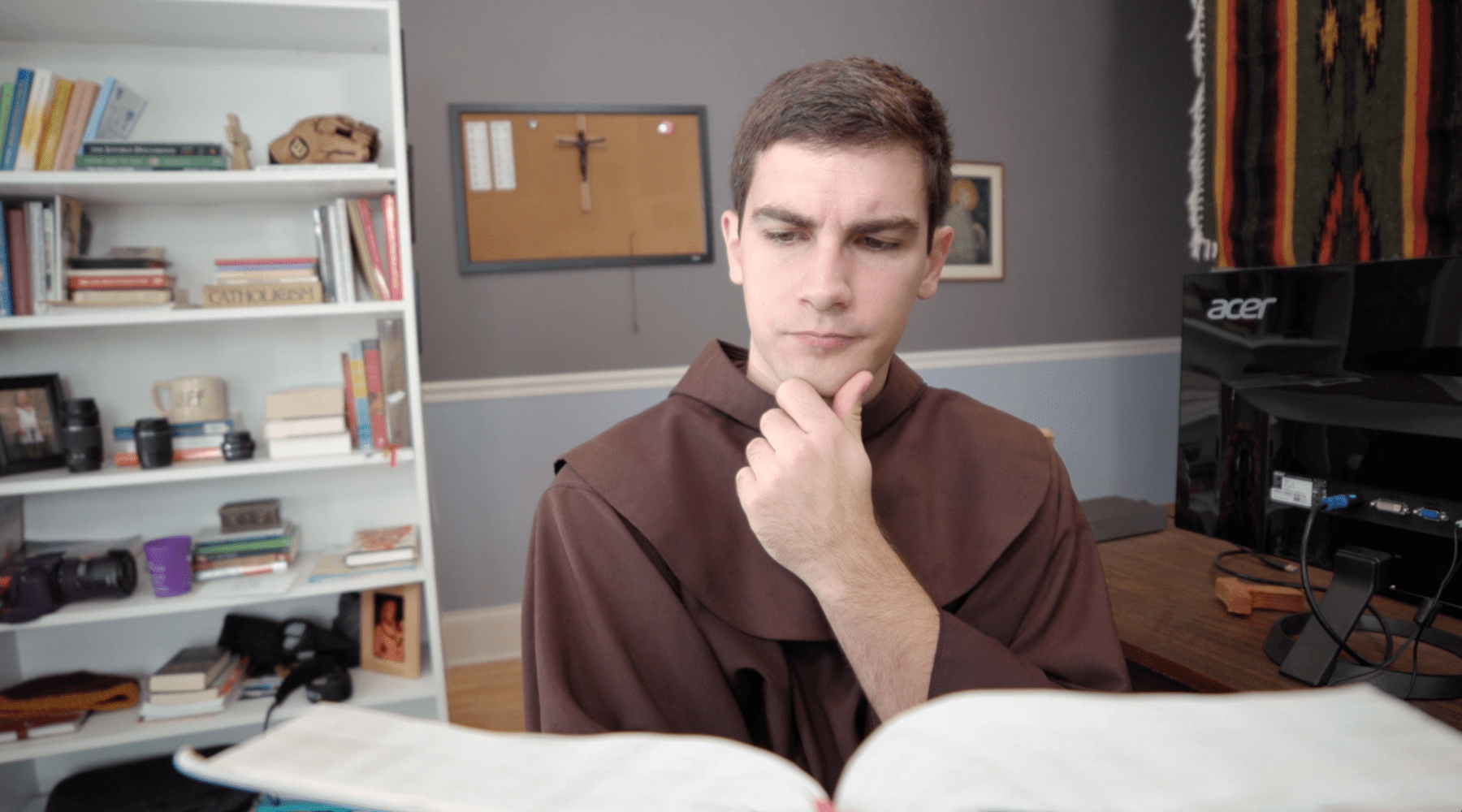
This week’s vlog asks that very question. It challenges each of us to slow down and let God speak to us in a special way over the course of these few weeks, to let ourselves be ready, for once, for what is about to happen.

What will you do?

A few years ago I took a class on Church history. Naturally, one of the major topics of study was the schism between the Churches of the East and West known as the “Great Schism.” But rather than just focus on the events of 1054 (the mutual excommunication of Pope and Patriarch), our professor brought us back hundreds of years to see how the seeds of division had been planted and nurtured well before that time. We learned how it was a complicated issue, how both sides had made their own mistakes, and how we as the Catholic Church needed to have the humility to recognize the major role we played in causing the problem.

It was a great moment of clarity and regret for me.

Most of all, though, I will never forget the interaction I had with a fellow student the moment we left the classroom. “Do you think that the Eastern people will ever come back to the Catholic Church?” he asked. Um… what?? Were you not just sitting there in class? Did you not see how it was not them who broke off from us but a tangled web of issues over the course of many centuries that produced a pretty mutual split? I was quick to answer: “Not with that attitude they won’t.”

Maybe a bit sharp, and I eventually explained what I meant and hopefully put together the pieces he had missed in class, but I stand by my statement: no unification will happen if we hold to the idea that we are the true Church without fault in the matter, and that they need to completely ascent to us. While the Protestant Reformation may have a different dynamic, the relationship between the Eastern and Western Churches, to me at least, is that of rival fraternal twin brothers: coming from the same mother, sharing the same history, and fighting all through our youth, we look different and have different perspectives but neither of us ultimately has a claim to being the more “true” brother. We share in our authentic status as the original Church of Jesus Christ and it is a great sin against the body of Christ that we remain apart.

Theological and practical issues do remain, and I am not saying that those do not matter or that one side cannot be more right than the other. What I am saying, and say quite emphatically, is that unification is not a matter of one side coming back to the other. From the start we were different, and different we will remain. But unification does not mean uniformity. When we look to history, we see that what separates us is not our language, culture, theology, or liturgical practice—these differences existed while we remained in communion with one another for centuries. No, sadly, history reveals that what most keeps us apart is our own desire for power and authority, the notion that we are the real and true Church that others must return to.

If you, like me, disagree with this very un-Christian notion that undermines the body of Christ and wish to see a more unified Church, then let’s begin by showing a little humility towards our Eastern brothers and sisters and work for something more than we have.

For more of a foundation in the issues that divided us a millennia ago, click here to watch this week’s video.

Down through history, the Bible has been as much of a weapon as any manmade contraption. Used not to inflict a deadly blow but rather to entrap, oppress, or belittle, one could argue that it is the most powerful forces of violence the world has ever seen.

In fact, many do argue that.

And yet, we as Christians hold it as the most sacred of books. We hold that this controversial book is not just important, it is the Word of God, so divinely inspired and life-giving that it offers us a pathway to salvation.

How do we reconcile the two? How do we, as faithful Christians, respond to those who see genocide, slavery, and incest within its pages and dismiss its importance? Forget responding to others—how do we reconcile this within our own consciences?

Naturally, these are questions that would take hours to answer, and even still we mind find ourselves struggling with the paradoxes we find. But I would like to offer a start. It may not be a solution and it may not offer concrete answers, but I would like to offer a means by which we begin to answer the difficult questions of faith.

In this week’s vlog, I look to the Bible as a complicated and confusing book, but one that can offer us powerful truths if we know how to read it. My hope is that it begins a conversation, evokes a deeply hidden question, and inspires us to take seriously our call to know and live the Word of God in our lives.

For email subscribers, click here to watch the video. As a reminder, you can follow me on Facebook, Twitter, and Instagram for exclusive content not found here on the blog.

Faith is an interesting thing. Where does it come from? How do we receive it? Where does it go sometimes?

As we are faced with the sobering reality that so many of our young people are either leaving the Church or being brought up in a secular world, we can see how delicate the faith we possess is. Though nearly two millennia in age, it would take but one generation for it to disappear. If no one receives it today, who will be around to pass it on tomorrow?

Now, I should say that I do not believe that we are in such a bleak situation as to say that the Christian faith is being wiped off the face of the earth. Worldwide the number of Christians continues to rise and is stronger than ever in some places. But I do think, especially in the West, it is a question we have to ponder: are we doing enough to make sure that the faith we possess will live beyond us. While it may not disappear completely, there isa good chance that it will be left weaker than when we received it.

For me, that’s just not good enough. Sure, we are facing a secular society that might be as volatile towards religion as it was at the time of the French Revolution. Of course, levels of atheism or non-affiliation may be the highest they have ever been. These are realities for sure, but they are not excuses. The world has seen troubled times, and our Church, trust me when I say, has been through worse. The issue is not the world; the issue is whether or not we have the faith and charisma and effort to infuse that world with something we know is worth handing on.

Will you help me hand on what you have found to the next generation? You can start by clicking here to watch this week’s vlog.

Just a bit of Discipline

They say that sometimes the best strategy to preaching is to preach to yourself: figure out what you really need to hear and go with that.

One can only hope that’s the case as this post is riddled with irony. This week’s vlog, posted a day late and without an accompanying blog post until Saturday at 6:45pm Central Time (not exactly the original plan), recommends that the secret to staying balanced, getting work done, and being a good Christian is adding some discipline to our lives.

Says the guy completely behind on everything.

But then again, “they” also say “do as I say not as I do.” In that vein, and hearing my own preaching, I present this newest video on a Saturday night as I am abstaining from watching college football so I can put some devoted time into work and eventually some late-night prayer!

Click here to view from email.