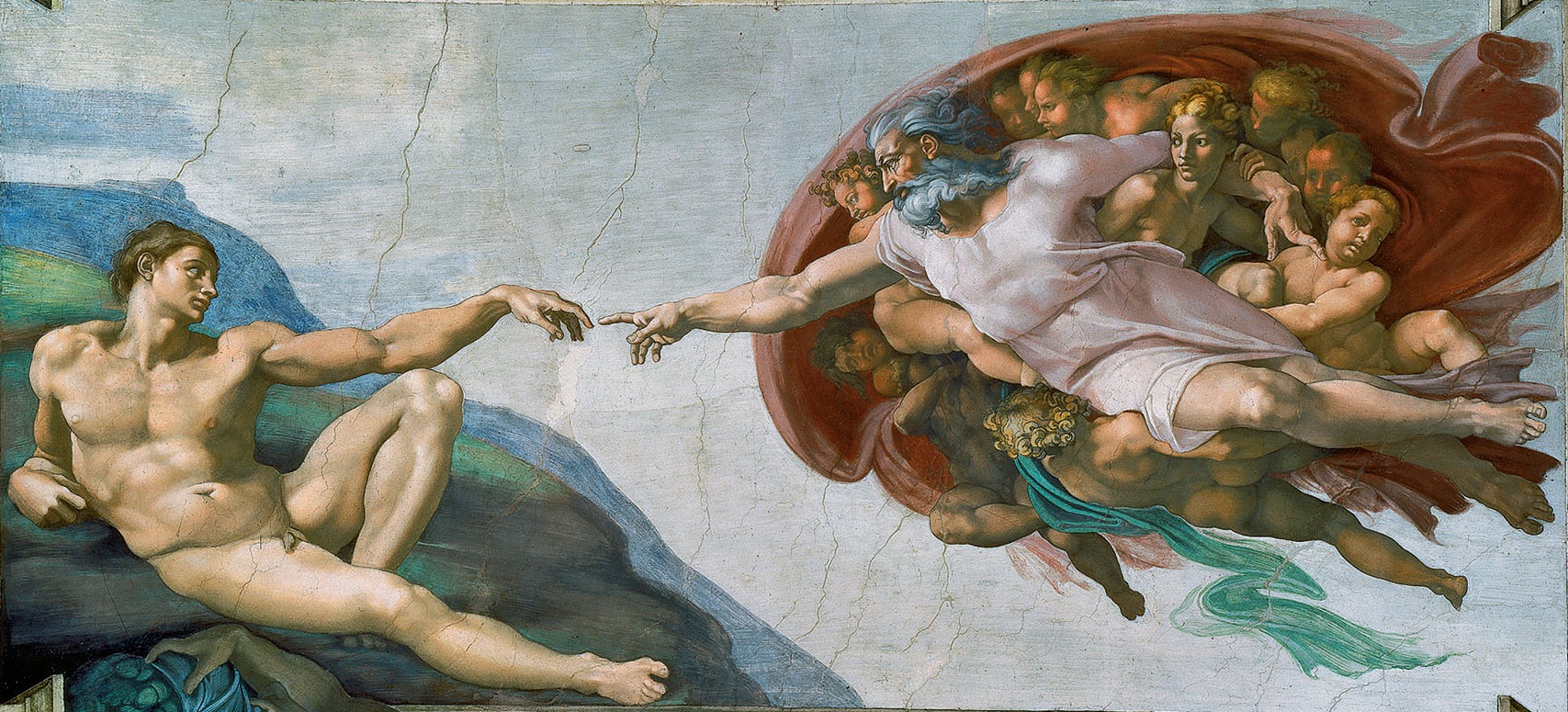
Have you ever heard someone say that you were “created in the image and likeness of God?” If you have, might might have also wondered, “What the heck does that even mean??” If so, you’re not alone.
In my Christian Anthropology course this semester, we spent four whole weeks unpacking this notion of the imago dei, the image of God, because, really, it doesn’t get a whole lot clearer once you start studying it. With so little to go on in Scripture and the Tradition largely silent, it is one of the theological topics that we put in the “disputed questions” bin, questions that have a lot of opinions but no official magisterial teachings.
That’s not to say that there aren’t some good opinions or ideas worth entertaining. Just because there is no clear-cut answer doesn’t mean that we shouldn’t study it. Like any mystery of faith, the purpose is not so much to “solve the mystery” with a definitive answer, but to enter into it so to grow deeper in our questioning. In other words, the more we ask, the more we realize we don’t know, which, in a way, is something we now know.
Don’t worry, this week’s video is much clearer than my explanation of it. Looking at three possible answers to the question, I want to suggest that it is only when we take all three together that we are able to understand what it means to be created in the image and likeness of God.
“If you want something done right, do it yourself.”
Although a tad overused and basically a cliché, there’s something very truthful about this bit of advice. No one else can get it done exactly the way we want, so why leave it up to others when we are able to do it ourselves? We’re just going to be disappointed.
And if all we’re focused on is a “thing,” a task to be completed, then I think it would be a great motto for life. But is it ever just about the task?
No task is ever separated from relationships; no thing to be done without people doing them. As much as we would like to do everything ourselves, we simply can’t, and really, shouldn’t want to. Doing something ourselves is efficient, yes. It gets a job done and we’re happy. But that’s all it does: it gets a job done. When we do everything ourselves, no one else learns that they can also do it themselves. No one else ever learns that they are capable and responsible and important. Nothing is ever accomplished except for that one job.
What if we had a different approach? What if, rather than “do it yourself,” we tried “do it together”? Sure, each task might be a little more laborious. It might have more conflict and not get done exactly how we want it to. But look what else might happen: others will feel a part of something, share the load, and be able to pass on the skills to the next job. When we do things together, a mission can live beyond us.
For me, this is advice that we greatly need in our Church. Even though we know we should do things together in ministry, even though we’re told to love one another and it’s about the person and not the task, sometimes we can fall into this model, even at Church. Sometimes we try to do everything ourselves, failing to train the next person, to include others, to take the time to make it about “us” rather than the task at hand.
This lent, we are called to go on mission, together. We are called to truly be Church, to look beyond the task right in front of us and see what is really important: the people doing the task. He could have gotten a lot more done if it were about the task. He could have done it all himself and completed it just the way he wanted. Instead, Jesus sent his disciples out of on mission, and never alone. There was something more at work in the mission than just the “work.” Jesus was building something beyond himself, and so must we. As much as we love a “do it yourself” attitude, what our Church truly needs—what we truly need—is a “do it together” attitude.
If you’re interested in more reflections like this, you can purchase my book, Called: What Happens After Saying Yes to God on Franciscan Media: https://goo.gl/6xXV13
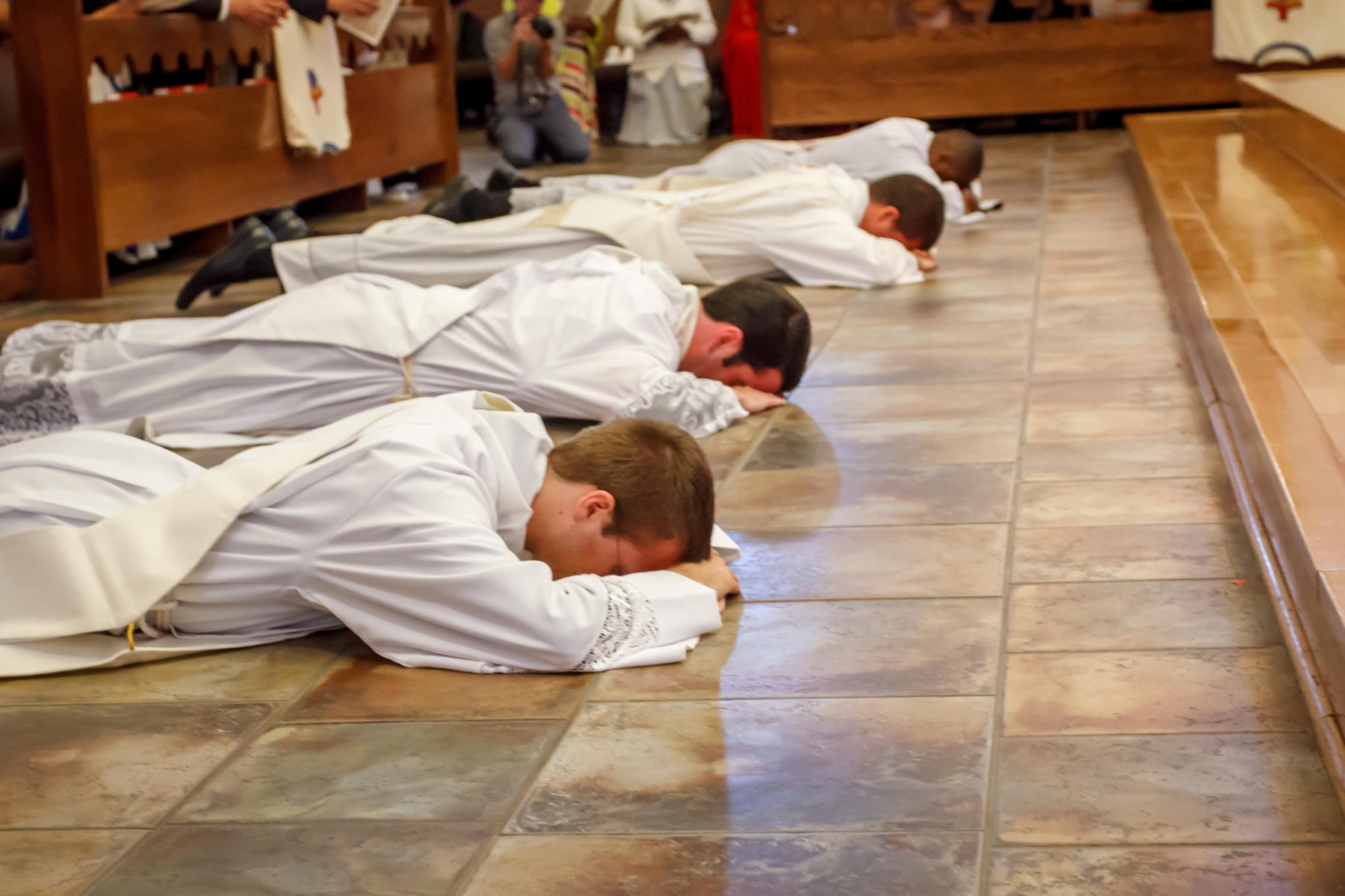
So… fun story. I was ordained a deacon on Saturday. I know, right? It surprised me too! Long story short, I was planning on being ordained in June, but when my provincial heard that another province of Franciscans was having an ordination in March, he said, “Why don’t you just tag along with them.” In truth, he said this to someone else who then forwarded it to me, so I doubt he used those exact words.
Regardless, I have had hands laid upon my head, I’ve made my formal promises, and I’m ready to go! So in honor of that great change in my life, I’ve decided to dedicate this week’s Catholicism in Focus to the sacrament I just received: the Sacrament of Orders.
Hey everyone! Before we get to the post, just wanted to apologize for the lateness of this post it was actually done Wednesday, and if you can believe it, I forgot to post it until right now! I hope you’ll forgive me as I feel like I have a fairly good excuse: Friday morning, the time when I usually post, I was picking up my parents from the airport as they were flying in for my diaconate ordination this weekend! It’s been quite a crazy couple of days, but I’m happy to say that I have been successfully ordained to the diaconate and ready to start my ministry of service to the Church!
“Take nothing for the journey, neither walking stick, nor sack, nor food, nor money, and let no one take a second tunic. Whatever house you enter, stay there and leave from there.” (Luke 9:2-5).
Jesus has some peculiar conditions for his disciples when he sends them out on mission: take nothing. Not a walking stick for defense, sack for extra materials, food for nourishment, money to barter with, nor second tunic for comfort. He does not equip them with the necessities for life; he does not protect them with comforts and safeties and assurances. He sends them out with nothing.
At first glance, this might seem fairly counterproductive. Wouldn’t they be much more effective ministers if they didn’t have to focus on their livelihood and could devote themselves entirely to the mission? Won’t the anxiety of trying to stay alive distract them from doing the task at hand? Surely, we say, we cannot do anything if our safety is in question, and so our first task must always be to shore up for ourselves a sense of security. From there, and only from there, will we be able to give of ourselves.
My guess is that Jesus would have some choice words to say to this: “You are thinking not as God does, but as human beings do” (Matthew 16:23).
As important as safety and security are for us—evident in the amount of time and money we spend worry about ensuring them—Jesus seems to have no interest in them at all. In fact, for Jesus, they are more of a hindrance than a help. You see, when we are safe, when we have protection, when safety nets are all around us, we don’t need to ask anyone else for help. No, in those situations, we find ourselves in quite a self-reliant state. We can count on our own strength and our own resources and our own ability, and pretty soon, we don’t need to trust in anyone else but ourselves.
(This is when the red warning light should be going off in our heads.)
The reason why Jesus strips them of all that they could use to ensure their own security and sends them out with nothing is because he wants them to trust not in themselves, but completely in God. When things get difficult, when danger approaches, when they need help, he does not want them looking to themselves for the answer. No, at those times, he wants them to be so completely without anything else of use that they must rely on God.
That is what is necessary for the journey. That is what will make them good evangelizers. And that is what we all need this Lent. Like the disciples, we need to strip ourselves of all that gives us a false sense of security and leaves us feeling like we can control our own lives. We need to leave behind the notion that we are in charge and that we can trust in ourselves, and instead trust solely in God.
As strange as it sounds, what we need most is to seek insecurity. That’s the way Jesus went on his journey. That’s the way the great saints lived. And that’s the path we must follow as well. It is only when we have nothing to lean on ourselves that we will be forced to lean on God in a way that we never knew we could. That’s what Jesus wants.
Interviews can be a fun way to promote a new project and to let people get to know you better. Without a script, talking in a casual and unpredictable way, the viewer gets new insight into the person they follow and the work they’ve done. When choosing an interviewer, everyone looks for someone with whom they will share a good rapport, who will ask the questions they want to answer, and who, obviously, believes in their work.
I knew just the guy.
No, not Stephen Colbert. He hasn’t returned my calls.
No, the guy I got just gets me. He has been with me since the start, has read all of my work, and is fully committed to the ministry of Breaking In The Habit. He’s the sort of guy that wants to promote my work, but not be too easy on me either.
Anyway, you are definitely going to want to see my interview with this mystery guy! Click the image above to watch the video, and be sure to tell me how you think he did!



 Breaking In The Habit