From the stern and oppressive theology that made everyone afraid of God, to hippie-inspired self-love homilies that made sin irrelevant, the topic of sin has swung the pendulum back and forth over the past few generations leaving some to wonder, “What is sin?”
Really. I’ve had people ask me questions along these lines on multiple occasions. When we go from talking about it too much to never talking about it at all, people get confused.
It’s no wonder, then, that good and faithful people are looking to strike a balance between God’s law and God’s mercy, emphasizing forgiveness while also trying to do everything they can not to need it. Sin is a serious problem, and some priests are rightfully preaching in a way to recapture an appropriate aversion to it in our lives. God may be forgiving, but that should not make us any more apt to sin.
I saw one such attempt recently on Twitter, and I thought that it’s intentions were right. At its core was a desire to please God, to inspire people to take their lives seriously, and realize that sin is nothing to mess with. Everything we do should reflect the fact that God is our greatest desire. That tweet? “A friendly reminder that whenever we give into sin we are saying ‘I want this more than God.”
So, yeah. As you can imagine, whenever someone compliments something for having the right intentions… you know that there’s a going to be a “but” to follow. This is no exception. I find this to be a really helpful reminder for certain people in certain situations (namely, those who do not take their lives seriously) but… I also think that it can be problematic, even harmful to others in a different situation (namely, those who are trying their hardest to please God but still struggling to overcome temptation.) Sin is always a turn from the will of God, but it does not necessarily say that we want our sin more than God. Sometimes, we need to remember that our will has been weakened, that our freedom is not perfectly intact, and that, even with our eyes fixed on God, we can make mistakes.
In this video, I do not completely disagree with this fellow evangelist’s words, but I wish to offer some nuance to them. I fear that, taken as it is, in only so many words, this very true and well-intentioned tweet might do harm to people already burdened by sin. To them, I want to offer a simple message: even if you sin, God still loves you. Never forget this.
A number of years back, I was at a parish for mass on Sunday when I heard something that shocked me to the core: the priest, referring to the Holy Spirit, said “she.”
Gasp!
At this point I can’t remember when exactly this was or when I first heard it, but I remember being very confused, even offended by it. Who did this priest think he was?God is not a “she.” He’s just trying to be hip or go with the trends of the world. Stick to the faith father and stop pushing an agenda.
Over the years, I began to hear this more, both by priests within Church and by other faithful Christians in other contexts, and I began to question my feelings on the matter: why does this offend me? I remember someone asking me one time, “You believe that God is neither male nor female, right? God is above gender? Then why does it offend you when we use the analogous language of “she” but not when we use “he”?
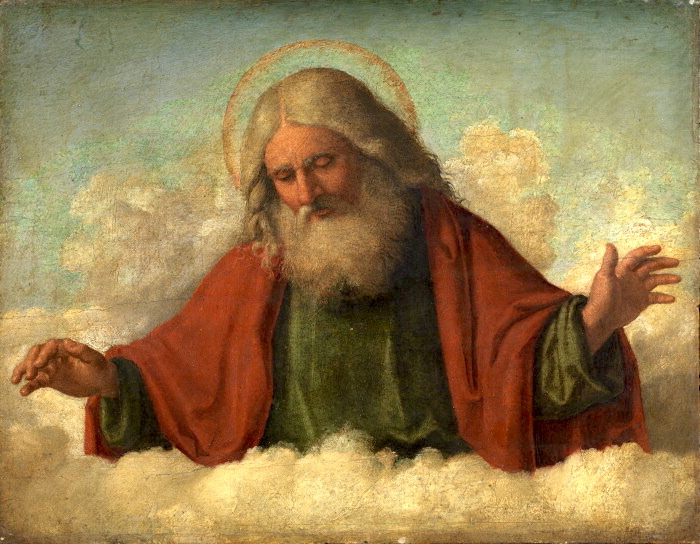
Fair question. God is not masculine by nature. God is not an old guy with a beard. God is pure being, completeness, beyond any particulars or potencies. Sure, God is often depicted in Scripture in traditionally masculine terms (most notably as “father” by Jesus), but God is also described in traditionally feminine terms as well. We tend to latch on to one, but not the other.
So, what’s my response today? Am I an advocate for beginning prayer “In the name of the Mother…” or “following her word”? Not necessarily. But I am more conscious of the fact that our language is wildly insufficient. I fear, sometimes, that we forget that we are using an analogy and begin to deify the wrong aspects of God. I fear, sometimes, that the title “Father” has become less of a term of endearment and more of an idol. For what is an idol but making something that is not God into God? If we believe that God is beyond gender, then what does it mean when we insist that God only be referred to through one gender?
Interesting questions for sure, and hopefully something that we can continue to approach with humility in the future!
Last year, Catholicism In Focus asked the question, “How Late Can I Come to Mass?” Officially, there isn’t a rule or an actual cutoff. There are no bouncers at the door. While most people would say that if you made it by the Gospel and Homily, you were good, this has simply never been the case.
But the very fact that most people thought this—and held to this conviction so strongly that they fought with me on social media when I presented this video—shows how engrained this notion was. Why is this significant? Because implicitly, the vast majority of people have been raised to believe that the what maters at Mass is the Eucharist, and everything else is secondary. “Oh, don’t worry, you just missed the first reading. You didn’t miss what really matters…” You might not find someone who actually says these words that bluntly, but the idea is certainly there.
This, quite obviously, is not what the Church wants us to think, and the problem was apparently so bad, that it had to explicitly state the opposite in its Constitution on the Divine Liturgy: “The two parts which, in a certain sense, go to make up the Mass, namely, the liturgy of the word and the eucharistic liturgy, are so closely connected with each other that they form but one single act of worship. Accordingly this sacred Synod strongly urges pastors of souls that, when instructing the faithful, they insistently teach them to take their part in the entire Mass, especially on Sundays and feasts of obligation” (Sacrosanctum Concilium, 56.)
The liturgy of the Word is not simply a warm up to what really matters. It is a gift in and of itself. In reading from Scripture, Christ is made truly present. That is pretty incredible, and something that we should take seriously!
A little while ago, I was talking with someone about how the Church cares for the poor, works for justice in our world, and does all that we can to promote peace. I said that we do these things not because we’re “do gooders” or hippies, but because it is our responsibility as Christians.
I forget the context of the conversation, but it was a pretty standard response to whatever was asked, straight from Catholic Social Teaching 101. I will never forget the response:
But why should we care about this world? If we believe in heaven, who cares if people are poor or die? Shouldn’t our only focus be on getting souls into heaven?
Rarely am I caught off guard by a question, but this one certainly got me. I could see what the person was getting at, I could see why they would ask this, but there were just so many problems with that way of thinking that I didn’t know where to start. Luckily I have a good internal filter and regrouped, because my first thought was, “So, are you suggesting that we just mercy kill everyone who has a tough life so that we can ‘send them to heaven?'” That would not have been a pastorally appropriate response.
I can’t remember exactly what I said at the time, but it got me thinking, theologically, how to best answer this question. In this week’s Catholicism In Focus, I offer three reasons why we care about protecting life, and really, the entire physical world:
1. Creation was created by God, it is good in itself, and is a vessel for experiencing God.
2. The human person is more than just a “soul” or spiritual body, but is fundamentally a physical being.
3. Salvation is not simply an other-worldly experience, one completely removed from our reality.
Is this a complete list? By no means. But I think it offers a foundation for a Catholic view of the world that must be behind everything we do. Unless we accept these three points as a basis for our faith, we might struggle to understand much of what we do and why we do it, leading us to ask tragic questions like, “Why should we care about life at all?”
Going to church… can be a bit boring. Look out into the congregations of many churches and you will not find hoards of smiling faces, upbeat and excited about what they are doing. No, quite unfortunately, you will find many dour faces and low energy. The problem is so common, in fact, that Pope Francis even addressed it in one of his apostolic exhortations, bemoaning the loads of “sourpusses” he sees coming up for communion.
What a tragedy!
For me, there is nothing more life-giving in all the world than the community gathered for this sacrificial meal. It is the “source and summit” of our lives as Christians, the inspiration and strength we need to go out into the world. Catholics do not attend mass simply to get into heaven, as if it were something to be endured before we received our reward; no, we attend mass because it is a small taste of heaven itself. For those who know what is happening at the mass, it is the highlight of their week.
And I think that’s the key: “for those who know what is happening.” When you know what is happening, when you can follow the internal logic of the rite and can enter fully into the mystery before us, the experience is anything but boring. While the execution of the rite (stylistic choices, skill, personality, ability to follow rubrics) can obviously have an effect on the congregation’s experience (there are such things as bad presiders and choirs…) the Mass itself will always give life to those who understand.
And since I cannot fix every presider and choir or force every parish to be filled with joy and energy… the only thing I can do is shed some light on the rite itself, hopefully instilling in others the same love for the Mass that I have. With this series, my goal is to break the whole liturgy down to its individual parts, explain what each mean, and put them back together to reveal a coherent, artfully crafted act of worship that gives glory to God.
There are many ways that this can be accomplished. Some would explain the Mass in two parts, separating the Liturgy of the Word and the Liturgy of the Eucharist; others would build the series around the three processions found in the mass; others still might focus entirely on the complexity of the Eucharistic prayer, breaking that down into four parts, with the Liturgy of the Word and Concluding Rites as bookends. All of these would make for fine explanations of what is going on in the rite, but they are not what I have chosen.
This series will be divided into six parts, a double series of three, following the same structural arc: Called in and prepared, Given a gift, and Sent out.
Beginning first with the Liturgy of the Word, the first arc will begin with the gathering, call to worship, penitential rite, gloria, and collect. Through this series of actions, the congregation will be called in from their disparate lives and prepared to enter the worship. This will give way to the reading of Scripture and the recitation of a psalm, reaching its pinnacle in the reading of the Gospel. In this way, the congregation will be given the gift of Christ’s true presence in the Word. Bringing the first arc to a close, the homilist will make sense of what has been given, offering practical applications for lessons, and the congregation will respond with the prayers of creed and prayers of the faithful. All three components focus the attention of the congregation to the outside world where they are sent out to live what they’ve heard.
The structural arc will begin again with the preparation of the gifts, in which the congregation literally prepares for what is coming next: they not only prepare the altar for the physical sacrifice, but prepare their hearts for a spiritual one. The Mass then reaches its high point in the Eucharistic Prayer and reception of communion, in which the congregation is given the gift of Christ’s very presence in sacramental form. Having received this gift, the congregation has not just eaten a meal, but has become what it received: they constitute the body of Christ themselves. In this way, then, they are sent out to live as such in the world, announcing the Good News with their lives.
Called in and prepared, Given a gift, and Sent out.
Obviously, the Mass is a complex act of worship filled with more rubrics, history, and symbolic significance than can fit into a six-part series of 10 minutes videos. In preparing for this series, I read multiple Vatican documents, three different commentaries on the mass, consulted liturgists, and built upon my four years of theological study. Regrettably, there was a lot that I had to leave out, and decisions had to be made as to what to keep in. This series will not be the end-all-be-all of mass commentaries, nor will it be without its own flaws and personal biases. Since I had to choose what to include and what to leave out, this series, like any project, will ultimately be incomplete.
And I’m completely fine with that. My goal in sharing this work is not to provide the most complete, objective recitation of facts possible. No, my goal is to share the love that I have for the liturgy so that others may have faith. I do my absolute best to stick to the facts, never outright sharing my opinion on any topic, but there’s no question that my own experience and theology is behind the whole creative process. This series is about telling a story, not about reciting the official rubrics one by one. My hope is that, in sharing my passion for this great communal worship and offering the foundation for its logic, that others will be inspired enough to study the documents themselves and come to their own conclusions of what each part means, why they’re important, and how to share that experience with others.
If that sounds like something you’re interested in, or maybe something that would benefit someone else, I encourage you to join me each Friday for a new installment.



 Breaking In The Habit