History is always more complicated than what is popularly believed. Besides the shear volume of information that has to be oversimplified to be understood by the general public, what we popularly believe is often a combination of facts, legends, opinions, misconceptions, and errors. Because of this, one of the dangers of many years of theological study is a tendency to “deconstruct” stuff, to tear down what people accept as true with statements like, “That never happened.”

On the one hand, it is important and necessary. While it can be jarring for people at first to realize that what they have believed to be true is actually not true, ignorance is not a virtue and it does not build up the kingdom of God. We have a duty to understand the truth, not perpetuate “nice stories” because people like them, and sometimes that means going through the painful profess of tearing down closely held falsehoods. What’s the point in believing something if it’s just not true?

On the other hand, deconstructing history without building it back up with something else is an act of violence to faith. As much as we would like to think that we compartmentalize parts of our experience, the fact of the matter is that everything about us is interconnected: our sense of faith is built upon the stories we heard as kids which is tied to the way we relate to our parents which influences our approach to life and so on. When we tear down those parts of history that are false but people have always believed to be true, it has an effect on the rest of the person. Like a controlled implosion of a building or pulling out a few Jenga pieces from the stack, deconstruction without reconstruction runs the risk of bringing the whole building down. On more than a few occasions I have seen well-meaning people destroy another’s faith in this way, dismissing something that intellectuals know to be superstition, legend, or misinterpretation, failing to realize how central it was to another and ultimately leaving a gaping whole or missing link in the other.

Why do I say all of this? Well, because I am guilty of this from time to time with Catholicism in Focus. With the intention of bringing people to greater clarity about topics Catholics think they know, there is often a good deal of deconstructing that has to take place. Behind each episode is a sentiment of, sorry, no, that’s not what we believe. And like I said, this is an important part of growing in one’s faith. Why would we want to persist in error?

In most cases, it is not just about tearing down but also about building back up, giving people something new to believe in that is more factually accurate. Usually the videos are not negative in tone, doing more than just pointing out what’s wrong. Usually. One video stands out to me as breaking this rule. You may remember back in the fall an episode called “What Did St. Francis REALLY Say?” The purpose was to get at some of the popular quotes attributed to the saint, point out how he absolutely couldn’t have said them, and replace them with things he actually did say. Only… I never got to the last point. All I did was pick apart the quotes people use today without offering anything in their place! This is not good scholarship, and it is terrible catechesis. And for that, I apologize.

And since words are cheap and apologies mean little without real action, I present a new video this week to make up for the first one: “Things St. Francis ACTUALLY Said.” Starting with a foundation for understanding the sources themselves, I not only give an overview of the things St. Francis wrote, but also offer a number of shareable quotes to replace the ones we know he didn’t say. I hope you enjoy the video, but more importantly, I hope that you will help me introduce the real St. Francis to the world by sharing the pictures from below on social media. There is a lot out there that is wrong about St. Francis and we should definitely deconstruct it. But instead of just saying, “No, that’s wrong,” we are now able to put something better back in its place.


I firmly believe that the Catholic Church is a sacrament of salvation and holds the fullness of truth. I love its mission of sharing the Good News of Jesus Christ with the world, am inspired by its many amazing examples of holiness, and could never imagine being a part of any other Church.

And yet… I’m okay pointing out that it is also a human institution with a complicated history, sometimes leading to peculiar ends. And trust me: there are some peculiar things about the Church!

This week, I want to share to one of my biggest “soapbox issues” within the Church, something that I can hardly hold my tongue about when the topic surfaces. It is such an important issue for me that, if I were ever unfortunate enough to be made bishop, it might be the first thing I would change in my diocese (one among many reasons why I should never be ordained a bishop!) It is an issue that affects everyone in the Church, and unknowingly, has probably caused a lot of confusion over the years.

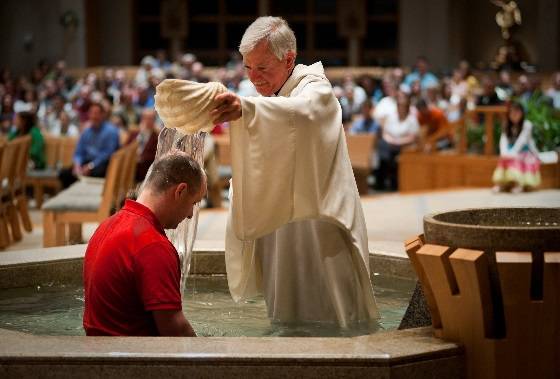
That issue? The order of the sacraments of initiation. Is it baptism, eucharist, and confirmation? Or is it baptism, confirmation, eucharist? For adults entering the Church, the Church says the latter; for children, it’s generally the former.

Why the discrepancy?

Why so many different understandings of Confirmation?

Where did confirmation even come from?

Why do some dioceses have different rules about this order?

These questions, among others, are the reason that I have jumped up on my soapbox this week for a very long, very complicated, and very controversial episode of Catholicism in Focus. While I strongly believe that the Church is a sacrament of salvation, I also believe that human decisions within the Church are not always the most systematic or consider all of their implications, and sometimes, unknowingly, lead us to a place we never intended to end up. When we’re able to look to history and understand the origins of our sacraments and how they developed, it’s clear to me, at least, that we might just need a course correct. Whether you agree or not, hopefully this video will help your own understanding of this complicated story!

Last week, I went to the greatest show on earth: the Paschal Triduum of the Catholic Church. (If you don’t know what that is, check out my video for this week.)

In reflecting on my experience over the past week, and in defense of the title I chose, I thought I would share a bit about the difference between a “show” and a liturgy, and why I think the Triduum is a wonderful example of this.

Participation

When we go to a show (or watch something on television or computer), we are a passive spectator. Communication goes in only one direction: we sit and information is given to us. While our occasional laughter, cheers, or clapping may effect the experience of the performance if we are in attendence, in reality, we add nothing to what is actually going on; the show goes on just the same whether we are there or watching on television.

A liturgy, on the other hand, depends on our presence. We do not attend as passive spectators waiting to receive entertainment, we attend as active worshippers, coming together to create something new. Not only are their parts of the mass that are rightfully the responsibility of the congregation and inappropriate for a priest to take on himself (e.g. responses such as “and with your spirit”) there is a sense that there is more to the reality of the service than simply what is going happening “on stage.” In our greeting one another, singing in the pews, offering a sign of peace, walking in procession, offering our personal prayers and sacrifices, and so on, we are not simply watching a show, we are making the liturgy (hence its name, from the Greek, which means “the work of the people.”)

And how this is even more true for the Triduum. We are not simply attending a concert or beautiful commemoration of past events put on by actors, we are, together, building an environment where that mystery is made present. Even more than our already active, “Catholic calisthenic” worship services with standing and kneeling and moving all around, we make ourselves a part of the work of the people during the Triduum with special gestures, processions, elaborate songs, and special roles.

Entering a symbolic reality

And yet, it is not as if we are simply attending an improvisation theatre production with major audience participation; a liturgy is not just a play that involves its audience. As theatrical and dramatic as a liturgy is, what we do is not a matter of recreating the past with actors and scenes, attempting to mimic past events with historical accuracy. No, liturgy is the act of entering into a symbolic reality of what those past events represent, offering praise and thanksgiving from our own cultural and historical reality.

What do I mean by this? Well, liturgy is not a passion play in which we take the Bible and make a script out of it, trying to get everything exactly right. Rather, it is an act in which we look at the reality of what happened (e.g. Jesus humbled himself and died on a cross) and create an environment in which the importance of that action makes the most sense to us today. There is no need for costumes; we don’t need to have every detail included or follow the exact order. We do not speak in the language that Jesus did; we do not sing the songs that the disciples did; there is no need to make the gestures exactly as they would have. What is significant is not the historical events as they happened, but making present what we find significant about them. What we do is speak our own language, sing our own songs, and make our own culturally appropriate gestures that capture what the original meant.

How true this is with the liturgy of the Triduum. With old and new coming together, we find an expression of ourselves and our history making the reality of Jesus known. Surely, he did not use a Paschal candle, sing the exultet, wear priestly vestments with specific colors and designs, process as a whole community to wait in the night, and so on. But these images and symbols and gestures make sense to us, evoke some meaning from our own lives, that help us to enter into his historical reality.

And so, was the Paschal Triduum the “Greatest Show on Earth?” Technically, no, because it was not a show at all. It was a liturgy, the act of a community coming together to build a reality that makes another, deeper reality present. It is not like the circus or a performance of Hamilton or even a contest in which the audience participates by voting. And yet, what an amazing job it does of capturing our attention and entering us into a reality far from our own, just as “shows” do. That, for me, is what makes it the best “show” around: it pulls from the technique and quality of those shows we love to watch, while also calling us out of our safe space to be an active part in making it present. Truly, there is nothing better.

As we entered the holiest of weeks on Sunday, triumphantly processing into the Church as Jesus marched into Jerusalem, we were reminded where our pilgrimage would ultimately end up: the cross. Hearing the whole story of the Passion proclaimed, it was made clear to us why Jesus entered Jerusalem and what the focus of the entire week would be.

And this presents an interesting theological question for us: knowing of course that Jesus suffered and died on the cross, can God suffer? It is a question that has become very popular over the past 100 years, and one that I explore in this week’s Catholicism In Focus.

I hope that everyone has a good Holy Week and a blessed Easter!

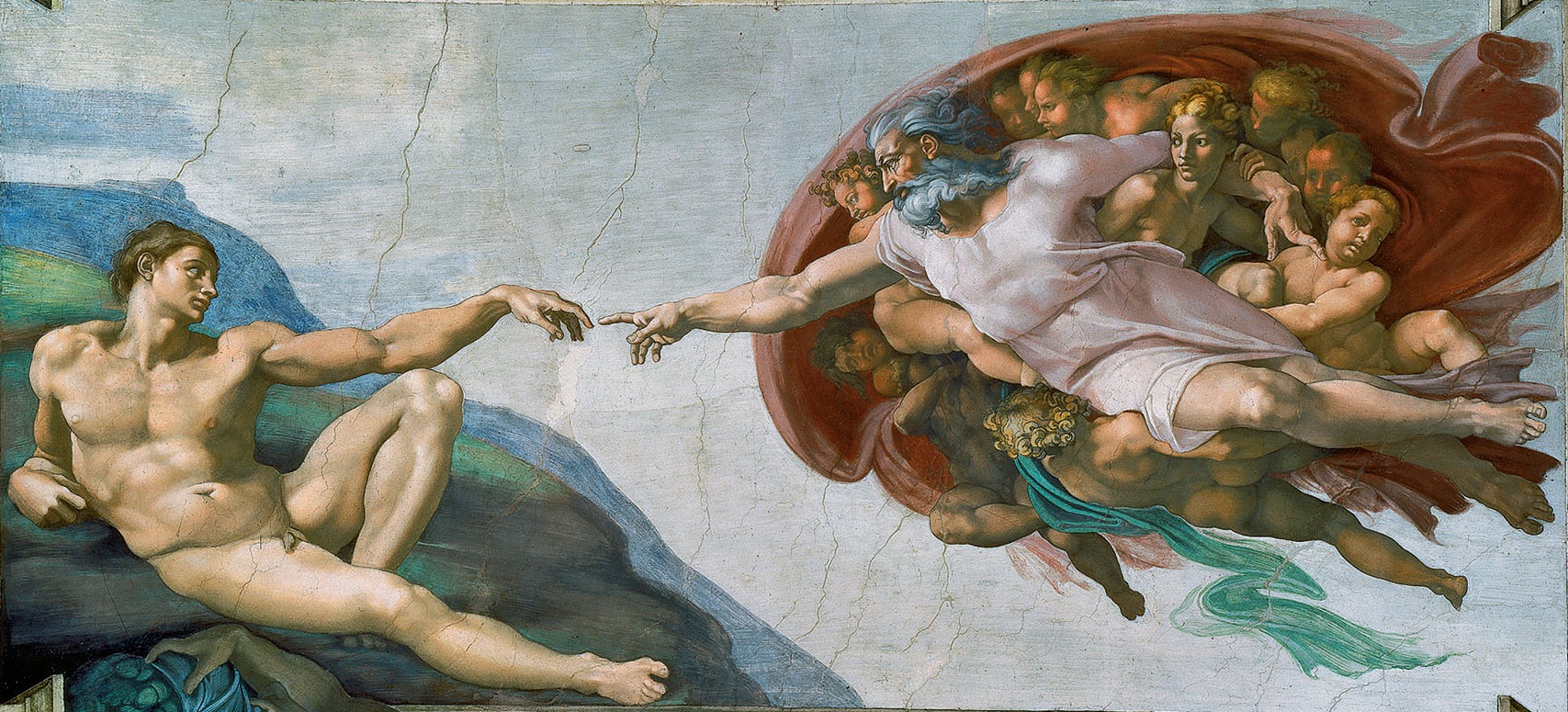
Have you ever heard someone say that you were “created in the image and likeness of God?” If you have, might might have also wondered, “What the heck does that even mean??” If so, you’re not alone.

In my Christian Anthropology course this semester, we spent four whole weeks unpacking this notion of the imago dei, the image of God, because, really, it doesn’t get a whole lot clearer once you start studying it. With so little to go on in Scripture and the Tradition largely silent, it is one of the theological topics that we put in the “disputed questions” bin, questions that have a lot of opinions but no official magisterial teachings.

That’s not to say that there aren’t some good opinions or ideas worth entertaining. Just because there is no clear-cut answer doesn’t mean that we shouldn’t study it. Like any mystery of faith, the purpose is not so much to “solve the mystery” with a definitive answer, but to enter into it so to grow deeper in our questioning. In other words, the more we ask, the more we realize we don’t know, which, in a way, is something we now know.

Don’t worry, this week’s video is much clearer than my explanation of it. Looking at three possible answers to the question, I want to suggest that it is only when we take all three together that we are able to understand what it means to be created in the image and likeness of God.