Over the past three or four weeks, I’ve experienced a fair amount of disappointment. From the trivial (watching a favorite sports team’s season go up in flames; giving up on a failed video project after many hours of work) to the substantial (realizing that major parts of my internship year plan are no longer possible; attending a heart-wrenching funeral), and everything in between (being yelled at by parishioners on separate occasions over the election; having plans to see close friends cancelled because of hurricane Matthew; feeling a few close relationships slip away), it has been a difficult month at times. While there have been some tremendous moments as well, and overall, these moments of disappointment pail in comparison to the tragedies that many have to go through each day around the world, there is no denying that the lows for me lately have been lower than normal. Having been shaken out of the normal routine and forced to deal with unwanted situations instead, there is a strong sense of uneasiness in my life now as I walk on uneven ground.

And yet, in this same time, I have also experienced a sense of confidence and clarity that I haven’t felt in a long time. When many things around me have wavered, my prayer life has flourished.

As many of you know, I am someone with great ambition. I am wired in such a way that I am constantly looking to the future, setting goals, and finding ways to accomplish things that are important to me. As much as I know that the world is absolutely not a meritocracy, there is something deep inside me that believes that I can accomplish anything I want with enough effort, and that, because I’m a “good person” and work hard, my life will ultimately be filled with success and good things. In essence, I can control my fate if I work hard enough.

Ha!

When said like that, such a sentiment is obviously ridiculous. Of course I can’t control my own fate. Of course I need God in my life because God is my all and the reason for everything good in my life. And yet, when things are going well, these things are easy to forget. My faith formation classes are successful because I’m a good teacher. Duh! My relationships are healthy and fruitful because I’m mature and self-giving. Naturally! Things in my life go as planned because I think ahead and work hard. If only others were like me! Even though there’s not a one of us who would say that God is not the most important part of our lives and the ultimate reason for our successes, when things are going well, it’s very easy to see oneself as the impetus of one’s success, and not turn to God with the same longing.

Not in times of trial. Not over the past three to four weeks for me. No, when standing on uneven ground, when the world has been shaken up and we find things well outside of the norm, the focus and intent of prayer changes dramatically. We begin to actually believe what we say, realizing that there is no one greater than our God, no good thing that doesn’t come from Him, and truly nothing else that matters.

I think St. Paul captures this sentiment perfectly in his second letter to the Corinthians in describing his many trials:

“That I might not become too elated, a thorn in the flesh was given to me, an angel of Satan, to beat me, to keep me from being too elated. Three times I begged the Lord about this, that it might leave me, but he said to me, “My grace is sufficient for you, for power is made perfect in weakness.” I will rather boast most gladly of my weaknesses, in order that the power of Christ may dwell with me. Therefore, I am content with weaknesses, insults, hardships, persecutions, and constraints, for the sake of Christ; for when I am weak, then I am strong.” (2 Cor. 12:7-10)

The beauty of this passage is not that he prayed to God and God gave him what he needed, it’s that he came to realize that faith in God is not dependent on one’s current situation, good or bad. Sometimes God not answering his prayer to remove his suffering sounds harsh, but it was probably the best thing for him: had God simply answered his prayer and took his suffering away, Paul might have continued to judge the sufficiency and meaningfulness of his life on the things around him. My life is good because things are going well. Instead, having to deal with weakness, he came to realize that his life was good because God has given him grace… because the power of Christ dwells in him. It is this, not the external blessings or hardships, that makes one life meaningful. It is in giving up one’s desire to be Lord, that futile attempt to control everything, that he came to realize who was really in control and had the strength he needed.

This has precisely been my experience of late. By no means has my life been worthy of its own Lifetime Original Movie, but there has no doubt been a little turbulence. My plans have not exactly panned out the way I had hoped and I have come to realize (once again) that I am not strong enough to make everything go well in life. And I’m extremely happy because of this. In having to face disappointment and accept that there are things outside of my control that I will just have to deal with, my dependence on God and commitment to this relationship has strengthened considerably. Taking these issues to God in prayer—the trivial, significant and everything in between—I have begun to care less about the issues themselves as a gauge for my life, and begun to gain much more satisfaction in the one who truly matters, our God. I know that I cannot control everything (or anything) in life, but I surely know that God’s grace is enough. It is only with a thorn in one’s side that we can truly know this.
I’ve heard it said a number of times that if it were a denomination of its own, “Lapsed Catholics” would account for either the second or third largest Christian body in the United States. Roughly one out of every ten people in the country were raised Catholic but no longer identify or practice the faith.

This is a staggering statistic that calls for action. But what?

The large statistic does not say very much, tough. All it says is that there is a growing number of people in this category. The real question is why. Over the past two decades, there has been extensive research into this question, and smarter people than I have written books on all the many reasons and what we can do to fix it. I do not pretend to offer any new information or to be an expert on the issue. Rather, I think what is most helpful for me is not knowing all of the individual reasons that someone leaves, but the nature by which someone “leaves.” Was it an abrupt, conscious decision, or did someone gradually fade away over many years until they no longer considered themselves Catholic?

In the former category are those who leave because of trauma, scandal, theological disagreement, or some other event that either destroyed their faith in one fell swoop or was the final straw that broke the camel’s back. They can point to a specific thing in the Church that is keeping them away, and unless that thing is changed, they will not return. For the average Catholic, there is little we can do to remedy this situation because the thing is often well outside of our control. We can’t change the theology, we can’t undo the past, and we can’t take away the pain that they feel, whether imagined or actual. In many ways, the best we can do is to simply live our faith with patience and hospitality for those struggling.

This is quite different from those in the latter category, a group that I believe (although I have no data to prove it) is much larger. These people have no major “issue” with the Church, no traumatic experience or major moral disagreement with its theology. No, those in this group are simply bored and disconnected. They do not feel a part of a community, are either unaware of the activity of the Church or have limited options for getting involved, and frankly, find the liturgical celebration, the main experience of Church for most people, to be dreadfully boring and un-affective. Add a touch of misinformation or poor catechesis, offer them numerous ways to be a good person in the world without going to Church, drop the Catholic guilt that drove them in their younger years, and you’ve got yourself a person that says, “What’s the point in going to that building once a week?” There’s no strong feeling towards the Church, no stumbling block preventing them from coming… there’s just no feeling at all.

That was the backdrop for a conversation I had a few week back with Rob, the mysterious voice that routinely asks me questions from behind the camera. With so many people leaving, and so many people simply disaffected by their experience, we’re forced to evaluate what we do: is there something wrong with the Mass that leaves so many unfulfilled? And if so, what can we do to make it better?

There are a few meals that I will never forget as long as I live.

I’ll never forget Thanksgiving dinner with my family some years back. We all tried our best to be as behaved and formal as we could, but alas… it’s just not in the Cole genes. Napkins were used as puppets and funny hats, napkin holders became building blocks, and normal, respectable voices turned into eruptive proclamations and impersonations.

I’ll never forget visiting one of our friaries for dinner as a postulant. Spontaneously visiting for the weekend, the five of us not only got the opportunity to meet the three friars living there, we were coincided with the surprise visit of two other friars from out of town. A casual dinner soon turned into a small party: wine, laughter, and a dinner conversation that lasted more than three hours.

I’ll never forget the times I went on retreats or away on Spring Break as a college student. There, away from our normal routines, intentionally together, we set up, cooked, shared a meal, and cleaned up together. With nothing to do or to distract us from each other, dinner was something we did together.

In each of these cases, what made the so memorable was not the food we ate, it was the company that attended. While meals can certainly be practical ways of obtaining calories, a purely physical necessity, meals can also be powerful social, even spiritual experiences. With good friends around a table, time can almost stand still. It’s the place where bonds are formed, relationships are nourished, and memories are instituted for ever.

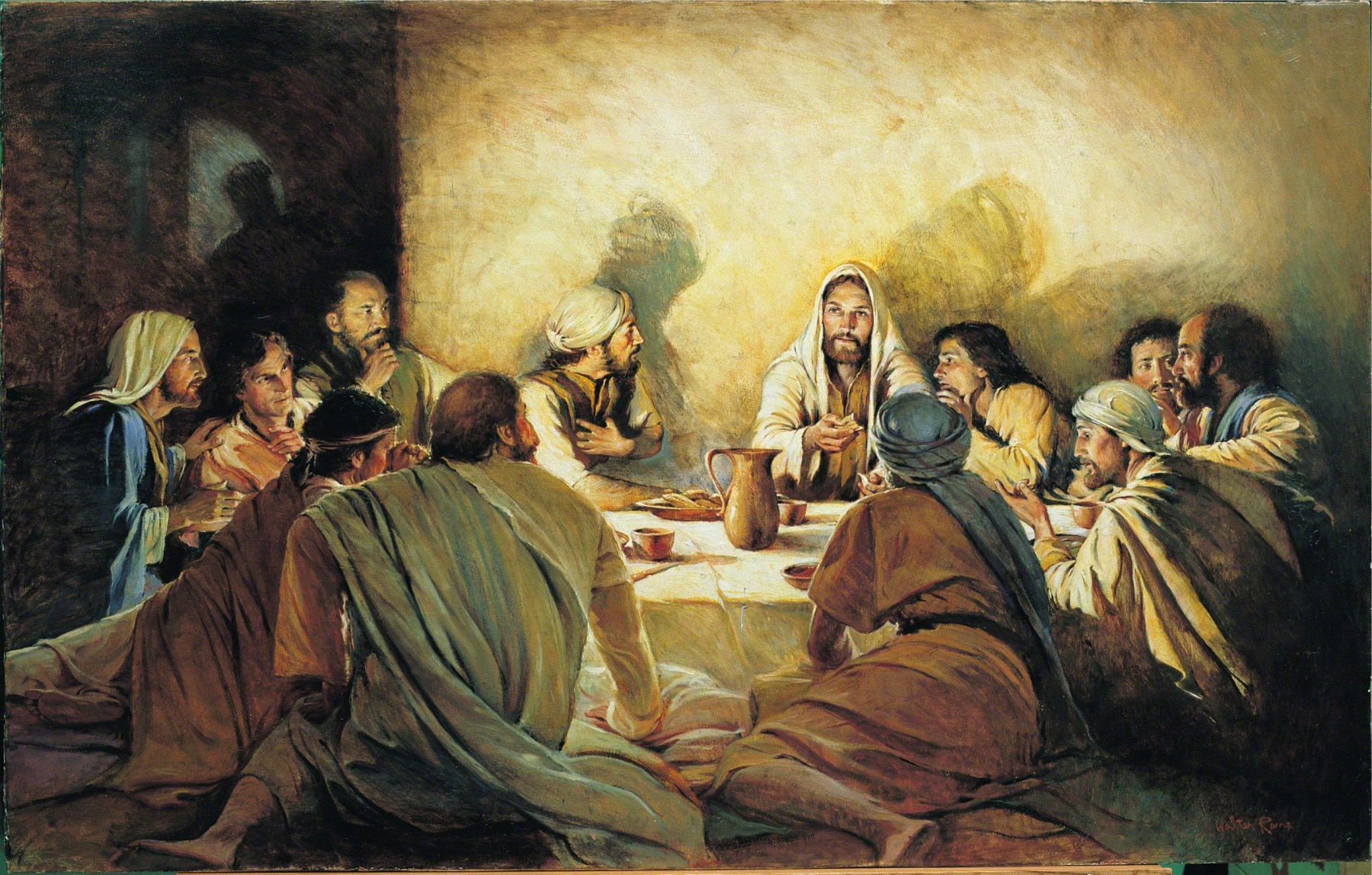
There’s no doubt that Jesus understood the power of a good meal with friends. In our Gospels, especially the Gospel of Luke, Jesus does much of his ministry around the table breaking bread. It is around the table, not in a synagogue or temple, not in the city streets, and certainly not from a throne, that Jesus has his most intimate moments with his disciples. Just before he died, it was a meal he shared with his disciples; after he was resurrected, it was a meal that caused the disciples to know who he was; just before the ascension, it was a meal that reestablished the fellowship he had begun in order to commission them into the world.

What Jesus did through meals has served as the “source and summit” of our Catholic faith for two thousand years. At the mass, we break the bread of life, our savior given to us, as a means of building our own table fellowship, coming closer to the one who created us, and inspiring us to go out and be the Body of Christ in our world. As Catholics, we marvel at God’s ability to turn bread and wine into the body and blood of Christ, a miracle before our eyes, and offer thanksgiving for the great gift that is his eternal grace.

But as we heard in our first reading at mass today, there can be a danger in such marvels. Witnessing a man healed in the waters, the crowds flock to those who blessed him to see more miracles. A good thing for sure, a sign of faith. And yet Peter is furious. How are you amazed at this miracle but you refuse to accept the one who caused it, Jesus the Christ? What inspired the people was not the person of Jesus; they desired no relationship with him nor did they want to be a part of his community. What amazed them was the external sign, the miracle, the “magic” of unexplained powerful things.

There is, I will say, that temptation in our Eucharistic meal. Focusing solely on the “Holy Sacrifice of the Mass,” there have been times in our history (and spiritualities even today) that are so concerned with the holiness of physical body and blood of Jesus, that the whole experience either becomes, a) the reception of a miraculous, grace-filled wafer that is so objectively powerful that nothing else matters except saying the proper words and personally receiving with proper devotion, or b) something so very holy that one is rarely ever worthy enough to receive, a prize to be won by the perfect but hardly ever earned. Something is surely lacking here.

Jesus instituted the Eucharist as a meal, a form of table fellowship. He established it not to be dispensary of miracles and grace, but as a way to encounter the living and true God in an intimate, communal way. What we do at mass is a very holy experience, one that requires a certain level of reverence for sure. But it is a holy experience because it establishes and nourishes the community that Jesus established and serves as its head. When we gather for Eucharist, we gather together around the table, not simply as coincidental bystanders in a common location, but as men and women forming and nurturing a community of faith. When we gather for Eucharist, we gather together with our risen and living Lord just as we would at our kitchen table: to share a meal with a close friend.

There’s a reason that Jesus gave us a meal as a way to remember him. Meals can be the places where communities are born, where times can stand still, where we can be who we are in a comfortable setting. It’s no wonder that Jesus made the center of our worship a table for eating. Our hope as Christians is that the life we share together at the kitchen table—all of our joys, fears, vulnerabilities, and excitements—will be what we bring to the altar of our Eucharistic table, sharing with Jesus and his gathered Church in a way that makes time stand still and forms memories that we will never forget.

After forty long days of Lent—a period of intense introspection and conversion focused on prayer, fasting and almsgiving—we kept vigil Saturday evening and celebrated the resurrection of our Lord all day Sunday. Alleluia! He is Risen! For many, Easter is a wonderful day of rejoicing, both liturgically and socially; it’s a day of celebration, fellowship, feasting, and relaxation after such a long an arduous journey of Lent. Alleluia!

So… what do we do now?

For many, Easter is a celebration that lasts but a day, an experience of rejoicing that ends in an instant. Monday comes and it’s back to school, back to work, back to the normal grind. Whereas Lent was ever on our minds for forty days, reminding us of the things we were giving up or taking on to prepare for Easter, Easter itself—the very thing we spent an entire season preparing for—gets our attention for one day.

Liturgically, this is certainly not what we celebrate as Catholics. For 50 days we are an Easter people, recounting the events of scripture that took place after Jesus had risen and interjecting “Alleluia” anywhere that it will fit, we intently focus on our renewed lives as baptized Christians who are sent out with the gift of the Spirit. Our celebrations are positive, lively, and aimed at lighting a fire in our Church and world. The emphasis on Easter is so strong, in fact, that the entire first week of Easter is called the “Octave” of Easter, a time in which the Church treats every day as if it were Sunday.

And yet, it’s been my experience that this is hardly lived out in the regular lives of people, religious and priests included. Sure, the liturgies are about Easter and we say “Alleluia” a lot, but compared to the intense focus of Lent, the Easter season seems like any other period of the year, and makes some of us wonder:

“Why do we spend so much time doing penance in Lent but only one day of celebrating during Easter?”

This was a question a classmate of mine raised in one of our weekly meetings during novitiate (the second year of our formation). “Why do make such an effort to come together as a community more in Lent and not Easter?” It was a poignant question, a question that did not really have a great answer. Why didn’t we?

It was as a result to that question that we decided to institute a new practice: every Friday for the entire Easter season the community would come together for some form of celebration. It didn’t have to be quite as extraordinary as Easter Sunday, but it was expected that our liturgy, meal, and recreation would have something special about it. We each took turns, and the nights varied, ranging from a movie with the whole community to an elaborate talent show with a stage and colorful lights to make us feel like we were at a theatre. Some nights were “party” nights with alcohol and nice appetizers before dinner, others were more community oriented with sharing and reflection. The whole point was that our days and weeks, just as in Lent, would be oriented towards the season: how is my daily life reflective of the joy of Easter?

For us as Easter people, living in the joy of the risen Lord, it is a question that we all need to answer. Is Easter just a day, a holiday on the calendar that we breeze through as we march through the year, or is it an entire season, a mindset even, that dictates the way we live our lives? Just as our sense of penance and conversion was evident to people around us in Lent, our joy and thanksgiving should flow from our lives during Easter.

So… what do we do now? I say, because the things we do during Lent are often defined by negative statements—don’t do this, stop bad habits, no more complaining—Easter should be defined by positive statements: I want to be more thankful, show affection more, look on the bright side of things, count my blessings, and share good news with everyone I meet. With Easter joy as our inspiration, the possibilities are endless!

Last week I made a video explaining how the many groups of Franciscans developed over the centuries, splitting and reforming into the many Orders we know today. But I think there is an even more interesting question: what was so attractive about the early movement that it grew as quickly as it did and remains vibrant in the Church today? It’s in answering that question that we see why Franciscans are needed as much as ever in our world today.

A renewed sense of prayer

When we think of the medieval world, many of us think that everyone was Christian, that it was not until the modern world that “secular society” began to exist. The fact of the matter is that there has always been a divide between the religious and secular, and Christians have had various degrees of religious commitment since the time of Jesus. In Francis’ time, corruption (both at the hands of the Church and civil society), disenfranchisement, and apathy all around. Few people received the Eucharist, and because many people were either illiterate or ignored, they rarely had profound encounters with God in the Church.

With Francis and the Franciscans, the Church was called to a renewed sense of prayer and spirituality. Their “incarnational spirituality” showed people that God was in their midst, comprehendible and accessible to them wherever they were. And do you know what? They used entertainment to get their message across. The Franciscans were popular preachers. They did not preach precise doctrines or theological treatises, they preached the Gospel in the language of their hearers. They preached with joy, with life, and most of all, with creativity. Their spirituality caused people to change their lives, but their style of preaching made people want to listen to them in the first place.

Today, the world looks quite different, but the issues remain the same: many people are disconnected, alienated, even cynical towards faith. But notice how I don’t say that it is “secular society” or “new atheism” that’s the problem. While more and more people are claiming “no preference” on religion, there is still a strong spiritual yearning, even among youth. The real problem, as I see it, is that the established religions have failed to speak the language of new generations and engage them in a way that makes prayer meaningful. Too often, when faced with difficult questions, they’re handed answers of morality and philosophy when all they’re looking for is compassion, inspiration, and joy.

How do we respond? With engaging preaching that comes from a solid life in prayer. For Francis, the world was his cloister: he could at once be grounded in prayer while also attuned to the needs of the people around him, a witness to something greater.

Brought together in equality

The 13th century saw the beginnings of a new economic system: the feudal economy was fading away and the market economy was coming to prominence. On the one hand, it brought wealth to people who would have otherwise been ignored because of their lack of nobility; on the other hand it broke the bonds of responsibility for the poor and subjected some to even more humiliating poverty. It was a time of major class division, growing disparity between rich and poor, and no recourse to bridge the gap.

And then there were the Franciscans. Here was this bunch of men that brought together rich and poor at one table. Clergy, professors, princes, homeless, porters, lepers. Together in one family, they were all equal. Where else in the 13th century could you experience such radical emphasis on human dignity? Where could you step outside of the expectations and systems of society to live as the Apostles did? No where.

Today, we see the divide between the rich and poor growing rapidly in recent years. In the past 40 years, the United States has seen some of the worst of this: the top 1% own 10% more of the total wealth today than they did in 1979, have seen a 275% increase of income compared to 40% for the rest, and in 2011, despite being the most affluent country in the world, half of the United States lived in poverty or was designated low-income. Among the rest of the world, the United States is in the 30th percentile (70% of countries are better) with the trend getting worse.

How do we respond? By being minors for the sake of the poor. Because we do not believe that we are above anyone else or deserve respect because of who we are, we find ourselves among the poorest and most forgotten of society.

A Fraternity bigger than oneself

I can’t say exactly what it was about the time of Francis, but there appeared to be a deep yearning for brotherhood. Francis and his brothers were by no mean revolutionary when it came to the idea of forming a brotherhood: the middle ages saw a tremendous flux of new communities and orders all throughout the Church. The answer might be a simple one: people have a natural drive to be together, and seeing other people with similar ambitions is attractive.

Today, we live in a highly individualized culture. In a very positive way, the turn to the self has allowed more people to develop a personal relationship with Jesus in a way that previous generations simply did not even think about, not to mention the heightened sense of the personal dignity and health of self. These are great things. That said, much of our culture has taken this to the extreme, isolating and individualizing everything in such a way that we live fragmented, selfish lives. Everything is about “me, me, me.” The rise of new forms of communication have connected people in ways never before seen, but it has not been accompanied with the maturity and responsibility required to maintain personal relationship at the same time. Despite being so connected, so much of the world feels so alone.

How do we respond? With an example of “us, us, us.” Being a fraternity in mission categorically changes the way we do mission, and really, the mission itself. We don’t just work together, together we work for the sake of one another; we don’t just live together, we have lives together.

Building bridges, not walls

Finally, there could be no discussion about the Franciscans without a mention of peacefulness. One of the most foundational experiences in Francis’ own conversion was witnessing the horrors of war. In this time, there were battles between cities, wars between nations, and a little thing called the crusades. Groups like the “Knights Templar” and “Militia of the Faith of Jesus Christ” (seriously…) even sprang up as religious brotherhoods of soldiers, seeing it their duty to engage in violence for the sake of the kingdom.

The Franciscans could not be any more different. Francis always came in peace and told his brothers to always begin preaching with the words, “peace be with you.” They were forbidden to carry arms and could not even use violence to defend their own property or lives. As if this was not revolutionary enough, Francis even went to the front lines of the crusades and attempted to make peace. Crossing enemy lines, he walked right into the camp of the Muslims and spoke with the Sultan. Did he tell the Sultan that Islam was wrong? No. Did he try to convert the Sultan? Nope. He simply showed the love he had for God and spoke with him as a brother. Even in his words, Francis acted as a man of peace before all.

Today, violence is all around us. It is on battlefields, in our streets, on our televisions, in our politics, and in our homes. It’s as if we have forgotten how to dialog, how to disagree with one another while maintaining respect. In recent months, our political debates have been a prime example of this. But it’s more than that. Washington is not broken as much as Washington reflects the way we engage one another in our daily lives: name-calling, judging, excluding “those” people, looking down on those with which we disagree, and failing to show each other the respect we deserve.

How do we respond? By being peacemakers like St. Francis. Rather than seeing everyone as potential enemies, why not see everyone as Francis did, fellow children of God? Instead of starting conflicts or running from them, why not run towards them with a desire to reconcile? We need peacemakers who are willing to build bridges, not walls.

800 years ago, the Franciscans grew like wildfire because they were exactly what the world needed and people wanted to be a part of the movement. Today, I think that is still the case. What we stand for is exactly what the world is longer for.

But ideals and mission statements don’t change the world. Throughout history, it’s been the men and women who have heard the call and lived these values that has made the real difference. Nothing else will do.

So, what does the world need today. It needs men and women who live prayerful lives, lives that spring forth in creative in relatable ways; it needs men and women who are able to check their ambition and privilege at the door to be equals with anyone else who walks in; it needs men and women who are capable of struggling with others, overcoming their shortcomings, and making it work with others; it needs men and women who want to live for others, who want to build the kingdom of God even in the most difficult of places.

The funny thing about it all is that these people are already out there in the world, living and doing these very things. Maybe it’s even you. Maybe what the world needs most right now is not some politician to fix our problems or God to perform some incredible miracle, but you, as you are, living the 800 year old charism of St. Francis of Assisi.