Everyone knows St. Francis of Assisi and St. Anthony of Padua. They’re arguably the most famous saints in the history of the Church. Most people know of St. Clare, if for nothing else, that she was associated with St. Francis. And all throughout the world, the name Padre Pio has become more and more popular after being canonized a little over a decade ago. When most people think of the Franciscans, these names come to mind.
But… we’re an 800 year old movement. We are by far the largest religious family that has ever existed in the Church, and we’ve had some holy people along the way. Surely we have more than four saints, right?
Coming up with the exact number was hard to find (typical Franciscans, right?). If you include all of the saints who were professed as Secular Franciscans before becoming associated with another Order, the number is around 177, but even conservatively estimated, we’re well into the 100s.
That’s a lot of holy men and women. And I think we should remember them. In this week’s video, I’ve selected seven Franciscan saints that I think everyone should know, and offered my take on the holiness of our charism. If you stick around to the end, you might even get a quick joke at the expense of the Dominicans (no offense Dominicans!)
Going to church… can be a bit boring. Look out into the congregations of many churches and you will not find hoards of smiling faces, upbeat and excited about what they are doing. No, quite unfortunately, you will find many dour faces and low energy. The problem is so common, in fact, that Pope Francis even addressed it in one of his apostolic exhortations, bemoaning the loads of “sourpusses” he sees coming up for communion.
What a tragedy!
For me, there is nothing more life-giving in all the world than the community gathered for this sacrificial meal. It is the “source and summit” of our lives as Christians, the inspiration and strength we need to go out into the world. Catholics do not attend mass simply to get into heaven, as if it were something to be endured before we received our reward; no, we attend mass because it is a small taste of heaven itself. For those who know what is happening at the mass, it is the highlight of their week.
And I think that’s the key: “for those who know what is happening.” When you know what is happening, when you can follow the internal logic of the rite and can enter fully into the mystery before us, the experience is anything but boring. While the execution of the rite (stylistic choices, skill, personality, ability to follow rubrics) can obviously have an effect on the congregation’s experience (there are such things as bad presiders and choirs…) the Mass itself will always give life to those who understand.
And since I cannot fix every presider and choir or force every parish to be filled with joy and energy… the only thing I can do is shed some light on the rite itself, hopefully instilling in others the same love for the Mass that I have. With this series, my goal is to break the whole liturgy down to its individual parts, explain what each mean, and put them back together to reveal a coherent, artfully crafted act of worship that gives glory to God.
There are many ways that this can be accomplished. Some would explain the Mass in two parts, separating the Liturgy of the Word and the Liturgy of the Eucharist; others would build the series around the three processions found in the mass; others still might focus entirely on the complexity of the Eucharistic prayer, breaking that down into four parts, with the Liturgy of the Word and Concluding Rites as bookends. All of these would make for fine explanations of what is going on in the rite, but they are not what I have chosen.
This series will be divided into six parts, a double series of three, following the same structural arc: Called in and prepared, Given a gift, and Sent out.
Beginning first with the Liturgy of the Word, the first arc will begin with the gathering, call to worship, penitential rite, gloria, and collect. Through this series of actions, the congregation will be called in from their disparate lives and prepared to enter the worship. This will give way to the reading of Scripture and the recitation of a psalm, reaching its pinnacle in the reading of the Gospel. In this way, the congregation will be given the gift of Christ’s true presence in the Word. Bringing the first arc to a close, the homilist will make sense of what has been given, offering practical applications for lessons, and the congregation will respond with the prayers of creed and prayers of the faithful. All three components focus the attention of the congregation to the outside world where they are sent out to live what they’ve heard.
The structural arc will begin again with the preparation of the gifts, in which the congregation literally prepares for what is coming next: they not only prepare the altar for the physical sacrifice, but prepare their hearts for a spiritual one. The Mass then reaches its high point in the Eucharistic Prayer and reception of communion, in which the congregation is given the gift of Christ’s very presence in sacramental form. Having received this gift, the congregation has not just eaten a meal, but has become what it received: they constitute the body of Christ themselves. In this way, then, they are sent out to live as such in the world, announcing the Good News with their lives.
Called in and prepared, Given a gift, and Sent out.
Obviously, the Mass is a complex act of worship filled with more rubrics, history, and symbolic significance than can fit into a six-part series of 10 minutes videos. In preparing for this series, I read multiple Vatican documents, three different commentaries on the mass, consulted liturgists, and built upon my four years of theological study. Regrettably, there was a lot that I had to leave out, and decisions had to be made as to what to keep in. This series will not be the end-all-be-all of mass commentaries, nor will it be without its own flaws and personal biases. Since I had to choose what to include and what to leave out, this series, like any project, will ultimately be incomplete.
And I’m completely fine with that. My goal in sharing this work is not to provide the most complete, objective recitation of facts possible. No, my goal is to share the love that I have for the liturgy so that others may have faith. I do my absolute best to stick to the facts, never outright sharing my opinion on any topic, but there’s no question that my own experience and theology is behind the whole creative process. This series is about telling a story, not about reciting the official rubrics one by one. My hope is that, in sharing my passion for this great communal worship and offering the foundation for its logic, that others will be inspired enough to study the documents themselves and come to their own conclusions of what each part means, why they’re important, and how to share that experience with others.
If that sounds like something you’re interested in, or maybe something that would benefit someone else, I encourage you to join me each Friday for a new installment.
In some ways, the topic of this week’s Catholicism in Focus is a trivial one. It is the sort of topic that the Pharisees might have argued about, seemingly esoteric, having no effect on the lives of the poor and no relevance to a true faith.
In other ways, this topic finds itself at the very center of the most important aspect of our lives. How we answer this question is not simply a matter of preference or idiosyncrasy, but is rooted in the very theology that we bring to our Eucharistic celebrations.
Oh, and based on the comments on the video so far, it’s also a controversial question that is dictated more by emotion and nostalgia than a carefully tested Eucharistic theology…
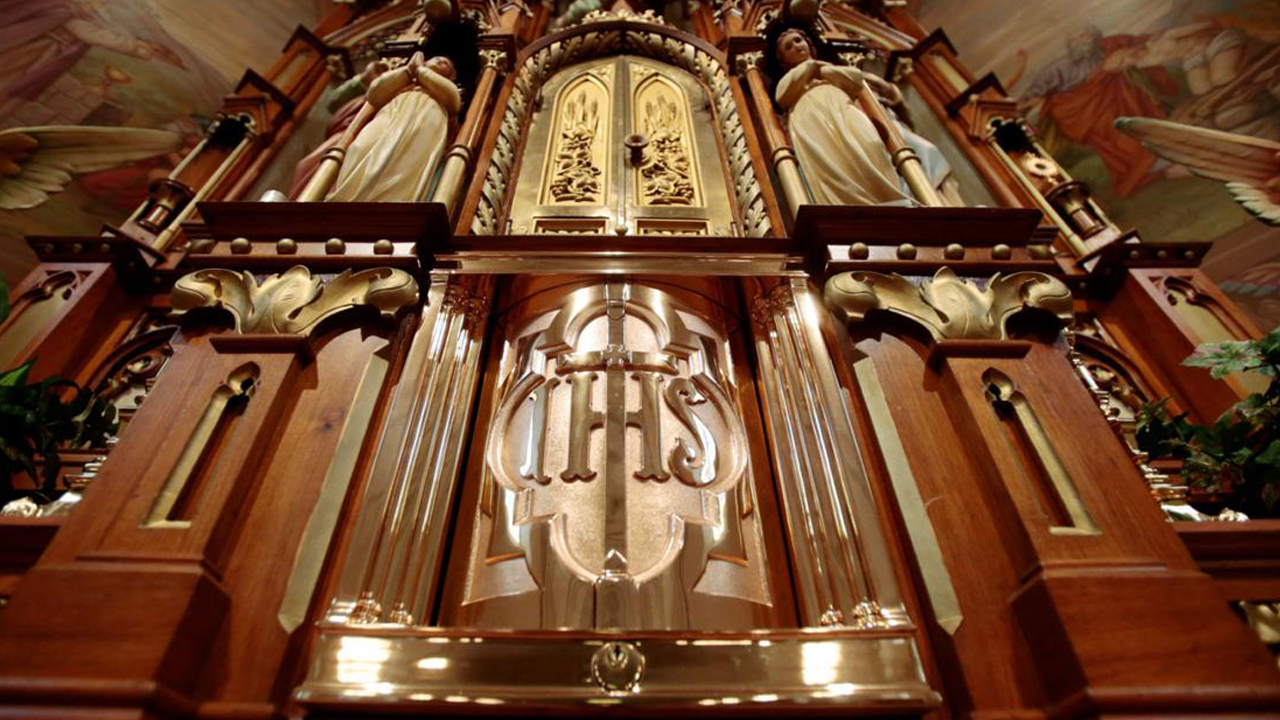
The question that I tackle this week is of the placement of the tabernacle.
As you watch this video, I simply ask that you try to understand what the Church is saying and why it is saying it. Rather than trying to justify your own opinion or challenge what is being said, really try to get to the heart of the issue. In the interest of tradition and familiarity, many have already rejected the prescriptions of the Church, writing them off as irrelevant, out of touch, or just another mistake of the Second Vatican Council. They have looked to things they don’t like in the Church as a way to prove that this “new” practice is the cause. Even some bishops are trying to find their way around the rubrics and return to what the Church used to do. Try to fight this urge. Try to get beneath the surface, outside of your comfort zone, and see what is really at stake.
Reverence for the Eucharist is surely not what it should be. Our worship can definitely be lackluster at times. For some, this is reason enough to abandon our present practices and return to the old ones, a “magic bullet” to fix our issues. My opinion? While there are some obvious pastoral issues at play here and some clear problems that need to be addressed, the placement of the tabernacle is less of an issue than catechesis is. Putting it at one place or another might hide the issues we have, but it won’t actually address them if people don’t know what’s going on. Let’s address what’s going on under the surface, let’s correct what could be lacking in our Eucharistic theology, and none of this will be an issue.
Eight hundred years ago, a little man from Assisi, a man without tremendous wealth, power, stature, or societal influence, set a movement in motion that would leave the Church and world forever changed. That man was St. Francis of Assisi.
Within just a short decade, there were already more than 5,000 friars in countries all across Europe, the Poor Clares had spread to multiple monasteries and established itself as a new way of monastic living, and the penitent movements had received their rule and amassed a larger number even than the rest.
It’s difficult to underestimate the effect that the Franciscan movement had on history. With its great size and diversity came the ability to spread its culture and values, including a number of innovations, in a way that had never been seen before. Constantly on the move, they could respond to the signs of the times, enflaming a people with passion before moving on to the next place. The way they served the poorest of the poor, living humbly themselves, preaching in new and popular ways, and not asking for much in return challenged the secular priests of their day to serve in a different way. The nativity scene and stations of the cross, while not invented by the Franciscans, are popular devotions today because of their insistence on an incarnational way of prayer. And the breviary, the shortened and compacted way of praying the psalms found in every religious house in the world today, was first employed by these traveling preachers.
At every level of the Church, in every country in the world, the Franciscans have not only been present, but have left their mark in irreconcilable ways.
But why? Why didn’t the Dominicans, who were formed around the same time, not grow as quickly? Why did it take the Jesuits, who were founded to do similar forms of ministry, so long to get its first pope (who took the name Francis!) Why haven’t the Benedictines, who have existed for much longer, had such a lasting effect on the imagination of the Church? And why haven’t the countless other religious orders that were founded throughout the history of the Church been able to match what the Franciscans have done in 800 years?
I ask these questions not to put down other Orders or even to shamelessly promote the Franciscans (okay, a little bit of the latter), but simply to marvel at what seems inconceivable: a religious movement started by a simple man like Francis should have never worked at all, let alone have changed the Church and world as it did.
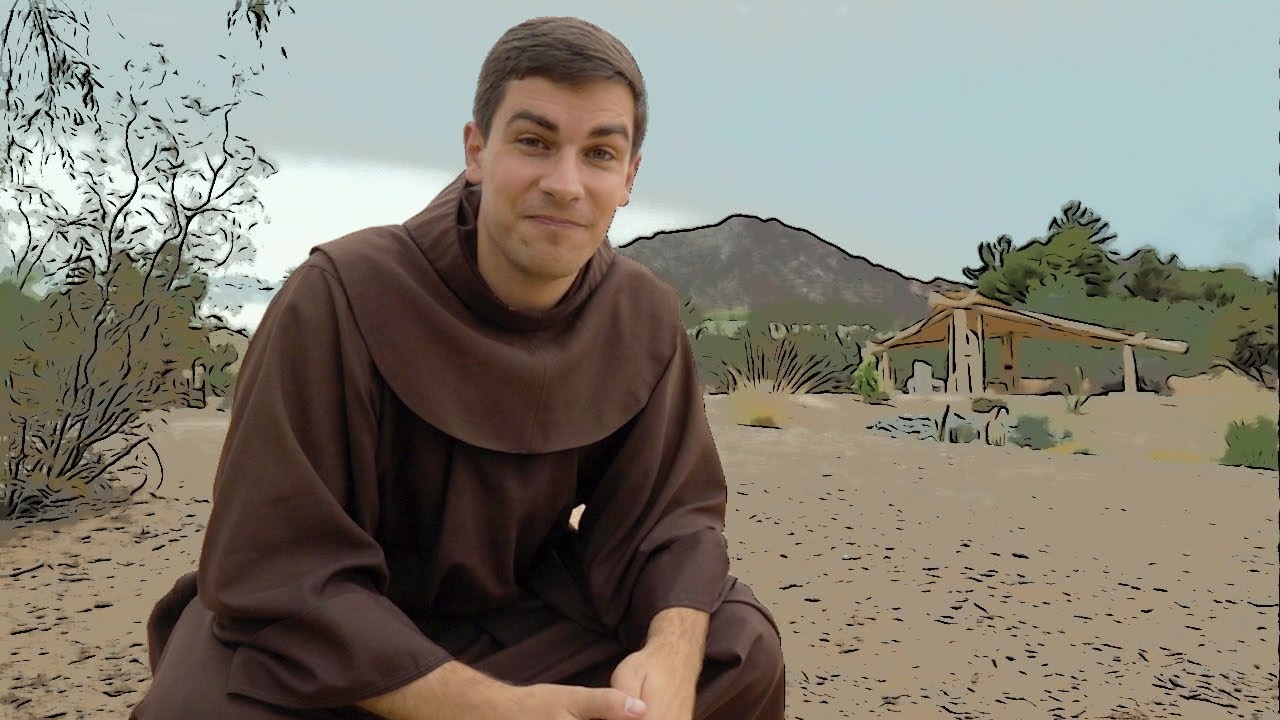
Why is that? And maybe more importantly, what might we learn from the success of this movement 800 years ago in what our Church and world are facing today? That is what I was employed to talk about last weekend at the Franciscan Renewal Center in Arizona. While I can’t repeat all 5 hours of talks, I wanted to share the central points here in this week’s vlog.
I hope it inspires you to join in the movement, in however you can in your situation, and happy Feast of St. Francis to you all!
When I went to college, I was given a helpful study tip: study and relax in distinct places and never mix the two. The thinking is that your body becomes accustomed to a certain environment and will train itself for a specific task, i.e. you sleep in bed and so you begin to get tired when you get into bed. When environments are mixed, so too do our habits. Studying in bed will make us more inclined to fall asleep while trying to learn, or worse, less inclined to sleep when we want to. By only sleeping in bed and only working at the desk, keeping tasks in a specific and distinct location, one will be able to focus on each better.
We certainly can and have applied this principle to our prayer lives as well. In places like chapels, cathedrals, and monasteries, we create environments that fosters prayer and contemplation. They are generally quiet but acoustically resonant, beautiful yet tasteful, simple yet thought-provoking, and comfortable yet deliberate. They are not the place to eat lunch or watch television, but places to experience what is holy. Over time, they become places of refuge, sources of inspiration for our faith; places that we celebrate the sacraments, gather for communal prayer, and find peace. In other words, these are the places that we find God. These are holy places.
Ah… an interesting concept. Holy places. What do we mean by that? What does it imply? We are absolutely correct in saying that such places are fountains of God’s love and mercy, that God can be found in these places. We know this to be true. But does that mean that God cannot be found other places? Are there places that God cannot be found?
That is the topic of this week’s reflection, looking at what we would describe as the “sacred” and the “profane.” While there is certainly some benefit to applying our common study tip to our prayer life, we have to be careful not to be so quick to cut off God’s ability to reach us when and where we are.



 Breaking In The Habit