St. Francis is probably the most popular, widely recognized, and most misunderstood saint in the Church’s history. It’s not that people don’t know a lot about him, it’s the opposite: since there have been so many stories written about him over the past 800 years, everyone knows something, but it can be difficult to separate fact from folklore.

As someone who has studied the early sources of his life, it can be frustrating sometimes to see how his name is used or what people are saying about him. Take the “Prayer of St. Francis.” It’s a nice prayer, but those who have read Francis’ actual writings know that it sounds absolutely nothing like him. Dig a little deeper and you’ll find that it was a prayer for peace written during World War I.

Francis preaching to the birds is another example. Did Francis preach to the birds in a literal sense? Maybe. We do have one or two references to it in his early biographies. But what’s interesting is that so many other saints before him were also said to preach to animals, and that, for some, the birds represented the many types of people of the world. And besides that, he did and wrote about many other things; preaching to the birds is something he never mentions, and is really insignificant to all of the other more important things he said and did. And yet, he is the man of the birdbath.

These are just two examples of the manways the image of Francis has been misunderstood throughout the years, and it’s no wonder that he can be found promoting such vastly different causes. Once, for instance, our novitiate class was forced to attend an etiquette because, as the friar hosting it said, “Isn’t this what Francis would have done?” An etiquette workshop. Right.

That’s the feeling that Rob Goraieb, OFS had a few weeks ago when we were preparing for the feast of St. Francis, coming up this weekend. How could we deal with this frustration in a positive way? Like the 40 minute video we filmed a few months ago about vocations and church in the modern world, we decided to just sit down and talk about it on camera. What things frustrated us? What aspects of Francis’ life are often overlooked or forgotten? What do we as Franciscans want the world to know about St. Francis?

We sat for about an hour on camera and we hardly scratched the surface of what we wanted to say. In fact, both of us were initially left dissatisfied with what we had done. The fact of the matter, as we realized, is that there is no way to totally encapsulate the inspiration of the life of Francis, and in some ways, we didn’t even want to try. But we did want to share with you what we found most essential to Francis’ life and what it might mean to follow Francis today.

Happy Feast!

For those on email, the link is here.

When I was a senior in college, I had the great privilege of acting as our club baseball team’s president. Since there was no active faculty involved with the team, that meant that I was also the coach. Between the vice president and myself, we petitioned for money from the school, recruited people to sign up, ran practices, paid for regular expenses, and coached games. It was an incredible experience with incredible results. We went 13-2 in the regular season, good enough to win our division, then went 3-1 in the regional tournament, earning a berth to the Club Baseball World Series in Pennsylvania–this from a team that had went 0-7 and 6-4 in the previous two years! Even though we didn’t play well in the World Series, it was a storybook end to my baseball career and one of the fondest memories I will ever have.

At the time, I was very proud of myself. Naturally, I was proud of the whole team, but I really did work hard to make us successful. While the vice president definitely helped, I felt that it was my ambition, persistence, and creativity that fueled the team. The budget I submitted was detailed and professional (which led to us receiving the third highest budget of any team, a huge increase from the year before), I got people to actually come to practice twice a week (more than six once a week was a success in previous years), found an abandoned baseball field near the school and worked to clean it up for practices (the previous two years we practiced on a community soccer field), convinced the varsity baseball coach to let us use the school’s batting cages on their off day (restoring a relationship that been ruined years before by a previous club president), and didn’t stop recruiting until the final week of roster closures (the week we picked up our eventual RF and #2 hitter, and a defunct varsity pitcher). At the time, as I said, I was proud of myself.

That was until I checked in with the team the year after I left. When I left, they were set up to repeat and had real reason to think that they would be even more successful. In essence, they lost me, another senior who only played in the final weekend, and our number 3 pitcher. They still had their top two pitchers (one was probably the best pitcher in the division, and the other guy finished with an ERA under 1.00 the year before), still had their entire lineup save the #3 hitter, and had an entire class of new freshmen coming in. So what happened? Did they repeat and go to the World Series? No. They finished below .500, had to forfeit a number of games, missed the playoffs entirely.

When I lamented about this to a friend, they thought I was bragging, as if to say, “Look how much they needed me. They couldn’t do anything without me.” That wasn’t my first thought. When I saw the immediate drop in results with almost no loss in talent, I realized that I had actually failed them in setting up the team for the long run.

I think a problem we all have when we are passionate about something and want to make it successful is an “I can do it” attitude. What do I mean by this? I’m not talking about initiative or confidence in oneself; this sort of “I can do it” attitude is something all leaders need. Rather, I’m talking about the sort of “I can do it” attitude that does not include others in the building process, in a sense saying “If I don’t do it, it won’t get done right.” Sometimes it is an issue of control and lack of trust in others, other times it is simply a failure to identify talents in others and offer them opportunities to succeed even if “I can do it” better. I think my attitude was somewhere in between the two.

For me, this was my last shot at playing baseball and I made it my highest priority. Was I really going to take chances with guys who weren’t as passionate?

And it was successful…

For one year. What I did was make sure everything was done right; what I failed to do was empower anyone else to care to do it that way once I was gone.

As friars, it can be very tempting to lead our ministries in this way. And who can blame us? In many cases, we’re the most capable of doing any job around the parish: we’re passionate about our ministry and want it to do well, are highly trained with graduate degrees and many years of preparation, and are definitely the most responsible if something were to go wrong. “If I can do it, why wouldn’t I? It is my job.” Add a generally likable personality to the mix, and there’s almost a guarantee for success.

But what happens when a) that specific friar is transferred to a new fraternity, b) a parishioner moves to another church not run by an “I can do it” priest, or God forbid, c) we have to turn the ministry back over to the diocese because we can no longer staff it? If all we have ever done is lead from the top, making all of the decisions and making sure everything is done perfectly, if all we have ever done has been to lead with an “I can do it” (so no one else has to) attitude, then the people we serve will never know that they can do it too. And they can.

I admire our friars who do this so well, leading with the people they serve as the people they serve, empowering them to take an active part in leadership. Because, when you think about it, we are shepherds, not CEOs. We are not owners or kings, we are guides and supporters. The Church does not belong to us nor does it require us to function properly. It belongs to the people of God, and it is our role to make sure they are passionate about and capable of taking up their own cross, not to make sure it is successful at all costs.

Coaching baseball for one year in college will no doubt be one of my fondest memories for the rest of my life because of our success, but it will also be one of the most important memories for me in effective leadership. If all we want is short-term gains, do it ourselves; if we want to make something lasting and worthwhile, we have to build people up and empower them to lead it with us. Coaching that year taught me that “I can do it” can certainly lead to success, but the sort of success I really desire can only be won with an attitude of “we can do it!”

As a part of our priestly formation at Catholic University, each student is required to take what is called “Basic Supervised Ministry,” an intense, year-long course combining ministry experience and academic reflection. For most of us, that means taking a shift each week at a local hospital visiting patients and serving as a chaplaincy intern. The experience is often well out of one’s comfort zone, and can be a time of both revelation and stress.

I apparently wasted no time with both.

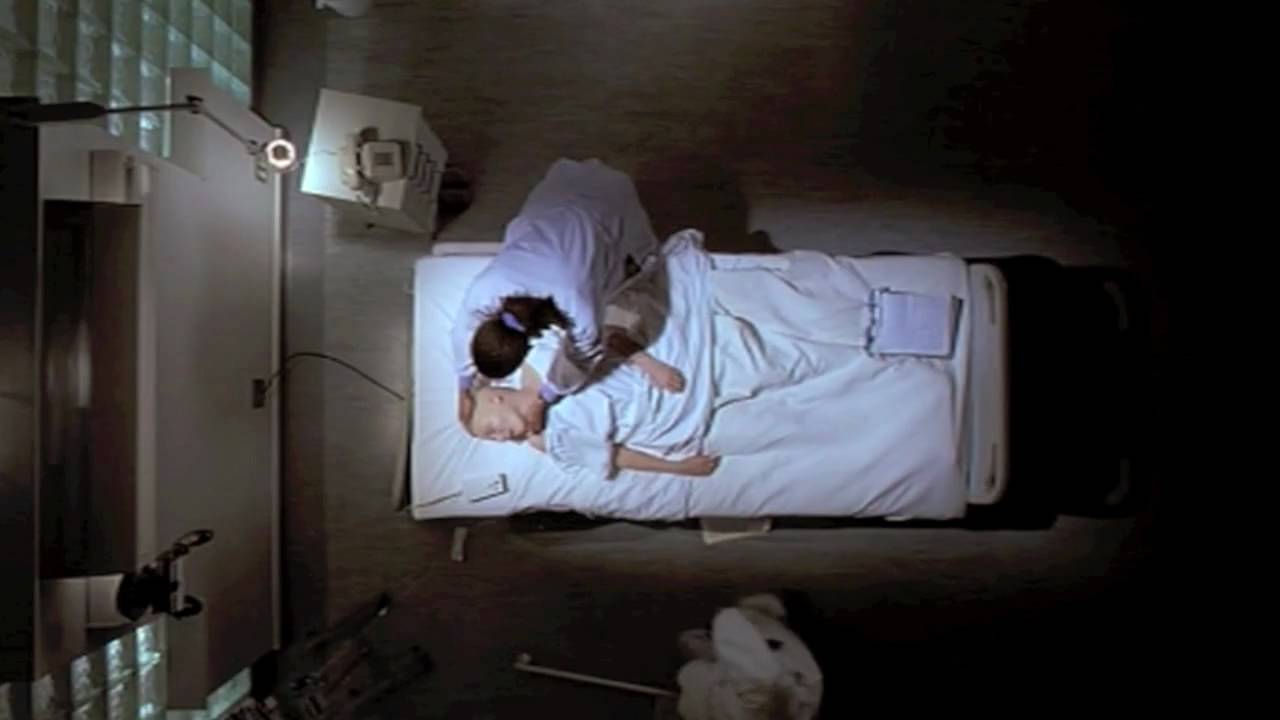
On my first day, I visited a patient that was very near to death. When I came to his room, he was unconscious, and his wife indicated that it would not be long before he was gone. It was obvious. In the bed before me was someone sick and weak, entirely dependent on the outside world to survive. There was very little to see in that bed.

And yet, there was something profound about the experience. In just the few seconds I spent in his room, I felt something come over me. I couldn’t say exactly what I was feeling at the time, but when I looked at this tired old man, beyond the years of being respected and “useful,” I thought about how he must have been at one point. Sure, he was a withered old man now, but wasn’t he a child at one time, full of energy and optimism? Wasn’t he a young man at one time, in love and eager to take on the world; mustn’t there been a time in his life when he was so very sure of himself, capable and able to take on the day? There had to be more than this shell of a man I saw.

As it was a busy day of orientation, I didn’t think much more of him until later that evening when another friar and I watched the movie Wit. A homework assignment for our ministry class, Wit is a movie about a renowned and confident professor who develops and eventually dies of cancer. Through the process of following this woman’s struggle with aggressive, experimental treatment methods, the viewer comes to understand know the great physical pain and emotional trauma one goes through in such a situation. Emma Thompson’s performance was so raw and so technically precise that I wanted to look away at times… but I couldn’t. Her portrayal was absolutely chilling. Award-worthy if you ask me.

But it is not her pain that made this movie so relevant to my experience earlier in the day, it was her existential crisis. Through numerous flashback scenes and monologues, the viewer is made aware from the beginning that she is no ordinary woman. Not only a professor at a distinguished university, she is a renowned research scholar with countless publications and accolades. To say that she is “brilliant” does little to appropriately distinguish her from her inferior colleagues. From her perspective (and the perspective of the viewer), her identity is defined by her long life and many accomplishments; cancer was but a footnote to how she understood herself, an afterthought on an otherwise noteworthy life.

But this is not who she is in the hospital. To the medical personnel, her primary identity is as a cancer patient. As such, she is seen and treated like all of the other patients: with concern and dignity, but as an utterly sick and weak person, entirely dependent on the outside world to survive. Having no knowledge of her life prior to treating her, they do not glory in her brilliance or fear her reputation; they simply see a bald-headed, toxic-ridden body that had little-to-no chance of survival. From their perspective, and there’s no way you could blame them for this, her identity is intrinsically linked to having cancer, and their association with her reflects this. It was as if her life began when she entered the hospital doors and her life was defined by who she was there.

On an existential level, this aspect of the movie tore me up. There she was throughout the movie, a woman filled with an entire world of unique memories, having lived through trials and fears, joys and despairs and eventually making a reputation of greatness and incredible self-worth for herself… completely unnoticed and treated like anyone else. No one, even the one who treated her nicely, saw her for who she was at her best; they saw her for who she was at her worst, a cancer patient. How painful this must have been emotionally. How lonely she must have felt. How insignificant her life seemed to become. The way she narrated and acted with those in the hospital all but cried out, “This is not who I am! Don’t you know this? I’ve lived fifty years of greatness and all you see is me at my weakest, me at the end! This is not who I am!”

Isn’t that so true? Who of us is at our strongest when we are at a hospital? Who of us is at our best when we are sick? One might say that it is exactly the opposite: to go to a hospital is to be at one’s most vulnerable, to admit sickness, brokenness, and need for healing. We are hardly who we are at our weakest state.

It was with this that my experience from earlier in the day came flooding back to me. Like the professor in Wit, I thought about how emotionally painful it must have been in his situation. I thought about how embarrassing, even, it must be to be a grown man with seventy years of accomplishments and experiences and yet have people see him for only the person he was in the moment, the weak, helpless man on his deathbed. Everyone who casually walked in and out of his room saw one man, but is that really the man he thought of himself to be? I hardly think so. How difficult it must be to be faced with such an existential crisis at such a weak time. “Doesn’t anyone know the real me?”

I can hardly fault the doctors or nurses for how he must have felt as their preoccupation is clearly on medical issues. One could even argue that they are simply not trained to deal with such issues. In fact, I’m not sure if I would want my doctor to know the deepest desires of my soul. But in that situation, I would definitely want someone to know. And so many do. In situations like these, so many people just want someone to talk to, someone to hear their story, to walk with them through their fears and pain. At their weakest point, they just want someone to affirm that they have not always been this way, that their lives and self-worth are so much more than their experience in the hospital.

As ministers, this is what we are training to do. While everyone we meet will obviously not be on their deathbed facing a dramatic existential crisis, so many will be faced with issues they’ve never had to deal with before. Insecurity. Fear. Doubt. Weakness. Boredom. Regret. Pain. Disillusionment. The list could go on. As ministers, it is our role to be with them, to hear them, and to restore hope in them.

And this is by no means easy. In fact, I imagine it will be the most difficult thing I do in my life. But I think I learned valuable lesson on my first day: the first step in helping someone restore hope is to discover and lift up who the patient knows him/herself to be at their best, not who they are at their weakest, sitting before us. If all we can see is the sickness or infirmity effecting the person, we will never be able to see the whole person before us, and thus, we will never be able to help them in the way they need. That’s quite a lesson to learn on the first day, and quite a task for the year. But if God can use an unconscious man to speak to me so well on just the first day, I know that God is capable of working through even me.

Our Franciscan Mission

After ten days of reflecting and slaving over a hot computer, I am pleased to present a video about our mission to Nicaragua.

There are two things you might notice right away. The first is that the video does not follow the chronological order of the trip. In fact, it doesn’t even show every aspect of the trip. There is only one clip of us praying and no clips of us reflecting, two things we did together every day of the trip. There’s also very little about our meals or relaxing time, and believe it or not, no description of the organization that ran the whole trip or the great work they’re doing (you can check it out here if you’re interested). These are not oversights. Part of it was simply a decision to put the camera down at times in order to fully participate (prayer) or a respect of others’ vulnerability and privacy (reflections), but part of it was simply a conscious decision to show something more than the just “my trip.” I wanted to show mission. What is it about this trip that is true for other trips? What is it about this experience that represents the experience of Franciscans on a larger scale? This I found much more interesting than cataloguing every detail and event.

The other thing might be a bit more surprising. Outside of the opening introduction, you will not hear me speak in this video. Unlike all of the other videos that were entirely directly by my voice and reflection, this one is directly entirely by my fellow Franciscan friars on mission. Did I all of the sudden get camera shy? Not exactly. What I realized part of the way through the trip was that this was not my trip to give some wise, all-encompassing reflection, it was our trip. Each friar brought with him different expectations and added to the life of the mission in a different way. Sure I have reflections to share (as I’ve shared two posts on it already) but there was something about the Franciscan nature of this mission that couldn’t be shared by one person, and there was even a thought that it couldn’t be shared by me. I decided to document my brothers’ experience, to let them tell our story.

As usual, if you are reading this via email, you can click here to watch the video.

Encountering Ourselves

While yes, there are experiences further from my comfort zone than making bead necklaces with a tiny child that doesn't speak English, the problem was that I focused on my struggle and not on the boy in front of me. Such is the experience of a first time missionary.

While yes, there are experiences further from my comfort zone than making bead necklaces with a tiny child that doesn’t speak English, the problem was that I focused on my struggle and not on the boy in front of me. Such is the experience of a first time missionary.

As I’ve reflected with others over the past few days, answering the obvious, “How was the trip?” question more than a few times, I was discouraged at first that I didn’t have a clear answer. “It was good,” was usually all I could come up with. One person responded, “It sounds like it was a good trip, but I expected a little more excitement in your voice. I just don’t hear it when you talk.” He was right.

This was partly the sleep deprivation giving mixed signals, but there was some truth to it. I didn’t come back excited about the trip because I didn’t exactly know what I was bringing back with me. Whereas a number of the volunteers shared powerful moments of conversion, clear experiences of God in what they were doing, and serious connections with the people we served, my big reflection was, “I was happy not to die on my first trip out of the country.” Don’t get me wrong: I enjoyed the work, felt relatively comfortable in a foreign environment, greatly enjoyed my time spent getting to know the other volunteers, and was obviously touched by the generosity and openness of the people that welcomed us into their homes and culture (how could you not be touched?) I would even say that I would go back again. It was a good experience. And yet, I didn’t come back “excited.”

In fact, there was a part of me that was a bit disappointed in the trip. The fact of the matter is that I didn’t really invest myself as completely as others did. They came prepared with games and stickers, books to read and puppets to play with; they jumped right in and started talking with people and making friends; they tried everything, took part in every game, meal, excursion, and gift shop. I, on the other hand, followed where I was supposed to go, did what I was supposed to do, and mostly kept my head down. In the end, they had their full experience and I had my “I’m happy I didn’t die” experience. In this way, my lack of excitement could definitely be traced to a little regret here.

But as I think about it more, what I experienced was exactly what I needed to experience. As this was my first time out of the country, let alone visiting a third-world country, so much of this trip was just encountering and overcoming new experiences. Mosquito net beds. Toilet paper in the trashcan. Worrying about drinking enough water but making sure it’s clean. Being one of the only people in the area that speaks English. Eating foods I’ve never tried. Rooms with six bunkbeds. No hot water. Ten days without technology. Navigating new cultural and social norms. The list could go on and on for hours because, really, almost everything I experienced for ten days was new, making even the most routine tasks a new personal challenge to overcome.

It’s no wonder, then, that I didn’t jump right in as others did or come away with the strong connections with the Nicaraguans we met: I was too busy encountering myself in a new environment. It’s strange thing to think about but I think it’s true. Placed in a new environment, stripped of our comforts and distractions, left with only ourselves and our thoughts, we are forced to see even familiar tasks differently, but more importantly, to understand ourselves in those surroundings differently. Just as the background of a picture can drastically change our perspective of the subject, so to do we see ourselves differently in a new surrounding.

For us on mission, I think this is an essential, albeit frustrating, process that everyone has to go through their first time. We all want to go and encounter the other, to understand another culture through intense relationships with new people. And to some extent, I did that last week; it’s kind of impossible not to get a taste of this after ten days. But there’s also a part of me, the disappointed part, that realizes that I was not fully capable of encountering the other. Although I could begin to form a relationship, when so much of my energy in the encounter was spent dealing with my own struggles, my interactions with others were less about encountering another and more about encountering myself in the other. When I met someone new, I couldn’t fully see them because all I could see was my newfound minority status and inadequacy in speaking the language. This is the story, I hope, not so much of egocentric me, but of a first-time missionary in a completely new environment, a story we all must go through before we can go deeper.

So how do I feel about the trip? Well, it was a good trip, and I am happy that I survived. These words don’t seem to say much and they’re certainly not profound reflections, but I say them now without disappointment or regret. I know that I cannot fully encounter another until I have first gotten over the need to encounter myself. I did that. It’s my hope that, as I go on more of these trips and am able to spend less time processing mundane things and more time outside of myself, that the one that I will encounter is my new brother and sister, and that who I will encounter in them is our Lord who unites us as one. I’m glad to have encountered myself in a new way on this trip, but I also know that no encounter with ourselves can ever be complete without this.