Tour of Mission San Luis Rey

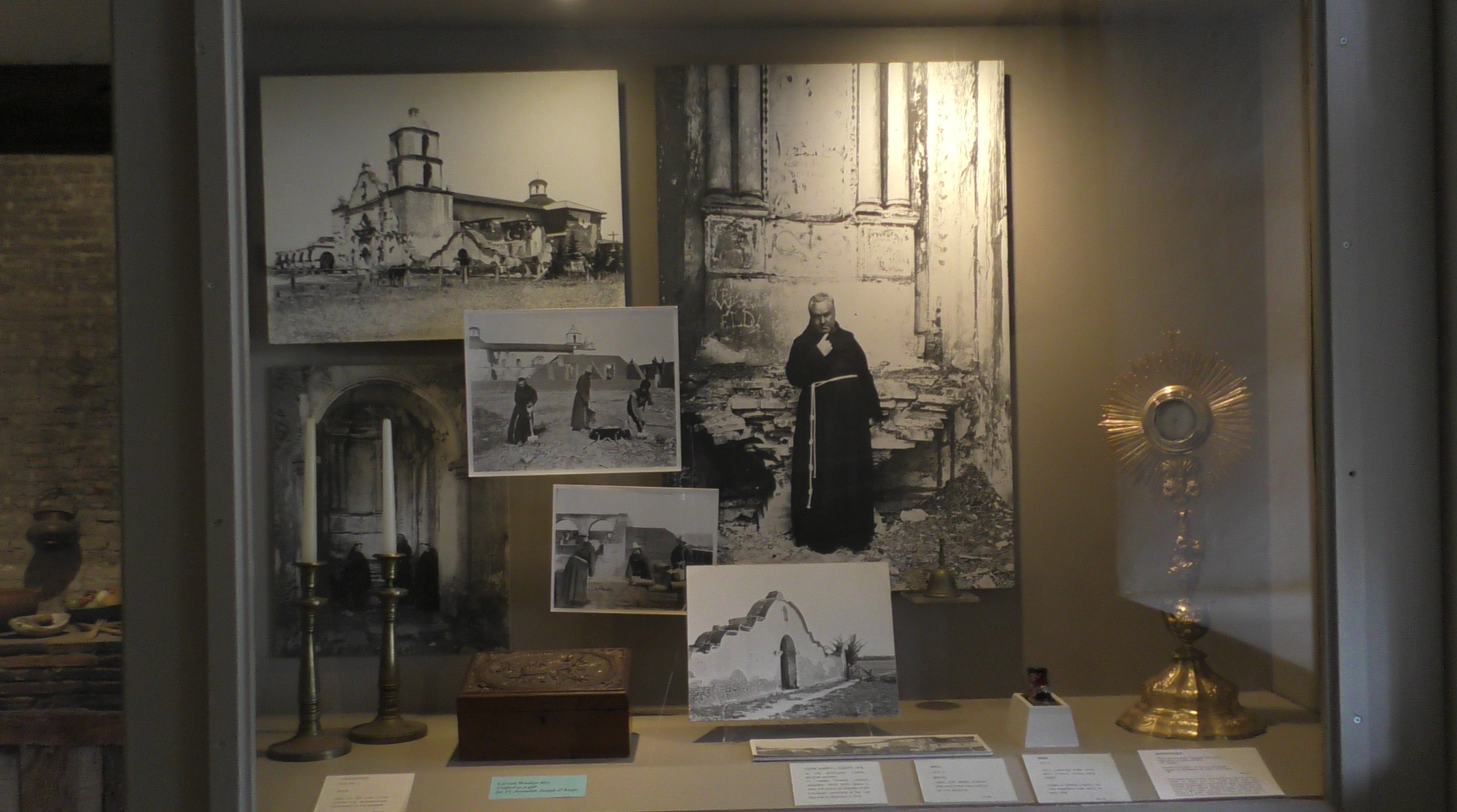
How old is your church? Yesterday, I was given a tour of a church founded in 1798! One of the original missions of the Franciscans in the southwest, Mission San Luis Rey is the largest adobe church in the country, and because it was not damaged like most of the others, is still in incredible condition. Naturally, it is a major tourist stop, as many come from great distances to see the old church and museum, but it is also a thriving parish, complete with two parish halls and a retreat center to accommodate it’s 6000 families! It was so inspiring to see the legacy of the friars alive and well today!

But rather than writing all about it, why don’t I show you? Here are a few pictures of the mission, and at the bottom, you will find my second video blog, Day Two: Tour of Mission San Luis Rey.

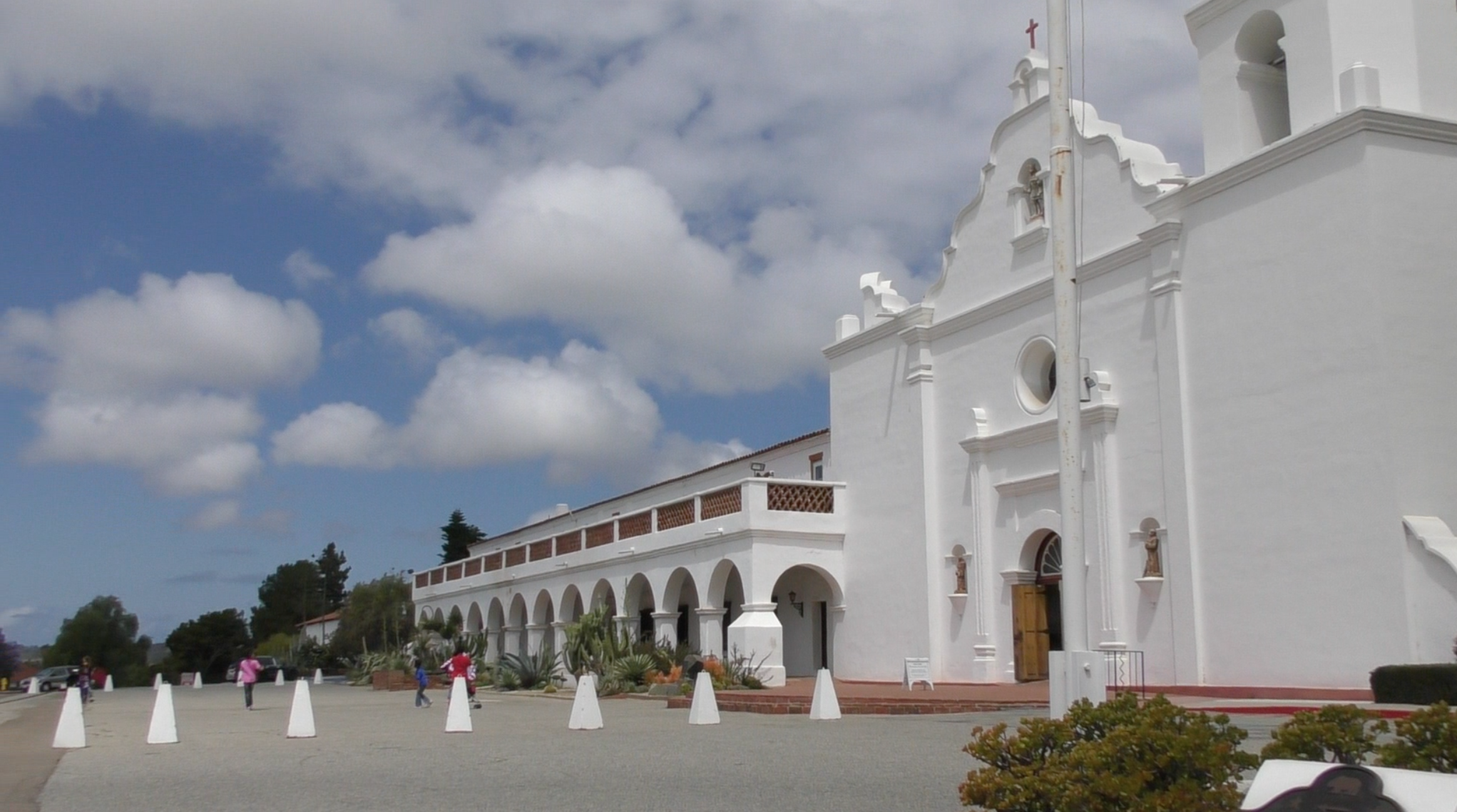
Mission San Luis Rey is a gorgeous adobe church in Oceanside, CA.

Mission San Luis Rey is a gorgeous adobe church in Oceanside, CA.

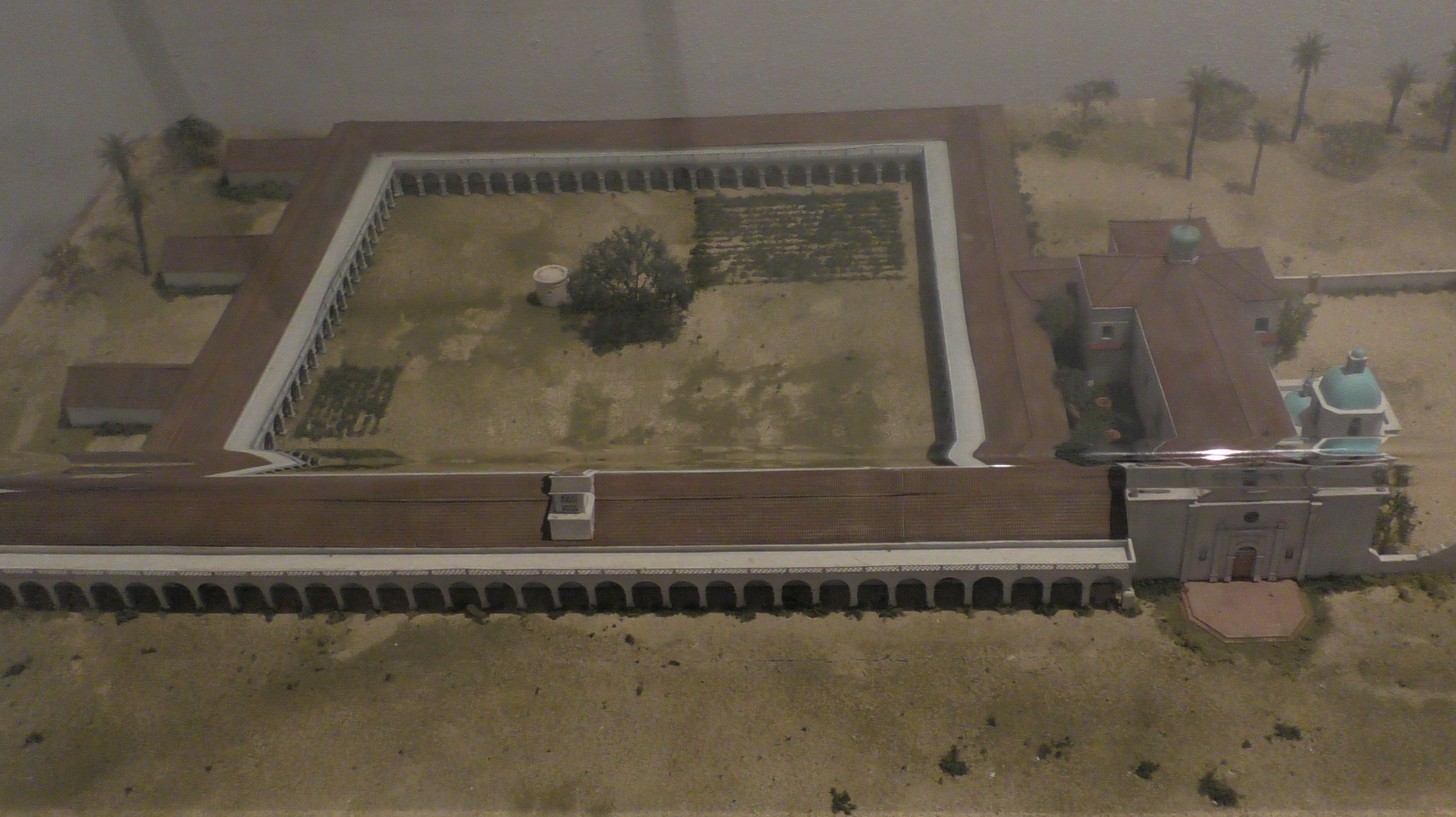
The original mission

The original mission

The friars have a long history in California

The friars have a long history in California

Edgardo having a little fun with Francis

Edgardo having a little fun with Francis


(If you’re reading this post from your email, be sure to click here to see the video. Apparently it doesn’t show up in emails.)

Sometimes We Fail

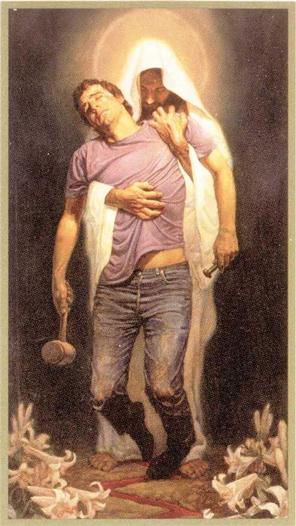
Easter is realizing that Christ is carrying us

Easter is realizing that Christ is carrying us

Last year, I wrote The Joy of Our Salvation as a candid recount of the Easter Vigil calling it, “hands down the best liturgical experience I have ever had.” I was amazed by the transcendence in the liturgy, the energy in the congregation, the faith in the catechumens. Last year, everything went exactly as planned. It was an incredible success.

This year went a little differently.

Now a theology student with a little experience preaching, I was asked by the pastor of St. Camillus Church to give the English “reflection” for Good Friday, the celebration of the Lord’s passion (since it’s not a mass someone other than a priest often gives it.) I was honored. I was excited. Those who know me know that I love big liturgies and I love to preach. Come Friday morning, I felt really great about what I wrote and couldn’t wait to share it with a packed church on such an important day.

But things did not go according to plan. Starting around 4:00 that afternoon, I developed a headache which turned out to be a migraine. I was in pain and confused for a few hours. I felt dizzy and disoriented for much of the afternoon. I could see, but part of my vision was blurry. I took a long nap, got some medicine and right before the service started I felt a little better. Rather than have the pastor stand up and have to make something up, I decided to give it my best. I would be in a little pain, I thought, but that I could still do a decent job.

I didn’t.

In front of my fellow student friars, four priests, and an almost packed church that included friends, strangers, and even one of my professors, I failed miserably. Within twenty seconds I lost my place. After a few sentences, I became downright confused. Looking directly at my written reflection, I could see the words but they meant absolutely nothing to me. I said one sentence a few times because it seemed completely incoherent. Three times I stopped, caught my breath and tried again. I looked at my paper again, but they were only nonsense words. I couldn’t do it. After three tries and about two minutes of embarrassment, I looked at the pastor, said “I’m sorry,” and began to cry as I walked away. I made it to the sacristy, fell to the floor, and cried as hard as I ever had.

I had failed.

I hope that this doesn’t come off too dramatic or even privileged, but it was easily one of the top three most painful experiences of my life. Not only was I in a good bit of pain, I embarrassed the heck out of myself, messed up the liturgy, and back in the sacristy, my classmates, two priests, and some strangers saw me crying, something I have not let people see in many years. How could this night have went any worse?

But then a friar sent me a text and my perspective began to change ever so slightly:

In no way should you feel embarrassed. It was incredibly brave for you to try to do it. I’m very proud of you for trying to tough it out, but also knowing when to ask for help. While I’m sorry you had to go through it, I think for most folks it was a rather poignant demonstration of what carrying the cross looks like in real life. Several people said to tell you what a beautiful homily it was. And it truly was.

By most definitions, what I did up there was anything but a success. I stumbled. I lost my place. I didn’t even get 1/3 of the way finished before I quit. And yet, the result was anything but a failure. There before me, I witnessed my brother stepping in to finish my words for me. I felt my classmates and random members of the choir come to bring me water and console me (like ten people crowded in the sacristy within seconds!) Some even mentioned later that the abruptness of the situation broke them out of the predictable pattern and awoke them to something more before them. How could it be that I was unable to do anything right, that the plan failed miserably, and yet Christ’s message came through?

God transforms our failures into his success.

I stood up, relying on my own strength, thinking that I was going to talk about the pain Jesus went through, the humiliation He experienced, and how He even wept, but my strength was not enough. I couldn’t do it by myself. And I didn’t have to. There we were celebrating the moment in history when Christ triumphantly took our pain and weakness upon himself, subsumed our failures into his perfection, and it began unfolding once again before our eyes. I wanted to talk about this event, but God wanted to show it. My weakness was turned into strength, my failure into success. The Paschal mystery could not be contained by words.

To say that this year’s Triduum celebration went off without a hitch would be far from the truth. Before my Easter this year, I had to experience one of the most difficult crosses of my life. Nobody likes to realize that they are not strong enough. Nobody likes to admit that sometimes we fail.

But we do. And that’s okay.

It is in our weakness that Christ is our strength. It is in our failings that Christ is our success. It is in the crosses we bear that Christ is our Easter joy. May we never be ashamed of our weaknesses, despairing over our failures, or refuse to carry our crosses. Sometimes we fail. Every time Christ succeeds. Happy Easter! Alleluia!

Not Wed to the Idea

There is nothing appealing about this experience. And yet, in every marriage, there is an opportunity to bring people closer to God.

There is nothing appealing about this experience. And yet, in every marriage, there is an opportunity to bring people closer to God.

When I was discerning my call to the priesthood, you might remember that one of the things that drew me to the possibility of being ordained was the sacrament of reconciliation. I find it to be a very powerful experience and the thought of welcoming people back to the church was very appealing.

What I didn’t mention in my posts concerning discernment, however, was one of my major deterrents: the sacrament of marriage. My thought during postulancy, a thought that I continue to hold to some extent today, is that presiding at weddings is the worst part of being a priest. Don’t get me wrong, witnessing the love of two people is a wonderful thing and I’m happy to be a part of it. But I want to be a part of it in a sacramental way. The thought of being a “rent-a-priest” in some elaborate fairy tale that has nothing to do with Christ’s love for the Church or the ceremony being the obligatory hoop to jump through before the couple can have a reception and honeymoon is less than inspiring.

And yet, there is now a part of me that is excited about the prospect of presiding at weddings. What has changed? My education. The more I learn about the sacrament, the wedding rite, and married life, the more I see an opportunity to offer people a powerful and life-changing experience of God in their lives that is often lacking or misunderstood.

Preparation

One thing our Church is witnessing these days is that a lot people are very poorly prepared for the whole process. A little preparation goes a long way in forming healthy, lasting marriages. How do we communicate with one another? How do we resolve conflict? What role does God play in our marriage? What is the theology of the Church regarding our bodies and sex? These questions, especially the last one, are not always discussed in a meaningful way before couples get married and I think that is a great detriment to their love.

The major issue, I think, is helping people to build a marriage with God as their foundation. My professor put it pretty well yesterday: love for one another does not sustain the marriage bond, the marriage bond in God sustains the love. This is both critically important and really encouraging. Marriage is a sacrament in the Catholic Church, an experience of God in a visible, tangible way meaning that the act of marriage is both the experience of God’s grace and the source of grace to be able to accept it. Romantic love is a major part of marriage, but it is not what will sustain the couple in tough times and on bad days, those times when he tracks mud into the kitchen for the thousandth time or she snores all night long.

Breaking down “traditions” and false-signs

And so if this is the case, and God is the centerpiece of the marriage, we want to have the opportunity to say so in a liturgical way. How do we do this? Being that it is a sacrament, what is the “visible sign” that confers the invisible grace? It’s not the rings. It’s not the priest’s blessing. It’s not the priest “pronouncing” anything or anyone. Believe it or not, the liturgical act is nothing other than the consent of the couple. In a truly beautiful and powerful act of love, the couple administer the sacrament to each other in the words, “I take you (name) to be my husband/wife.” This is the centerpiece of the whole ceremony, the sacramental experience.

One of the difficulties about this, then, is breaking down “traditional” or misunderstood marriage practices that distract or distort this experience. For instance, how should the bride process into the church? “Traditionally” she comes in with her father with the groom waiting at the altar to receive her. Why? Because traditionally women were property that needed to be handed from one male authority to another! Is that what we want to say? Absolutely not! In contrast, the Catholic liturgical rite calls for the couple to process in together behind the priest (and even accompanied by both sets of parents) because they are the administers of the sacrament, even if celebrated in the context of marriage. This is fantastic symbolism! And yet not “traditional” as some would expect.

The same goes for “traditions” about the bride and groom not seeing each other before the ceremony (put in place during a time of arranged marriages so the groom could be fooled into marrying the wrong person), the bride wearing white (not a sign of purity but a convention for the bride to look like royalty after Queen Victoria did it), the wedding party wearing the same outfit (superstition to confuse demons… seriously), entering to “Here Comes the Bride” (a song from the opera Lohengrin, which is not exactly appropriate… It’s the equivalent of walking down the isle to something on the radio), and the priest “pronouncing them man and wife” (which is bad theology because they pronounce each other).

Marriage as an act of the community

Lastly and most importantly, marriage and the ceremony that initiates it should not be an insular experience that focuses on the couple in themselves, but rather the couple as now a new identity in relationship with God and neighbor. Karl Rahner, S.J. had this to say about it:

“Marriage is not the act in which two individuals come together to form a ‘we,’ a relationship in which they set themselves apart from the ‘all’ and close themselves against this. Rather it is the act in which a ‘we’ is constituted which opens itself lovingly precisely to all.”

In the Catholic Church, marriage is an act of the community for the community. It is public and it is inviting. It is an experience of grace with one another for the sake of sharing that grace with the world. What does this mean, practically? St. John Chrysostom advices couples to invite the poor to their gatherings and to have modest receptions centered in Christ. While I may struggle to convince couples not to have an open bar at the wedding, it is not uncommon for couples to choose a simpler ceremony or even add a charity or food shelter to their registry rather than spend thousands of dollars on the event. As a Franciscan, I can’t think of a greater first act of marriage than to have a couple choose modesty over excess or the poor over opulence.

But it gets better. As a way to liturgically express the theology that a couple’s love for each other is both supported by the community and helps build up said community, the Church actually encourages couples to get married on Sunday within the context of a normal Sunday mass. How awesome is that? Rather than “a princess’ special day” the wedding is clearly and explicitly more about the community than the couple, more about looking outwards than hiding inwards. Sure, it’s difficult to have a bridal party of ten and a guest list of 500, but the entire community gets the opportunity to take part in supporting the marriage and experiencing the fruit of its love.

***

Overall, I still think that weddings (and marriage in general) will be the most frustrating part of being a priest. For every couple that I can open up to Catholic ideal there will be plenty others that will jump through hoops rather than fully prepare, insist on writing their own marriage rite than following the Church’s, and mothers that will know more about weddings that I do. Such is life. But unlike how I felt a few months ago, I know that that is not all of life. Weddings are an extraordinary time for counsel, guidance, and even evangelization given the amount of non-Catholics that we be a part of the process. For many, they may be the only time they ever step foot inside of a church, and the experience they have may define what they think of the Church for the rest of their lives. I hope and pray that these experiences will be as grace filled as they are intended by God and that we as Church, and me as future minister, will be able to best express the love of Christ found for them here. Now that is something I could get wed to!
Can You Keep A Secret?

Part of being a good minister is knowing how to keep a secret

Part of being a good minister is knowing how to keep a secret

Over the past three and half years, I have been the recipient of more than a few conversations regarding sensitive material. With increasing occurrence, I find people “wanting to talk,” telling me very private information. Close friends and complete strangers alike have apparently felt comfortable enough to tell me their tragedies, embarrassing stories, questions of faith, and confounding moral dilemmas, without any intrusion on my part.

Why is this, I wonder?

In one sense, I see it as a sign of the speaker’s trust in me, his/her recognition of my character and maturity, and an attempt to be more vulnerable for the sake of fostering our relationship. I see myself as someone willing and able to have an intimate conversation, and people feel comfortable engaging me in a safe environment.

But that’s clearly only one, small part of the story. While I have obviously matured to some degree since entering the friars, I am generally the same person as I was before. Rather, I feel that it is much less who I am as a person as it is what I am as a person. I am a friar minor. I am a seminarian. I am someone who has devoted his life to God and serving God’s people. Most of all, I am someone who is expected to be trained in dealing with difficult matters and required to keep much of what I hear to myself. It is this, the title/position that I bear, that compels people to share their lives with me. Who I am as a person may account for the conversations I have had with close friends, but it certainly doesn’t account for the (non-immediate) family members and complete strangers that have all of the sudden begun offering intimate details about themselves in recent years. There is something much more than me here.

For the most part I welcome it all. It is a great privilege, and frankly, one of the main reasons I became a friar, to have the opportunity to enter into people’s lives so deeply. Being a friar, wearing my habit, gives people a very public and openly accessible opportunity to speak in ways that they would not normally feel comfortable. While some may find it exhausting to engage in these conversations in public, I actively welcome them.

For me, the thing that is much more exhausting is processing and holding onto what I have been told after the fact. While my experience has been nothing compared with someone hearing confessions on a regular basis, I have still heard some tough stuff to handle, situations that shake my sensibilities, shatter my preconceived notions about a person, or just leave me feeling very upset. In my very limited experience, I find that there are two issues to remain aware of.

The first is related to my post Growing in Solidarity. As one becomes awakened to a situation and person, one either chooses to remain distant or is moved towards a state of empathy, even solidarity. A major challenge for me is realizing that the latter is not necessarily the better option. If doctors, nurses, psychiatrists, counselors, police officers, and case workers took on the emotion and status of everyone they served, they would be overwhelmed and useless in a week. One simply cannot emotionally invest him/herself in every person and situation they meet. The toughest thing I think young people in each of these professions face, myself as a seminarian included, is knowing how to keep clear boundaries; we must balance our desire to be deeply invested in the lives we serve while remembering that the problems we hear are not our own. Some of them may be. Like I said in that post, some people or issues will inevitably move us, and as Christians, we are compelled to be converted by them. But not everything can have this effect. At times, being a good minister means being fully present in the moment but with a short memory.

For those moments that absolutely rock us, those situations that move us to the core or upset the way we once viewed the world, this presents another problem: processing the issue with another. For situations with complete strangers outside of the context of confession, the fraternity is an excellent outlet for advice. It’s the whole reason we choose to live in fraternity in the first place. We are in this together and we look to those who have lived this life to guide the new brothers along the way. But what if the situation relates to a well-known parishioner? What if it is a highly sensitive matter to the fraternity? What if it is about another brother? The reason that people invite us into their lives so willingly is that they trust us not to make their story open knowledge. To share a story with a wise brother, even if it is solely for professional advice, still spreads information that was held in confidence. However helpful, it is not always appropriate to go to our brothers for help.

What do we do then? For me, as in all cases of gossip, the first place I have to take anything is prayer. Throughout our lives, ministerial or personal, each of us hears things that we “just have to tell someone.” A lot of times, it is better that we don’t. Taking this to prayer has been an excellent way to release the burden of knowing something I cannot tell and a great way to come to peace with whatever it may be. As I develop my relationship with the triune God, I find that I can bring whatever it may be, trashy or deathly serious, and process it with someone who will not be scandalized by the information or in any way changed in relationship with the person about which I speak. And do you know what? God understands. God understands more than anyone I could possibly speak with, and, if I am right to listen, will help me process the situation and my own feelings better as well.

Ultimately, strictly “offering it up to God” as they say may not be the final solution every time, as serious situations require serious measures. But that doesn’t negate the importance of prayer nor does it diminish the expectation of secrecy many have when they open up. In fact, it is for these very reasons that people open up to us in the first place: they know that we will take their lives with us to prayer and that we will not share their story unless it is in their best interest. Thus, when I look at it this way, it’s very easy to answer the title question: a good minister never has to be the sole possessor of precious information, carrying the burden alone, but knows that God and God’s people are always there to guide along the way.

Frat Party with Hillbilly Thomists

As the title would indicate, last night was yet another peculiar night as a friar. Maybe the most peculiar night I have had as a friar. And what a fun night it was. Here’s a small taste:

A few weeks ago, the Capuchins Franciscans (the Franciscans that inspired the naming of the Cappuccino and the Capuchin monkey because of the resemblance to their habit) near Catholic University sent out an invitation to all the religious in the area: “Holy Hour followed by a performance by the Hillbilly Thomists.” Pictured on the flyer was exactly what one would expect: Dominicans in habit playing banjos. To be honest, I could not think of a worse combination of events in an evening: adoration (a devotion that simply doesn’t make sense to me… but that probably requires a full post to explain), coffee (of which I’ve never had a cup in my life), Dominicans (our rivals, who, I would like to remind everyone, we beat in softball this year), and bluegrass music (need I have an explanation for this one?). A few weeks ago, I had not planned on attending.

As of two days ago I still hadn’t planned on attending, and figured most others felt the same way. I was wrong. Two guys in my house were really excited about it; I found out that undergraduate students would be there, giving up a Saturday night in college to go to a religious house; many of the other religious mentioned how much fun it was going to be. Really? I still didn’t think so. But I admired the initiative to start something new, to bring people together. One Capuchin said that it was an experiment: if it worked, they were going to do them frequently with different performances. Alright, I said, I really need to go, if for nothing else, to support guys who were extending themselves and taking a risk with a creative event. Who knows? The next one might be better.

Let’s just say that I underestimated just about every aspect of the night. I was worried that it wouldn’t have enough support: it was standing room only in a large chapel, and almost impossible to move when we transitioned to the basement. I was worried that adoration would be a bit strange, even awkward: the music was fantastic, the energy was tangible, and the preaching was some of the best I have heard, ever (even theologically, I found myself so caught up in the living, breathing body of Christ all around me that I didn’t find myself thinking about how strange it was that everyone knelt there for an hour staring at what should be consumed, I just adored Christ like everyone else, seeing him in my brothers and sisters gathered in great faith.) I was worried that the music would be super lame and that the Dominicans would be formal, pious, and reserved (as has been my experience): the music was so catchy and fun that I couldn’t stop clapping my hands, tapping my foot, and laughing at the great show. All in all, it was one of the most fun nights I’ve had all year.

Last night and today, I couldn’t help but reflect on how creative and effective this was by our brother Franciscans. They found a way to bring together men from five different religious orders and two diocesan seminaries (who, surprisingly enough, do very little together), include as many undergraduate students as there were religious, offering an opportunity to mingle with lay people in a really un-intimidating way, and create a powerful environment for God to touch us all. I think even we as religious can forget the power of intentional, spontaneous prayer in our lives. We prayer multiple times of day, go to mass often, and keep a very good schedule. But when do we go out of our way like this to bring 100 people together who want to be there for no other reason than to praise God? I think people are hungry for this sort of stuff. They want to go out of their way to do something new, something fun; they want to be prayerful people, surrounded entirely by people that want to be there, sing all of the songs, and don’t care what time it is. In a lot of ways, I don’t think it matters what you do if you have people like that coming together. Even if it’s banjo-playing lovers of Thomas Aquinas playing at a [religious] fraternity house.

I’ve said it before and I’ll say it again, I think we as a Church need to think outside of our status quo, to stop waiting for people to come to us and instead be creative with the way we engage people with our lives. I look at something like the “Mass Mobs” in Buffalo and think, “How simple. How brilliant.” I see someone like Sister Cristina, the “Singing Nun,” using her talents and faith together to creatively re-brand the popular song “Like A Virgin” in such a powerfully Christian way. I think about our friars who have a chapel in the place people go most: a shopping mall. What are the ideas of tomorrow? Whatever they are, they’re going to have to be creative, attractive, inspiring, and new. A hillbilly frat party is certainly a start.