A Welcomed Downsize

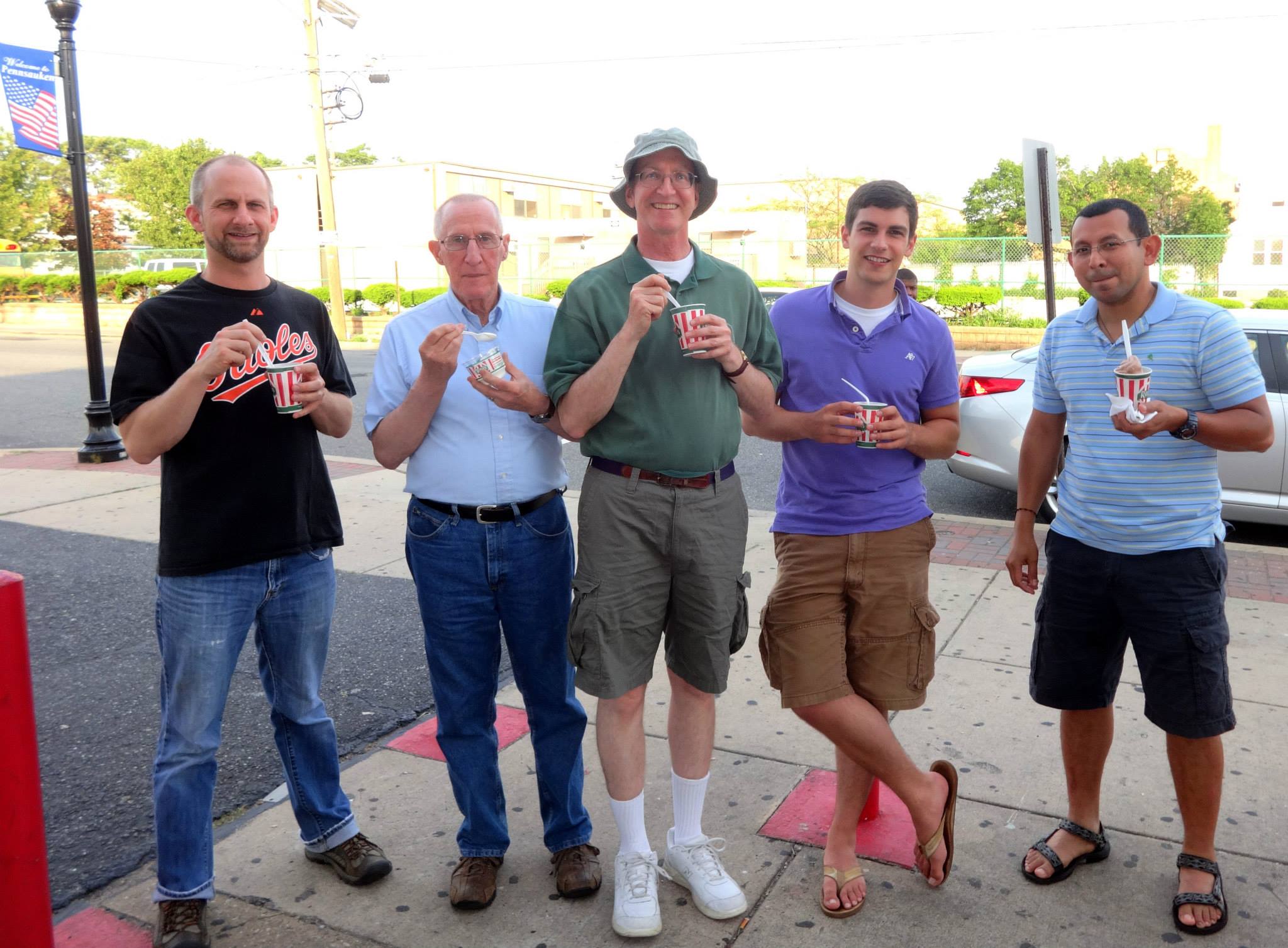
Even simple outing likes getting ice cream are near impossible for a large house.

Even simple outings likes getting ice cream are nearly impossible for larger houses.

In my first three years in formation with the friars, I have not experienced what many would consider “normal” friar life. Let me qualify: while there are many different types of friar communities and by no means a suggested or preferred arrangement for living together, in the 21st century, communities of 3-5 are much more common than ones with more than five guys. (Of the 31 main friaries in our province, only 12 have more than five friars, including two formation houses, two retirement homes, and a nursing home.)

In three years, I have lived in communities of 10, 21, and 27. By nature of its size, houses like these are not simply larger versions of small houses: they have a completely different culture. With 27 guys, it only makes sense to have a cook, to buy everything in colossal Costco-sized quantities, to develop a house schedule and stick to it rigidly, to rely on the guardian to make many executive decisions rather than have a discussion (more on this in a second), and to live in a place that looks more like an office building than a house.

With a lot more guys, it is necessary, and even cheaper, to have a lot more at one’s disposal. For instance, our house in Silver Spring, MD, is complete with more than 13 bathrooms, an exercise room, three TV areas, a conference room, a library, and a courtyard; we have at any given time five different types of snack food, ten different drink options, and enough food to fill up a dump truck (which, of course, lasts us only about a week.) While this is a great attempt to make everyone marginally happy, the problem with this for me is that I completely lose touch with the things that I consume, where they come from, how much they cost, and what it means to want something. There’s just so much of everything!

Needless to say, this summer is a much-welcomed downsize. When I discerned becoming a Franciscan, I always imagined living in a small community of guys like this in an old, normal-sized house, simply and flexibly. This summer, I love the fact that we take turns cooking and going to the grocery store (buying only what we know we’ll eat that week), have only one common living space to share with one another, and that we don’t have an industrial-sized oven, dishwasher, walk-in refrigerator, or bathroom. Everything is “normal” size. The best part, though, is how flexible the dynamic of the house can be: with so few people, prayer and meals can be adjusted to fit the day’s needs, each friar intentionally commits himself to the community knowing that his absence hinders the community (not the same for a house of 27 in which people can come and go as they please) and most of all, decisions can be collectively and informally made in a matter of minutes. This is a big one.

There’s one story I like to tell people about what I don’t like about large houses. During our novitiate, I went to the guardian with a modest request: “Do you mind if we get a different type of cereal? We get the same six cereals every week.” His response: “Sure! Not a problem. How about you bring that up at our house chapter this Friday and we can all discuss and vote for new cereals.” Aaaaaand pass on that idea. Can you imagine 21 people all “sharing their feelings” about the cereal situation in the house? Now, obviously, this is a ridiculous example, and items like this need not be addressed by every member of the community, but what about changing the prayer schedule? Deciding what to do as a house for Lent? How to celebrate Christmas? These were all things that we discussed as a house, and these were all things that took a very, very long time to decide.

Ultimately, there is no “right” way to live in a friar house. By the looks of how many friars transferred to our large houses in New York, Boston, and Siena College this year, it shows that many actually prefer this style of living. Larger houses offer more opportunities for personal relationships, allow for more profound liturgical and social experiences, and afford a greater flexibility for those preferring a more independent lifestyle. These are all good things! Even though I prefer the intimacy of the small house and the intentionality of a small community, I will look forward to these positive aspects of friar life when I go back to Silver Spring in the fall.

All in all, the fact that I feel more genuine to the vocation I discerned and more responsible to the brothers with which I live when I can count my housemates on one hand, while others feel the same when in houses of 30, is the true beauty of our life. Our Franciscan charism is wide and diverse, open to each brother to follow the way Jesus has called him to Himself. There’s no “right” way to live as a friar. What’s important is not how many friars live together, it’s that they live together, doing so as faithfully and simply as they are able. A downsize in housemates is something that I welcome with open arms, but I recognize that there are as many ways to encounter Jesus as there are ways to live. That is, if we’re open to that encounter!

Message From the Minister General

Michael Perry, OFM, is the Minister General of the Order of Friars Minor.

Michael Perry, OFM, is the Minister General of the Order of Friars Minor.

In an unprecedented fashion, Minister General Michael Perry, OFM, attended the first day of our provincial chapter and addressed Holy Name Province friars about the state of the Order and its future.

He told us the latest numbers appeared bleak to some, but that they were misleading. As of December 2012, the order was “down” to 14,077 friars worldwide with 1,400 men like myself in initial formation (with my province accounting for 17 of those men, the most of any of the United States provinces. In fact, the 2000s produced more vocations than the 1990s, showing a small, but important upswing in vocations!) We have friars in 113 countries and have 125 semi-autonomous entities of leadership, i.e. provinces.

For those who know the order, these numbers are drastically lower than they were fifty years ago, and for some, this is reason to panic. Quite the contrary. In some places like Mexico and Vietnam there are two or three young friars (under 40) for every old friar (over 65). This is tremendous news, and great perspective: we are a part of a larger Church than the experience of this country, and although it may look bleak in the Northeast United States, there’s a whole wide world of faithful people out there building up the church (and sometimes even in this country… Southeast United States anyone?)

In this way, our Minister General’s message was not of death but of new life. How, as friars minor or the Church in the United States, are we to live in order to promote the growth of Gospel living and Christian fellowship in our world? The five points he gave are tremendous reminders to us as friars but are also values that would no doubt help any part of the Church grow.

Clarity of Intention 

Who are we, and where do we want to go. Any good business requires a mission statement. Why not the Church? Sometimes with a two-thousand year history, 1500 page sacred text, and countless popes, bishops, and priests each giving helpful guidance, it can be difficult to clearly state who we are and what we are about. As Christians and friars, we need to make it clear what we believe, why we believe it, and how we are going to live that message. Even for those who have been Christian all their lives, it is helpful to remind ourselves of what called us to this life in the first place: the eternal and all loving God, wanting to be one with all that God created, became human, experienced all that we experience, died and rose again forgiving all of our sins. It is a message of love, forgiveness, peace, mercy, and justice; it is one of eternity.

Authenticity of Life

I can only assume that Michael Perry, ofm, is an avid reader of my blog because the next two points are exactly what I wrote in The Medium is the Message (clearly, he could not have gotten the idea anywhere else…) He spoke to us of the power of symbol, that the message of how we live, how we treat others, and how we stick to our own ideals, speaks much louder than the words we actually say. It is a call to authenticity and integrity, like our chapter theme, to be who we say we are. It is quite easy to criticize the world we see around us, but are we living up to the same standards we place on the rest of the world? I am not saying, and I do not believe he was, that we may only speak truth to power if we ourselves are perfect; this can never be the case. What I believe he was saying, though, is that our words and actions must be one if we are to ever be heard.

Simplicity of Life

More specifically, this means a simplicity of life, materially and spiritually. How easy it can be to become cluttered and distracted, focused on the things that do not matter. When we possess something tightly without our hands they cannot be open to receive the graces that are always being given us. As friars, we are called to be itinerants and poor men; as Christians, we are called to remove everything that impedes are relationship with God. With Jesus, our Pope, our patron Saint Francis, and many others in the Church, Michael called us to simplify our lives of the clutter, whatever that may be.

Commitment to movement, risk-taking

“The devil you know is better than the devil you don’t.” Because the “unknown” poses such a risk to our comfort, change can be traumatic to some. More times than not, we seek to maintain the status quo, even when it’s clear that it is not fulfilling. The easiest path is the one of least resistance, but it is not the one of movement. We are called, especially in this time, to be risk-takers. We are called to step out of our comfort zone, to allow ourselves to be moved, and to move the world. Do we want to sit idling by as the world continues to change all around us, tightly holding to what once was rather than accepting what is now, or do we want to step out there and be the change we wish to see in the world? The Church needs creative thinkers that are willing to risk everything for the life of the Gospel message.

Become and remain brothers (and sisters) on the road of the Gospel

Lastly, this is a journey that we must do together. Like it or not, we are all brothers and sisters on the same road, and we need to find a way to not only “get along,” but to grow in love and respect for each other. Having now lived with more than fifty different men in the past three years, I understand completely that it is impossible to like everyone. I simply cannot like everyone. But that doesn’t mean that they are unlikeable, and it certainly doesn’t mean that they don’t deserve my love and respect. Michael pointed out that dialog, transparency (of self and finances), communication, prayer, and fraternal love are all essential to walking this road together. We must always remember that Jesus is the center of our lives. If we do this, Christian hope will always be alive, and we will be able to live with hospitality, nonviolence, liberty of spirit, boldness, tolerance, and care for the poor and marginalized within our homes.

Peace and good be with each of you. I hope that this paraphrase and interpretation of our Minister General’s message finds you well and that you may join us friars in trying to live it out.

Fraternal Embrace

10155617_10152103519320009_8599643951739093513_nEvery three years, the friars throughout the world come together within their respective provinces in what is called a “chapter.” At this meeting, new leadership is elected, reports are made about the previous three years to identify areas of success and failure, legislation is presented and voted on, and direction is given for the future. In many ways, the focus of these meetings is very practical.

This, I might say, was not what I experienced this past week, nor is it what I think Francis had in mind when he instituted it 800 years ago. Sure, we elected a new Provincial, Vicar, and Provincial council; sure, we went over the financial report of the province, heard presentations from each of our directorates, and voted on a new course of action; and sure, we even heard an hour and a half speech by a friar from another province, appointed to us by Rome to spend six months in our province as a consultant and meet with each individual friar for an hour (I wrote about this in Canonical Visitation). But these are not the things I will remember in thirty years.

10271610_10152098857015009_5400523980374350046_nWhat I will remember is joy that each friar exhibited to be with one’s brothers again. Like a big, extended family, the friars span a large geographic area: with the majority living up and down the east coast of the US, some are as far as Arizona, Peru, and even Japan. We are hardworking men that have little time for ourselves let alone our distant brothers a thousand miles away. For many, this one week every three years is the only time we see each other. Witnessing each friar embrace the other was a sight that reminded me of this passage about Francis of Assisi:
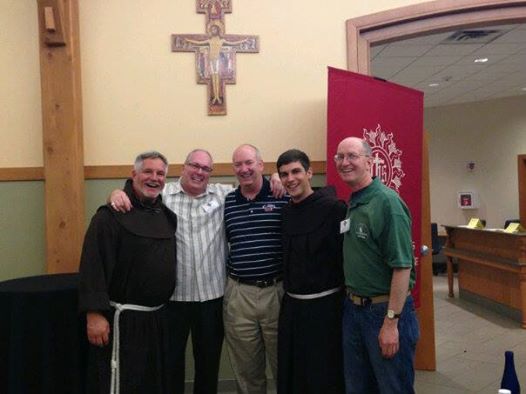
Only a short time had passed when Saint Francis began desiring to see them all. He prayed to the Lord, who gathers the dispersed of Israel, mercifully to bring them together soon. So it happened in a short time: they came together at the same time according to his desire, without any human summons, giving thanks to God.

Coming together in one place, they celebrate with great joy on seeing their devoted shepherd and they are amazed that the same desire to come together moved all of them in this way. They report the good things which the merciful Lord was doing for them, and if they had been somewhat negligent and ungrateful, they humbly ask and carefully accept correction and punishment form the holy father.

The Life of Saint Francis by Thomas of Celano, FAED I, 207

One can only imagine (and will have to because I will not go any further into detail!) the stories that are told by a group of men that love one another, see each other very infrequently, and live such unusual lives! I heard stories about their early years, mistakes they made, and embarrassing situations; I heard stories that only close friends can tell about one another, ones that made me laugh until my sides hurt; I heard stories about their ministry to the marginalized, their successes and failures in tough situations, and the extraordinary people they met; I heard about their hopes for the future, their sources of inspiration, and the struggles they will face implementing them.

10351380_10204094269816490_2469087448990386158_nFormally, a chapter is a place and time for very important practical matters; without an administrative structure we would be like a heard of sheep running amuck. In reality, however, a chapter is a time for the fraternity to step outside of the world in order to catch up with itself. When you think about it, we spent a lot of money and took 250 men out of the workforce for five days or more when we could have put that all towards the poor. That’s true. But where would we be without our relationship with our brothers? As brothers, we rejuvenate one another’s spirit through prayer and reflection; we offer each other the spark of inspiration to keep us fresh in our work; we hand down the gentle (or sometimes not-so-gentle) fraternal correction to keep us healthy, all while making each other laugh like we’ve never laughed before.

This fraternal chapter was a good one. I have little with which to compare it, but the response was overwhelmingly positive: there was a buzz of excitement from the brothers about where we stand and what the future holds. All I can say is that it is an exciting time to be a brother in the Order of Friars Minor!

The Medium is the Message

Are we always the people we say that we are?

Are we always the people we say that we are?

As Christians, I’d say that our “message” is pretty good: the eternal and all loving God, wanting to be one with all that God created, became human, experienced all that we experience, died and rose again forgiving all of our sins. It is a message of love, forgiveness, peace, mercy, and justice; it is one of eternity.

But as I’m sure you know, it’s not what you say, it’s how you say it that matters. In an amazing way, we humans are able to communicate so much more than the words we speak: our body language and tone shape our words, convey meaning, and often overshadow what we are actually saying. Even more importantly, who our listeners believe us to be (sometimes in terms like “good” or “bad”) can determine the message that is received, no matter the words. Even before we speak we have communicated something.

As Christians, sometimes we can communicate mixed messages. Our words say love, but our actions say hate; our words say forgiveness but our actions say retaliation; our words say peace but our actions say violence. Trust me when I say that the medium is the message. When the outside world looks at us Christians, they do not evaluate the clarity of our words, the thoughtfulness of our theology, or the logic of our philosophy; what is “heard” most clearly is the way that we live and how we treat others.

As friars, “official” members of the Church, we must be as conscious of this fact as anyone. We are given the opportunity to engage thousands of people each week as representatives of the Church, capable of being the inspiration to return to God or the final nail in one’s coffin that is religion and “all those hypocrites. Because of this, the friars of my province are meeting this week for what is called a Provincial Chapter, a meeting (instituted by Francis himself) of all the friars every three years for fraternal fellowship, prayerful retreat, and practical planning, such as elections. This year, our question is simply stated but difficultly answered: “Are we who we say that we are?”

The idea came from one of our lay leaders. She told us that the charism of the friars is a wonderful charism that the Church needs in this time: men who live simply in a fraternity of prayer and work, treading the world humbly in order to promote peace. We do not need a new statement of character, a vision of ministry, or structure of fraternity. What we needed, she suggested, was to simply be who we say we are, who people believe us to be. It was a call to integrity, a call to recapture what may have been lost and to recommit ourselves to it.

I think that it is a fantastic theme for the chapter because, frankly, we are different from many of the religious in the world and we need to own that. Many times in our history we have chosen to sacrifice aspects of our charism for the sake of more ministry. We took on more parishes because we could reach more people, but sacrificed our poverty and humility in the meantime, taking on great authority and even wealth; we decided to split up, preaching separately so to preach more, but sacrificed the opportunity to preach together from our fraternal life; we focused very intently on going out to preach the message to all corners of the earth, but sometimes we forgot to go back in to receive it in prayer.

For me, as a humble student friar finishing up my third year of formation, I think that there is so much more to the message than the words we speak and how often we get to speak them. The way we live is a more powerful message than any homily we could ever preach. It is my hope at this chapter, along with the thoughtful election of new leaders and adoption of new referenda, that we refocus our message on the medium. Let us recommit ourselves to a simple lifestyle and not be afraid to say no to the generosity of our parishioners that want to give us more than we need; let us recommit ourselves to fraternal life, one that does not simply sit around together doing nothing, but that is attentive to our brothers’ needs, works through the mess of living together, and shares that experience with the world; let us recommit ourselves to a life of prayer, making prayer as important of a priority in our fraternity as anything we do, unwilling to miss it or “do it later” because some ministerial need arises.

In my short time as a friar, I have learned that there is always something more to do: someone is in crisis, the Church needs money, the buildings need repair, and thousands of people are poorly catechized. We could work 24 hours a day and there would still be more to do. What’s different about us as Franciscans, I believe, is that we approach these problems from a life of simplicity in a fraternity of prayer and work, treading the world humbly in order to promote peace. It is our lifestyle that must be our primary focus. If it is not, and we choose to sacrifice any part of it for the sake of more ministry, I wonder what type of ministry we will be doing. Sure, we will be doing more, but where will we be drawing our inspiration and strength?

For me, it is not what we preach, but how we preach it. Our source of strength and identity is our fraternal life, and whether we recognize it or not, people notice. This as true for friars as it is for all Christians as it is for all people. People notice who we are, and that affects what they hear. If we are going to truly be good preachers of a message of love, forgiveness, peace, mercy, and justice, we must first focus on the medium: are we the people we say we are, people that practice what we preach?

A Missed Opportunity

After a particularly heady reflection on the Trinity in the spirituality of St. Bonaventure, I thought that I’d bring it back down to earth with St. Francis in this post. In contrast to Bonaventure’s inward journey, that of the soul and intellect being moved by the great mysteries of the transcendent God, Francis’ journey was of a poor traveller:

He wanted the attitude of traveller and stranger to characterize the friars minor. He envisioned them as pilgrims on the way to the heavenly kingdom. The historic Christ, after all, came to this world as a pilgrim. His starting point was heaven. Then He tarried, like the very poor, long enough to carry out the will of His heavenly Father, and, having atoned for sin and merited the grace of the Holy Spirit, He returned to His Father by an ascension. Francis knew that the whole meaning of the kerygma was to participate in this humiliation and exaltation of Christ.

(Sergius Wroblewski, OFM, Bonaventure: Theology of Prayer)

As a poor traveller, the object of one’s contemplation is less of the transcendent forms of heaven and more of the immanent, mundane realities of the world.  As followers in the way of St. Francis, we Franciscans find great meaning in the dirty, the chaotic, and the less-than-ideal because that is the road traveled by Jesus. Basilicas are wonderful, but so are bus stops.

In this way, you will find with the Franciscans almost no attempt to present a false air of perfection, to hide our flaws (although it might be nice if some friars did sometimes!) There is a recognition in our spirituality that the only thing potentially “holier” about us than lay people is that we embrace the fact that we are not complete, recognize that we are in need of God, and seek to journey in the way of Christ. Despite what some may think about the “holy brothers in the monastery,” we do not spend every waking moment in pious practices or talking about Jesus; we watch television, talk about sports, and even fight. But that’s the beauty of it: even in, or should I say especially in, the mundane conversations, petty conflicts, dirty situations, and dry moments, we attempt to identify ourselves with the humble struggle of Jesus’ life.

I was reminded of this recently in the two areas of greatest conflict in friar communities: kitchens and bathrooms. (I’ve said before, no fights are had over theology, but there is a weekly conflict over dishes.) Needing a fork, I opened the drawer only to find that all of the silverware had been indiscriminately thrown every which way. Utter chaos. Infuriating laziness. “Really people??” There are only so many messes you can clean in one day, I told myself. I’ll give them the opportunity to fix it. If it’s not fixed by the time I’m done eating, I’ll fix it, but I’m not dealing with this now. Closing the drawer, another friar looks at me and says, “If you’re not a part of the solution you’re a part of the problem.” I nearly smacked him in the face. Why is it my responsibility to clean up everyone else’s mess, especially given the fact that I do so in almost every other case.

Fast forward a few weeks, and low and behold, we have a bathroom issue. Issue is not strong enough. We have a toilet atrocity. Let’s leave it at that. Nope. Not dealing with this (insert pun). Whoever did this can come back and clean it up later, I’ll find another bathroom. A few hours later, the mess was cleaned and nothing further was ever mentioned.

Do you know what my spiritual director had the audacity to say about these two events, particularly the toilet? “You really missed an opportunity to love.” Come again? His point was that, very simply, I was too focused on how I had been wronged to notice how a brother may have needed me.

I could have helped a brother that was likely sick (confirmed later that he was); I could have provided a clean bathroom for the next person so that they wouldn’t have to deal with the frustration of a dirty bathroom too; I could have experienced humility in swallowing my pride and doing something that “I shouldn’t have to do”. Instead, I chose to leave the mess, use the other bathroom, and leave a statement to whoever did this that I’m not your maid; doing things for people that can easily do them themselves but refuse to do so is not love, it’s enabling rude and inconsiderate behavior.

I wonder, though, if that’s the only message being sent. I wonder if my sick brother that day got that message, or if, after returning to the bathroom in his weakened state a few hours later he got a different one: “We’re all in this alone so don’t expect any help from me.” Ouch.

Obviously, I do not advocate a community based on submission or abuse of those willing to care for the others. If a problem was recurring and it was clear that the person was less needy than lazy, direct confrontation would probably have been the best way to love. That being said, we can never forget that we are in this together. I know that my brothers unjustly deal with the burdens I unknowingly place on them. Couldn’t I put up with their’s as well, doing what “I shouldn’t have to do” simply because I’m taking a burden away from them?

Ultimately, how can we say that we walk the journey with Christ if we are unwilling to participate in the burdens he faced? If we love only those who treat us well and do only what is ours to do, we miss a real opportunity to experience Christ in the way of St. Francis. God is found in basilicas, for sure, but don’t miss the opportunity to see him in the mundane situations all around us.