There are more than a few types of religious Orders in the Catholic Church: Franciscans, Dominicans, Jesuits, Carmelites, Benedictines, Paulists… you get the picture. What many don’t get, though, is how we differentiate between each other.

As far as externals go, the habit is the easiest distinguisher because we all have slightly different styles: Dominicans are white, Jesuits have a formal cassock, Carmelites are brown with a scapular and leather belt, Benedictines are black, and the Paulists have a cassock with special buttons, different from the Jesuits. But this form of distinction only goes so far. For starters, many religious do not wear their habits but for special occasions. It makes it very difficult to tell the difference when they’re wearing jeans and their habit is in their closet! But besides that, a habit in itself is but an external sign: it does not articulate any meaningful differences in belief, practice, or spirituality.

For that reason, a much better way to understand the differences between the religious Orders is getting to know their “charisms.” A charism is essentially the personality of the Order, the attributes and preferences of the founder that determine how they prayer, where and how they live, and what they do in ministry for the Church. A charism can be very specific, tied directly to a particular mission such as teaching or medicine, or can be very general, focused on an ideal like hospitality or mission.

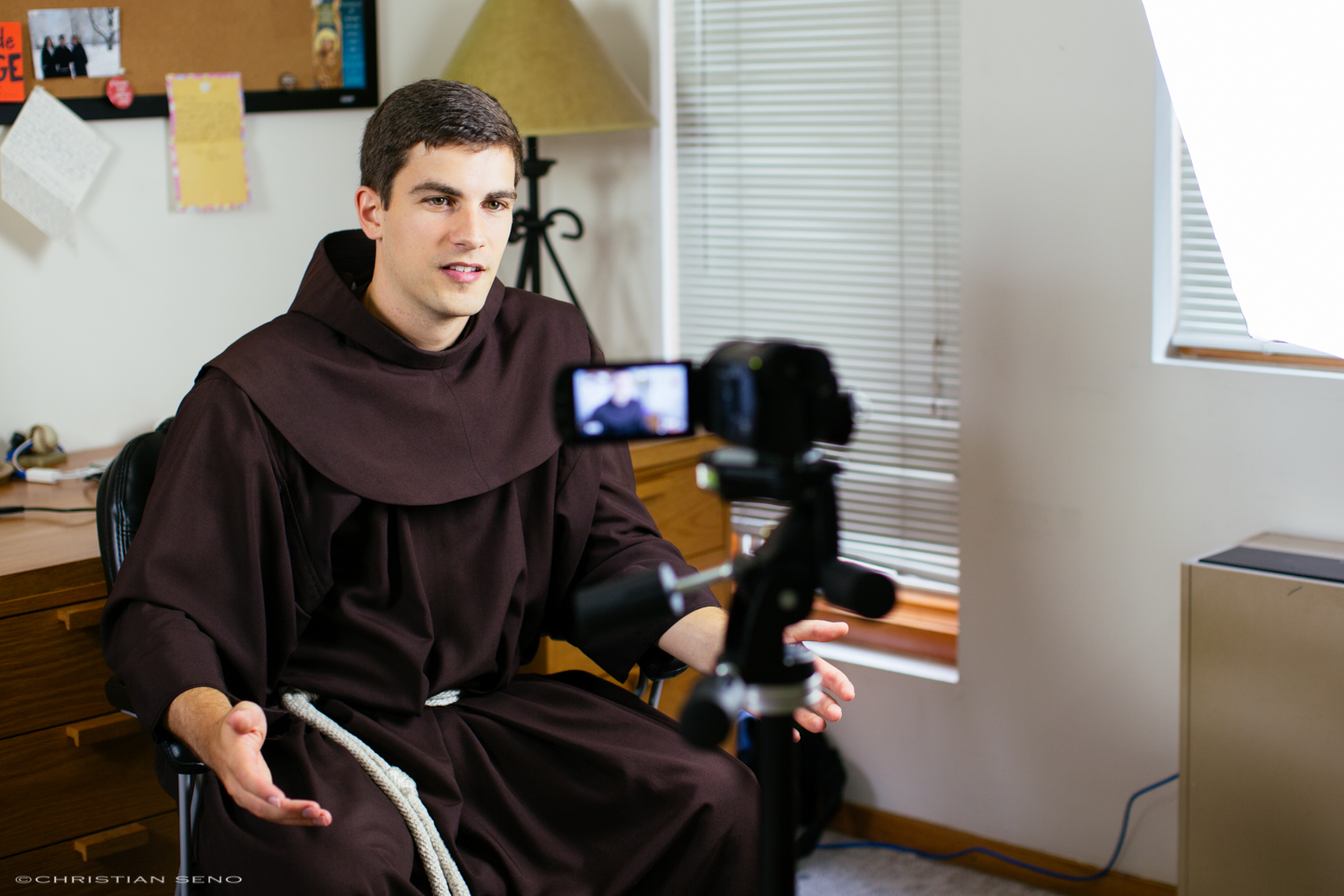
This week’s video offers a brief explanation of that concept, a statement about a few of the major religious Orders to serve as contrast, and three aspects I think are integral to the Franciscan charism.

For those on email, the link is here.

This week’s question may sound like a simple one to answer, but can actually be a difficult question for friars: Are we allowed to own pets? 


With school now in full swing, the past two weeks have been busy, to say the least! I’m working on two reflections that I hope to get out soon, as well as two videos outside of the “Ask Br. Casey” segment, so check back soon for more to come!

I remember quite clearly how overwhelmed I felt the first summer I ever had a homework assignment. (To this day, it still seems unjust!)  It was before my junior year of high school and the teacher wanted us to read The Scarlet Letter and write a two-page essay on the book. I was beside myself. After reading two chapters, I begged my dad to let me switch into the easier section. “I can’t do it!” He denied my request. I wrote the paper, got a B in the course, and ended up learning just about everything I know about writing that year. I hate it when dads are right.

When I look back on that time, it makes me laugh a bit because I would kill to have such an easy assignment. This semester, I have four different classes that require a two-page paper every week, and seem to be handling it “okay”! Who I am today, and what I am capable of, is far beyond what was the case when I was 16. The same has been true at every stage of my life: At each new level, I started off overwhelmed with all that I couldn’t do, only to find that, with time and training, I was able to do it.

The reason I tell this story is not to show how great of a learner I am or even to spout the cliché that “you can do anything you set your mind to!” No. (I thought that Calculus was overwhelming when I started it and I will forever believe that it is overwhelming. Growth doesn’t always happen.) What I am trying to say is that we are often more capable of growth than we realize, and more importantly, that conversion often takes a long time.

I look to my life as a Christian and a Franciscan friar as another example. Today, I live a fairly ascetical life compared to what I did in college. I have less freedom, less time, spend less money, and own fewer things. I prayer at least three times per day. I have more than one time looked at my life and decided to something much more inconveniently or uncomfortably in order to be more energy conscious. If college me would have looked at the way I live now, with all of the many things I have picked up over the years as a way to live out my call to discipleship, I would have been absolutely overwhelmed. I can’t do it!

Do you know what? Four years ago, that was true. There is no way that I could have taken on four years worth of conversions at one time, redefining every aspect of my life all at once. And yet, here we are. I am living this way and I am loving it. I am a person today that is no longer overwhelmed with the same demands of Christian discipleship as I was yesterday. Conversion has taken place, and in some cases, it took four years (some things will probably take much longer!)

So what does this have to do with anything? Very simply, small conversions amount to big ones over time. We may look at someone like St. Francis of Assisi or Mother Teresa and say, “There is no way that I could ever be that holy, that devoted to Christ.” And you’re right: Right now, you can’t. But just remember, at one time, St. Francis was just Giovanni “Francesco” Bernardone, an arrogant kid in nice clothes that wanted the glory of being a knight; at one time, Mother Teresa was just Anjezë Gonxhe Bojaxhiu, a little Albanian girl admiring the lives of missionaries. They weren’t always saints. Over a lifetime they learned to live radically for the Gospel, one step at a time, until they had become a completely changed person from when they started.

The same can absolutely be true for us. We are all called to be saints. Really. Do you think that you could be a saint? Probably not if you focus on just the finished product. As a sixteen-year-old, I couldn’t even see myself writing one two-page paper over the entire summer let alone four per week. And yet, here we are. Jesus doesn’t ask of us perfect discipleship all at once, but he does ask that we face what challenges us today with a step forward. It may not be a big step, but small steps over a lifetime makes for quite a journey. May we, like the saints, use every moment we’re given to learn to live each moment more radically than the last.
 

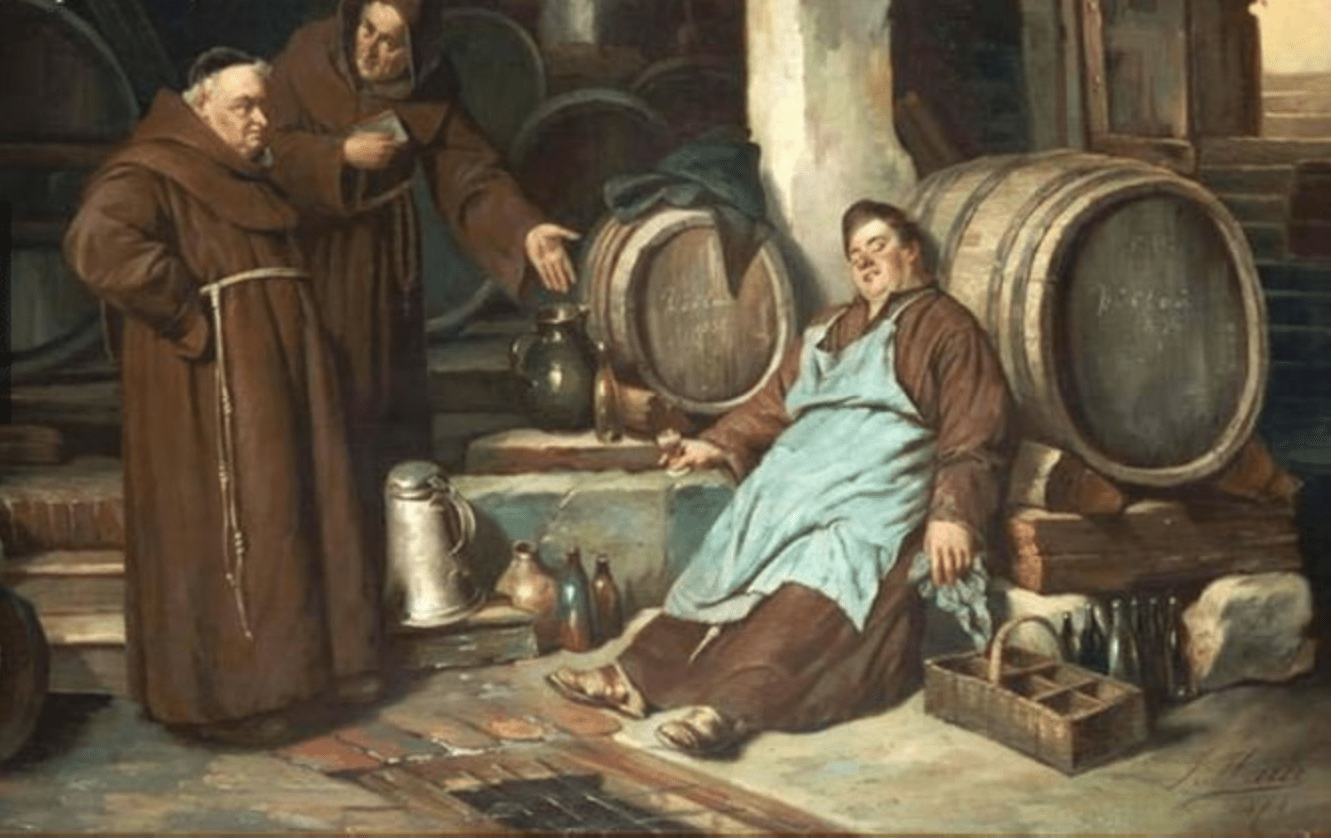
For some, alcohol is normal, if not necessary, part of life associated with happy memories and fun times. For others, it is dangerous substance, associated with pain and abuse, that should be avoided entirely. Both are very real, very important experiences. To say that alcohol is something everyone should share forgets the inability of some to control their consumption or deal with immense hurt caused at its abuse; to prohibit it universally to protect those affected by it forgets the pervasive and arguably inseparable connection it has to most cultures (our own most sacred liturgy requires it and was allowed to continue it even during the American prohibition… that’s how pervasive and inseparable it is!)

Because of this, I have been asked on more than one occasion as a friar, “Are you allowed to drink?” For some, the question is a question of morality, and seeing friars as penitents and holy people, they assume that drinking alcohol is too base of an act for us to engage in.

I assure you, this is not the case.

While drinking alcohol certainly has moral aspects, e.g. financial cost, sobriety, charity, affect on one’s work, inclusivity of those who don’t drink, etc., it is not, in itself, a moral question for Franciscans, nor do I find it to be a difficult question for Catholics in general. In essence, we recognize that it can easily be abused and we want to avoid that, but there’s nothing wrong with a glass of wine or a cold beer among friends. How often that occurs and in what quantity are two very different questions, but to all those wondering if we are still allowed to drink alcohol now that we’re friars, the answer is a clear “yes.”

This is the most recent family photo I have… from 2010. I guess we’ll have to take a new one this weekend at the Cole Family Reunion!

It’s Tuesday! Do you know what that means? It’s time for another “Ask Br. Casey” video. This week our question comes from an actual viewer (who did what I asked and left a question in the comments like all of you will do this week… right?) His question has to do with family: Are you allowed to visit your family?

It’s a great question and one of the most popular among discerning men. They read passages like Matthew 8:21-22 in which Jesus tells a man to forget about burying his father and instead follow him, or about Francis of Assisi who renounced his family so to be completely dependent on God. If I join the friars, do I have to renounce my family too? For some Orders, particularly monastic ones, this is in fact the case. They live very enclosed lives and are never able to take vacation or visit their families.

That is simply not the case for us, though. While the first passage from scripture definitely focused on the urgency of following Jesus, not allowing ourselves to be bogged down by the practical matters of this world, it must be balanced with another passage a few chapters later: just because someone has been consecrated to the Temple does not mean that s/he renounces all responsibility of honoring father and mother (Matthew 15:1-9). In the same way, we do not enter religious life to run from our families or to free us from unwanted responsibility. We do so for love of our new family, one that has Christ as the head and adopts many others as our brothers.

In this way, then, we must balance the new family we have chosen with the old family we have been given. Just as with a married person, we would not run home to our biological family every time we didn’t have work, abandoning our spouses and children. That’s absurd. The same is true in the friary. Just because it’s a three-day weekend doesn’t mean we can all scatter, leaving behind those who do not have or are unable to return to their biological families. Like a married person, we must continue to support our biological families, visit them as frequently as we can, and encourage them to get to know our fraternity, but in a way that it upholds, rather than detracts, from the life of the fraternity.

In short, yes, we are absolutely free (and even required) to visit our families from time to time, but must also learn to see our brothers in the fraternity as a family worthy of our time.

There’s not much more to the video than what I’ve written here, but I figured I’d give readers of the blog the option to read or to watch as they are very different mediums. I hope you enjoy and be sure to ask your own questions below!

(For those on email, you may watch the video here.)