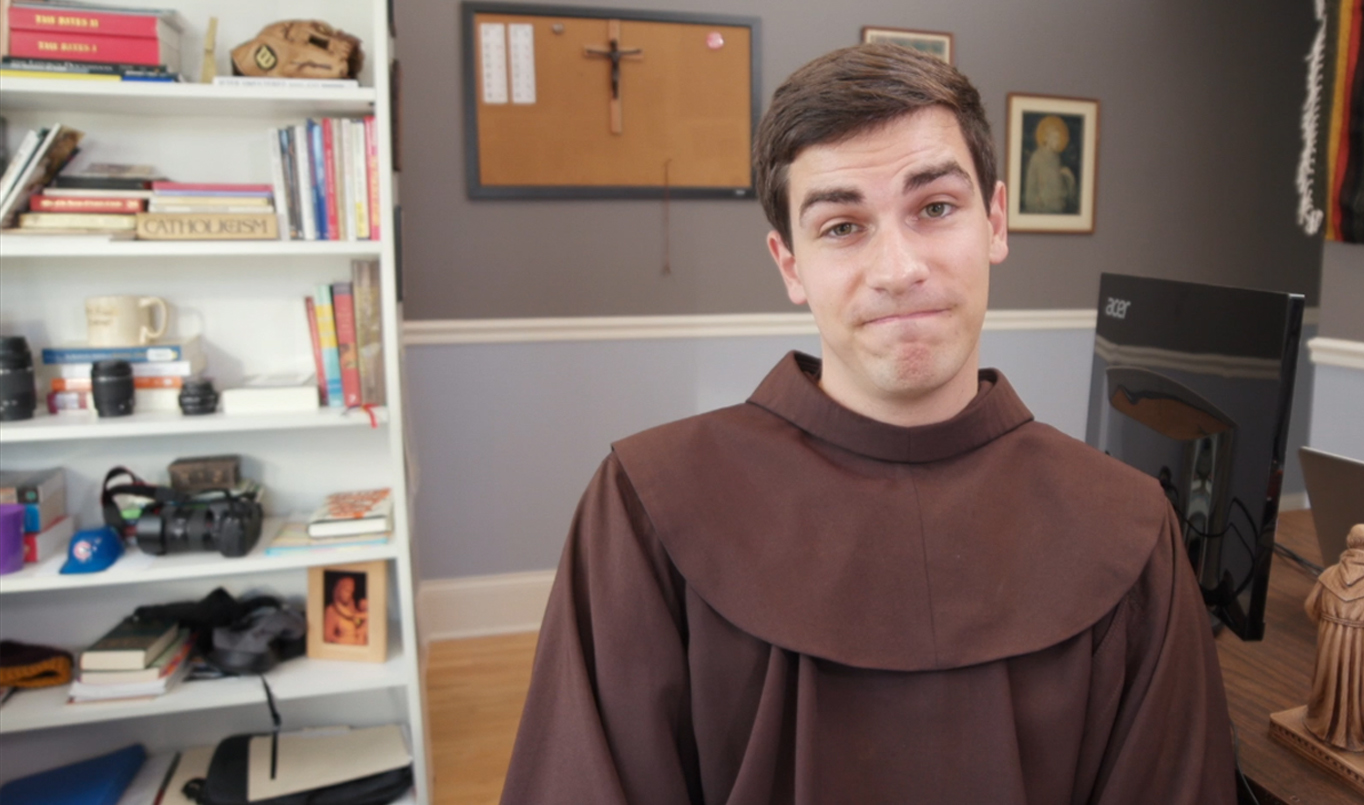
Longtime blog followers will know that I have written a lot about the vow of poverty. It is very misunderstood, often neglected, and rarely means much in our practical lives as friars. We are told we must live chastity and obedience without any exception, but poverty? Well… that’s a big more complicated, we say. We sort of “grow into” that one.

On the one hand, I understand why. As opposed to the other two, poverty has an all-encompassing yet difficult to define nature. It involves material possession and acts of will alike, and there is hardly a proper measuring stick to grade one’s performance. While chastity and obedience might be said to be goods in their own right, poverty is more often something we speak about in a negative sense: it is something we must eradicate, and freely taking it on is merely a pathway to something else.

It is also the most visible of our vows, something that people can see (and judge) from the outside without a full picture. Seeing my laptop, camera, house, car, and vacation, some have taken it upon themselves to criticize my life, to call me a fake or a fraud, and to explain to me what true poverty is.

How do you respond to that?

Just like the vow itself, the answer is muddied and complex. In one sense, yeah, people are right. We could do better. This vow is a bit of a joke at times and we just sort of accept that we mean something different than the rest of the world does. We are not poor and can never be poor like those who are financially desperate. Our voluntary poverty often lacks a sense of stress or pressure, and the lack of urgency in living it means that we rarely feel any spiritual effects from it.

And yet, what we profess to live is not abject poverty. What we give up is not the use of material goods. How, really, could someone live without anything? This image of religious life—one of the strictest austerity and deprecation—is not a virtue as much as it is actually an idol, focusing our attention on something that is not God rather than using it to lead us to God. The vow of poverty, if exclusively about the amount of material possessions one owns, runs the risk of turning into a weapon to empower or belittle, to put ourselves above or below others. When its ultimate focus is not what is beyond—a life lived in Christ with humility—it is not longer a vow worth taking.

My hope is that this week’s video will help continue the conversation that I have already started here. If you would like to read more about this topic, below you will find links to a four-part series I wrote a number of years ago.

My Struggle With Poverty
Why Poverty?
How To: Poverty
My [Continued] Struggle With Poverty

They say that the apple doesn’t fall far from the tree, that the best way to begin to understand someone is by meeting their parents and seeing where they come from. Like it or not, we often take the traits of our parents, including their values, sense of humor, subtle mannerisms, and annoying ticks.

Ladies and gentlemen… my parents.

While home on vacation last week, I had the wonderful opportunity to sit down with my parents and ask them fan-inspired questions in this week’s video. Ranging from vocations to what I was like as a child, my parents don’t hold back in their answers, sharing their joy, their support for me, and just enough personality to reveal the proverbial tree from which I fell. In my case, I didn’t fall far, and I’m okay with that.

Sometimes, life is hard.

Yeah. That’s the sort of amazing insights that keep people coming back to Breaking in the Habit.

Throughout our life, we face challenges, difficulties, frustrations, setbacks, and feelings of immense stress. At the midpoint of my first semester back in school, those words have a particular familiarity to me right now.

But what’s interesting about the situations that these words describe is that nothing ever starts out that way. No, normally, we begin a new project or stage in our life with excitement and joy. A fresh start. A new opportunity. We begin with idealism for what might come, for all that we can accomplish.

And maybe that’s what makes our frustrations that much more frustrating: we expected something very different than we got. Our idealism has been replaced with a disappointing reality.

That was the topic of my reflection this week, something that I found in the readings at Wednesday’s daily mass. For email subscribers, click here to watch the video.

In the world of the internet, it seems like everything can be done online: Domino’s pizzas can be ordered, plane tickets and travel arrangements can be planned, and in some cases, doctor’s appointments can be scheduled. Just yesterday, I signed up for an online subscription, opted out of a service, and took part in countless social media endeavors, all without ever having to speak with or meet a real person. We have become so accustomed to the ease of access of such things, that three weeks ago, when I went to the gym for the first time, I was annoyed that I had to sit down with a representative and talk about the gym for 30 minutes before I could use it. Why can’t I just sign up online and walk right in?!

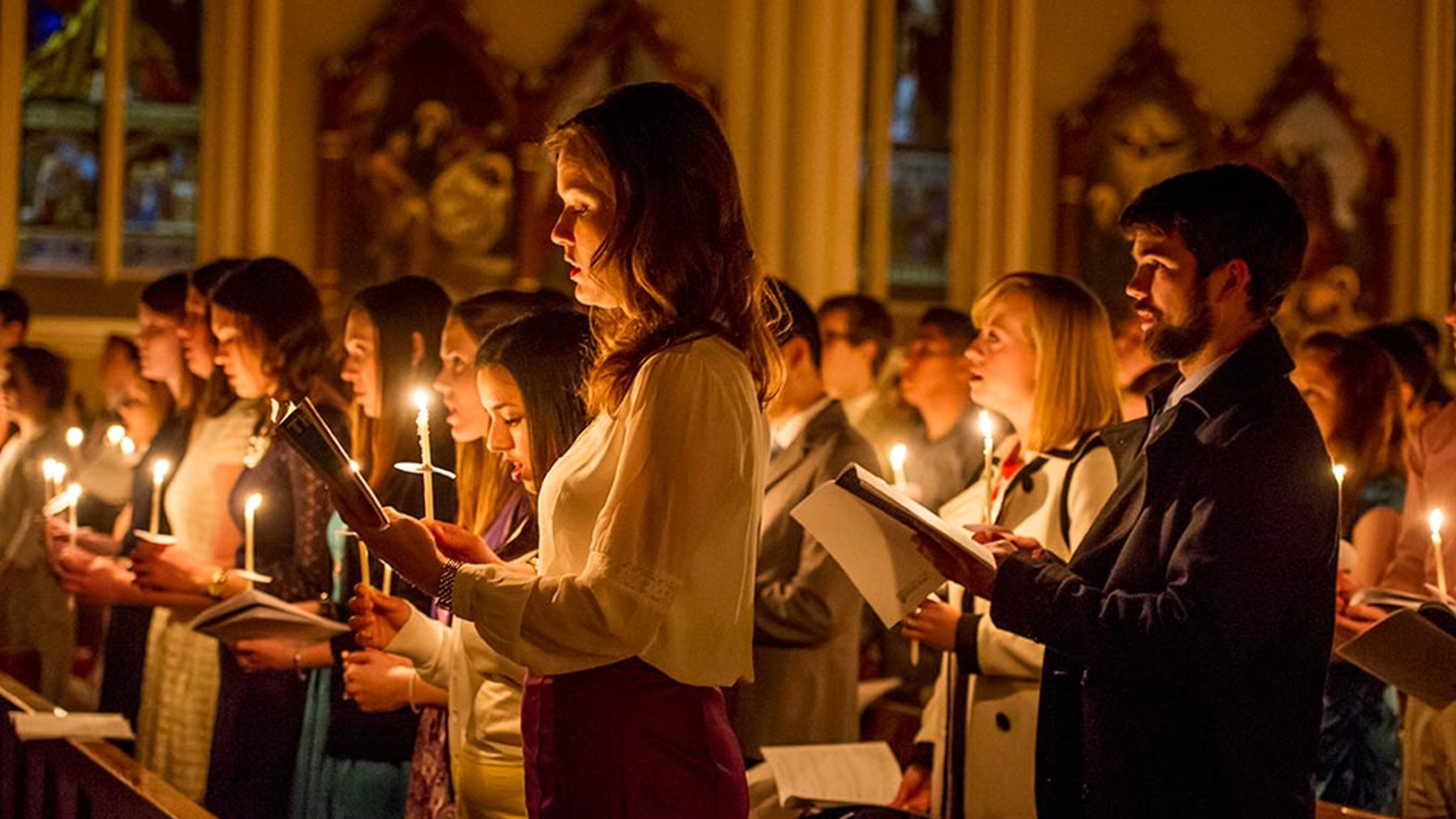
It’s with that as our backdrop that the initiation process of becoming a Catholic Christian appears so counter-cultural. With no “signup now” link on our website, it is only in the rarest of occasions that someone can decide to enter and be a full member in under a month. For most, the process can take six, nine, even 24 months from start to finish. And that is even an abbreviated process compared to what was practiced 1500 years ago!

Why so long? Contrary to popular belief (and even contrary to some popular practice) the purpose of the extended time is not simply because there is a lot to learn; intellectual formation is important, and the Church is rich in many things that are important to know, but being a Catholic Christian consists of more than just knowing. First and foremost, the process of entering the Church is about conversion. Unlike joining a gym or a political party, we as Church are concerned with the way people live—privately, in community, and in the world. Living the Gospel is not an easy task and it takes more than just knowledge to be a Christian, no matter how much knowledge one may have. At its core, formation in becoming a Catholic Christian requires a look at one’s prayer life, moral virtues, commitment to others, and readiness to answer God’s call.

This is hardly something that could be completed online.

What’s interesting about the process of initiation, then, is that it is not a one-size-fits-all experience. There is no aptitude test or bar exam that one has to pass. The question of entry is not about intelligence or ability to memorize facts, it is about one’s readiness to live the life. Depending on who one is, what they need, and what the Church can offer, depends on the process one follows. Flexible to the needs of aspiring members of the body of Christ, the Catholic Church groups people together into three main categories:

Non-Christian converts Never been baptized in any Church? Congratulations! You are a true convert to the faith of Christianity. As a result, we will start from the ground up, introducing you to the basics of the faith, helping you develop the skills needed for prayer, and encouraging you to become an engaged member of the community. Throughout the year-long (likely 9 months…) process, you will be gradually welcomed, strengthened, and initiated through a series of progressive steps so that you are ready to be a Christian when that day comes. Oh, and that day is already on the calendar: all baptisms of adults take place at the Easter Vigil.

Protestants seeking communion Were you baptized in another Christian tradition and want to become Catholic? Congratulations! You are already a Christian! As long as your Church baptized you in the Trinitarian formula (In the name of the Father, Son, and Holy Spirit), the Catholic Church recognizes the permanent and unfading character of your baptism and already considers you one with us in Christ. Unfortunately, because of the fracturing of the Christian Church over the years, there are still some areas in which we are not one in communion, however, and a period of preparation will be needed to teach about the specifics of the Catholic faith. There is no set time minimum or limit for these people; it all depends on how long it takes for someone to be ready.

Incomplete Catholics Were you baptized a Catholic but never confirmed or received Eucharist? Congratulations! You are already a Catholic! The most complicatedly simple category, there is no impediment for you to finish your initiation into the Church. While continued faith formation is important and usually required, the only thing that you will truly need is for your pastor to get permission from the bishop to complete your initiation and then pick a date to make it happen! Different Churches will have different processes, and some—especially if you know very little about the faith—may require that you attend some classes with the Protestants seeking full communion, but ultimately the focus is still the same: as soon as you are ready, you are ready.

Do you know someone who might be interested in becoming a Catholic Christian? Why not share this video with them so they can know what they have to do? For email subscribers, click here to watch the newest “Catholicism in Focus” video.

Today marks the six year anniversary of entering the friars as a postulant.

Wow. Six years ago my parents and I drove up from North Carolina to Wilmington, DE to drop me off at the friary. There are moments of that year, now so long ago, that I can remember as if they were yesterday.

I remember the joy and freedom I felt once it finally began, arriving where I had wanted to be for over a year, starting my new life. The first night I sat in my room—a room left barren with so few possession to fill the big empty space—and smiled with excitement. I was really doing it. No more thoughts. No more discernment. No more “in the future.” I was on my way to becoming a friar.

I remember the awkwardness of meeting my new classmates, working through the social dynamics to figure each other out. For the two weeks, I don’t think anyone talked with each other outside of our meetings and meal times. People did what they were supposed to then shyly retreated to their rooms.

I remember the frustration of dealing with housemates with different values than my own, of having a director place rules on me for the first time since I was probably 12. I felt trapped at times, stuck in a world that was completely foreign to me and bore little resemblance to the life I wanted to join.

I remember the almost daily occurrence of new insights, moments of growth, and challenges that would shape me for the rest of my life. In some ways, it is so difficult to think back six years and remember who I was, what I thought about, what I didn’t know, what I failed to do, and what I still needed to learn. If only postulant me could see almost-solemnly-professed me…

I’ve said multiple times before that I decided to become a friar in July of 2010, a year before I actually entered the Order. I knew at that moment that I was in it for life, and could very well have taken solemn vows right then and there. Even looking back, I believe I could have. My conviction for this life has not changed, and there has never been a moment in these seven years that I have legitimately considered anything else.

And yet, as grueling and frustrating as this preparation has been, knowing the whole time that I didn’t actually need time to make the decision, I can’t even begin to think about what type of friar I would be right now without it. These six years of memories—

  • Almost burning down the postulant house when someone put a pizza box in the oven
  • Going through three rounds of evaluations in novitiate in which I had to present all of my strengths and weaknesses to a panel of four team members
  • Staying up late at night to discuss religion, politics, philosophy, and the need in the world today, “Making plans to change the world, While the world is changing us,” (to quote the great pot-smoking mystic Dave Matthews)
  • Mourning as classmates decided to leave the Order for another life
  • The amazingly supportive people I have interacted with, at ministry sights, within religious life, and even here online
  • Fighting with the brothers over things that can only be fought over when people are under-stimulated and see each other too much
  • Nervously stepping into the role of Church leader for the first time, struggling to do things that I can do without a moment of preparation today

—yes, this six years of friar life could fill a book with all I’ve reflected on and learned along the way, how I have maintained the same conviction with the same values, and yet become a person I would have never imagined. What a ride it’s been.

Come Saturday—yes, this Saturday, no longer any needed a qualifier or explanation because it was so far in the future, but the very Saturday that is next on the calendar—I will make my solemn profession before my Provincial Minister, the friars gathered, my friends, my family, and anyone else who wants to join, to live as a Franciscan for as long as I live.

Walking with my classmates, six years ago, to the solemn profession of two brothers. Quite surreal to know that I will be on the other side of this picture soon.

And I find myself at the crossroads I imagined from the beginning.

Five years ago, I wondered about the future of Breaking In The Habit. As a name, it fit perfectly for what I was doing; “Reflections of a friar in training” was the original tagline. Once I was solemnly professed, would I continue with the blog? Would I keep the name? Now, crossing the proverbial bridge we knew we would come to, the answer is obvious to me: of course I will keep going. Besides the practical business side of maintaining a brand, the fact of the matter is that I’m not done breaking in this habit. Despite the fact that I am done with formation and am ready to live the rest of my life as a Franciscan Friar, my life is not over! Come Sunday, friar life will not all of the sudden become magically easy; the challenges to Gospel living I face Friday will not disappear by Sunday; my flaws today will still be my flaws next week! No, “breaking in the habit,” learning to live this life, is not something that one can complete and move on from. It is a life-long process.

And I can’t wait.

I want to thank all of you who have followed me from the beginning, those who have supported me along the way, and those who will support me in the future I continue to break in the habit of a very strange life. My last six years has not been lived in a vacuum, and what I said in the original “why blog” tab that was on the old site: I wanted to blog not just to share my life with others, but so that others could take part in my reflections, forming and challenging me along the way. So many of you have done just that, and so I want to thank you, but also exhort you: just as my work of breaking in this way of life is not done, neither is your effort in doing it with me. If I am going to be anything close to what God wants me to be for the people of God, you all are going to have to keep it up as well. And I’m sure you will.

Peace and good to all.