Why Do We Suffer? Pt. 1
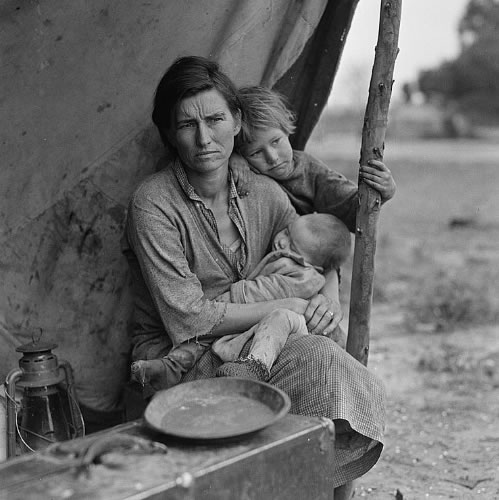
Where is God amidst suffering?

Poverty, war, ecological disasters, abuse, death, cancer, famine. Why do we experience suffering and evils? It’s a question that I’ve thought about for a few years now, and the lack of a concrete answer begs one of the oldest and most popular theological questions: if we are to believe that God is omnipotent, omniscient, and comprising all that is good, what does the existence of suffering and evil do to God?

There are two very common, and incomplete, answers to this question that attempt to justify God. The first is the claim that “everything happens for a reason.” If there is suffering, it is because God made it so. There is no such thing as coincidence: everything that happens, good or bad, is either a gift or burden from God based on his plan for each of us. This paradigm upholds God’s omnipotence and omniscience, but it also accepts that God permits, even sends, evil and suffering to the world. This is an unacceptable paradigm.

As a reaction to this cold-hearted God that sends despair, others will characterize God as a “watchmaker,” forming all creation as good but then stepping away and taking the role as compassionate observer as it is set into motion. This paradigm upholds God’s omniscience and goodness, but it asserts that God is distant from us in our suffering, and powerless to effect change in creation. This, also, is an unacceptable paradigm.

Though technically complete opposites, both of these explanations share the same flaw: neither is willing to accept that there are different forms of suffering that may have different origins. They both attempt to protect God by saying that he is EITHER in complete control OR completely innocent of any harm. The truth is, God is BOTH just AND merciful; BOTH respects our autonomy AND values our connectedness; and through the incarnation, BOTH separately divine AND similarly human. God is at once in our lives, articulating and inspiring his plan to us through word and deed, responsible for some of our suffering, and also autonomous, allowing for the world to work itself out, free from his every command or desire.

The true question in theodicy, thus, is not whether or not God causes suffering, but rather which acts of suffering are at God’s hand, and which are not (and what are other possible sources)? Part two of this series will deal with understanding how and why God causes suffering, how this suffering does not negate his goodness, and how we are to respond to it. Part three will recognize the free will God grants us, the inevitable consequences of such an act, and how God then responds to us. Taken together, I hope to create a more complete paradigm through which we may see and understand God, refusing to accept easy answers and half-truths. There is no doubt that my synthesis is incomplete and will need further adaptations, but I hope that it may add to each of your own perceptions of God.
Continue to Part 2

Retreat to the Beach

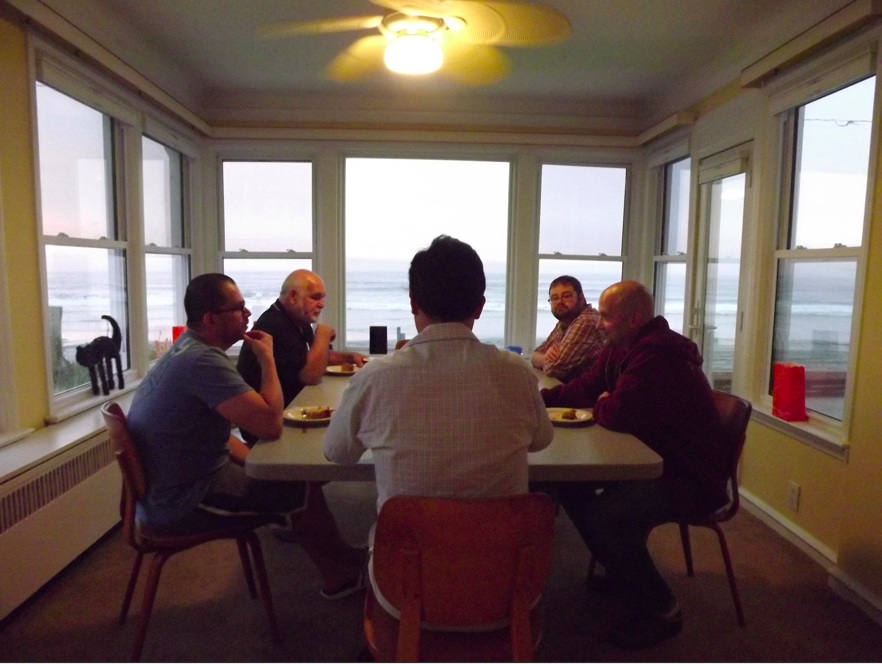
Great guys, great food, and a great view!

Up until only recently, friars were not allowed to spend the night with family or friends outside of the friar community: when visiting home, they were required to sleep at the local rectory and commute to wherever their family lived. This, along with the vow of poverty, made it very difficult for many friars to take much needed vacations or retreats from their ministries.

It was because of this, that the province decided in the 1960s to buy a house in Margate, NJ. Centrally located to a lot of friars back then, this 13 “bedroom” house offered a free and comfortable getaway whenever anyone needed it. (I put “bedroom” in quotes because it was probably designed as a seven bedroom house, but walls were added to trade quality for quantity, and each one is probably about 6×15 ft.) Throughout the summer, and even the off-season, friars fill the house on personal vacations, community retreats, and overnight stays in place of a hotel.

What was great about this trip was that the entire community of Wilmington friars attended it. Though we’ve been living with Fr. Chris, Fr. Todd, Br. Bill, and Fr. John since August, we never really had a chance to formally get to know them. It was a great opportunity to hear their vocation stories, discuss our different experiences in the friars, possible visions we have for the future, and general ideas related to living together. Along with prayer, mass, meals, and a good amount of free time to spend on the deck and beach, it was a refreshing weekend.

Given the free time to just sit by the ocean and think, I think a few things were made a bit clearer in my mind. Over the next few days/weeks, I’d like to post my reflections on a few topics that have grabbed my attention over the past month: Gods role in suffering and why bad things happen to us, the necessity of keeping the sabbath and how difficult it can actually be for a priest/religious brother, and what it means to be a spiritual death valley or dead sea. Though we’re given a lot of time during the day for prayer and reflection, there’s just something about being at the beach and looking out at the wonder of the ocean that is so conducive for epiphanies and revelations. Hopefully I’ll be able to articulate some of the things I realized this weekend in a way that will be helpful to others. I hope you’ll check back in a day or so and see which one I’ve decided to tackle first! Thanks again for reading!

Pictures are up on the shutterfly website!

Adopting a Few New “Habits”

The postulancy is a year for trying on a new way of life

“The Franciscans have been wearing the same thing for 800 years, and in no way is it out of style. From the latin word habitus meaning “to put on a new way of life,” the habit is an outward symbol of an inward commitment. I will not receive one until my second year, and will not have the three knots until I take my initial vows the following year.” Sound familiar? It should! It’s been on the right side of the screen under the brown habit since I launched this blog!

I think it’s a great idea on the part of the order to a have a preparatory year such as this in which we do not receive the habit because it allows us to discern our own inward commitments a bit more before we show the world in such a physical way. This, however, doesn’t mean that we as postulants can’t begin “to put on a new way of life,” expressing the beginnings of our inward commitment by adopting personal “habits” so to speak. Here are a few of the lifestyle changes that I’ve made so far this year that I feel are both a representation of my commitment and an aid to strengthen it.

Early to bed, early to rise: It’s been a very difficult discipline, but I’ve been in bed by 11:00 almost every single night, and up by 7:00 every single morning. For those who don’t think that’s hard, remember that I’m 22, and just 6 months ago I was on the 1:30am-9:30am sleep cycle. The first week of transitioning was awful, but I’ve been okay with it since.

No more dryer for me: In an attempt to lower my carbon footprint and better respect God’s creation, I’ve decided to air-dry all of my clothes. It takes about ten extra minutes of work to hang all of them on a drying rack than than to throw them in dryer, but there is absolutely no energy used in the process. It also means that my clothes, in theory, will last longer, requiring me to buy new things less often.

Praying multiple times a day, every day: As a community, we pray in the morning at 7:30, in the evening at 5:15, and at night at 9:00. Though this isn’t exactly an optional habit to get into, it still requires an appropriate mindset for each: I could simply show up to each, or I could take a few minutes before and after the set times to prepare and reflect. I’m certainly working towards the latter, and it’s one of the best habits I’ve adopted.

Reading the Bible everyday: As a typical Catholic growing up, I didn’t read the Bible often, and the extent of my knowledge came from the readings at mass. Given that it has a couple thousand pages, it would be easy enough to label it an overwhelming task and never read any of it. But if I commit to reading a chapter or two every day, 3-6 pages a day turns into more than a thousand pages in a year. I can commit to three pages a day! So far I’ve read the Gospel of Luke, most of John, and the commentaries for both.

Clean and simple room: For those of you who know me well, this may be the most shocking habit I’m attempting to adopt. I have made my bed every day, I fold and put away clothes immediately, and I’ve put papers and books back where they go rather than letting them stack up. As I said in A Rush To Slow Down, my room is my sacred space, and part of keeping it sacred is keeping it clean. So far so good, but we’ll have to see once the year starts getting a little busier!

Obviously there are a lot more things that have changed in my life since last year, but I thought that these were the most significant. I hope that adopting these new habits with great joy will help me discern my commitment to following St. Francis’ way of following Jesus.

I won’t be able to post again until Tuesday night at the earliest as we’re heading off to the beach for a community retreat. Thanks for reading and I hope you’ll check back Tuesday or Wednesday!

It’s Off to Work We Go

Father Ron took this picture of us yesterday

Yesterday our lives as postulants got busy. After a month of a sort of “grace period, (but of course, all periods with the friars are graced…) we were let loose from the house, sent forth into the world to minister. Three days a week, Edgardo will meet with the Legion of Mary where he will be visiting the sick and bringing communion to the housebound parishioners; Ramon and Sergio will drive up to Philadelphia to work at the St. Francis Inn where they will be serving the poor directly; and Dennis and I will be going to a nursing home in Newark to visit the sick and elderly.

Unlike most nursing homes, Jeanne Jugan Residence is a warm, inviting place where almost all of its residents are happy to be there, and there is a waiting list of a few years to be admitted. Run by the Little Sisters of the Poor, a religious order of women devoted to the sick and elderly, this home offers a dignity and respect to each of its residents that I have never seen before: there are two full-time entertainment coordinators that run games and events every day, the residents are visited on a daily basis by the sisters, the food is honestly very good, and the facilities feel more like a big comfortable home than a drafty hospital. The sisters that run the home actually take a forth vow (along with poverty, chastity, and obedience) of hospitality, vowing to never let anyone feel unwelcome or lonely, caring for those especially on their deathbed. Besides serving those who can no longer serve themselves, the sisters have a whole wing of the building set aside as apartments for more active and independent people, free to come and go as they please.

All in all, pretty boring job right? Listen to old folks ramble on about the “good ol’ days” and about how “kids these days” are ruining society, right? Yesterday, I played a card game called Tri-Virsity with three sassy women that had me on my toes and laughing the whole time (who also beat me), got a chance to go to mass, ate ribs with the residents living in the apartments, played host to a number of game shows such as “Are You Smarter Than A Fifth Grader?” then rounded out the day by getting my butt kicked in Wii bowling by someone three times my age (seriously, I bowled a 223 and this old lady beat me by more than 20 pins!)

Because there’s such a range in activity levels, I’m excited to run a bible study for some, but also be a pair of ears for the lonely ones who never get visitors; play competitive card games, but also push someone’s wheelchair outside so they can get fresh air; listen to some tell me about how I’m “exactly like my grandson” or “perfect for my granddaughter” but also talk without response to others so they know someone’s with them.

For Dennis and I, work looks a bit more like leisure: we play games, we sit and talk, and we enjoy a meal together. But in the end, even though it may not be very “difficult” to do what we’re doing, does it make it any less significant for the person to which we’re ministering? If we want to uphold the dignity of all human life and foster the authentic development of all human life, I think it’s equally as important to play Wii with a lonely old woman as it is to give bread to a hungry young man. Don’t you? When I look at it this way, and realize that God needs help in many different ways, it’s pretty easy to just let go, take a vow of obedience, and minister wherever it is I’m told to go… even if that place is a nursing home.

Español con Capuchinas

(It means

As some of you may know, my spanish is pretty abysmal. I took the required three courses while at Furman, and passed with an A-, B, and C respectively (but not all that respectably). As if it wasn’t poor enough “in my prime,” it’s been more than a year since I’ve tried to speak it. So… yeah… I don’t speak Spanish.

That’s all about to change! Our province believes that it is very important that all of it’s members have a basic understanding of the language and be able to at least communicate on the lowest level with the Hispanics we serve. Throughout our formation, we will be encouraged to “perfect” our speaking ability through classes, leading up to a trip to Bolivia in a few years. But before that happens, there is a lot to be learned, which brings me to tonight: our first class. The original plan was to enroll in a community college course and to learn the language very formally; that’s what they’ve done in years past, and it has worked out okay. But with the larger group this year, the large difference in experience levels, and the possibility of missing classes due to travel, there is a new plan: class with the Mexican sisters down the street.

Tonight was the first try at the new experiment. The four non-native speakers spent an hour and a half sitting around a kitchen table casually trying to communicate with Sister Delores and one another, fumbling over words and, I’m sure, saying things we didn’t mean to say. Luckily for us, Sister Delores is a very understanding and funny woman, and was patient with each of us, using a mix of English and Spanish to get through the conversation. All in all, it was actually a really fun time and I think it was a great environment to learn. I look forward to meeting with her each week, and God willing, becoming a bit more proficient in the language. (Well, maybe God can’t do everything…)