Is It Tough To Preach There?

Giving a lecture on Laudato Si in the church to a mixed audience

Giving a lecture on Laudato Si in the church to a mixed audience

If time flies when you’re having fun, it seems to break the sound barrier when you’re busy living out your life’s calling. After eight weeks that I will forever remember at our parish in Triangle, VA, I find myself back at Holy Name College in Silver Spring, MD wondering what just happened. Part of me is in denial. I only started packing to leave an hour before I left, and didn’t even hint at saying goodbye to any of the parish staff until I was packed and ready to go. I sit here in my room half expecting to head back in a few days, but that is not the case. I do not know if or when I will return, but I do know that it has been (dare I be so bold…) my favorite period of being a friar thus far.

For some, this might be surprising given the reputation of the parish. The parish does not have a bad reputation by any means, but before I visited and ultimately decided on it, there seemed to be an obligatory question friars asked when mentioning the parish: “Is it tough to preach there?” What they meant by this was that the influence of the government and military (the marine base at Quantico is just .4 miles away and the parish is the home of many Pentagon and intelligence workers) was perceived to be a detriment to preaching freely about some difficult topics. How could one engage in works of social justice, challenge the culture of war and gun violence, and speak freely about the social ills of the country if everyone there was either a gun-toting conservative or a high-powered government agent that would be keeping tabs on anything controversial (not that either of these things is bad, I should note)? That was the perception I had of Triangle after three years in the Order, having visited the parish only once.

Having now spent eight weeks there and leaving with actual experience preaching, do you want to know my answer? No, yes, and it’s a flawed question. Let me explain.

For starters, the very reasons that some have cited as potentially off-putting are the very reasons that make it an incredible place to work and preach. Because let’s be honest: if you are interested in social justice and actually want to get things done, wouldn’t you want people in the pews who can make a serious difference in their work, say… FBI agents, people who protect and interact with the president on a regular basis, and oh, you know, generals in the armed forces. Sitting in their pews each week are the people that have the power to make incredibly influential decisions on behalf of our country, and are entrusted with the task of forming many young men and women entering these jobs. Rather than reading the New York Times op ed piece and forming an opinion, the people of this parish can go and speak to an actual person working in the Pentagon or investigating an issue on the ground and have a real conversation. This is an incredible resource. Is it tough to preach here? No. Quite the opposite: it’s better informed and more exciting.

On the other hand, having these resources there do require a bit more work in preaching. Our preaching has to be done in a smart way. Unlike “easier” situations for preaching, congregations that are largely similar and everything we say is like “preaching to the choir,” one cannot get away with saying lazy answers or half-truths when those listening are well-informed and diverse. If everyone is conservative in the parish, you could get away with preaching about how there are abuses to the welfare system and the best way to help the poor is to make them “help themselves.” Popular, but not the Gospel. If everyone in the parish is liberal, you could get away with preaching that the entire reason people are poor is because of corporate greed and the top 1% of wealth-owners. Popular, but also not the Gospel. When a parish has the parishioners that St. Francis does, knowledgable and well-connected, and given the issues many have had with their previous churches, overwhelmingly diverse when it comes to the conservative/liberal scale, it can only be successful if it preaches carefully and invites all to the table.

I saw this first hand working with the Care of Creation Committee on Pope Francis’ Laudato Si and the Economics Committee on wealth inequality. Both issues are very controversial. Both have the possibility of alienating parishioners. And yet arch-conservatives and flaming liberals (and of course, us normal people in between!) were able to come together, challenge one another, and not leave the conversation by flipping the table and storming off. Why? Because the conversation was incredibly intelligent, and more importantly, involved people that knew that the real answer had to include everyone. Is this a difficult environment to preach in? You bet.

As a result, though, St. Francis is the most successful parish I know of in actually making a difference in social justice issues. How successful? While many churches have a food pantry and outreach program, which St. Francis does, it also has seven different Action and Advocacy groups. The Anti-Human Trafficking group, for instance, is so well-organized and ahead of the curve that two representatives of the parish were asked to present on effectively organizing a parish-run social action group at the Anti-Humam Trafficking conference organized by the United State Conference of Catholic Bishops a few weeks ago. That’s no small potatoes! It is a certified Green Faith parish, an active community organizer through the Virginians Organized for Interfaith Community Engagement (V.O.I.C.E.) organization, a major supporter of respect for life issues (a committee that includes but goes beyond abortion in its defense of the dignity of human life), and… well, you’re probably tired of me shamelessly selling this parish by now. But you get the point: it is a successful parish.

So, is it tough to preach there? No, yes, and ultimately, it’s a faulty question. Because, really, shouldn’t it always be tough to preach somewhere? The Gospel is not easy to follow. It’s challenging. If it seems easy to preach and everyone agrees with what we’ve said, well then maybe we haven’t preached well. If we have picked a side and given people what they want, haven’t we also failed to be bridge-builders to those on the other side? Maybe we haven’t challenged our congregations, or maybe we haven’t challenged ourselves. At St. Francis, one can understand the apprehension to preach and its reputation, given the congregation. For me, though, that’s what all preaching should be, and I loved the opportunity to take part and the excitement of knowing that, if the Lord chose to work through me, and if I took the time to actually listen, I could effect change in the world in a way not possible other places. For me, that’s a tough situation, but not for the reasons some might thinks.

Although technically 300 miles closer than San Diego, this trip will be a world away.

Although technically 300 miles closer than San Diego, this trip will be a world away.

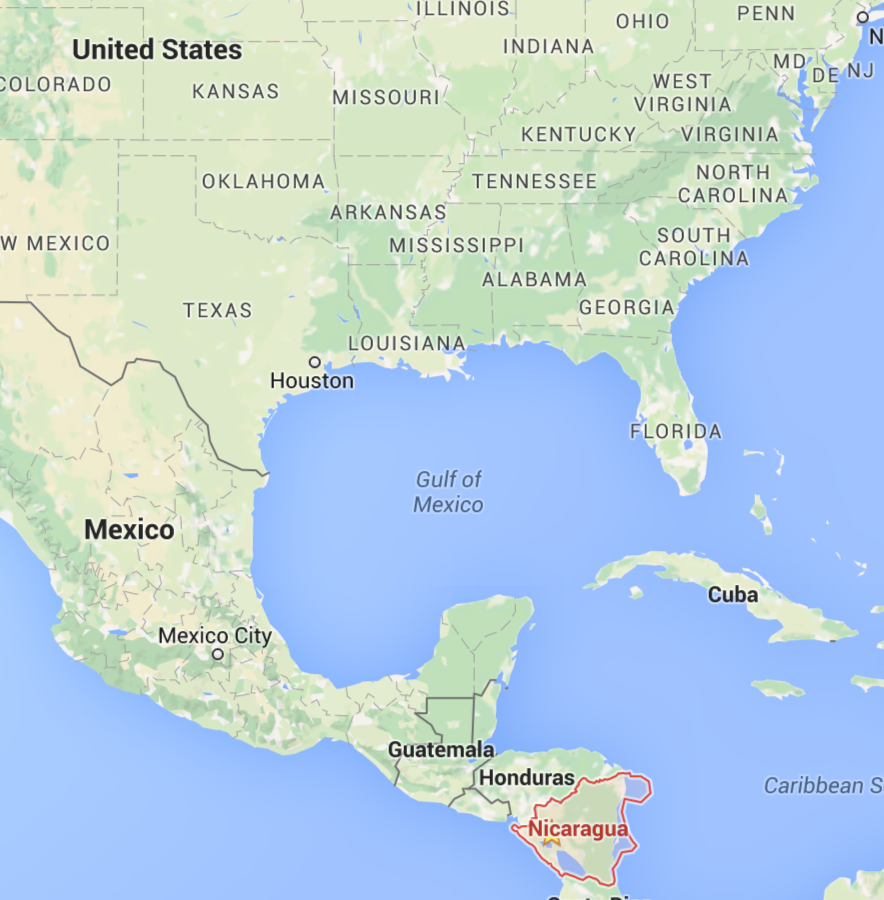
For the second time this summer, I write to you today to announce a major trip I will be taking with the friars: in one week’s time, I will be on a plane with five other friars and twelve lay people on the way to Ciudad Dario, a small city in the western part of Nicaragua. There, the group of us from St. Camillus parish will help to make progress on a new school being built for 240 students.

As you can imagine, this trip could not be any more different from the road trip across the country in May. In fact, with the exception of my classmate Edgardo, there may not be anything in common. For the road trip, I planned everything long in advance, knew mostly what I was getting into, traveled willingly, moved almost constantly for a week (although remaining almost entirely sedentary for much of it), and kept in contact with people throughout with updates, pictures, and videos. This trip, I have planned no aspect of it, have very little idea what I am about to do, was assigned to go on this trip by the formation team (I would have went even if it was optional), will remain in basically the same location for a week’s time while working very hard, and will have no way of contacting anyone until I return to the States. But there’s more. This trip is actually different from any trip I have ever been on. While, yes, I have been on a mission trip, this one is the first one amidst “third world” poverty, and actually, my first trip out of the United States at all. 

Naturally, the more I’ve thought about it over the past week the more anxious I am about it. This is seriously new territory for me. Although technically closer to home than San Diego, where I am going will be a world away. Language, culture, food, sanitation, customs. All of these things will be foreign to me and no doubt difficult to adjust to at first.

And yet, there is definitely a corresponding excitement to all of my fears. Since I will be traveling with a large group–some of which were on this same trip last year–to a place run by an American company, there is a sure sense of relief that I don’t have to know everything or be prepared for every situation. Sure, there are obviously dangers in what we will be doing and I have so far taken all of the necessary precautions (shots, research, medicine, packing, etc.), but there is something to be said about simply being a follower and active participant for once. It’s in this sort of space that I look forward to experiencing so many things for the first time, good and… “less good.”

Our main task will be, as I said, to build a school, but there is much more to it than a desire to complete a task. We’re Franciscans in the end, aren’t we? We know that people have started the project before us and we know that we will not be the one’s who will finish it, and so, while we want to give a week of honest work, we also recognize that there’s more to be built on the trip than the school: we are going to build relationships. Our desire is to work together, for the poor, with the poor, and as the poor, always focused on the reason for the school, the people, more than on the school building itself. As our leader said, “If you get a little tired or if one of the students comes up to you with a soccer ball… or even if you’re not tired and you just want a break… we encourage everyone to spend time with the kids. Play a game. Read them a book. Put together a puzzle.”

Overall, I think I really am looking forward to the trip. Since I will be going with five other Franciscan friars (four of which are in temporary vows like me), it will definitely serve as a strong bonding experience. There are just some things you can’t know about each other living in Maryland; throwing people together in an intense, uncomfortable situation is just a different experience than living together normally!

As I said, I won’t be able to share anything along the way as I did last time, but my hope is to put together a video of the experience the week after we return. Until then, it’s back to work here at St. Francis parish where I am finishing up my summer assignment this weekend. Peace and good!

Discernment, Formation, and the Church in the Modern World

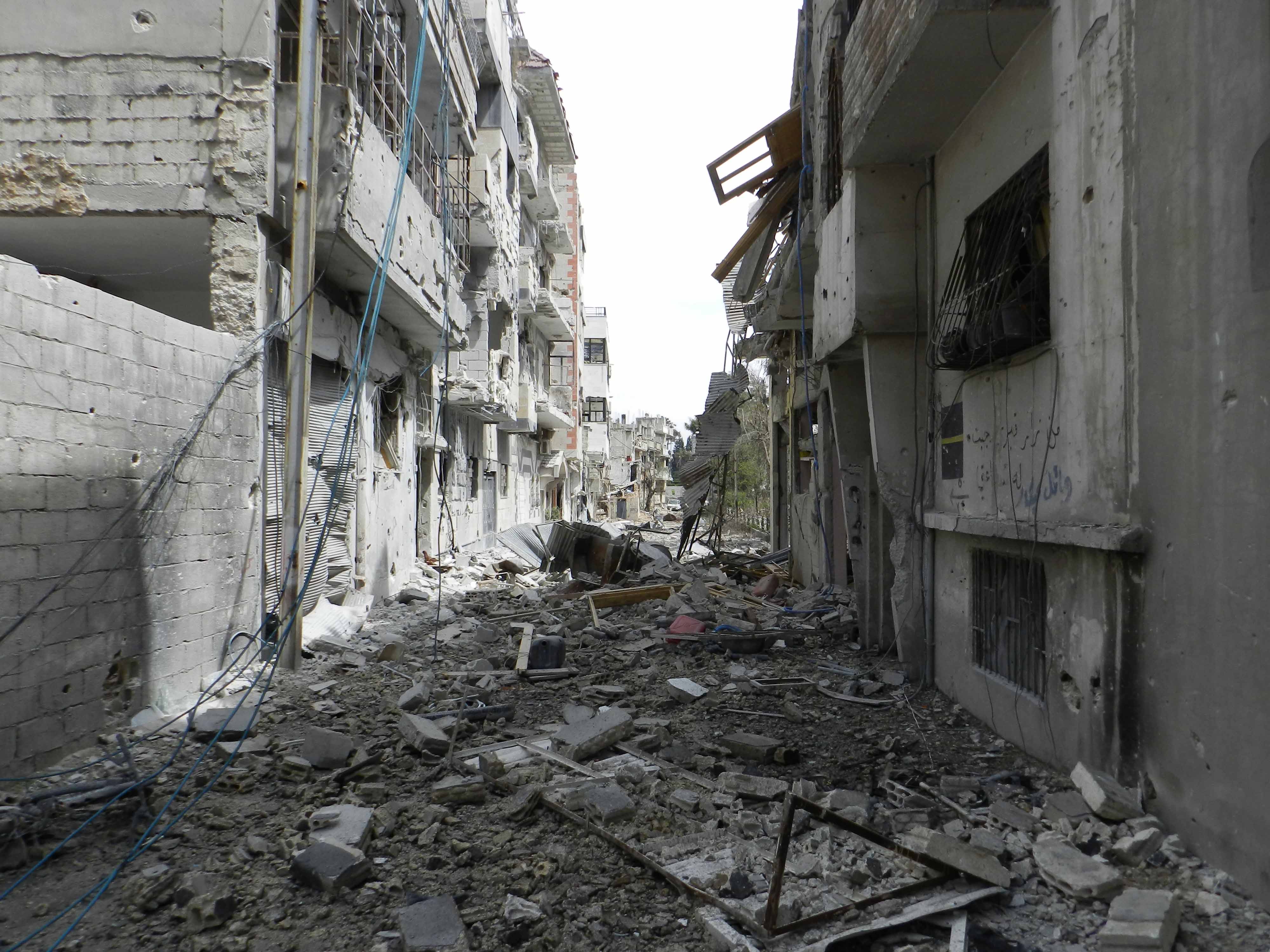
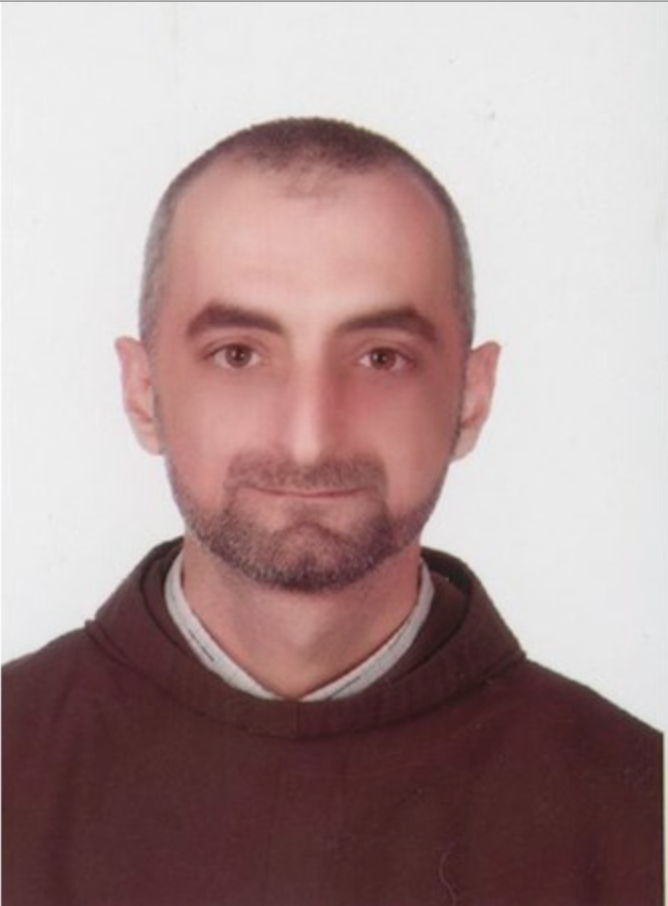
If you think that title is long, wait until you see the video! But before I get to that, I have great news! Our brother in Syria, Fr. Dhiya Azziz, OFM was released unharmed by his kidnappers! Praise be to God! Thank you all so much for your thoughts and prayers throughout this past week. 

And with news like that, where do I go from here? Well I can assure you that I can’t beat it. And since you’re going to be disappointed anyway… let’s talk about this video that I have for you. You see, it started off with the best intentions. I planned to film a two part series: one on my discernment process, the other on the formation process of becoming a friar. I worked out the script, had lots of pictures, filmed it three times… and realized it was incredibly boring and useless. What I also realized was that, in between takes, the conversations Rob and I were having were really lively and really interesting. So we filmed that.

And here’s the thing. I think it’s the best video yet. The conversation was candid and lively, the questions were honest and off-the-cuff, and the answers surprised even me. When we went back to see what we had, we couldn’t find a place to cut or edit… and so we didn’t. What I have before you is a forty minute video. That’s right. 4-0. But do you know what? That’s shorter than one episode of Law and Order, and certainly shorter than a football game, so I don’t feel bad at all! Enjoy it at your own leisure, either all at once or in little bites, or don’t enjoy it at all! That’s up to you! All I’ll say is that I am really pleased at how it came out: for the first time, I really think you get to see a bit of my personality and passion for this life come out in a way that blog posts and scripted video reflections can’t capture. For that alone, I stand by it and hope you will to.

For those on email, you can click here to view.

Also, if you’re interested in more about my vocation story, you can click here to read a shortened version, or here to see other related posts. There are also quite a few about the formation process, which can be found here.


Bringing Calm to the Chaos

Happy Friday, and happy Fourth of July weekend! To celebrate both, I present to you a twofer: a video AND a blog reflection. Although focused on the same topic–the way in which Jesus calms the storms of life and then calls us to do the same for others–the two mediums, written and video, offer very different perspectives from one another. I hope you enjoy them both, and since this is America on the Fourth of July, celebrate your freedom: it’s up to you which you enjoy first!

(Here’s the link to the video for any email subscribers)

Being that it’s Father’s day, I thought that I would start with a story about my father. My father is a great guy. He’s smart, he was an all-American in high school, a great coach and teacher. And oh my gosh is he funny. My dad was born without the ability to feel embarrassed, so it doesn’t matter where we are or who’s around, he will do something stupid to make us all laugh, whether it’s intentionally tripping down the steps or pretending to play soccer with a statue. Actually, now that I think about it, he might just be crazy. That’s just who my father is, and I love him very much.

But that’s not what makes him a great father. Yes, it’s great to have someone who is silly and easy to get along with, but there’s more to being a father than that. What makes him a great father is what happened my senior year of college. After four years of driving 70 miles each day for a job that offered tuition exchange, the only way I would have been able to go to college, he calls me: “Hey Casey, I just wanted to let you know that I got let go today. They’re downsizing the department and had to cut someone.” I was devastated. Why him? He’s such a good man. I started thinking about a lot of things: how were they going to pay the bills, how was this going to effect their marriage, how was this going to effect his pride/was he depressed? I said, “Dad, I’m so sorry. Are you okay?” I’ll never forget his response: “Why wouldn’t I be okay? Don’t you see how God has blessed us? When you were looking to go to college, there was no way we were going to afford it. God provided me with a job that made that possible. Now you’re graduating, and I don’t need this job anymore. I’m just so thankful for the blessing we had for four years.”

Wow. That is what makes my dad a good father. When I was ready to focus on the negative, fall into despair at what I didn’t have, my dad was calmly there pointing me to our Father in heaven. In the midst of chaos, my dad brought me the peace of Christ.

All too often I find myself playing the role of the disciples in our Gospel. When things go wrong, when the world comes crashing down on me, my first reaction is to let the chaos get the best of me. Like the disciples, sometimes I forget that Jesus is right there in the boat, waiting for me to awake him. No matter what is happening all around us, no matter who we are, no matter what we’ve done, Jesus is always there offering himself.

And I want to focus on that for a second. Sometimes we hear some things so many times that it loses its effect; we hear it doesn’t touch us like it should. “God is always here; Jesus loves us; the Eucharist is the real presence. Yeah, I know these things.” But really, take a moment to let this Gospel image set in a little. In the midst of all the chaos of our lives, the problems with money, children, careers, loneliness, bullying, whatever it may be, whatever our storm is… Jesus is right there in the boat, waiting for us to call on him. Jesus is here… now. I mean, seriously. When we listen to the word of God, when we share this meal together, we’re not just doing nice things… we are experiencing the living and true creator of the universe. Wow. There is no chaos too strong for our Lord; no problem too big. With him in the boat with us, there is nothing we could ever fear, even the raging sea. And why is that? Because if we believe with all our heart that what we’re doing is more than some nice gesture but really is the living and true God giving himself for us, if we let him take hold of us and become a part of us, how could we we ever fear or be concerned with anything else? The peace of Christ that we receive conquers every pain, every worry, every suffering, and every misplaced desire that we can ever have, and makes us whole again.

And if I stopped there, you’d probably think to yourself, “Well that’s nice. Good encouraging message from Br. Casey… and it was short! Nice!” And I could stop here, but that’s not the whole story, is it? As nice and true as it is to be reminded that God is always there to take away our pain and to calm the chaos, to stop here gives us the image of our God as the powerful psychiatrist in the sky, a genie that fixes our problems. God becomes someone who exists solely for the sake of making us feel comfortable and happy. To stop here leaves out an essential part of what it means to be Christian: mission.

Having experienced the love and peace of Christ in our lives, the transformative nature of the Eucharist that fills us with joy and hope in the midst of chaos, we are now called to do the same for others. Remember how our Gospel passage started: Jesus told the disciples to get into the boat. He led them into the chaos, not away from it. Why would he do this? Why would he put them in harms way? As Christians, those who know the power of Christ to heal wounds and bring peace, we are not meant to flee from pain and despair, but to be the first ones running towards it. We are called to get into that boat and to bring Jesus where he is needed most.

A quick look at our world shows that there is no shortage of chaos all around us. Everywhere we look a storm is brewing and ships are sinking. People are being shot in churches; pope Francis reminds us that we are turning the earth into “an immense pile of filth”; there is human trafficking and spousal abuse; bullying and loneliness; war and mass migrations. Given it all, we could easily say that it is not our problem, claim that it doesn’t affect us, and just wait for someone else to take care of it. We could hide in our safety and comfort. But what if, as Christians, those who truly know the power of Christ to heal wounds and bring peace, what if we were the first ones running towards the chaos, bringing Jesus to those who need him most? What a world that would be…

And so I pray, on this our Father’s day, that we may always remember two things. The first is that there is no amount of chaos that could ever overwhelm our God. No matter what we are going through, no matter how crazy it may seem, God is there, waiting to be awakened to calm our storm. The second is that, once we have received this great gift, the only thing we can possibly do is go to those in the chaos, go to those in the place that we were before we knew Christ, and bring them the love and peace that we have received. It’s the story of the Gospel and it is our Christian mission. In the midst of chaos, may we always be as my father was to me: calmly pointing others to the Father in heaven.