When I was discerning a life with the Franciscans, one of the friars told me a joke: “Once you’ve met one Jesuit, you’ve met the Jesuits. Once you’ve met one Franciscan, you’ve met one Franciscan.” A quip both sides actually like to tell (James Martin, S.J., the Jesuit writer of for America Magazine mentions it in his book, The Jesuit Guide to (Almost) Everything), once could say that it’s more than just playful sibling rivalry: there’s actually some truth to it. As this friar (and James Martin) described it, Ignatian Spirituality and its subsequent formation program for new Jesuits is very organized, regimented, and clearly defined, producing men that all seem to have similar ideas about various topics. Even the slightest whiff of a reform is squashed immediately. The Franciscan charism, as many of you will remember from my video Why Are There So Many Different Franciscans? is slightly less defined… and is almost built on constant reform. As a result, I have heard Jesuits and Franciscans tell the same followup joke: “If you ask 100 Jesuits from around the world the same question, you will get the same one answer. If you ask 100 Franciscans around the world the same question, you might get 100—or more—different answers.”
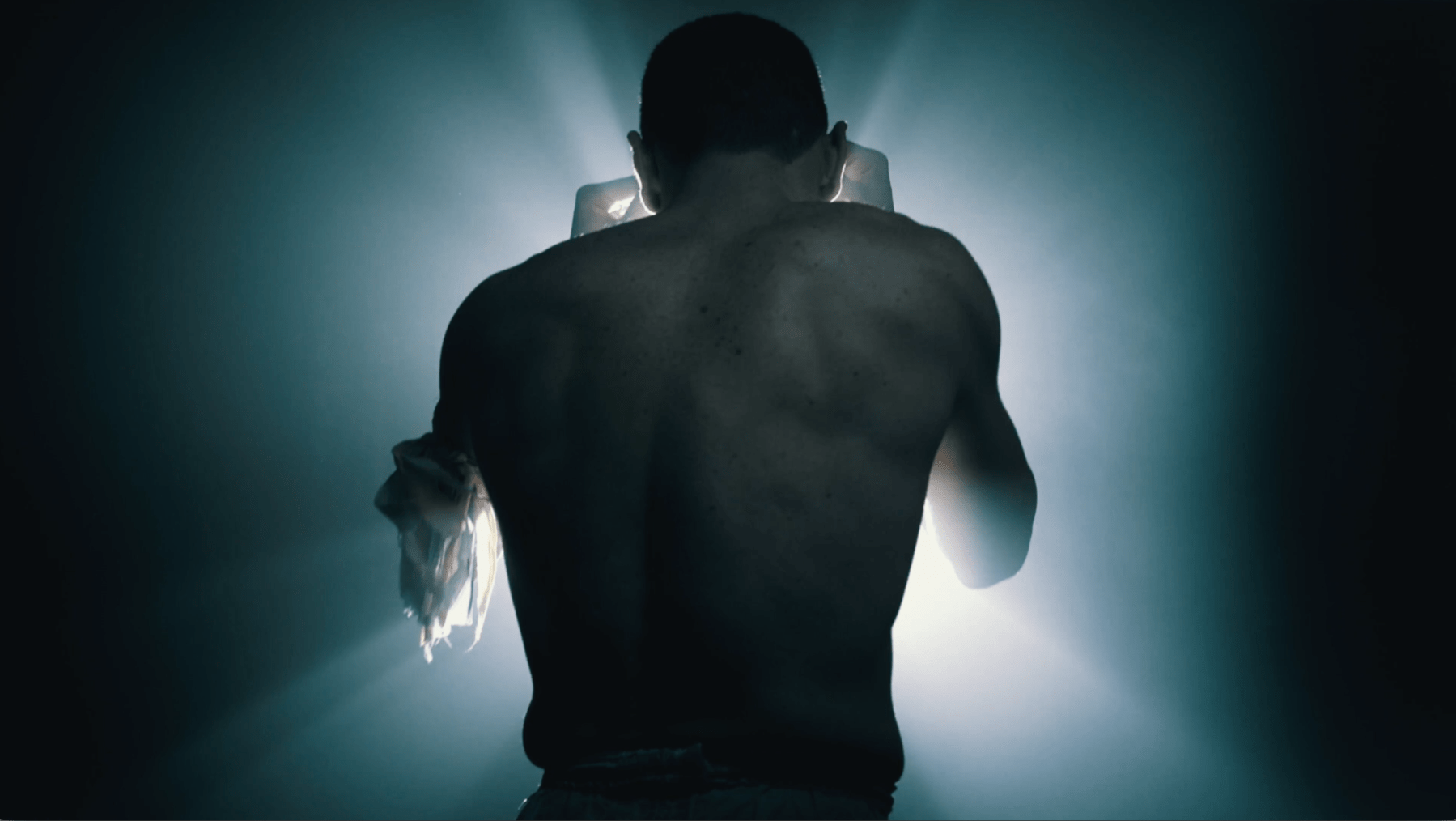
It is within that context that I present the newest web series to Breaking In The Habit, “A Friar Life.” For years I have gotten requests to share what a normal day is like for a friar, and for years I’ve wanted to show it. But who could capture what it means to be a Franciscan for us all? What one single day could epitomize the rest? Surely, for us friars, one does not exist. Luckily, one doesn’t have to. For the next five (hopefully six… maybe seven) Fridays, I will present a glimpse into the life of a different friar. Sometimes shot in a single day, other times highlighting a variety of tasks over a series of days, no one video is meant to capture every aspect of each friar’s life as if each were complete, stand-alone records of each friar’s life. Rather, just as we come together to build a fraternity that is greater than any one individual, these videos are intended to be taken together, each as a piece of the wider, ongoing, and growing puzzle of what it means to live as a Franciscan.
Email subscribers click here to watch this trailer, and be sure to check back in each Friday. If you have not subscribed to the YouTube channel directly, you can do so by going to the page here.
Believe it or not (and there are days that I refuse to believe it!) my internship is quickly coming to a close. After nine months of living and working at Immaculate Conception Church in Durham, NC, I find myself preparing to say goodbye once more, three weeks from today. The life of Franciscan itinerancy is lived most by those in initial formation, and I must move on.
Naturally, the announcement of my departure has elicited more than a few questions over the past month and I find myself almost constantly answering some variation of the same question: “What are you going to do next?” For longtime blog readers, my answer may sound a little familiar…
Road Trip!
As is becoming a routine for me, I find myself at the cusp of a third straight year taking a road trip in the month of May. In 2015, some will remember, I drove from San Diego to Washington, D.C. in order to help my classmate move. It was, as I hope some of you will forget, the period of time when my YouTube career began with a fun, yet haphazardly and stressfully made series of daily videos about our trip. (Seriously, I’m not even putting a link. Don’t look for them.)
In 2016 I turned the camera setting from video to photo as I played tour guide for two of my classmates who had never been to the southern part of the United States, visiting all of our ministries in Georgia, South Carolina, North Carolina, and Virginia. It was a fantastically energized trip, visiting eight ministries in eight days while traveling 1500 miles, that left us anything but energized by the end.
Now, in what I believe can only be the result of a developing insanity and lack of sleep, I have plans for a trip that not only combines the two ideas… it intensifies them. For 25 days beginning May 22, I will be traveling with two newly-transferred friars from another province to six of our provincial ministries sites. Covering nearly 1800 miles to stop at six locations, our trip has two goals: 1) to acquaint the new brothers to the friars and their fraternities in mission throughout the province, and 2) more to the true reason behind the trip, to film a six-part documentary series about the Franciscans, life in the Church, and active participation in both. More details to come as the time comes closer, but please keep us all in your prayers as this is unlike anything that any of us have done before!
Vacation
By that point, I’m going to need a vacation. If nine months at the parish hadn’t done enough to exhaust me, this will certainly do it, and I’m looking forward to a week with my family in which I do very little at all.
Solemn Vow retreat, More Travels
Which will be a very good thing because there is no rest for the weary this summer: in another dose of déjà vu, I will be making a trip outside of the country for the third summer in a row. Starting July 2 and ending August 7 (yes, five full weeks), I will be making my first European trip. As is required by canon law, all wishing to make solemn profession must make a retreat. Traditionally extended in length (roughly a month) and done in a quiet setting (retreat center or monastery), many Franciscans in the United States have adopted a new model of late. Instead of locking us up in a monastery—a form of life and prayer distant from our own—the powers that be have transitioned to more of a pilgrimage model, one that is prayerful while itinerant, solemn while within the world. In other words, one that is Franciscan. For four weeks this July I will be joining Franciscans from around the country and of various Orders in a journey to the original Franciscan holy places—Rome, Rieti, Assisi, and La Verna—to contemplate my life as a Franciscan in the very places where the charism was born. You could say that I’m a little excited…
But wait! There’s more! What happened to that fifth week, you ask? Well… since the majority of the expense of a European trip is simply getting to Europe… and since I’m already there and am unlikely to return as a friar any time soon… my director is allowing me to use my final week of vacation and all of my vacation money to spend a week visiting other friars in the area and doing some site seeing. So, yeah. If I can walk by that point, it’s going to be quite a trip!
***
All told, I find myself in a haze of déjà vu. All around me, the story feels the same: move out of a house to live in another, go on a joyfully stressful road trip, take some vacation, and go on an international trip. It’s amazing how things that, for the most part, never existed in my life prior to joining the friars has become somewhat commonplace now with them. And yet, how, no matter frequency or familiarity of such things, there’s something still so exciting, joyful, terrifying, stressful, and new about them. As I prepare to move out of my sixth friary in six years to move on to another stage, I find myself torn in two directions. On the one hand, I’m still the wide-eyed and excited person I was the first time I went through it all, overwhelmed with the change and exhilarated by what most would consider mundane, while on the other hand the calm and disaffected seasoned vet I’ve become, the product of years of experience and success telling me, like the biblical teacher Qoheleth, that “Nothing is new under the sun.”
I guess that’s what makes déjà vu so mysterious: we find ourselves in two places at once, experiencing the old while living the present, confronted with the things of old from a different vantage point. And I guess that’s sort of a good thing. While we all get older and experience new things, there are aspects of ourselves and the world around us that change, but in many ways we will never escape the recurring lessons and experiences of life. What we can hope for, and maybe all we can hope for, is that the perspective we have the next time around helps us to act in a more Christ-like way with every new day.
After forty days of lent, we’ve finally reached Easter and can triumphantly proclaim, “He is Risen! Alleluia!” I appreciate all who followed the Franciscan Media lenten series each week, and all the many words of encouragement I heard along the way. It was a great experience for me, and I hope to do more projects like it in the future.
For now, though, it’s time for a little break! As we’ve all worked so hard preparing for Easter, I think it’s appropriate that we all take a little time to enjoy it. For me, that means a few weeks without posting.
But have no fear! As we speak, I’m packing my bags to travel to Chicago to film parts 4 and 5 of a new (and hopefully ongoing) series called “A Friar Life,” a look into the many ways that friars live and work in the 21st century. Check back the first week of May for episode 1!
The following is the seventh installment of a seven-part lenten blog/video series sponsored by Franciscan Media. For the previous reflections, click here. For those subscribing by email, click here to watch the video.
“Failure.” For many of us, it is a word we refuse to accept, the true “F-word” that should never be spoken in polite company. And why would we? We say that the keys to success are in our hands, that the strength we need is within us. We tell ourselves things like, “If you work hard enough you can achieve anything,” and that those who succeed are the ones “Who wanted it most.” We glorify those who “pulled themselves up by their bootstraps,” who don’t need help from anyone else, and who, no matter the difficulties, “Never, ever give up.”
Failure? No, we will not accept failure. Since we are always in control, there is no one to blame but ourselves if we don’t succeed. Accepting failure means accepting that we were not good enough to succeed.
And so, in our eyes, we never truly fail. Sure, things don’t always go right, but we can easily defer blame and minimize the effects. That competition was rigged… I actually wasn’t even trying that hard… It was her fault… It’s no big deal… I didn’t want to win anyway. Failure, that is, not being able to achieve what we wanted even though we thought we had the capability to do so, is so shameful, belittling, and dehumanizing that we can’t bear to even acknowledge a simple fact: sometimes we do fail.
And that’s okay. In fact, it’s more than okay: Jesus shows us that it’s necessary.
Rarely will you ever hear a vowed religious leader say these words, but Jesus’ mission on earth was by and large a failure. Yes, a failure. On the surface, Jesus set out to reveal the glory and divine will of the Father, namely, that if people were to follow him in humility and peace they would have eternal life in heaven. What happened? Well, Jesus was hated by the religious leaders, feared by the secular leaders, betrayed by his followers, and ultimately killed as a common criminal for blasphemy and inciting a revolt. He was weak, needed help, went through horrific physical agony and emotional shame, was abandoned by his defenders, and left alone to die.
Even the most lenient of curves is going to have trouble not giving him a big “F” on this test…
Here was someone who truly did hold the keys of success in his own hands, who, if he had worked hard enough, could have done just about anything he really wanted. More than any other human in history, he had the power to achieve worldly success. And yet, by our earthly standards, his life was a huge failure.
But of course, it wasn’t a failure. And that’s sort of the point.
On Good Friday every year, we do not celebrate the fact that Jesus came up short in his mission, we celebrate the power of God to transform even the worst of failures—unjust suffering and death—into the glorious success of our salvation. We celebrate the fact that it is not despite failure that God succeeds, but in fact through it. As is the case all throughout salvation history, God does not “help those who help themselves,” as we often say, choosing those with strength and charisma to achieve great things for God based on their own skills. No, God chooses the weak, the helpless, the lowly, the poor, and the incapable—the “failures” of society who have to rely on God— to show his true power and achieve his success.
When we enter into this mystery of our salvation, our conception of success/failure and our connection with Jesus’ mission completely changes. In following the path that Jesus has laid out for us—showing us that it is in dying that we are given life, in giving of ourselves in patient humility that we receive—we realize that being weak and asking for help is not “failure,” it is in fact a virtue we must live. We realize that our strength does not come from within, that we cannot actually achieve everything we want if we just work hard enough and want it. We realize that, sometimes, it is the very act of “giving up” and accepting our own defeat that we succeed beyond our understanding.
Most of all, we realize that failure is not the absence of God in our lives, moments of shame and humiliation that we should avoid, but in reality, the moments in which God is most present to us, lifting us up and transforming us in our most vulnerable state. It is why God, when asked by St. Paul to remove the thorn in his side, said no: “‘My grace is sufficient for you, for power is made perfect in weakness.’ I will rather boast most gladly of my weaknesses, in order that the power of Christ may dwell with me. Therefore, I am content with weaknesses, insults, hardships, persecutions, and constraints, for the sake of Christ; for when I am weak, then I am strong” (2 Corinthians 12:9b-10). St. Paul realized—only in a moment of failure, I might add—that true success does not come from our strength but Christ’s strength filling in our weakness.
And so I wonder. As we continue in this great liturgy of awaiting the Paschal Mystery and realize once again that our salvation does not come despite our failures but through it, how might our conception of failure, the dreaded “F-word,” change in our lives? It is my hope that we may strip ourselves of the inherently inspirational yet tragically flawed clichés of our time—these notions that we can achieve all that we want, that weakness is a flaw we can rid ourselves of, failure a concept we should repress, perfection the goal we seek, and that there is nothing more inexcusable than “giving up”—and put our strength and notions of success completely in God. It is my hope that, as a Christian people, a people that celebrate the power of God to transform failure into life, we may no longer run from or deny the failures we experience in our lives as moments of shame or worthlessness but see them for what they truly are: wide open moments to experience the power of God alive in our lives.
The following is the sixth installment of a seven-part lenten blog/video series sponsored by Franciscan Media. For the previous reflections, click here. For those subscribing by email, click here to watch the video.
“Sticks and stones may break my bones but words will never hurt me.” If you were ever a child on a playground, chances are you’ve heard this little jingle. Taught to kids as a way to fend off bullies and maintain their self esteem, it reminds children that words only have power over us if we let them. No one, no matter how powerful, can control how we feel or what we think of ourselves.
And yet even the weakest words from the weakest people often do just that, even to as adults.
Likely, it is not “sticks and stones” that cause us the most grief on any given day—things that will objectively hurt us—but rather those little, insignificant, and powerless words that come from our neighbor. How easily we are thrown into fits of anger, frustration, and misery when called something offensive. How quickly our sense of self comes crashing to the ground when told something hurtful. For many of us, what people say and think about us is often the greatest source of strife we face, defining us and bringing us down.
We know the opposite to be true as well. How surprisingly happy, uplifted, and hopeful we feel when given an unexpected compliment. How bolstered our sense of self becomes when we are affirmed by someone we respect. For many of us, what people say and think about us is often the greatest source of assurance we receive, defining us and lifting us up.
Quite contrary to what we tell our children, words in fact do have power over us. And I wonder: should they?
To find the answer, we once again look to Sacred Scripture and call ourselves to imitate the One we follow. In the story of Jesus’ entry into Jerusalem and Passion read each year on Palm Sunday, we find a man bombarded with “words.” Ranging from glorious hymns of praise and thanksgiving for His life and ministry to ruthless shouts of disgust and vitriol for His religious dissent, Jesus is surrounded by others’ opinions of Him. Any one of us, I can only assume, would have been moved to ecstatic joy to crushing despair in mere hours. And yet Jesus is unwavering: hearing His name called like a celebrity does not inflate His ego or fill Him with pride, and being falsely accused and treated like a common criminal doesn’t cause Him to lose hope.
How? He has confidence in who He is, and no one, good or bad, can take that way from Him.
But here’s the thing: Jesus’ confidence does not come from within. He is not simply some super guru or courageously-willed survivor who believes He’s able to accomplish anything He sets His mind to. It is not Himself that Jesus believes in. No, his confidence comes from God the Father. The reason that Jesus is completely unfazed by what people are saying around Him is because He knows who He is and where He comes from: He is the Son of the Father. Who could ever take that away? What could ever challenge that status? What “words” could cause Him to think more of less of Himself than He already does? Jesus lives with unbridled confidence in this fact.
And so should we.
In our being created in the image of God and recreated in our baptism, we find ourselves as adopted sons and daughters of the heavenly God. More than anything else, this status found in our relationship to the Father defines everything about us. I’ll say it again: we are adopted sons and daughters of the heavenly God. If this is the case and we truly believe it, what could ever matter more in life than pleasing God? What could ever define our sense of self more than what God thinks of us?
In this Lenten season, as we approach the joy of Easter, we are reminded time and time again how much God loves us and wants to be with us. That which we seek most is right before us. Emboldened by this ultimate truth, may we live with the same confidence that led Jesus to accept the world around him without wavering, saying with true conviction that “words will never hurt me.”


 Breaking In The Habit