As the world changes, so too does religious life. 150 years ago, there were thousands of women and men religious in the United States running schools, hospitals, orphanages, and centers for the poor. The significance of women religious in particular was so great in founding this country that Congress actually thanked them some years back.

Now, they represent but a remnant of their past glory. Even more than men’s religious groups, women’s religious groups have diminished almost out of existence. It would be very easy to say that there is no future for such groups.

At least, “no future” for the way that they operate today. That was the theme of this weekend’s talk by Sr. Carol Zinn, SSJ at the gathering of the Poor Handmaids of Jesus motherhouse. Honoring the Poor Handmaids on their 150th anniversary in the United States, she recounted their past and their great accomplishments, how they were among the tremendous labor force of the Catholic Church to build institutions and evangelize the new world. Their thousands were necessary to do the work of God. But not so much now, she said. Looking to the future, she turned their sorrow of diminishment into something for the future: “When the Church needed a labor force, we provided it. We served as teachers and nurses and founders when there was no one else to do it. But now, the world and Church have those things and does not need that from us. Rather, what it needs us to be is the leaven, the agent that inspires and lifts the already-working institutions. That is our role for the future.”

Sr. Carol went on to remind the sisters that religious institutions have often gone through cycles of growth, death, and rebirth over their histories. Every three hundred years, she said, a movement needs to either transform or die. We are at that point now. What will we do?

Her response spoke very true to my own experience of religious life. She told us that gone are the days when we could define ourselves narrowly by what we do and people would be attracted to that. Among other reasons, one of the greatest reasons for decline in religious life came at the Second Vatican Council (and no, not because Vatican II is a bad council… ugh) when it insisted on the primacy of baptism and the universal call to holiness. Now, one did not need to be a brother or sister to be holy; now, one did not need to take final vows to teach, care for the poor, help the sick, or do extraordinary work. In the case of women, it was also at this time that women across the world began to break the barriers of the workplace, able to do incredible work and be taken seriously even without the backing of a religious order. The greatest decline in religious life came not because of some theological reason or because of lack of faith, but because people began to realize that they could do almost anything a brother or sister could do… and still have a family. If a religious order is simply a workforce, why would someone go through all of the troubles and sacrifices when they could do the work anyway?

This is the shift that religious life needs to make if it wants to survive: rather than defining itself by the work that it does, it needs to focus on the life that it lives. No matter how robust its ministry may be, a religious community is first and foremost a brotherhood/sisterhood of people wanting to live the Gospel in prayer and humility. What defines religious life is the life together. It is only from that life with God and each other that any ministry makes sense; it is only from that life with God and each other than anyone will want to join us.

For me, this is what we need to (re)claim if we want to have a future. As important as ministry is—and it is critical to this life—it must always be seen as the fruit of our life rather than the substance. People join us not because of what we do but because they are seeking an intentional community to live the Gospel. They join us for intimacy and support, for inspiration and foundation.

And we need to give it to them. Too often, in my experience, our houses are not houses of prayer—they are domiciles for workers, barracks for priests. This is not enough. We need to make sharing meals with one another a priority. Common prayer a necessity. Routine faith sharing, recreation, spiritual nourishment, and times to just be together are not luxuries, they are the very things on which our life rests.

For me, that is where the future of religious life lies: in communities that are so filled with love and support of one another and the Gospel that they cannot help but go out and spread it to the whole world. If that is our focus, religious life will absolutely have a future.
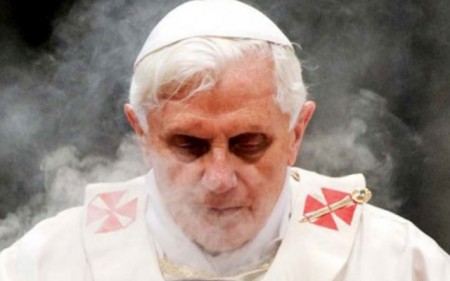
 

Two weeks ago, I learned of the deaths of two extraordinary men: Saul Rodriguez and Albert Hendel. In many ways, they had very little in common. Saul was a seminarian with the Capuchin Franciscans, was 31 years old, and died suddenly; Albert was my grandfather, the father of ten, nearly 98 years old, and died after a number of weeks of preparation. One represents what we would call a tragedy, while the other is the ideal situation we can all hope for.

And yet, there is a sense that even in the case of Albert, something is still tragic. Death, it would seem, is always tragic.

Why, even though we believe in the resurrection, is there still the sting of death? Why, even when someone dies after a long life with little pain, are we still upset about it? Why, in a world where death is inevitable and a faith built upon it, are we so bad at accepting death? This week’s video is my attempt to make sense of it all from a Christian perspective. I hope that you will join me in praying for the families of the deceased and for all of the deceased that go unnoticed. May we all find ourselves, one day, in the heart of God with the saints.

For many an internet troll on Catholic YouTube channels, “Catholicism is a cult” is a go-to comment. When in doubt, just lump the world’s largest religion in with fanatical fringe groups to win an argument.

Yeah… the internet is not always sophisticated.

But it does raise an interesting question. While we don’t have to stop for a second to actually wonder if Catholicism is a cult, what exactly is a cult? It may seem like a weird question, asking something that appears to be blatantly obvious, but just like defining what a religion is, it often eludes our grasp. With each bit of criteria, there are exceptions to the rule.

Most cults are small, and so we might look to size as a determinant. And yet, a group like Family International, largely held to be a cult, claims to have more members than the ancient religion Zoroastrianism, well over 100,000 people.

Often, cults are as much of a new religious movement with entirely new revelation as they are a reform of a previous religion. In which case, how do we distinguish between Mormons, Scientology, and Peoples Temple, all of which were founded on entirely new statements of faith?

Even the concept of “brainwashing” and self-mutilating practices, two things always associated with cults, are suspect. For one, is there really even any such thing as “brainwashing”? No one can ever force another to believe something against their will, and while misinformation plays a major role in it, it is still up to the individual’s personal agency to join in the first place. As for practices that hurt an individual, how do we separate the ascetic practices of Christianity and Buddhism from the seemingly dehumanizing practices of Heaven’s Gate? Is it just perspective?

And so on.

In asking these questions, my hope is not to relativize the issue and say that “cults” are just the same as traditional religions, nor do I want to defend some truly horrible groups; there are definitely some highly misguided people out there who will abuse others for their own gain, and they should not be grouped together with Christianity. My point in this week’s Catholicism in Focus is to show that the term “cult” is often loaded with a lot of definitions and particularly hard to define. It is important that we not think with such a black-and-white mindset in these issues, definitively declaring certain aspects to be bad, as we might find that we are condemning ourselves. What makes something a “cult” versus as religion is not necessarily one or two factors but rather an overall combination of factors.

Oh, and to show that Catholicism is not a cult. ‘Cus that’s ridiculous.

My apologies for the clickbait, but I think it’s a pretty accurate title… in a sense. I do think that we should stop referring to the center of our faith exclusively as “God.” I do not think that we should stop believing in a deity in general. Hopefully the video will explain itself.

But since I have gotten some confused responses, it might not hurt for me to offer a bit more explanation! Seems safer.

Put simply, the word “God” is very generic and means a lot of things to a lot of people. When some people say “God,” they mean a spirit in the sky that created the world but remains uninvolved in our lives; others mean a sacred tree that connects all life; still others have been influenced by a certain science fiction saga that takes place among the stars; and Christians… well we mean none of those things.

And yet, we still use the same word. And yet, we get our language mixed up and start to accept theologies about these “Gods” that has nothing to do with our own.

For me, we need to reclaim our own definition of God and our own theology, namely, that God is three in one, personal, and immanent. God is not just a philosophical concept, God is not just a transcendent being. God is Trinity, ever close and ever related to us.

Hopefully that helps to clarify!

Every so often there is a debate in the political arena about placing the Ten Commandments in a public space, either a courthouse or at city hall. And while there is a lot to debate around this topic politically and socially, there is something even more essential that needs to be discussed: theologically, there’s sort of no such thing as the “Ten Commandments.”

Okay, that’s a bit misleading, I admit. The Ten Commandments that we all learned in Sunday School are not made up and can most definitely be found in the Bible. The issue is not that we learned something that’s wrong, it’s that many of us learned a different set of ten laws. In fact, there are four different sets of what is called “The Ten Commandments,” and there could even be many more, depending on our interpretation.

If that intrigues (or confuses) you, check out this week’s episode of “Catholicism in Focus”!