No.

Not even a little bit.

And I’m not saying anything against Catholic theology.

You see, whenever we get into important theological definitions, the language we use is incredibly important. Precision matters, and while it may sound like two explanations are saying the same thing, they might be actually quite different.

Take, for instance, the Catholic stance on justification. For many, the difference between us and Lutherans is that they believe in “faith alone” while Catholics believe in “faith plus works.” You’ve probably heard this before. And it’s… sort of true. More precisely, Catholics believe that justification is through faith, something that issues forth in works. We could simplify it to say that Catholics believe in “faith plus works,” but it might imply that what we are saying is that we can do good works to achieve our own salvation, something that is actually heretical. Rather, salvation is through faith, and if it is a true faith, it will manifest itself in the form of good works. Similar to “faith plus works”? Yes. A bit wordier? Absolutely. Theologically different? You betcha.

Whew. That was a long example to make a point. I hope I didn’t lose you.

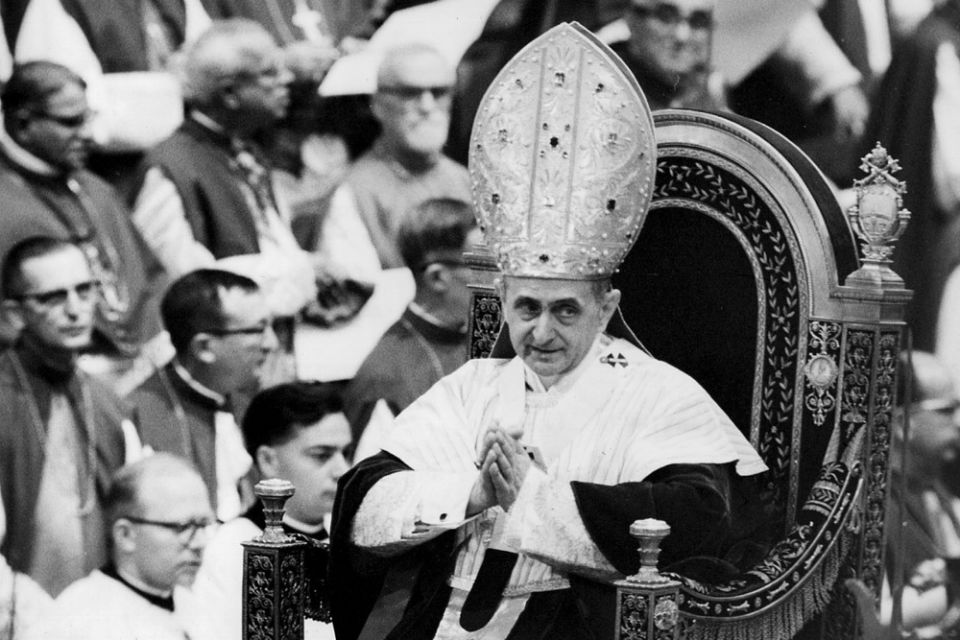
The reason I say this is because Catholics do not believe that the pope is infallible. Rather, Catholics believe that the teaching authority of the papacy enjoys infallibility. It may sound like the exact same thing and that we are needlessly splitting hairs, but it’s actually quite significant. In the latter, what we are saying is that the office of the papacy, regardless of who holds it, may speak without error under specific circumstances; in the former, what we are saying is that the human person who is the pope cannot be wrong. This is a major difference, and why I believe that so many people scoff at the idea of papal infallibility. Frankly, they just don’t understand it.

But this is not the case for you! At least, it won’t be the case after you watch this week’s Catholicism in Focus. More than anything, I hope that it will serve as another example of how important it is that we get our language right and are attentive to the words we are saying. Too often we get trapped standing by things that are false, rightfully attacked by non-Catholics for our beliefs, simply because we have used sloppy language. These things are important, and we must take them seriously!
A number of years back, I was at a parish for mass on Sunday when I heard something that shocked me to the core: the priest, referring to the Holy Spirit, said “she.”

Gasp!

At this point I can’t remember when exactly this was or when I first heard it, but I remember being very confused, even offended by it. Who did this priest think he was? God is not a “she.” He’s just trying to be hip or go with the trends of the world. Stick to the faith father and stop pushing an agenda.

Over the years, I began to hear this more, both by priests within Church and by other faithful Christians in other contexts, and I began to question my feelings on the matter: why does this offend me? I remember someone asking me one time, “You believe that God is neither male nor female, right? God is above gender? Then why does it offend you when we use the analogous language of “she” but not when we use “he”?

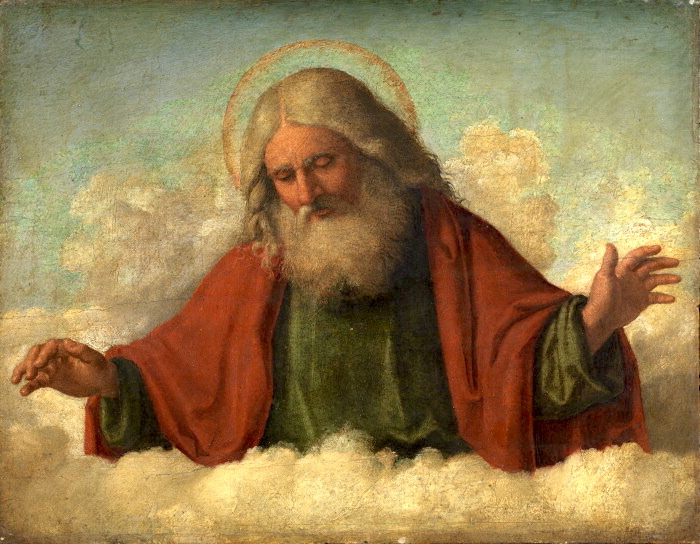
Fair question. God is not masculine by nature. God is not an old guy with a beard. God is pure being, completeness, beyond any particulars or potencies. Sure, God is often depicted in Scripture in traditionally masculine terms (most notably as “father” by Jesus), but God is also described in traditionally feminine terms as well. We tend to latch on to one, but not the other.

So, what’s my response today? Am I an advocate for beginning prayer “In the name of the Mother…” or “following her word”? Not necessarily. But I am more conscious of the fact that our language is wildly insufficient. I fear, sometimes, that we forget that we are using an analogy and begin to deify the wrong aspects of God. I fear, sometimes, that the title “Father” has become less of a term of endearment and more of an idol. For what is an idol but making something that is not God into God? If we believe that God is beyond gender, then what does it mean when we insist that God only be referred to through one gender?

Interesting questions for sure, and hopefully something that we can continue to approach with humility in the future!

A little while ago, I was talking with someone about how the Church cares for the poor, works for justice in our world, and does all that we can to promote peace. I said that we do these things not because we’re “do gooders” or hippies, but because it is our responsibility as Christians.

I forget the context of the conversation, but it was a pretty standard response to whatever was asked, straight from Catholic Social Teaching 101. I will never forget the response:

But why should we care about this world? If we believe in heaven, who cares if people are poor or die? Shouldn’t our only focus be on getting souls into heaven?

Rarely am I caught off guard by a question, but this one certainly got me. I could see what the person was getting at, I could see why they would ask this, but there were just so many problems with that way of thinking that I didn’t know where to start. Luckily I have a good internal filter and regrouped, because my first thought was, “So, are you suggesting that we just mercy kill everyone who has a tough life so that we can ‘send them to heaven?'” That would not have been a pastorally appropriate response.

I can’t remember exactly what I said at the time, but it got me thinking, theologically, how to best answer this question. In this week’s Catholicism In Focus, I offer three reasons why we care about protecting life, and really, the entire physical world:

1. Creation was created by God, it is good in itself, and is a vessel for experiencing God.

2. The human person is more than just a “soul” or spiritual body, but is fundamentally a physical being.

3. Salvation is not simply an other-worldly experience, one completely removed from our reality.

Is this a complete list? By no means. But I think it offers a foundation for a Catholic view of the world that must be behind everything we do. Unless we accept these three points as a basis for our faith, we might struggle to understand much of what we do and why we do it, leading us to ask tragic questions like, “Why should we care about life at all?”

Everyone knows St. Francis of Assisi and St. Anthony of Padua. They’re arguably the most famous saints in the history of the Church. Most people know of St. Clare, if for nothing else, that she was associated with St. Francis. And all throughout the world, the name Padre Pio has become more and more popular after being canonized a little over a decade ago. When most people think of the Franciscans, these names come to mind.

But… we’re an 800 year old movement. We are by far the largest religious family that has ever existed in the Church, and we’ve had some holy people along the way. Surely we have more than four saints, right?

Coming up with the exact number was hard to find (typical Franciscans, right?). If you include all of the saints who were professed as Secular Franciscans before becoming associated with another Order, the number is around 177, but even conservatively estimated, we’re well into the 100s.

That’s a lot of holy men and women. And I think we should remember them. In this week’s video, I’ve selected seven Franciscan saints that I think everyone should know, and offered my take on the holiness of our charism. If you stick around to the end, you might even get a quick joke at the expense of the Dominicans (no offense Dominicans!)

Among the many ridiculous things that critics of the Catholic Church say about us, none is more bizarre than the attack that we are “cannibals.” Taking our doctrine of the real presence a bit too literally (and forgetting that they, mostly fundamentalist Christians, also have communion services in which they read Jesus’ words “this is my body”) they talk about us as if we were offering a live human sacrifice on the altar and sharing it among the congregation.

But unlike some of the other doctrines for which we are criticized in a ridiculous way (venerating Mary, baptizing babies, having a pope, etc.) I have the sense that most Catholics don’t know how to defend themselves on this issues. In fact, I suspect that many Catholics actually make the situation worse, misunderstanding our doctrine and perpetuating misunderstandings in their attackers.

We believe in the real presence of Christ in the Eucharist… but we do not believe that it is actual flesh and blood. In this case, “real” takes on a very different significance than we are used to.

That’s the topic of these week’s Catholicism in Focus, the first of the season. Theologically, what are we actually saying when we say that Christ is truly present, body, blood, soul, and divinity.

Now, as a caveat not in the video (a reason why you should read the blog as well and not just watch the video!) there have been what are called “Eucharistic miracles” on various occasions in which the host has appeared to bleed. I have intentionally left these instances out of the video, not because I do not believe in them or because they challenge the point I’m saying, but simply because they are the exception. Regardless of whether or not you believe in such miracles, they are miracles precisely because they act against the normal way of things—the normal Eucharist that we celebrate does not bleed real blood because that is not what we believe is happening. If God so chooses to make it bleed so that some may have faith, as it appears may have happened a handful of times in history, then God is capable of such miracles, but they serve as the exception to the rule, not the norm.

Anyway, that might make more sense after watching the video, so you should do that first. Also, you should come back every Monday this semester for new episodes!