In this week’s Catholicism in Focus, I take a look at an often-misunderstand law of the church, the requirement to go to confession. While many will say that it is required at least once per year, that is technically not the case for everyone.
As for how often one can or should go to confession, that’s a different story, so be sure to watch until the very end!
There are two types of people in this world: winners and losers.
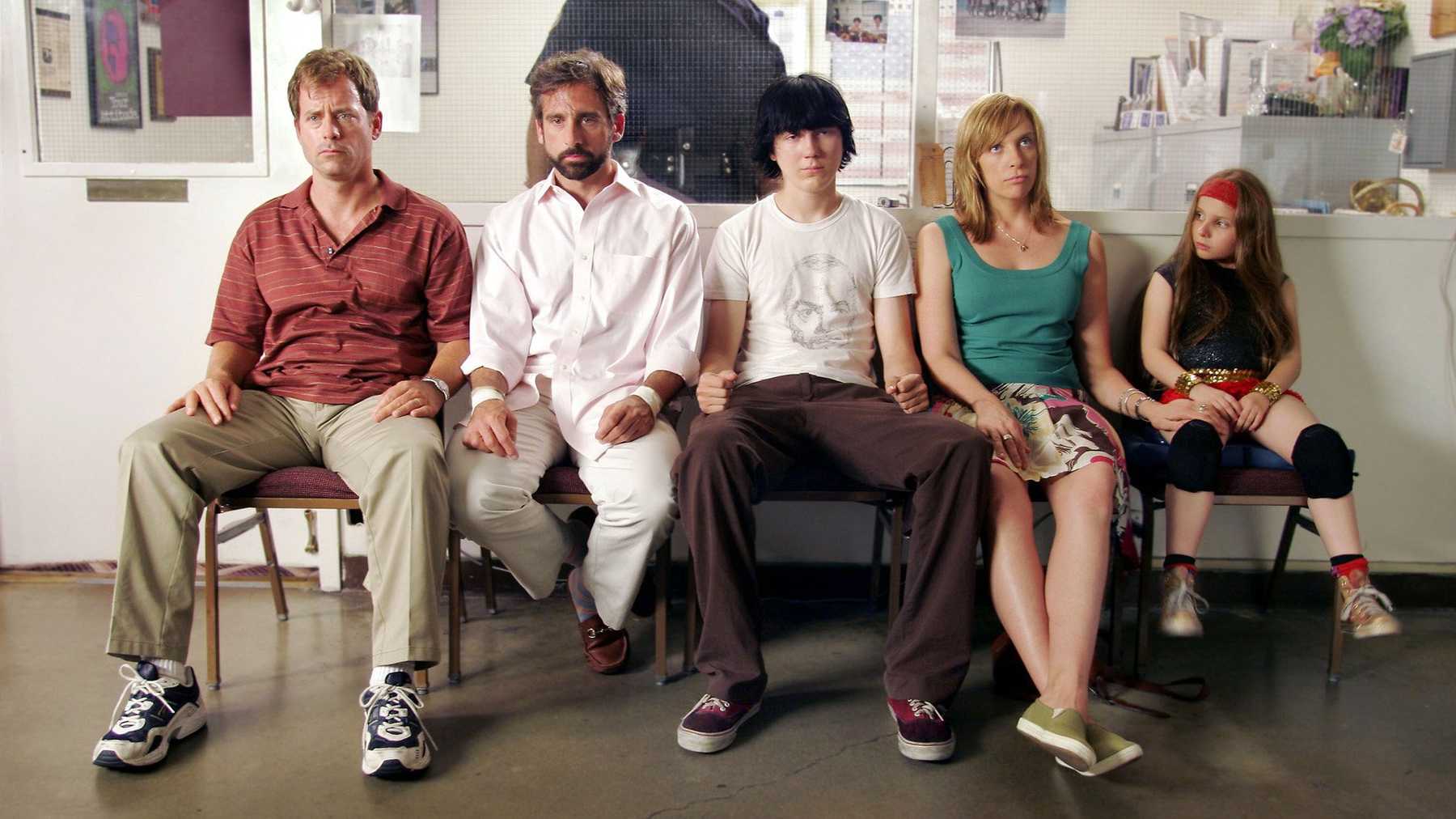
At least, that’s what the father in Little Miss Sunshine believes. He says so as the opening line of the movie, only to have it revealed immediately after that he himself is a loser. And so is every member of his family.
At least, they are by their own standards. They are by the standards of the world. They are when you look at them, hoping that they would be something they’re not. And that, right there, is the ironic twist in the movie: it is their fear of being losers that causes them to be loses. They care so much about what other people think of them, about conforming to outside expectations, that they fail to see the unique goodness in them all along.
Little Miss Sunshine isn’t the wise sage that it thinks it is, but it does offer at least a nudge in the right direction. While Br. Tito and I think that it takes its own advice to far, it’s advice, put simply, is true for us all: stop trying to be someone you’re not and love the person that you are.
Many fundamentalist Christians accuse Catholics of idolatry because of the images we hang in our churches. As I have pointed out before, this is a bit silly. At least, in the way that it is often articulated.
That said, the overall concept, that Catholics fall to idolatry, is not entirely wrong.
Rather than say anything more, though, I would like simply to encourage you to watch the whole video before coming to conclusions or leaving a comment (it’s one of those videos…) What I say about halfway through might come off a bit shocking, even heretical, but I PROMISE you that the point I’m making is 100% orthodox and appropriate for our day.
When you think of people that have had a tremendous effect on the world of economics, my guess is that “the Franciscans” isn’t the first thing that comes to mind. And why would it? A ragtag bunch of poor men in the Church has got to be the least likely candidate to economic reform.
And yet, the more you think about it, the more you realize that we’re a perfect fit: we’re a bunch of men committed to charity, with no interest in money ourselves. Unlike most everyone else, there is zero chance of scandal, no worry of financial impropriety. There’s no conflict of interest. Just the welfare of society in mind.
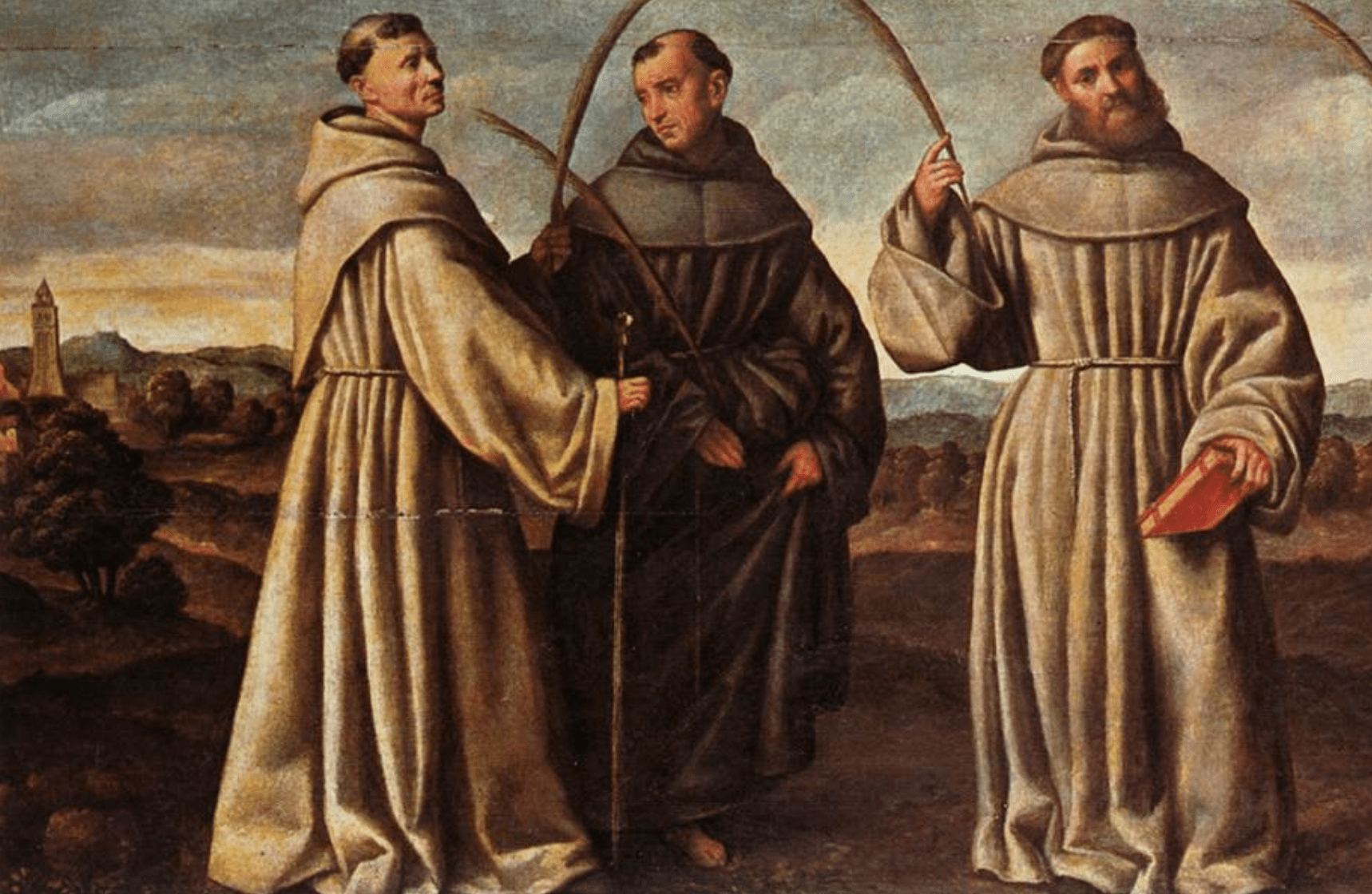
Which is why, in the 15th century, the Franciscans lay claim to one of the most interesting economic developments in history. Seeing the rampant abuse of the poor at the hands of usury, the Franciscans decided to get into the money lending business, showing that it could be done in a moral way. Without profit as the highest goal, businesses like these could actually benefit the disenfranchised.
Long story short, the Franciscans developed the first pawn shops in Italy.
Well look who’s behind this week! My apologies for just posting this week’s podcast now, on Thursday afternoon, when it was released on Tuesday (as normal!) Better late than never!
This week Br. Tito and I look at one of the most ambitious films I’ve ever seen, Gangs of New York. Set in New York the middle of the 19th century, it is a world unlike anything I could have imagined. The entire time watching I just couldn’t get it through my head that this was New York City, that this was America. It was so medieval, so barbaric, so utterly racist. The natives hated the Irish, the Irish hated black people, black people hated the politicians, and the politicians pretended to love whoever they needed to love to get elected. It’s a movie dealing with xenophobia, racism, police brutality, voter suppression, and political corruption.
Which… frankly… sounds pretty familiar. In a strange turn of events, what Br. Tito and I found was that, despite taking place in a world so unfamiliar to ours, the themes were entirely relevant. Hopefully we can all learn from our history so that we stop repeating it.



 Breaking In The Habit