The following is my homily for the 20th Sunday in Ordinary Time, Year C. The readings can be found here.

I have to admit, when I first read through the Gospel for today, my first thought went to The Dark Knight. I could just hear Michael Cain saying, “Some men just want to watch the world burn.” We hear of a Jesus who wants things to burn, wants chaos, want divisions. Given how divided our world already is today, some of us might find Jesus’ words a bit challenging, even shocking: “C’mon Jesus, I’m here trying to build bridges and work for peace and you’re over there saying ‘I didn’t come to bring peace but division.’ Let’s get on the same page here!” Of course, he’s the Lord and I trust him, but it does make me wonder: Is Jesus secretly just a criminal mastermind trying to take over Gotham? And if not, what does he mean by setting the world on fire? What does he mean by bringing division?

To answer this, I want to go back in time a bit, back to a time without as much civil unrest in our country as we have today. In 1896, the Supreme court ruled that segregation was legal, that black and white people could have separate but equal accommodations under the law. And for more than 50 years after this, life in the south seemed pretty stable. People knew their place and there wasn’t a lot of animosity.

But then things began to change. In the 1950s and 60s, the complaints of injustice became louder and more organized. There began to be a raised awareness of the plight of an entire people. People like Rosa Parks protested unjust laws; black students started attending white schools, drinking from the same water fountains; college students staged sit-ins at whites only restaurants and got arrested for breaking the law; people like Martin Luther King Jr. rose up and began rousing people to the cause, walking in Selma, walking on Washington, before he was arrested and thrown in jail.

All of this created major divisions. The US had gone from a peaceful, stable place, to a place with constant fighting and extreme tensions. Violence was in the streets, and people of color were blamed for causing it. In his letter from the Birmingham jail, King wrote about the resistance he received from others, that he was causing too much of a stir, that he should be more patient, that he should “wait” and basically not be in everyone’s face about these things. He was tearing the country apart with his demands. These civil rights advocates were responsible for causing division, they said.

Which is true, in a way. But not because they wanted to see the world burn. No. What they were advocating for was not division for the sake of division, but for justice, equality, and freedom under the law; they were trying to make the earthly kingdom appear more like the heavenly one. In other words, what they were advocating for was the Truth.

Unfortunately, what they found was that the Truth is divisive for those who don’t want to hear it.
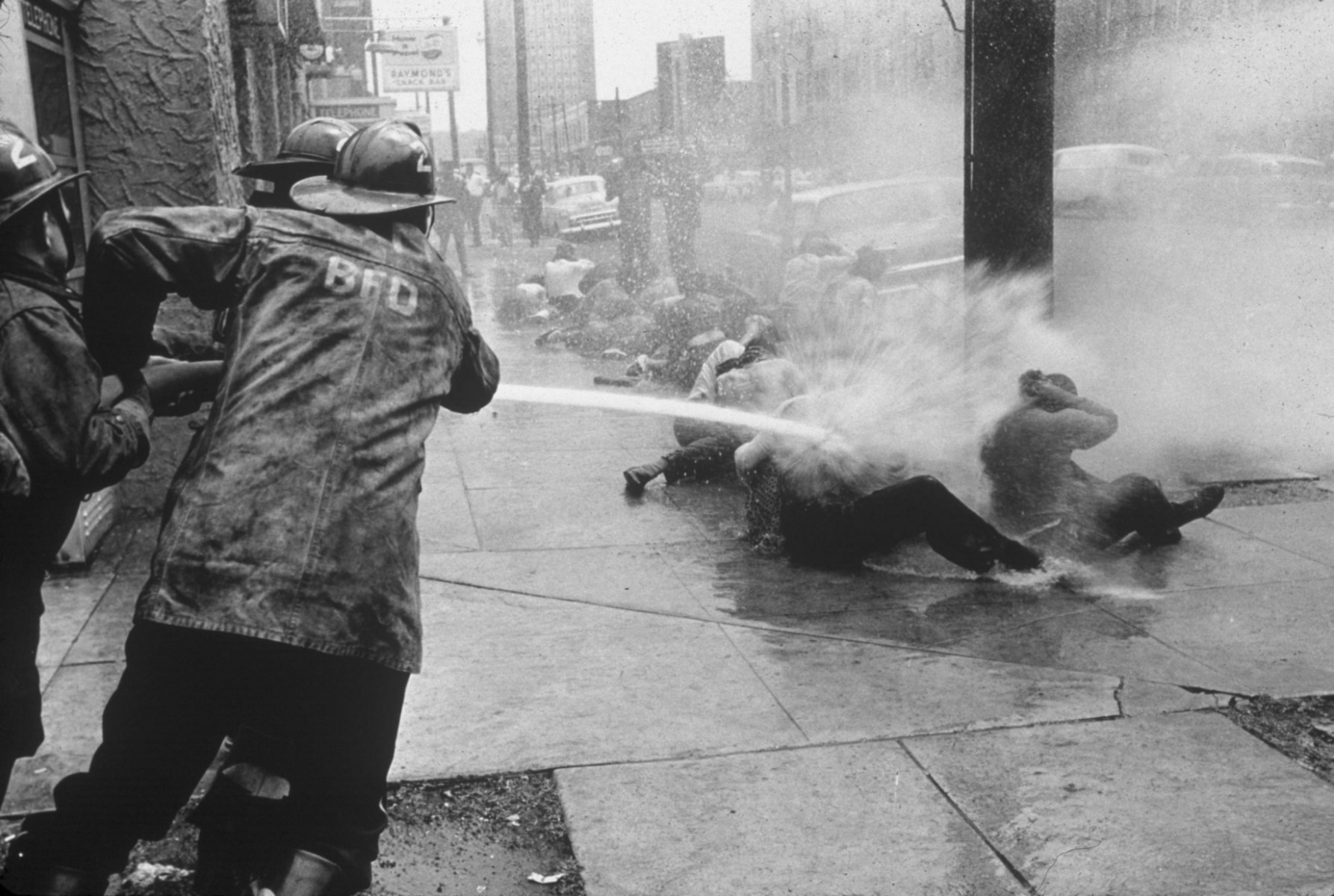
Those who preferred the status quo, those who liked to abuse and oppress others, those who did not care about justice, fought back: they had black leaders assassinated, burned people’s homes, attacked marchers with water hoses and dogs.

I tell you, it’s amazing how history repeats itself. Turn back the clock 2500 years and it’s the exact same story. In our first reading we hear of Jeremiah the prophet being thrown into a cistern, left for dead.
What got him here you ask? He called out his people for the evil of slavery. Even after God told them to free their slaves, that it was unjust to enslave their own people, they continued to do it, and Jeremiah continued to protest. He refused to quit preaching the Truth of God, and it got him first banned from the Temple—unwelcome in the place of worship—and eventually thrown into a cistern. Those with slaves, those with power, did not want to hear the Truth because the Truth forced them to admit that they were wrong, forced them to change what they did. They didn’t want that… and so they acted violently.

The Truth is divisive for those who don’t want to hear it.

Returning, then, to our original question—is Jesus secretly just a criminal mastermind trying to take over Gotham?—this is our answer. When we hear Jesus saying that he has not come to bring peace but division, this is what he is talking about. Jesus does not set out to create division for the sake of division. Rather, like the civil rights advocates, like Jeremiah, he comes preaching the Truth, but he knows that the Truth of the kingdom will inevitably upset people; the justice of God will not be received with joy from everyone because there are people who actually stand to benefit from injustice. Those who live selfishly, those who do not respect life, those who have no care for the kingdom of God will be offended by anything that challenges them. They might even respond with violence.

Jesus himself came preaching a message that many did not want to hear, that tax collectors and prostitutes were loved by God, that religious people were abusing their power and should give it up, that the kings of this world were filled with greed and should be cast down from their thrones. He preached truth to those who did not want to hear it, and it caused division, it created chaos… and it got him killed.

The truth is divisive to those who don’t want to hear it. 

This… presents a bit of a problem for us. Making a commitment to Christ means living the way the he did, caring about the things he cared about, preaching the things he preached. But what Jesus preached, what we stand for, is not alway attuned to the values of the world. If we truly take seriously our commitment to him, it is inevitable that we are going to face some resistance.

Standing with Jesus means that we may not be accepted by society. We are a people that stands for a consistent ethic of life, upholding the dignity of all life in all of its stages. We stand against abortion, the death penalty, euthanasia, war, and torture, while advocating for the well-being of children, refugees, the poor, and the elderly. There is no political ticket that accepts all that we believe. When you stand against greed and oppression in our world, you are going to make some people angry.

Unfortunately, the same thing can be said about our relationships with friends, with boyfriends and girlfriends. Following Christ means that what we do, and more importantly, what we don’t do, will go against what is popular sometimes. It will force us, as difficult as it is, to stand up to our peers and say, “No, I don’t do that sort of thing, and you shouldn’t either.” It might even compel us to intervene when our friends are gossiping or putting someone down, when they are doing something destructive and dangerous say, “stop, we shouldn’t do that.” That is not going to make us popular, no sir. The Truth is not received well by all, and those who commit themselves to it will cause divisions.

Divisions among their friends, but worst of all, among their families. I wish that I could say that it wasn’t the case, but I have met more than enough people whose parents do not support them going to church, who do not support their discernment of a vocation. Someone wants to devote their life to Christ, doing something virtuous for the kingdom, and their families tell them that they are throwing their life away.
How very sad. And what a horrible position it puts them in, to know the Truth but to realize that living it will bring division to people they love very much.

This, this right here, is what Jesus is bringing out attention to today: if we are to be his followers, if we are going to stand by the Truth, we must accept the fact that we are going to cause some divisions. People are not going to always like us. We might even face violence as a result of our lives.

The Truth is divisive for those who don’t want to hear it, but it is no less the Truth.

What Jesus wants from his disciples today is for us to pick a side. Are we going to stand with the world, with what’s easy, overlooking injustices, overlooking difficult situations so that we can live in peace and not upset some people? Or are we going to stand with Jesus, acknowledging that he is the Way, the Truth, and the Life, willing to risk what we have, even risk some of our relationships, to stand for the Truth?

I can tell you, standing with the Truth is not easy. You might lose some friends, face some ridicule. It might even get you arrested, attacked with a fire hose, thrown down a cistern, or even nailed to a cross. But what’s the point in having all the comfort in the world if we’re living a lie?


Chapter of Mats

Last week, 400 friars descended a poor corporate hotel in Denver, leaving everything in its wake. Truly… the hotel staff had no idea what hit them. Luckily, I was there to document it.

The following is my homily for the 19th Sunday in Ordinary Time, Year C. The readings can be found here.

A few weeks ago our our internet went out at the friary. It was horrible. No Netflix, no YouTube… just Fr. Frank and I… enjoying each others’ company. Luckily, we called the cable company and they said they’d send a technician out the next day. Unluckily, they said that he would be there anytime between 11 and 5. Lovely.

And so I waited at the house. At first, I was very vigilant, knowing that he could come at any moment. I didn’t make any phone calls, didn’t take Louis for a walk… I didn’t even want to take a shower or use the bathroom, just in case he came in the five minutes that I couldn’t answer the door. I just waited around the house, ready to answer the door at the drop of a hat.

After a few hours… I was not so vigilant. He’s not coming now, let me just run up to the center for a minute; I’ll just pop into the shower; maybe I’ll go take a nap. As the day rolled on, it was difficult to remain perfectly ready for whenever he showed up. I had things to do. I couldn’t be waiting by the door for six hours. Life moves on.

Happily, the technician finally came, fixed the modem, and so we have internet… I’m sure you were worried. But it reminded me a bit of our readings today. In each one, we hear of God speaking of a future reality yet to come, a reality that will come at an indeterminate time that we must way for. Wisdom reminds us of how the Israelites, those who were slaves and oppressed, waited to be saved for many years, how they had lived not knowing the time or day when they would be set free; the letter to the Hebrews tells us that many lived their entire lives waiting for their faith to be fulfilled, but died before that happened; and of course, o Gospel speaks of the master returning to the servant, a clear analogy to Jesus returning to his people in the second coming. In all of this, God tells us that we must wait for what we want. He tells us to be vigilant, to be ready at any moment for our Lord to return, to gird your loins. Everyone’s loins girded?

I’ve heard preachers say, “Treat every moment as if the Lord is on his way. Is this where you wanna be when Jesus comes?” they ask. And on one hand, it’s great advice, right. It reminds us to have integrity, to do what’s right even if no one is watching, to be ready at any moment. Good stuff. There’s just one problem—it’s entirely impractical. If people actually did live their lives as if Jesus were coming back right now, no one would ever go to work and there would be no dinner made tonight. If people actually did live with that much vigilance, they would run out of energy almost immediately. Does that mean we’re not supposed to sleep? Not supposed to go to the gym, clean out the gutters, or ever get dirty? Are we supposed to avoid Georgia football games, just in case Jesus comes back part way through the fourth quarter and our church is empty?

If you’ve ever tried to wait for the cable guy and found that 11-5 window a bit difficult to manage, then what do we do with Jesus who left us 2000 years ago and said he’d be right back? What does “being ready” even mean? I want to suggest three things.

The first is that we wait with surety, not worrying

Whether it’s with the cable guy or waiting for the that cute guy or girl to text you because they said they would, there’s always a doubt that it’s never going to happen. You can wait all you want, but it might all be for naught. Not with Jesus. As people of faith, we have no need to worry, no reason to doubt. Jesus said that he would come, and so we can take that to the bank. Our hope, in this life and the next, is not just some wishful thinking, but the most unbreakable promise that we could ever receive. 

How do we know this? Because we already possess what we await. 

While we do wait for heaven, we do wait for the second coming—events, places in the future—the fact of the matter is that our hope is rooted in the past and in the present: Jesus has already come. He already took on human flesh, walked this earth, performed miracles, and died for us. Not in the future, but in our midst does he make himself present in the reading of the word, in me, in you, and of course, in the sacrifice on the altar. It’s why, if you ever noticed, we begin by referencing four things—I kiss the altar, the book of the Gospels is placed in a prominent place, I greet you with the Lord’s blessing, and you greet me back. At each and every mass, we begin Mass by acknowledging the presence of Christ right here among us. The very first things we do when we worship. What we await, what we hope for, is already in our midst. We’re gathered here, not just for some distant, far off, abstract future… but for the living and true God among us.

And so, point number three, our waiting must not be passive, but that of active disciples. We do not sit around, waiting at the door, waiting at the phone, hoping that something will happen to us. As Christians, we know that something has already happened to us: in our baptisms and confirmations, we were grafted with Christ and infused with the Holy Spirit; in hearing the Word and receiving the Eucharist, we are continually filled up and sent out. The very reason that we are a Church, the mystery of Pentecost, is so that we would not need to sit around on our hands waiting for Christ to come back before we did anything, but that we would take up where he left off, that we would go out and heal people as he did; that we would go out and feed people like he did; that we would go out and be ministers of peace and justice in a violent and isolated world. 

What does it mean to be ready for Christ’s return? It means living with sure faith that it is not a matter of if, but when; it means recognizing in all that we do, in everywhere we go, that Christ’s presence is among us, filling us with his love; and it means devoting our lives to the mission that he started. 

And so, I have to ask… Are you ready?

The following is my homily for the 18th Sunday in Ordinary Time, Year C. The readings can be found here.

Does it really matter?

When I was a freshman in high school, I decided to run for student body president. It… did not go well. The school, very wisely, did not release the actual vote tally, but it was clear after the fact from my unofficial exit polling that I had not only lost, but lost by a lot. It was pretty embarrassing.

Now, truth be told, I don’t actually remember much about the campaign or the election itself, but I distinctly remember the conversation I had with my dad that night… because it seems so ridiculous to me now. I was so upset you would have thought that I had just been sentenced to life in prison and I remember him asking me why it bothered me so much, that it was just a freshman class election. I told him that it was so much more than that. I had lost this year, which meant I’d be a year behind next year, which meant I wouldn’t win next year either, which meant that I would never be president of the school and colleges would see that and so I wouldn’t get into a good college and then I wouldn’t get a good job and so my life was basically ruined at that point.

A little dramatic, I know.

Sometimes it’s helpful to be able to take a step back and see the bigger picture. When we were younger and something went wrong—we failed a test, someone broke up with us, something embarrassing happened at school—it seemed like such a big deal, like our life was ending. Years later, with many more experiences, realizing that there are far more important things to life, we just have to look back and laugh. Why were we so upset over something that had literally no impact of our lives whatsoever?

How much time we’ve probably spent worrying, sulking, crying over nothing! Had we seen where we are now, known what’s really important, we would have realized that those things really don’t matter, and spent our time on things that actually do.

This, I think, would have been great advice for the rich man in our Gospel. On the surface, if we’re honest with ourselves, we probably identify pretty well with him. What he does actually makes a lot of sense. He’s just being prudent and responsible, saving for a rainy day. Who can really fault him for working hard early in life, saving up, and resting at the end? Seems like he’s living the dream. When we look at his actions in the moment, they seem quite fine.

But take a step back, take the longer view, look at his life from the perspective of heaven, and things appear very different. What we see is a man who is so very worried about what he will eat tomorrow, how much money he will have left, whether or not he will be safe, that all he can think to do is build a bigger barn to protect his wealth. While his story and mine might seem very different—mine of failure and his of success—they are, actually, the very same: we have spent time thinking and worrying about things that mean absolutely nothing in the long run. Just as my dad asked me why losing bothered me so much, God asks the man, what good his possessions are to him now that he is going to die. In fact, he calls him a fool for wasting so much of his time on such things… which is never good, God calling you a fool.

Rather than feeding the hungry, sharing his wealth with the poor, virtuous things that would have benefited the man after death and built up the kingdom of God, he has spent his life worrying about something that has literally no impact on his soul whatsoever. You can almost picture the man after death, standing before God, feeling the same way I do when I think back on high school. “Why did I spend so much time worried about those stupid things. I wish I would have spent more time on things that mattered to God.”

By the time he realized this, though, it was too late for him. His life was poorly spent.

Luckily, it’s not too late for us. The reason that Jesus tells us this parable is because he wants us to make a change, because he doesn’t want us to stand before God at the end of our lives and realize we wasted them on things that don’t matter. Because we often do. How true the words spoken by Qoheleth were in our first reading: “vanities of vanities, all things are vanity!”  We spend so much of our time and energy worrying about things that seem so important at the time, that make us feel like they are the only thing that matter, and yet have literally no impact on our lives in God whatsoever.

Like the rich man, we worry about money: how much of it we have, what we spend it on, who has more of it than we do, where we can get more.

Here on a college campus, we worry about grades. In the grand scheme of life, could there be a more useless form of currency in all the world? Once you graduate, maybe even before that, no one cares or remembers what you got in biology or history. And yet, how many hours of sleep are lost, days ruined, not in actual learning, but in worrying about some arbitrary letter on a transcript?

I look at the fights we have, the things we choose to fall on the sword over. I’ve seen friendships ruined because one person had this political view and the other had another, and despite the fact that it in no way affected either of their lives—they were just opinions—they refused to speak with one another.
How sad it is to see so much time and energy wasted on things that do not bring us closer to God, that do not build up the kingdom.

We get so caught up in the moment, forgetting the big picture, that we let petty and useless things convince us that they really matter, that this is worth getting upset over.

St. Paul says no: seek what is above. Do not get caught up in the things that are below, the things that distract us from what’s important. Keep your eyes on what is above, on heaven, the kingdom of God, the thing that matters above all else. Never let this image leave you. Never forget what really matters. When we find ourselves upset over something trivial, annoyed by how someone spoke to us disrespectfully, how something didn’t go how we wanted it to go, we can step back and ask ourselves an important question: “does it matter? In the grand scheme of things, if I’m standing there in heaven after I die, will I be able to say that this thing that I’m spending so much time and enter worrying about actually made an impact on my soul, on my relationship with God?”

If not, let it go! Do not waste a second of your life worrying about something that will not bring you closer to God. Do not waste a moment on something that does not make the kingdom of God more present in the here and now. It’s not worth it. It’s not worth it looking back at your life with embarrassment, realizing that you lost your temper over a freshman election, that you lost a week of your life moping over something that didn’t matter. It’s not worth being the rich man, standing before God, having wasted his life worrying about things that didn’t matter.

You do not want that.

In everything you do, keep your eyes on what is above. Commit yourself to peace, justice, mercy, and truth, treasures that really matter, and you will find yourself, at the end of your life, rich in what matters to God.

The following is my homily for the 17th Sunday in Ordinary Time, Year C. The readings can be found here.

“On the day I called for help, you answered me.” Our readings this week are extremely uplifting. From our first reading in which God patiently listens to Abraham, to our Gospel in which Jesus tells us that God always answers our prayers, we get the sense that we are never alone, that God listens and cares for us.

These things should not come at a surprise to us. As Christians, we know, of course, that God loves and cares for us. That he answers our prayers. We could go around the room sharing time after time of how something in our lives seemed utterly miraculous happened, until God intervened with his saving hand.

When I was in high school, I planned on going to college. I found my dream school and couldn’t wait to start. There was just one problem. College… is expensive. I had no way of paying for it, and there was no chance that I was going to take out $200,000 worth of loans. I was stuck, and so I prayed to God. Please, help me. Wouldn’t you know it, my dad got a new job that paid a little more than his last one. More than that, this job was at a local university in the same system, and so they were willing to pay tuition exchange, taking care of more than 3/4 of my expenses, just like that.

How true our psalm is: On the day I called for help, you answered me.

And yet… as inspiring as these readings are today, we might find equally as challenging. Yes, God has answered some of our prayers, but certainly not all of them. What about those times that we were in distress and we heard nothing?

Jesus tells us to knock and it shall be opened, but I can think of plenty of times that I found nothing but a locked door. From the trivial things like praying that I would pass a math test, to quite serious things, like praying for an end to war, for the healing of a sick relative, many prayers have gone unanswered.

In our first reading, in fact, Abraham pleads with God to save the two cities of Sodom and Gomorrah, and God listens… but go a few chapters ahead and you know that it didn’t end well for them. As much as God answers our prayers, there are also times in which it seems that they go unanswered.

And so, it leaves us with a question: How do we reconcile the fact that God tell us to trust in him, tells us to go to him in prayer and we will not be turned away, with our own experience of being turned away?

For me, it comes down to a very simple solution: too often our prayers go unanswered because we misunderstand what prayer truly is.

So often, we approach God as if God were an all powerful genie. We come with requests, making known what we want, and do our best to convince God to give them to us. We say, “Lord, your will be done,” but in reality, what we’re trying to do is convince that will to be more like our own. We want God to see things the way we do, and so get what we want.

If this is the way we think, I believe we have something backwards.

Prayer, by its very nature, is not about convincing God to be more like us, but allowing God to transform us to be more like God. It is about bringing our needs and petitions to the one who can see it all, who knows it all, who is closer to us than we are to ourselves, so that we can be changed in a way that will best deal with our situation.

Sometimes, this means beginning to see the world as God sees, realizing that we have been asking for the wrong things all along.

When I was in college, my girlfriend broke up with me. [It’s okay, I’m over it now.] She was the love of my life, and I was absolutely devastated. I prayed to God that she would come back to me, that we would be together again. But she never did. I got angry at God, wondering why he wasn’t with me in my time of need. 

As I’ve thought about it over the past few years, I’ve come to realize that it was an unfair expectation of God. You see, God gives us each free will. He loves us enough to let us choose for ourselves what we do and who we love. In praying for my girlfriend to return, I was essentially asking God to take away her free will, to force her to do something that she did not want. This is not something that God can do, and so God could not answer my prayer as I wanted.

One could definitely argue that this was Abraham’s problem in the first reading. On the surface, he asks God to have mercy, and we are a bit confused why God doesn’t grant this. But in effect, Abraham is asking God to look upon overwhelming evil and injustice, a city that is so far gone that as few as ten people are righteous, and ignore it, to let it continue. This is against God’s very nature. This is an impossible ask. We cannot pray for God to cease being God.

When we feel that God is not answering our prayers, it might be good to take a step back and look at what we are actually asking for. Is this reasonable? Is it something that fits with who we know God to be? Or are we asking for something that contradicts the very nature of God?Sometimes, God does not answer our prayers because there is something wrong with what we’re asking for.

Other times, the problem is not that we ask incorrectly, but that we fail to see when our prayers are actually being answered.

How many times have I prayed for the recovery of a friend or family member, for help in a difficult time, only to forget about that prayer as soon as everything is alright? When things go catastrophically wrong, it’s easy to remember that God didn’t answer our prayers, but when nothing happens, when the crisis is averted and we go back to what’s normal, I often fail to see the work of God right in front of my face.

One reason for this is because God answers our prayers, but not in the way that we expected.

Through high school and college, I used to pray that God would show me the path that I was to follow, that I would do something important for the Kingdom, that my life would mean something. I feel that I’ve found that answer as a Franciscan, as a priest, but I know that this would not have been possible had it not been for some difficult experiences, not the least of which was my college girlfriend breaking up with me. At the time, as I was going through struggles, I felt that God was abandoning me. Looking back, it might be more true to say that those difficult experiences, the ones that led me to who I am today, were actually instances of God answering my deepest prayer.

But I couldn’t see it at the time. I couldn’t see it because I was expecting something else, and because I was impatient. I’m sure I’m not alone, but I sort of want what I want when I want it. I pray for God’s help, and I expect a clear sign of my life changing the next day. When I don’t wake up a completely different person, I find myself becoming cynical, crying that God does not answer my prayers.

Looking back on my life, seeing where I was five, ten, fifteen years ago, I’m astounded by where I’ve been, who I’ve become, and what more is to come. I could not have done this on my own, every step of the way was the result of God’s hand in my life… but at the time, I couldn’t see it. I was too impatient, too stuck on what I wanted, to see that God was there, answering my prayers.

So, yes. Sometimes we ask wrongly. Sometimes we can’t see what’s right before us. But other times—honestly, I think most of the time—what we misunderstand about prayer is that it is not about letting God do everything for us while we check out, it’s about receiving the grace and strength to make a difference ourselves.

All throughout human history, God has used his servants and prophets to perform miracles. What made the prophets great was not that they were amazing speakers, had power in themselves, but that they were so close to God in prayer that they knew what needed to be done. They knew that they needed to take responsibility: to announce justice, to perform acts of charity, to do what they could to answer their own prayers.

Rather than going to God, depositing our prayer, and walking away, feeling that everything will be taken care of, sometimes the reason that our prayers seem to go unanswered is because we failed to be God’s hands and feet in the world. In prayer, God offers us peace, inspiration, strength (in other words, God’s very self),  and he expects that we will take these things out to the world, to put to action the changes we know need to be done, to do our part in building up the kingdom.

“On the day I called for help, you answered me.” I believe this to be true with all my heart. But I do not believe that God is going to do it for us, as we want it, when we want it. Prayer is not about convincing God to be more like us, it is receiving the grace to become more like God, and living our lives as a people devoted to his mission. Call to God, and he will give you everything you need in return.