Breaking In The Habit

  • Home
  • Newsletter
    • Posts
    • Sign Up
  • Social
    • YouTube
      • Breaking In The Habit
    • Podcast
      • Everyday Liminality
      • Gospel Meditations
      • Minor Characters
    • TikTok
    • Instagram
    • Facebook
  • Vocations
  • Press Kit
  • Books
  • Donate
    • One-Time
    • Monthly

Growing in Solidarity
How do you respond?

How do you respond?

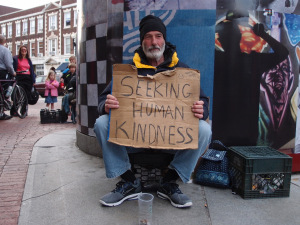
What do you do when you see a homeless person on the side of the road? How do you react when you hear about violence in Syria? What is your response to the overwhelming scientific evidence that humans are the result of the dangerously changing climate? For any number of social sins in our world–a list that would take days to compile-it is impossible for us not to respond in a way that reflects our own social consciousness. (Even doing nothing, outside of shear ignorance, reflects a support of the status quo.)  What I have before you today are five stages of response reflecting our level of social consciousness. Because there are so many issues, we will inevitably find ourselves in multiple stages at once, very conscious of one issue and very indifferent about another. What is important is that we allow ourselves to be vulnerable to the world around us, open to conversion wherever necessary.

Indifference

The weakest response we can have is indifference. Eh, who cares? That doesn’t affect me. At its most basic (and very understandable) level, we recognize that our minds and hearts simply cannot care for every issue under the sun, and while we know that it is happening, even if we wish it wouldn’t happen, we cannot spare even our sympathy lest we be stretched too thin. For many issues, I find myself in this stage as a defense against burnout. How can I spend my day thinking about human trafficking, immigration reform, AIDS in Africa, sweatshops in Asia, poorly educated schools, the fight for a living wage, the privatization (and immense profit) of prisons, political corruption, AND pollution? One person simply cannot be the defender of all things and so we willingly, though unfortunately, choose to remain unaffected.

Indifference is less understandable, even sinful in itself, when we attach ourselves to incorrect ideologies or facts so to negate the need for a response in the first place. Poor people are lazy. Climate change is a hoax. AIDS was sent as punishment from God. Immigrants are lesser people. Indifference in this respect is dangerous and hurtful, reflecting a level of social ignorance towards our brothers and sisters.

Sympathy

As issues become more personal, usually through a direct experience in our lives, we may find ourselves responding with some emotion. For many of us, I think the perfect example of this is the “pennies a day” commercial we see on television: showing images of children living in destitution, how can we help but feel sorry for hungry children? At this point, our knowledge of an issue has moved out of the intellect and into the emotion: we see something tragic and we respond by showing pity. Wow, I didn’t realize how hard those people had it. I feel really bad for them. Because the experience has touched us in a new way, we might even be moved to give something of our own, a donation of money to the organization or a dollar to the homeless person, to help alleviate the problem.

On the other hand, emotions fade, and as the commercial ends, so might our pity. The reason for this is that sympathy, while it might move us to help another (a very good thing), it will not move us any closer in relationship with the other because sympathy focuses exclusively on the situation of the one suffering, investing nothing of oneself. As a result, the relationship will only ever be one direction: the suffering receive pity from us while we remain virtually unchanged.

Empathy

What shows a greater connectedness to our brothers and sister is empathy, the ability to understand and share the feelings of another. When we see homeless people on the street, do we feel bad for them, or do we place ourselves in their situation to know how we would feel in their place? Wow, I would be in a bad mood too if I slept on a bench in the rain last night. Knowing how cranky I get when I miss a meal, I would be a wreck if I never knew where my next meal was coming from.

What is so critical about this stage is that we begin to recognize the common humanity in the other. By introducing ourselves into the situation, connecting our experience with those before us, we allow ourselves to be moved by those we serve. Something in us has changed, and something in our relationship has changed. The homeless man is no longer some nuisance on the street, he is a brother in Christ living in a way that we can no longer bear to see because we can feel his pain. When we reach this stage of consciousness, we simply cannot turn back to indifference. Something must be done to help.

Conversion of lifestyle

As empathy grows, so does our self-reflection. How am I related to this issue? Have I contributed in some way? Is there something that I can do in my own life to stop it? If we truly put ourselves in the place of the suffering, sharing in their pain and allowing ourselves to be moved with great humility and vulnerability, we begin to realize that we are not completely innocent to our brothers and sisters’ pain: the way we live contributes to the social structures causing injustice.

This is a difficult point to accept:

We’re not responsible for human trafficking! Yes, but we did buy jeans from the store that is uses child labor. We care a lot for creation! Yes, but we also eat three times the amount of meat the rest of the world does and drive our cars everywhere. We didn’t do X, Y, or Z. That was the government. Yes, but we also didn’t vote, write letters to our representatives, or exercise any of our civil rights for the sake of justice.

When we are in love, we are willing to sacrifice of ourselves for the happiness of another. We do not count the cost. We do not do so grumbling. It is out of love that we do everything in our power to alleviate the pain in the other. If we find that this step is particularly difficult, that we’re unwilling to give up the luxuries of our lifestyle, it is not that we do not care or that we are bad people, it is that we have yet to make a loving connection with people affected by our lives. A “cause” will not convince someone to give up their life but a person will, especially if we take Jesus’ words seriously: “Whatever you did for one of the least of these brothers [and sisters] of mine, you did for me” (Mt 25:40). For if we truly saw Jesus in the sick and suffering, and knew that we were responsible for his suffering in any way, wouldn’t we do everything we could to change our lives? That is the pinnacle of social consciousness, the point to which each of us strive as Christians.

(Self-Identification)

While I identify one more stage to this progression, I want to leave it in parenthesis because, frankly, it is not something everyone is called to (or even should be called to). We find in figures like Francis of Assisi and Mother Theresa a complete self-identification with the people they served. Not only did they understand and share the feelings of the poor, they lived them completely as the poor, refusing to accept distinctions between themselves and the people they served. The took on the material sufferings of the people around them so completely that they began to see themselves as poor too. They were reckless and cared little for themselves, and were criticized for such then and now. Maybe they were. Maybe they should have taken better care of themselves so that they could have helped more people. But then again, maybe their witness is the witness for us all: when you see Jesus in your brothers and sisters, how can you help but drop everything to be like him, leaving behind the worries of the world?

 2 Comments

 Posted on October 22, 2014 by CaseyOFM

 Justice, Ministry

     activism, Catholic social teaching, conversion, Emphathy, environment, Francis of Assisi, homeless, Inderference, Jesus, justice, Mother Theresa, social issues, solidarity, Sympathy

Don’t Fear Fraternity

Nothing to fear here!

Nothing to fear here!

As friars, we’re busy people. The students go to school and volunteer at ministry sites; the solemnly professed work full time jobs; the postulants (first year) volunteer at ministry sites and attend many classes and workshops on a regular basis. Add that to the regular prayers, meals, and house chores, and there is little time left in the day for most of us.

For the long-time reader, this may sound familiar. In A Brother, Even When Busy, I shared a similar reflection as the postulant year was starting to pick up and I was forced to budget my time and focus on what was most important: “Being busy is much more of a test and training of our priorities: even after a long day, how are we going to find time for our brothers?”

You see, being in a fraternity is a lot like one’s own family: you don’t get to choose who you live with, you’re not always interested in the same things, and while there is a common bond that unites everyone, the people around you are often taken for granted and overlooked because we know that they’ll always be there. There is in both cases, I believe, the false idea that our relationships with either stay the same or get better even without much attention; we implicitly believe that they will grow naturally by virtue of living together and sharing a common identity. I’m sure all of us can attest to the fact that this is just not the case. Community life takes work. Without clear intentionality on the part of everyone involved, it is simply going to fall apart when things get busy.

So what do friars do about that? One thing Holy Name College is doing this year for the first time is a monthly fraternal celebration. Set up by the recreation committee (who has just unofficially changed its name to the fraternal life committee), one evening a month has been assigned a theme to make it more than just a regular night, and the friars are “encouraged” to break from the normal schedule to be with one another for an extended amount of time.

With Halloween upon us, we couldn’t help but make the inaugural fraternal celebration a “Black and Orange” party. And how perfect it worked out. Celebrating the feast of Ignatius of Antioch, one of the first martyrs of the Church, the readings and homily at mass reminded us not to be afraid even when the world is crashing down around us or we’re about to be killed by the Romans (or that there are ghosts. That too.) We came out of mass to find the living room completely decorated with blac3k and orange streamers, Reese’s Peanut Butter cups and orange slice candies on the tables, and a witches hat on the lamp (that no one actually put on, surprisingly enough.) The dining room was completely decked out with orange and black table cloths and napkins, streamers from the ceiling, and festive place settings. For dinner? How about blackened salmon, black beans and orange rice, sweat potatoes with blackberry jam, sicilian orange salad with black olives, and for dessert, carrot cake and blackberry buckle. (But wait, there’s more!) After evening prayer at its regular time, the living room was reconfigured for a showing of a scary movie, The Others (good movie but excellent entertainment hearing one friar scream at every slightly scary part!)

Could it have went very poorly? Definitely. Some might have said, “I’m not giving up a Friday night to stay in,” or “We don’t do those sorts of things here. That’s really lame.” And I’ve heard friars say both. But they didn’t tonight, and believe it or not, almost every friar stayed for the whole night (and enjoyed themselves!) Was it a lot of work? Sure. But what would we have gained by “saving our energy”? A regular Friday in which people don’t go out of their way to make sure they’re at mass, small talk about the day for twenty minutes, normal dinner, and then everyone dispersing their separate ways after (or before) prayer. Instead, everyone made an effort to be there, to enjoy themselves and their company, and really appreciate the fact that we’re a fraternity, not a bunch of bachelors living together.

So what do I have to say about all of this, given the Halloween theme? We cannot be afraid to put ourselves out there for the sake of building intentional community. I mentioned a few weeks back how moved I was by our Feast of Saint Francis celebration, and I’m beginning to see a common element: the men that I live with are more open to working on our fraternal life than any of the three house configurations I have lived in before. I sense a comfort with one another and an intentionality of life that I have not experienced. This is very encouraging.

As the year progresses, my hope is that we may build upon the fun we have each other, and in a sense, move beyond it as our sole sense of camaraderie. Especially among men, it can be difficult to move beyond the laughter and good wine to something deeper, to something intimate. Why is it that we’re here, together? What struggles do we face in life? What brokenness do we carry around with us unbeknownst to others? Being vulnerable with each other can be very scary, no doubt. For many, we’d rather face a ghost than share who we really are. But isn’t that what our life is about, walking together because we know we can’t do it on our own? As Christians and Franciscans, let us never fear that which challenges us, builds us up, and above all, reveals Christ to us: our fraternal life together.

To see more pictures of the night, check out the shufferfly site.

 2 Comments

 Posted on October 17, 2014 by CaseyOFM

 Fraternity

     Black and Orange party, Christ, Christian fellowship, fraternity, Jesus, The Others

Do Grades Matter?

How important are these in your life?

How important are these in your life?

With midterm week(s) upon us, papers and tests are consuming students around the country leaving many to wonder, “Does this even matter?” It is a rhetorical question that I’ve asked myself many times, attempting to justify the amount of work I was unable/unwilling to finish or to comfort me with less-than-perfect marks. “Eh, what do grades matter anyway?’ While I have never “struggled” in school and my grades were by no means bad, such a philosophy always inhibited me from achieving the higher grades that were within my capability. So now I wonder a very non-rhetorical way, as a graduate theology student preparing for ordination, “Do grades matter?” Should I have studied more as an undergrad so that my GPA would have been .25 higher?

Yes and no. (Did you expect a straight answer?)

I wish I could emphatically say yes, that what I’m doing is of the utmost importance and that grades accurately reflected the amount of work I do and that they will predict how well I was going to be a priest in the future. That’s just not the case, because, frankly, no one cares how you did in “Canon Law of Sacramental Ministry” or “Ancient and Medieval Church History”. Even in more practical courses like “Advanced Preaching” or “Reconciliation” no one is out there wondering, “I wonder if he got an A…?” In life after school, either in ministry or professional degrees, no one is ever going to ask for or even wonder about how well someone was able to read a text and write a paper about it; what people want to see is someone who is knowledgeable and competent, who is able to integrate classroom information into real life situations.

Because our degree is a combination of intellectual and practical knowledge, it is fitting for people continuing on to higher academic studies as well as for people entering pastoral fields; because our degree is a combination of intellectual and practical knowledge, there are aspects of the degree that will serve absolutely no use to someone planning on only entering pastoral fields (this is also the case for every undergraduate degree. Do I really need Chemistry 101?) As a pastoral minister in the Church, do I really need to know the different liturgical rites of the Eastern Churches for baptism; the history of the Nestorian controversy and how the Councils of Ephesus and Chalcedon responded to it; or the differences between Scotus and Aquinas on the Absolute Will of God? Probably not. Does it matter, though, if I can give a personal (and theologically accurate) testimony of Jesus Christ in the life of the Church, offering consolation and guidance to someone having just lost a loved one? Absolutely.

With this is mind, knowing that we are in school not for academic pursuits but rather to better serve the people of God, there is a sense that we need to discern what is important and what is not, focusing less on the grades we earn and more on learning what will be useful. For example, the other day I was assigned a primary text of an ancient theologian that bored me to death and presented no practical application. Should I have a) read the treatise anyway, getting what was important to know for the test, or b) read the optional, supplemental material that gave a historical overview of the Church at that time, placing the theologian into the context of the whole Church? For me, even though it would not help my grade any more than doing nothing at all, I found the latter to be much more helpful in the long run of my ministry, and that’s how I spent my time.

I wish I could say that this is the solution to the question, that grades are merely letters with no significance at all and that all that matters is discerning what information is practical for ministry. This I simply cannot say. The fact of the matter is that grades do matter. While they should not be the determining factor to one’s happiness nor will they guarantee any success in the long run, they are helpful in keeping students on task and evaluating how well they were able to comprehend difficult material. Is everything in the course necessary for one’s ministerial career? Probably not. But how can one know what exactly will be useful in the long run? As the number of ministers in the Church continues to diminish, new ones will be called on to be all things for all people, expected to be prepared for anything and everything that comes along.

Similar to this, I think that there is a level of trust and obedience that can be exercised as a diligent student. Rather than discerning what is and is not useful, essentially dismissing the professor as unable to do his/her job, why not show some humility and give up one’s will in the matter, doing what is asked of oneself? I am fairly sure that graduation will not mark the end of trivial assignments or stressful work, so why not train the will, not the intellect, to be patient, obedient, and open-minded? I have found on more than one occasion that things I did not think were useful ended up being life-changing events. Who knows where God will speak?

Ultimately, while I wish that I could say that they don’t matter to me and that school is about what one learns, grades do matter to me, and that’s not a bad thing. Grades are an effective way to manage and motivate what I learn and how hard I work. As long as I remember that they are not ends in themselves and they do not give reason to boast in any way, that they are merely a tool to encourage me to learn more about God and serving God’s people, then I think they serve a great purpose. That’s the key, I guess. Whether it’s becoming a priest or going to tech school, learning is something that should always be done to build up the kingdom of God and should never be kept to oneself for pride or personal glory. Do grades matter? I guess it all depends on why one wants them.

 Posted on October 10, 2014 by CaseyOFM

 Ministry

     grades, Kingdom of God, school

Death, Pickaxes, and Home Videos: A Franciscan Feast

Just as the universal Church remembers and makes present the reality of Jesus with major celebrations throughout the year (Christmas, Easter), Franciscans come together each October 3rd and 4th to remember how Francis of Assisi lived and died as a spirit-filled imitator of our savior. For Franciscans, it is a time of prayerful reflection, joyful celebration, and life-giving fraternity. While each of the four feasts I’ve been a part of since entering the Order have had their own special character, none of them were as complete and vocation-affirming as this weekend.

Transitus: The Death of Francis

Each year, the Feast of St. Francis begins with a vigil service remembering the final moments of Francis’ life. The ceremony varies depending on time and place, but it usually consists of a retelling of the night Francis died, the reading of a passage from the Gospel of John, and the singing of psalm 142. Sometimes it is a short, somber experience with lots of time for reflection, other times it is an elaborate, well-choreographed production. In our case, Transitus was a sight and sound to behold, a wonderful example of the latter. The music was wonderful, the preaching was inspiring, and the candlelight procession from the church to the replica Portiuncula (the place Francis died) was very touching.

For me, though, no matter how well planned and executed the ceremony itself was, it was inconsequential compared to the amazing turnout by Franciscans far and wide. With as many as four hundred people present, the family was all there. Observants. Capuchins. Conventuals. Poor Clares. Secular Franciscans. Third Order brothers and sisters communities. Lay volunteers. Everywhere you looked there was a different shade and style of habit, tau crosses of different sizes and colors. Visibly we made present the reality of our charism: diverse and far-reaching, present throughout the whole world. For this reason, one of my favorite parts of the whole ceremony was the intercessions: nine people from nine different communities and language groups each spoke one prayer (Spanish, English, Chinese, Lau, Thai, Tagalog, French, Creole, and Korean to be exact.) What a wonderful expression for sure!

The friars should work

When one thinks of the original Franciscan charism, there are a number of things that come immediately to mind: fraternity, manual labor, care for creation, and begging on the street for food and clothing. This year, we decided three out of four wasn’t bad! Instead of kicking back with a drink and relaxing all day, seven of the friars grabbed a pickaxe and shovel and, following the example set by St. Camillus Church a few weeks ago, set out to care for their local environment. What did our grounds need, we thought? Well, with four oak trees dying in the last few years and Climate Change challenging indigenous species, we decided that we needed more local trees! Nineteen of them to be exact. Coming together as a fraternity, working with our hands in the way that Francis would have, we were able to diversify the plant population in the area, hopefully promoting greater pollination and plant life for years to come. Talk about a perfect Franciscan activity!

(The only thing that could make the day any more Franciscans is if we could have been able to beat the Dominicans in something, you know, for “old time’s sake.” But… alas… how would we ever pull something like that off? I mean, it’s not like there was a softball game at the Dominican house of studies yesterday between the Dominicans and diocesan seminarians, and the diocesan guys invited me to play. And naturally, even if that did happen, as a humble “lesser brother” I would never be anything but a good sport in friendly competition, even if, say, we beat the inferior Order of “friars” 6-3 on their own field. But… alas…)

Thanksgiving: Eucharist, Dinner, and Fraternity New and Old

The pinnacle of the day, however, came in the evening. Beginning with mass, the “source and summit” of our life and something very dear to Francis’ heart, it was easily my best experience of Eucharist in this house. Unlike our daily gatherings that have about 1/2 of the community and have sporadic singing, yesterday’s mass was full and on fire. As a way to make the day more special, we invited the director of music from the parish to play the piano for us. Wow. Not only were there 7-8 more voices than normal, she played so powerfully that the whole chapel just came alive! Oh praise him, Alleluia! To sing truly is to pray twice, and we sung better than we ever have.

After the high of breaking bread together at the Lord’s table, we entered the dining room to break some more bread (and meat, and green beans, and cake.) Decorated all day by three of our brothers, the room was gorgeous: table cloths, burlap, rocks, moss, fine dinnerware. Talk about a feast. While I’m not exactly one for formal dinners or elaborate occasions, one could hardly overlook the tremendous work that the brothers had put into making the meal more than just another meal in the house. The food was delicious, the wine was plentiful, and our conversations lasted well over an hour, all of us laughing hysterically with one another. There are few times in the year when the brothers are all able to commit themselves to one another, and I must say, it is a joyous occasion.

But, wait, there’s more! After dinner was cleaned up and put away, the recreation committee in the house had a surprise planned. Walking into the living room we found the projector set up and the chairs aligned. What could it be, you ask? How about a homemade video of the friars in formation from the 1950s. What a throwback. What a weird experience, I must say. Men that are now old or deceased were alive before our eyes, teenagers with youth and spirit, playing baseball, jumping in the lake, and performing plays. There was an odd sense of solidarity with these men for something so obvious: they were once young and ready to take on the world, just like us. And for the past 60 years, they have. The video was short and without sound, but nice nonetheless.

Little did we know that it was just the opening attraction: as a final treat, one of the formators found a vocation video from 1995 for us to enjoy (that is, laugh at.) Man. Not only was the style, hair, and technology a throwback, but friars we now know quite well were really young back then! To see guys now in their 40s and 50s when they were back in formation; to see our formators in different and sometimes funny roles; to see those running the province today back when they had their first assignments and filled with their original energy for the life was an amazing experience to share with our fraternity today. Trust me when I say that we laughed at our brothers quite a bit. It’s tough to see some of our guys with a lot less weight and lot more hair and not chuckle. But also trust me when I say that we looked on with great admiration and humility for the things that they have done before us and lives that they have lived much longer than we have. I took much joy in my brothers in these videos, and felt a great sense of awe about the brotherhood in general. While we were creating a new brotherhood ourselves in that moment, it is and forever will be only possible because of the many men that have come before us.

All in all, I can’t think of a better way to spend the feast of St. Francis. We prayed, we celebrated, we worked, and we laughed like friars do. I honestly don’t know how someone could spend a day like that with us and not sell all that they have to be a part of it. This Franciscan life of following Jesus truly is the pearl of great price, and this weekend truly was an unmistakable affirmation of my place in it. Peace and good to all.

 2 Comments

 Posted on October 5, 2014 by CaseyOFM

 Fraternity

     Capuchins, Conventuals, feast of St. Francis, Franciscan Feast, Holy Name College, October 4, Portiuncula, Secular Franciscans, Third Order, Transitus

The Friars Should Not Receive Money?

For Francis, searching for money, even for the poor, was still time spent on futile things.

For Francis, searching for money, even for the poor, was still time spent on futile things.

Every Friday morning after the office the leader of prayer reads a chapter of the Rule of St. Francis (1223) and we take fifteen minutes to meditate on its meaning in our life today. It is a great practice constantly reminding us of who we are and who we are to be as friars.

Today we read chapter four, “That the Brothers Should Not Receive Money”. In what is the most overlooked and disregarded chapter in the Rule, friars are forbidden to receive coins or money, either directly or indirectly, for any purpose other than the infirm brothers and clothing for cold places. According to Francis, the friars were not even to receive money to give to the poor. Instead, friars were to work for a living, taking in wages only what they needed to survive for that day, e.g. food, clothing, housing.

Naturally, this is something that has troubled me since the first time I read this on retreat in postulancy. What the heck do we do with this command? Clearly we’re not even trying to live this, we’re just blatantly ignoring it. If that’s the case, what else are we neglecting? It turns out, we’re also not allowed to enter the monasteries of women, appropriate houses for ourselves, and my favorite, ride horses. If all of these things are in the Rule, and we are clearly not adhering to them, how can we even say we follow the Rule at all? Is this, as some would say, “cafeteria Franciscanism?”

Without spiritualizing away the true difficulties of humility and material poverty that Francis experienced, I think true faithfulness to the Rule does not mean strict literalism. Just because the Rule says something explicitly doesn’t mean that that is exactly what we are to do. How is this not picking and choosing issues? The fact of the matter is that this document was written in a context not our own: society and Church of 1223 is nearly unrecognizable to society and church of 2014. Because of that, what was meant in 1223 is undoubtedly going to take on different meaning in a different time, place, and culture, making a literal adherence to that culturally condition expression a potentially inappropriate expression for today.

Faithfulness to the rule, thus, must not be a strict observance of the literal words but a faithfulness to the intended purpose of such actions. What was it that Francis and his brothers wanted to capture? What was it that they wanted to protect against? What is the underlying spirit that guided them to live as they did. In answering these questions, we find that the above passages are still critically important, but must take on a different expression today.

In the case of not receiving money, it must be remembered the economic context in which Francis lived and the role money had it in. Unlike today, money was not standardized and readily available. There were two types of coinage: one that the rich used, which held its value and was worth much more, and one that the poor used, which fluctuated in value and was often used as a means to cheat them out of due wages. It was an unjust system that disproportionately hurt the poor. Add that to a call to “leave everything” and follow Christ, relying solely on God’s providence with one’s eyes focused on the kingdom of heaven rather than the kingdom of fading money and power, and it’s clear why Francis forbade his brothers to take any part in this system.

With that in mind, we look to our own world. The concept of money is not a controversial topic any more. Not only is it standardized and readily available, it has completely replaced all other forms of economy. Try getting a job today and convincing the boss to pay you in loaves of bread and warm clothes. It won’t happen, and really, it can’t happen. That world has been replaced. Should we throw away the fourth chapter of the rule, then, since friars must receive money to live in this world? Absolutely not. Just because the specific expression no longer makes sense, the value still remains: we continue to live in a society that separates the rich from the poor, that acts with great injustice for the sake of money and power, and tries to distract us from what is truly important, following our Lord into the kingdom of heaven.

So, what does this look like? Well, it calls us to look at money in a different way than the world does. Although I get a stipend each month for my needs, I am reminded not to see it as my money that I can do with whatever I want and no one has a right to it, but rather something to use for the sake of the kingdom. Treating money as nothing more than a practical necessity, something to be shared and used for ourselves and others rather than something to be hoarded, defended, and worried about, frees us from the futile world of greed and consumerism, able to use things for the sake of people rather than what we usually do, use people for the sake of things. It calls us to often go without money, experiencing what the poor experience in this unjust system, to live as examples of people who’s joy is not dependent on material things.

Ultimately, what I’m trying to say in this post is that this process of understanding our Rule is not something reserved for friars but rather an example of the discernment all Christians must have each and every day. When we look at our sources for following Christ, are we called to live out the literal expression of the biblical text, or are we to be faithful to the intention God had through the writers? When we are able to shift from the former to the latter, to hold the text of scripture in one hand and the daily experience of this world in the other, what we’ll find is that the experiences are different but the truth remains the same. We can choose to remain in the realm of the literal, choosing the easy interpretation that does not force us to integrate the text in our lives but only gives us the option of accepting or ignoring bewildering precepts, or we can prayerfully engage the experiences of those who have gone before us as a common people, struggling through the ambiguity, to live the way Jesus would have lived had he walked the earth today.

What I say is certainly not easy, and is no easier in a faith community of diverse backgrounds and opinions. But that is our life. We do not live in a black and white world of easy answers. We live in a complex collision of worlds and realities that are all striving for meaning and all capture a bit of it, to varying degrees. It is only when we are prayerfully open to the diverse experiences our brothers and sisters that I think we will ever come close to living the way Jesus intended us to live.

 2 Comments

 Posted on September 26, 2014 by CaseyOFM

 Fraternity

     Francis, interpretation of scripture, Jesus, literalism, poverty, regula bullata, Rule of 1223, Rule of St. Francis

« 1 … 132 133 134 135 136 … 171 »

Breaking In The Habit

Create a free website or blog at WordPress.com.

  • YouTube
  • Twitter
  • Instagram
  • Facebook
  • Podcast
Privacy & Cookies: This site uses cookies. By continuing to use this website, you agree to their use.
To find out more, including how to control cookies, see here: Cookie Policy
  • Subscribe Subscribed
    • Breaking In The Habit
    • Join 4,792 other subscribers
    • Already have a WordPress.com account? Log in now.
    • Breaking In The Habit
    • Subscribe Subscribed
    • Sign up
    • Log in
    • Report this content
    • View site in Reader
    • Manage subscriptions
    • Collapse this bar
 

Loading Comments...