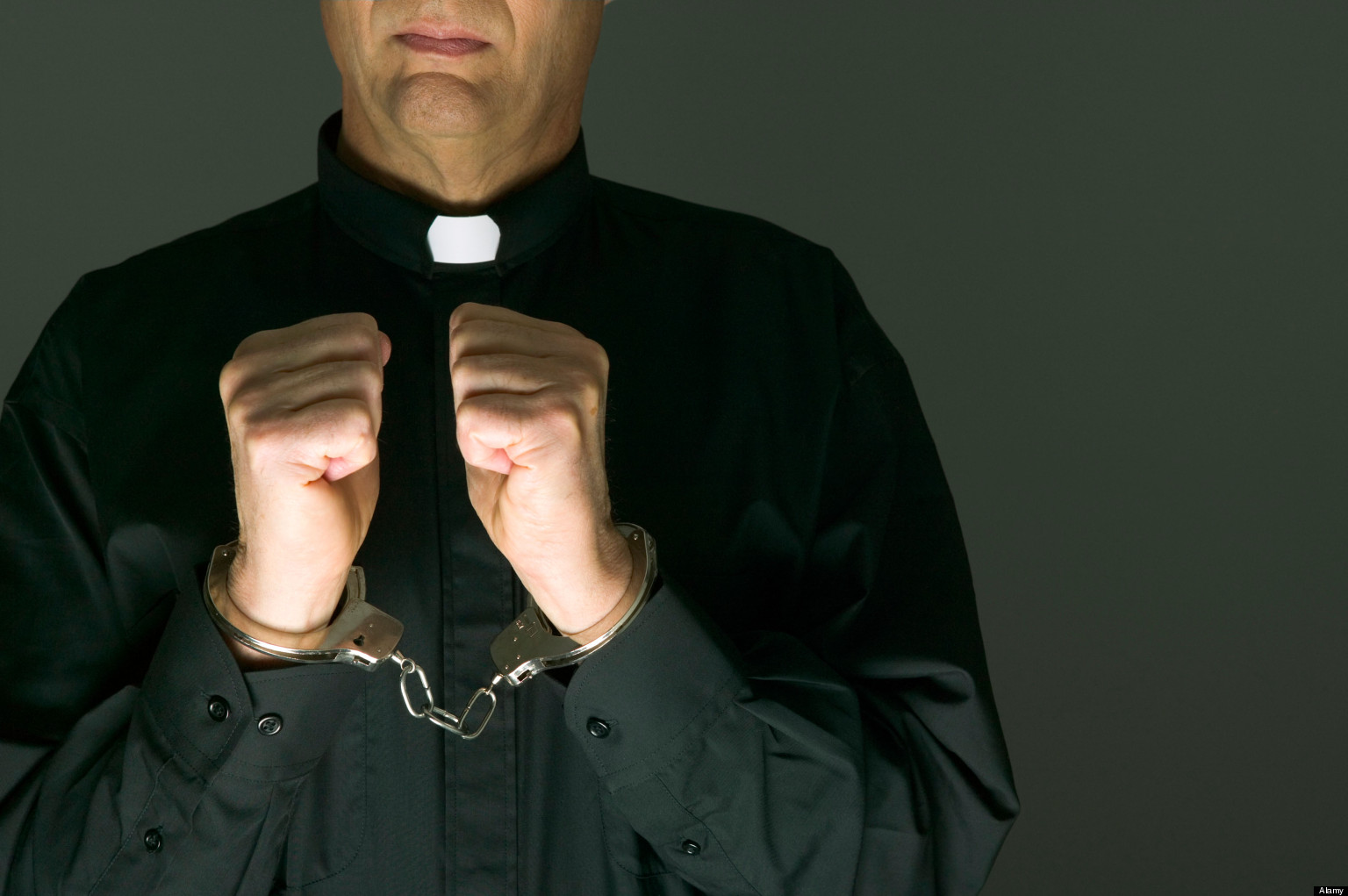
In this week’s Catholicism in Focus, we take a look at a mildly uncomfortable question: what happens when a priests is in a state of mortal sin and yet celebrates the sacraments anyway? Just as the lay faithful are forbidden to receive the sacraments in a state of mortal sin, so, too, the priest is forbidden to celebrate them. And yet, we can say with certainty that it happens anyway: The recent scandals in the Church that have exposed the grave sinfulness of some of its active ordained ministers.

So, in a very practical, non-hypothetical manner, what happens to the sacraments if they are celebrated by a priest or bishop who is not fit to celebrate them?

For email subscribers, click here to watch the video.

In the Catholic and Orthodox Churches, Mary the Mother of Jesus has a place of prominence among the saints. Throughout the liturgical year of the Western Church, we celebrate her conception, birth, presentation, annunciation, visitation, motherhood, sorrow, immaculate heart, assumption into and queenship in heaven, and her intercessory power through the rosary; we commemorate her many apparitions throughout history in Lourdes, Fatima, Mount Carmel, and Guadalupe. In all, there are more than 17 feasts and memorials, two months of popular devotions, and countless prayers and novenas devoted to Mary throughout the year.

That’s a lot of face time.

For many Protestants, and even a few Catholics like myself, this can be the source of a bit of heartburn. With the amount of time we devote to her and the elaborate statements we say about her, Mary the “Mother of all” becomes less like us—someone who shared in our experience and so offers us a path to follow—and more for us—a being of heavenly origin with special power and authority to act on our behalf. The existence of the “Co-Redemptrix” movement (the controversial, yet unofficial, idea that Mary was essential to the salvific actions of Jesus), the title of Queen (the complimentary title to that of King, the position held by God), and the replacement of female deities in native religions with the image of Mary, only heightens the concern. As a result, many like myself revere Mary and acknowledge her significance, but do not really have the “high mariology” that is so popular in our Church.

For me the issue comes down to something very simple: I already have a mother. I’m glad that Jesus had a mother, and I think anyone who gave birth and raised our Lord and Savior is worthy of respect, but I don’t need her to be everyone’s mother. I need her to be Jesus’ mother.

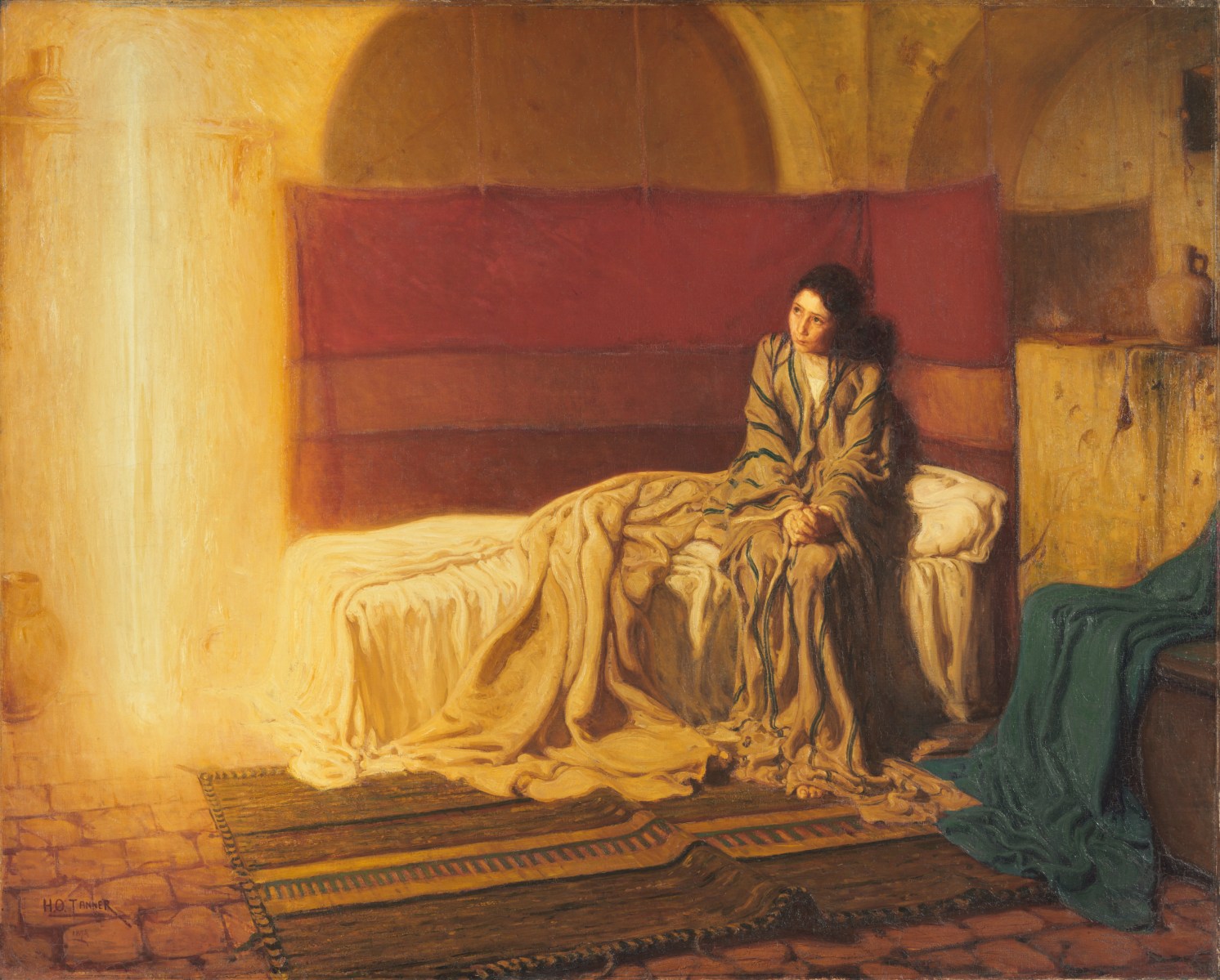
Which is why, I think, my devotion to Mary has grown of the past few years in the season of Advent. Before Mary was seen as the mother of all, before the countless devotions of Mary spread throughout the world, before she was crowned the Queen of heaven, before statues, shrines, effigies, and paintings were constructed in her honor, even before she gave birth to Jesus, the Son of God, Mary was a little girl with a call:

The holy Spirit will come upon you, and the power of the Most High will overshadow you. Therefore the child to be born will be called holy, the Son of God.

There she was, a little girl from a small, insignificant town—a nobody—and through an angel, God was asking her to take part in something beyond her ability or comprehension. “How can this be?”

Like any of us in that situation, Mary was unsure. Like any of us, Mary was afraid. Like any of us, Mary sought wisdom and refuge with family and friends. In remembering her annunciation and visitation, Mary is not the exalted Mother from on high that we so often celebrate today, she was simply a faithful member of a community trying to find her way through the normal difficulties of life. At least in the way she understood herself at the time, she was just someone like everyone else, faced with a big task.

Thus, it is in this season of Advent as we await the coming of our Lord, that a different title for Mary comes alive for me: sister. In these four weeks, Mary is not a queen on her throne to be revered and looked up to, she is a peer to be walked with and inspired by, an equal with gifts and flaws and idiosyncrasies. While the image of “mother” is usually one of reverence or submission, the image of “sister” is a bit more relatable: friendship, rivalry, maybe even conflict. We are reminded in this that her experience is so very much like our own, that what she did in the most significant and literal of way—carrying and making God present in history—we are also supposed to do in our own lives. We are reminded that saying yes to God is not always an easy or safe task, but it can be done. It should be done.

Mary, our sister, shows us so.

That is the Mary that I remember in Advent. That is the Mary that I have a great devotion to. Maybe, like me, the amount of attention the Church gives to her and the elaborate statements it says about her make you feel uncomfortable. That’s okay. Praying the rosary and having a regular devotion to the “Blessed Mother” are great acts of piety, for sure, but they’re not things for everyone’s spirituality. But just because you don’t have that spirituality or are called to those devotions doesn’t mean that Mary can’t be important to you.

We may not need another mother, but we can always use another sister, friend, or inspiration to help us get to who really matters: her son. I can’t think of a better person to have in our lives in Advent.
I’m not sure what the weather is like where you live, but in Washington, D.C., the past couple days have been cold. It’s been in the low 40s each morning, and yesterday it got below 32°F. As someone who lived in the Carolinas for many years, this is not ideal. Give me 95°F over 35°F any day!

Besides my obvious preference for heat, there is another reason why the coming of the cold weather would bother me, particularly as a friar: sandals. A slab of rubber and a few straps. That’s not exactly ideal for the freezing weather on its way, or for the rain that we could get at anytime of year for that matter. So what does a friar do? Are friars allowed to wear something with their habit other than sandals?

For many, it might sound like a silly question, but it was a highly controversial one at the start of the order (and actually one that surfaced many times in our history), and is a question that I get asked very frequently. I met a friend for lunch one day and he asked, “So… is there are point in your formation when you are allowed to wear closed-toe shoes, like when you’re ordained?” For him, and the many people that see me walking around in sandals when the temperature is in the 30s and 40s, sandals are a penitential act. While this may have been a part of charism at one point in our history, that is not why we wear them today. At least not the primary reason.

Friars are allowed to wear whatever they want with their habit, although, I have to say, not everything should be allowed (I’m looking at you friars that wear white sneakers, and don’t get me started about the socks and sandals guys!) Sandals are an iconic part of the habit, something that people identify with us, and so many people do wear them, but there is nothing intrinsically linked between the sandals and our vocation. For the most part, the decision is based on comfort (especially for older friars and ones with medical issues) and style.

But style doesn’t explain why I continue to wear them even into freezing weather. Sure, I like the aesthetic and think the image is pretty iconic, but there’s more to it than that. For me, there is symbolic value to the sandals that bring me closer to God and the poor.

I hope you enjoy the video! (Click here for email subscribers.) I’m working on a regular blog post now, but just a heads up for the faithful: it’s midterm time at Catholic University, so two major projects and a midterm might keep me detained for a while! Keep me in your prayers!

So it’s Tuesday. You know what that means! Another segment of Ask Br. Casey! Except it doesn’t. While I have posted a video each week for the past six weeks, and had planned on doing the same today, I simply didn’t get it done to my liking last night and chose to scrap it for the week.

But that’s not what this post is about. At least not directly.

This semester has started off as one of the more stressful semesters of my life. As I think I’ve mentioned before, four out of five of my professors have required weekly, or even daily, reflections on readings. That is beginning to take a toll on my free time, free time that I have quickly filled with anything and everything: making a video for the provincial fraternal days, agreeing to give a 30 minute talk to teenagers about the mass, sitting on two committees in our house, starting physical therapy for my shoulder (helpful, but still time consuming!), and, wait for it, professors are beginning to want final paper proposals (which in themselves, are not really that bad… it’s the final papers that generally follow that is quite the annoyance!) Add a weekly video segment and the normal goings of friar life to that mix, and you’ve got yourself a pretty busy life.

Trust me when I say that I’m not complaining, and I am certainly not bragging; so many people have to do much more than me with a lot less than I have. I say all of this to point out that, while this particular load of work may be a bit tedious at times, pushing me just beyond my threshold of stress, it is something that I took on, accepted, and want to live with. The fact of the matter is that I like to be busy. Doing something, even if fairly stressful, is better than not doing something.

And while I don’t discount some level of neurosis–“I must be doing something or I’m not happy”–I think my biggest motivation is that I feel that I am doing the work of the Gospel… or at least work that will prepare me to live the Gospel better. In my school work, I am preparing to be a priest for the people of God; at home, I am trying to build up our fraternity for the sake of the Kingdom; in my professional work, I believe I am using media to connect with people on a level I wouldn’t otherwise. Everything I do, I do for God and for the life of the Church. I am like Martha in our Gospel today at mass: frantically working, sometimes over my head, for Jesus.

Then there’s Mary. There she is, just sitting at Jesus’ feet enjoying his company. And Jesus has the audacity to say that she has chosen the better part? Doesn’t he know how hard I am working for him?

I have no intention of debating Jesus’ words or to enter into any sort of discussion as to which is better, the active or contemplative life. What I do want to say is that this Gospel reminds me that there is a difference between doing something for someone, and spending time with someone. Doing something for another is detached; it may benefit the person we love, but it does not facilitate any real interaction. Doing something with another is intimate; it may not benefit the person we love in any real practical sense, but it is, for me, the foundation of the relationship. It is the time that we spend with those we love that makes us want to do things for them in the first place.

In everything I do for Jesus, I need to be constantly reminded to actually spend time with Jesus. Without prayer, without time to be with our Lord in an intimate and quiet way, free from all of the things I have filled my life with, I will eventually forget why I do what I do, allow the stress to overwhelm me, and ultimately, lose sight of what it is I am actually working for: a world in which others know the love of Christ as I do today. Without prayer, I may be running at 100 mph, full of zeal for where I’m leading people, but in the wrong direction. Sometimes, it means stepping back, putting the mission on hold, and being with the one who calls us to mission in the first place.

For all of us working for Jesus, especially those of us who find life to be quite overwhelming, our highest priority must always be to make time with Jesus. As a friar of ours says: “You should pray privately for thirty minutes every day. When you’re busy, you should pray for an hour!”