Easter Internships

With Easter comes new life, and new opportunities. Alleluia!

Alleluia! He is risen! I hope and pray that everyone had peace-filled Holy Week and Easter celebrations and that we’re all rejoicing in the newness of life given to us by the resurrected Christ. It can be a very crazy time of the year, especially for those in liturgical ministries, and so I hope it was also a time for prayer and reflection (and not just work!)

One of the particular things that the postulants do for Holy Week each year is to go out on a “mini internship” at one of Holy Name Province’s many ministries. Because no one place could hold all five of us at once, we went out two-by-two (-by-one) to three different locations: Sergio and I went up to Mt. Irenaeus in West Clarksville, NY, Ramon and Dennis went to St. Francis of Assisi Church in Manhattan, and Ed aided St. Paul’s Church here in Wilmington, a place with only one priest to handle all of Holy Week.

One of the things we realized almost immediately was that there was almost nothing in common with any of the three locations. Mt. Irenaeus houses six friars living on a mountain top, hosting 25-50 people at the table for intimate liturgies and inclusive meals in their home; St. Francis of Assisi Church consists of more than 25 friars living in the busiest place in the country, serving literally thousands of people per day in a much more extraordinary, yet anonymous liturgy; and St. Paul’s is run by one friar, and is a niche parish for Spanish speakers in a poor neighborhood of a small city. In terms of ministerial experiences, we could not have been farther away from one another.

And yet, when we shared with one another our experiences of the week, we described our time with the friars and their ministry in almost the exact same way. Though we had seen it briefly in our trips throughout the year, such an experience made it so clear that there is a particular charism that we as friars bring to our life and work that is identifiable no matter the ministry or location.

The most obvious of this was that each ministry was first and foremost a community. Even at St. Paul’s where there is only one friar working at the ministry, each location had at least three friars with which to share meals, pray regularly, and recreate. This is absolutely the cornerstone for our Franciscan life and mission. Unlike most other communities, we were instituted to be a brotherhood, out of which flows ministry, not the other way around. It is only after we establish a healthy, prayerful community can we begin to understand the needs of the community and attempt to fulfill them.

Thus, at all three locations we noticed that the friars collaborated constantly with the laity, choosing to lead with rather than speaking in directives, even if that the latter might be much easier. At the root of this, I believe, is a desire of friars to invite others to enter into each others’ lives, so as to not only teach, but to be taught. To do this, each community finds itself eating, praying, and socializing with the laity outside of normal “work” circumstances, treating each other as equals on the pathway to faith.

At each place, this manifests itself in different ways, but the effect is the same. Whether it’s having a planning meeting before the liturgy so that the laity can not only participate, but add their own gifts to the liturgy, as at Mt. Irenaeus, or it’s making the sacraments accessible to the people, even if it means taking three-hour shifts for 12 hours a day for confession, or saying the first reading in seven different languages, as in NYC, there is inclusivity and humility in the way the friars lead. In all of these cases, it’s not about what the friars want, but rather what the community needs. I believe that it’s this attentiveness to listen and provide that makes us successful in our ministries and inspiring in our lay movements.

* * *

Obviously there was more to the experience than I am able to share, but I do have a number of great pictures here of Mt. Irenaeus for those interested. You can also find a better description of the place there, as well as at their website, http://www.mounti.com/.
Finding Solitude

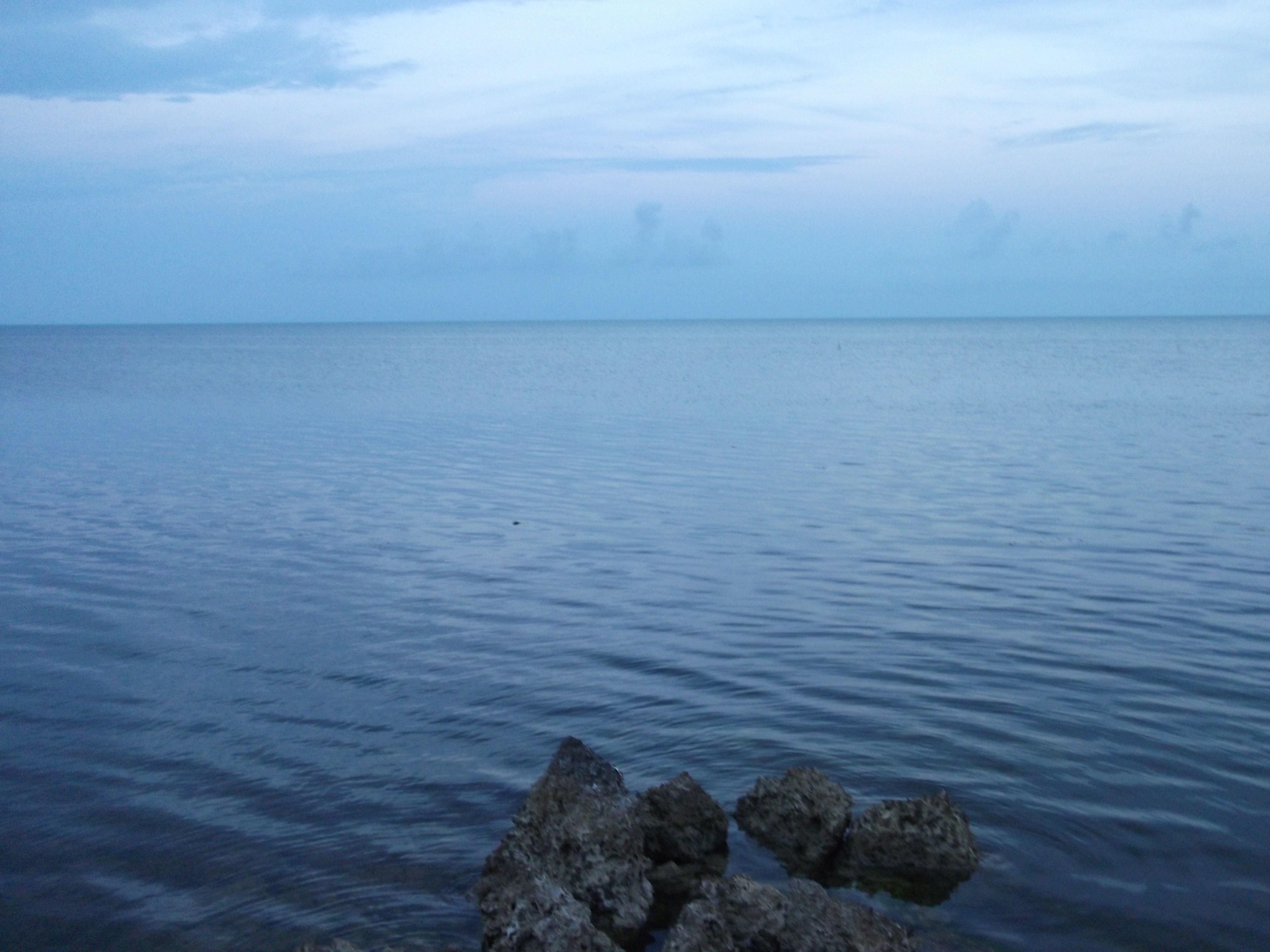
I may have experienced solitude here, but a spirit of solitude comes from within.

Back we are in Wilmington, and away we go! Today I found myself enjoying the bright sunny day with a little reading, cleaning, and laundry, taking in the time to relax  before heading out again. No complaints here, though: t’s was a great week at the Graymoor Spiritual Life Center, and I’m looking forward to our retreat coming up!

The week started on Tuesday with a 4 day workshop on Franciscan prayer led by the renowned André Cirino, OFM. Centering the material around Francis’ radical approach to constant prayer, we spent a good portion of our time focused on his The Office of the Passion (translated and published by Fr. André as The Geste of the Great King), and A Rule for Hermitages (also known as The Prayer of Solitudea less common but arguably more accurate name).

Of all the little bits of wisdom I received from Francis and Fr. André alike, one thing really struck me: solitude is less of a place than it is a state of mind.

This is a great challenge for me. When I’m in between activities with only fifteen minutes to pray or am outside of traditionally “sacred” places where it can be busy or loud, I find it difficult to get into a prayerful mindset, and believe that less-than-ideal environment makes my prayer less meaningful, and to some extent, less effective than a more formalized, “ideal” prayer. The problem that I’ve realized is that I am looking for solitude outside of myself, as if it can be found in a particular place or situation. In reality, one finds solitude from within, not from without.

My attempt to process this new concept could not have had more appropriate, yet ironic, timing: starting tomorrow, we’ll be starting a six-day hermitage retreat. Talk about external solitude! Not only will we be on retreat from the busyness of the world, prohibited from using cellphones and the like, we will also be living in our own private cabin. Whereas we were discouraged from talking outside of communal prayers on our trip to Mt. Savior Monastery back in December (“Living In The Moment“), we will even be discouraged this week from seeing one another but once a day for mass, dinner, and vespers.

Though I do find it a little ironic as well that I’ll be entering into physical solitude while arguing that inner solitude is independent from location, I think that this will be an excellent first step, and a challenge for sure. Just because one can remove all external distractions doesn’t meant that there will not be distractions to prayer! On the contrary, the lack of external distractions simply leaves an individual unable to hide from their internal distractions. These are definitely the hardest to overcome and the true impediments to prayerful solitude.

And with that, I’m off to find some solitude, hidden deep within myself! I thank you once again for your prayers and support, and will be praying for each of you this week!

Quiet Weekend, Busy Weeks Ahead

After spending so much time in preparation and implementation of the Parish Mission last week, the other postulants and I enjoyed what turned out to be a very quiet weekend: with the exception of class Friday and Today, and an integration seminar on Saturday, we were actually free to do as we pleased all weekend. This was much appreciated (and much deserved, if you ask me!)

Besides the usual reading, YMCA, and group movies, it was also a weekend of “firsts” for me: on Saturday, Dennis, Ramon, and I went exploring the nearby park looking for good walking trails by the river, and on Sunday, I cooked dinner for the first time. No one died as a result of either experiment, so I would consider it a pretty successful weekend!

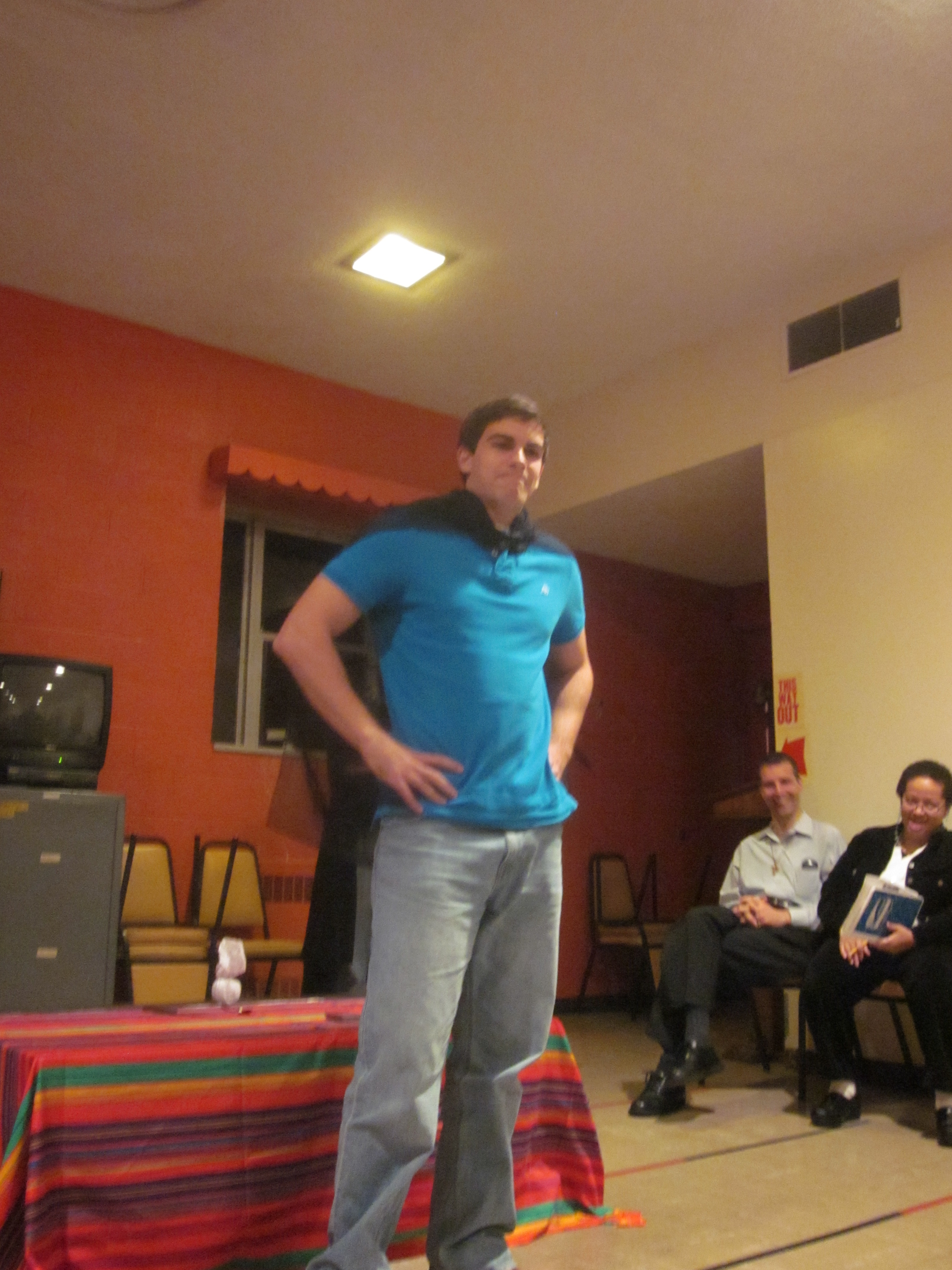
There won't be any "magic" in our sketch per se, but we've got a few tricks up our sleeves...

A relaxing weekend couldn’t have come at a better time, because by 6:50 tomorrow morning, it’s back to the Postulant grind. We’re starting with mass at 7:00 at the Poor Clare Monastery here in Wilmington, followed by lunch and fellowship at the Poor Clare Monastery in Wappingers Falls, NY, before we arrive once again in Garrison, New York for a Franciscan four-day workshop at the Graymoor Spiritual Life Center. If you’ll remember, we spent four days at Graymoor back in November and had an excellent time (you can refresh your memory with my post, Finally, a Franciscan!). We’re all really looking forward to another fully Franciscan run, Franciscan themed, and Franciscan attended workshop.

That’s it for now, but make sure you check back next weekend when we get back. I don’t want to give too much away, but the other postulants and I have been working on another routine for this year’s talent show that you’re going to want to hear about! Wish us luck!

Standing On The Shoulders of Others

It's on the shoulders of friars like these that we stand today.

One of the core values of Western Culture, particularly in America, is that of upward mobility in the form of constant progress. It’s almost implicit in the way we approach generational differences that each one will achieve greater success and push society forward more than the previous one. Though there is certainly some truth in a statement such as this (western culture has continued to make advances in every field of study), it runs the risk of forgetting the shoulders on which each new generation stands: without the advances of yesterday, we could never achieve what we do today.

Why do I bring this up? Well, after an interesting history lesson by Dominic Monti, OFM, about the history of our Order and Province, the postulants had an opportunity for some real “field research.” Spending last weekend traveling around northern New Jersey and New York City, we visited one of Holy Name Province’s three homes for retired friars, the Infirmary for aged and sick friars, and The Cloisters, a museum devoted to medieval religious life. This supplement to our classroom time gave us a more holistic experience of the province because we could actually interact with our past, forcing us to come face-to-face with the fact that everything we achieve in the future will be a direct result of what they did in the past (Originally, I had planned on titling this post, “The New, Old, and Ancient,” for that reason, but decided it might be misinterpreted by some…)

Starting at the chronological beginning, The Cloisters was quite an extraordinary experience. Built in the 1930s by John D. Rockefeller Jr., the museum is a full scale construction of a medieval monastery. The reason I don’t say “replica”  is because major structural pieces of the building, including pillars, stone arches, windows, and entire walls, are authentic pieces of medieval European monasteries, dating between 500-1100 years old! Instead of simply having pieces of art viewable from behind a piece of glass, like most museums, this one worked the art into it’s original settings, giving the viewer both context and heightened sensory awareness of the world that once was. Though not particularly “Franciscan,” it was enlightening to see what the predominant expression of religious life looked like during that time because it would have been the only thing on which they could based their own new lives. The whole place was truly fascinating.

Jumping ahead about 750 years we find the most immediate shoulders on which to stand: Holy Name Province “retirees.” Located in Butler, NJ, Boston, MA, and St. Petersburg, FL, our province houses the friars that brought us into the modern age of Catholicism. Because there’s no official age to retire, and because even if there was these guys wouldn’t do it, the majority of these men still engage in active ministry at local parishes and hospitals. We had dinner with the friars in Butler one evening, and had a great time talking about their adventures in religious life. In one sense, it was incredible to see men continuing to spread the Gospel and bringing people to faith well into their 80s (even a few 90s); on the other hand, it made us all realize that we weren’t going to “retire” any time soon, and that it’s time for us to get to work writing our own history!

As a last stop on the trip, we payed a visit to the friars at Holy Name Friary, a nursing home/hospital run by our province in Ringwood, NJ. It’s by far the least active of our houses, with most of the men suffering from a number of mental or physical ailments. For me, it was difficult to see the once influential men of our province in such a frail state, having stepped aside to let others lead the way many years ago. But at the same time, I find it to be a humbling reminder of the finitude of our lives in the grand scope of God’s infinite work; we may play a small role, but it can be a profound one if we let it be.

As I reflect and pray about the experience of this weekend, about what it means to stand on the shoulders of those before me so that I may lift up those after, I’m drawn to the words of Archbishop Oscar Romero in his poem, “A Future Not Our Own,” because it offers great perspective on our lives and our work. I hope you enjoy it as much as I do:

It helps, now and then, to step back
and take the long view.
The kingdom is not only beyond our efforts,
it is beyond our vision.

We accomplish in our lifetime only a tiny fraction of
the magnificent enterprise that is God’s work.
Nothing we do is complete,
which is another way of saying
that the kingdom always lies beyond us.

No statement says all that could be said.
No prayer fully expresses our faith.
No confession brings perfection.
No pastoral visit brings wholeness.
No programme accomplishes the church’s mission.
No set of goals and objectives includes everything.

This is what we are about:
We plant seeds that one day will grow.
We water seeds already planted, knowing that they hold future promise.
We lay foundations that will need further development.
We provide yeast that produces effects beyond our capabilities.

We cannot do everything
and there is a sense of liberation in realizing that.
This enables us to do something,
and to do it very well.
It may be incomplete, but it is a beginning, a step along the way,
an opportunity for God’s grace to enter and do the rest.

We may never see the end results,
but that is the difference between the master builder and the worker.
We are workers, not master builders,
ministers, not messiahs.
We are prophets of a future not our own.